

We research everything we recommend. When you buy through our links, we may earn a commission. Learn more

Buying guide · 10 min read · Updated October 2, 2026

3 Best 220v Solar Generators in 2026: A Practical Camping Guide

Best 220V solar generators compared on 120V/240V split-phase output, capacity, solar input and expansion for RV, cabin and home backup.

Danny WalkerBy Danny WalkerCamping Editor at RV Gear Lab3 products comparedSpec-sheet researched
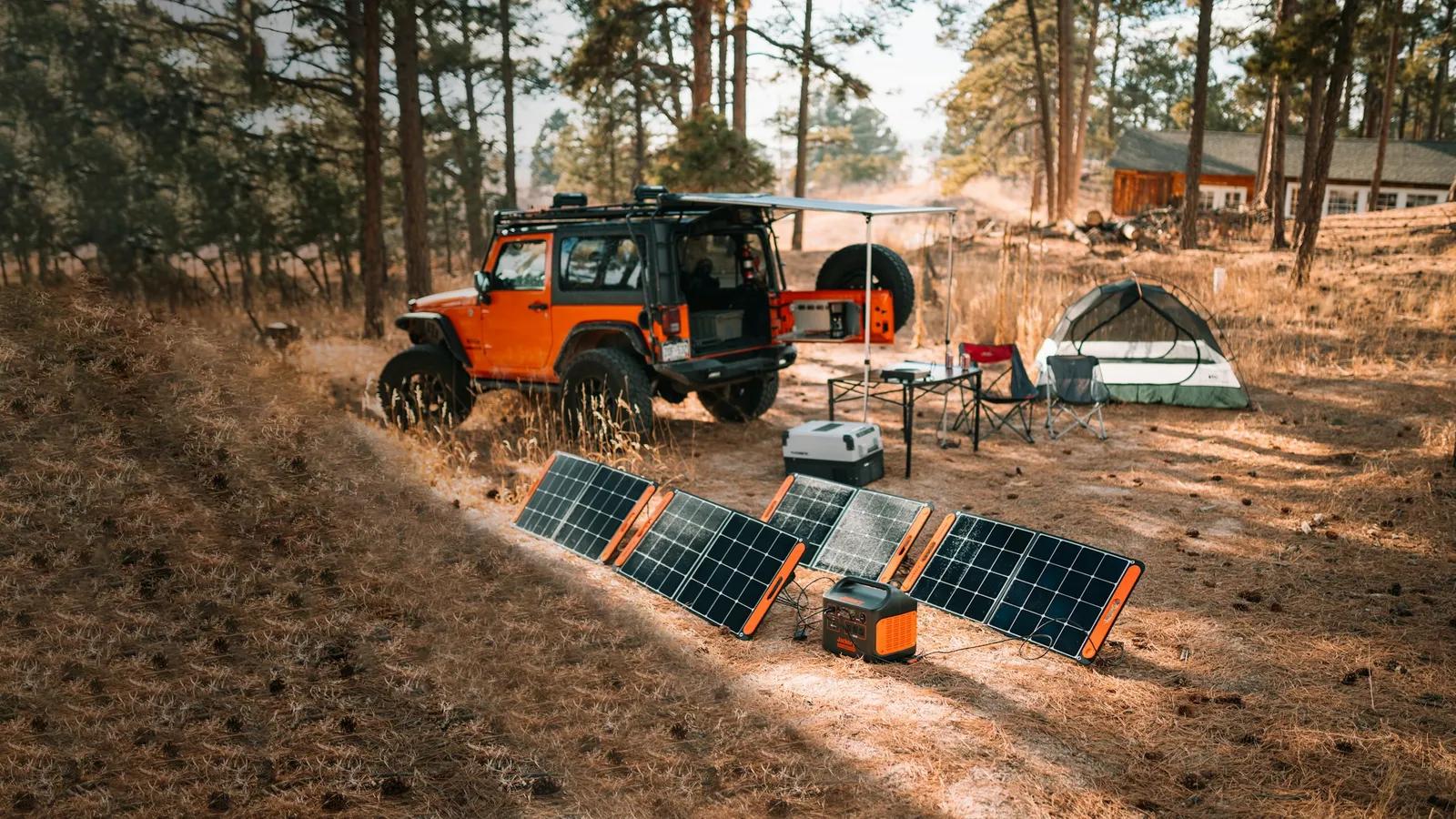
Jeep camp with a tent, solar panels and a portable power station at a pine forest campsite

At a glance

Our top picks

North American 220V usually means 240V split-phase, the circuit that powers a dryer, an electric range or a well pump. Very few portable solar generators can supply it, and the ones that do are big, heavy and expensive.

Two listings state 120V and 240V output, so they lead this short list. A third, 120V-class unit with a big 2600W rating is included as the nearest fit for readers who only want a larger solar kit.

RV Gear Lab field notes

The Campsite Fit Check

Start with the job
Jackery Solar Generator 5000 Plus and 2x200W Panels leads this shortlist for Whole-home 240V backup. Use that fit as a reference point, then compare the alternatives against your own space and workload.
Specs that separate the picks
The first details to compare are 5,040Wh, 7,200W, 120V/240V, 3,600Wh LiFePO4, 6,000W, 2,073.6Wh, 2,600W continuous. Confirm the exact model and included components before ordering.
Trade-off to plan for
Large and costly for casual camping

Before you buy

What Matters Before You Choose a 220v Solar Generator

Key buying criteria so you get the right fit the first time.

  1. 01

    What 220V and 240V mean

    In North America, 220V loads actually run on 240V split-phase, two 120V legs combined. A dryer, an electric range, a well pump and a large air conditioner use it. Check the listing for the words 120V/240V or split phase, not just a big wattage.

  2. 02

    Rated watts for 240V loads

    A 240V appliance still draws watts, so total output must exceed the load. A 5,000W well pump needs a station rated beyond that, plus surge. Look at the continuous AC figure and the surge figure.

  3. 03

    Capacity and runtime

    A 3,600Wh battery runs a 3,000W load for roughly an hour. Divide stored watt-hours by load watts. A 240V circuit for a well pump usually runs in short cycles.

  4. 04

    Transfer switch and wiring

    Feeding a house panel needs an approved transfer switch and often a licensed electrician. Never backfeed through a standard outlet. Look for a named transfer switch accessory on the listing.

  5. 05

    Solar input and panel kit

    Maximum solar input in watts sets the fastest refill. A kit with three 400W panels gives more daily energy than a single 100W panel. Match the panel voltage range to the station's input.

Our standards

Why You Can Trust RV Gear Lab

At RV Gear Lab, we compare products based on campsite fit, verified specifications, usability, setup requirements, weight, durability, and real-world trade-offs. We do not rank products purely on marketing claims or commission rates.

We have not personally tested every product listed. Where hands-on testing is not available, recommendations are based on verified manufacturer specifications, product documentation, use-case fit, and comparative research.

How we review camping gear →

Detailed reviews

The 3 best 220v solar generators, explained

01
Jackery Solar Generator 5000 Plus and 2x200W Panels
  • 5,040Wh, 7,200W, 120V/240V
  • 14,400W surge, 4,000W solar input
  • Expands to 60kWh
Check price on Amazon for Jackery Solar Generator 5000 Plus and 2x200W Panels (opens in a new tab)
Best for: Whole-home 240V backup

Our take

The big-house pick. It is overkill for a camper but ideal for a 240V well pump or dryer.

Why it made the shortlist

The Jackery Solar Generator 5000 Plus kit holds 5,040Wh and lists 7,200W rated output, with 14,400W of surge and both 120V and 240V support. Two 200W panels are included, solar input reaches 4,000W, and capacity expands up to 60kWh with a 60A Smart Transfer Switch for 12 circuits at 120V or 6 circuits at 240V.

It stores 1,400Wh more than the OSCAL PowerMax 6000 kit and outputs 1,200W more.

It suits households that want whole-home backup with both 120V and 240V. The capacity can run a house for days.

What works

  • Both 120V and 240V output
  • Largest capacity and output here
  • Expandable up to 60kWh
  • Pairs with a 60A transfer switch

Watch out for

  • Large and costly for casual camping
The catch
It is the priciest option, and its size is not for portable use.
02
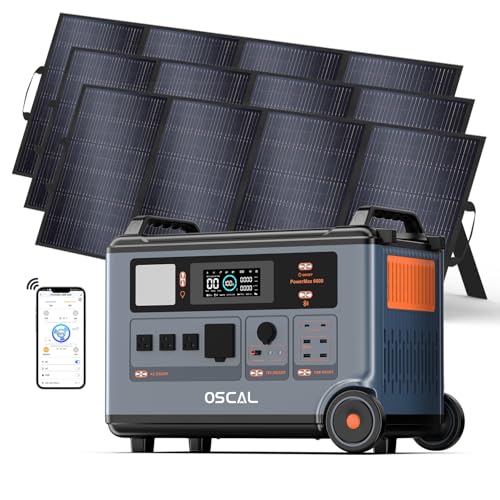
OSCAL PowerMax 6000 Solar Generator with 3×400W Solar Panel
  • 3,600Wh LiFePO4, 6,000W
  • 120V/240V split phase, 9,000W surge
  • 3 x 400W panels included
Check price on Amazon for OSCAL PowerMax 6000 Solar Generator with 3×400W Solar Panel (opens in a new tab)
Best for: A 240V kit with real solar

Our take

A more affordable way to 240V with panels in the box.

Why it made the shortlist

The OSCAL PowerMax 6000 kit includes three 400W panels and a 3,600Wh LiFePO4 station with 6,000W of split-phase 120V/240V output and 9,000W surge. It charges from 0 to 100 percent in 1.44 hours on 2,200W AC and 2,400W solar, and an EPS switchover takes 5 to 8ms.

Its three included 400W panels give it a 1,200W array, three times the 400W that comes with the Jackery 5000 Plus. The BLUETTI Elite 200 V2 offers less output and stores about 1,500Wh less.

It suits cabin and RV owners who want 240V from a roughly 3.6kWh battery with a meaningful panel array included. The EPS makes it a workable backup for critical loads.

What works

  • Panels included in the kit
  • Full recharge in 1.44 hours
  • 120V and 240V split-phase output
  • Quick 5 to 8ms EPS switchover

Watch out for

  • Less capacity than the Jackery
  • Heavy kit with large panels
The catch
Panel size makes it a fixed-site setup more than a camp one.
03
Best for: A 120V solar kit for RVs

Our take

A nearest-fit pick for those who do not need 240V after all. It does 120V well.

Why it made the shortlist

The BLUETTI Elite 200 V2 kit includes 2 x 200W panels and a 2,073.6Wh station with 2,600W of continuous AC output. It lists a standby draw of 10W, a CNAS-certified automotive-grade LiFePO4 battery rated over 6,000 cycles and a full recharge in 5.5 hours from 400W of panels.

It suits RV and cabin buyers who want a compact 120V solar kit and not 240V. The 6,000 cycle rating suits daily cycling.

What works

  • Panels included in the box
  • 10W standby draw

Watch out for

  • No 240V output listed
  • Smallest capacity of the three
The catch
The listing does not name 240V output, so heavy 240V loads are out.

Methodology

How We Built This Shortlist

Each pick was assessed across 4 criteria weighted for real-world use.

01

Voltage

Checked whether each listing states 120V/240V split-phase or only 120V.

02

Output and surge

Compared rated AC watts and surge watts.

03

Capacity and expansion

Looked at stated watt-hours and any expansion packs.

04

Solar

Noted included panels and maximum solar input.

Decision guide

Match a 220v Solar Generator to Your Camp Setup

By Appliance

Your situationRecommended pickWhy
Well pump or dryer on 240VJackery 5000 Plus7,200W and 240V
Cabin with a 240V mini-splitOSCAL PowerMax 60006,000W split phase
RV with only 120V loadsBLUETTI Elite 200 V22,600W, 120V class

By Budget

BudgetRecommended pick
$1490 to $1500BLUETTI Elite 200 V2
$3090 to $3100OSCAL PowerMax 6000
$3720 to $3730Jackery 5000 Plus

Whole-home vs cabin scale

Whole-home

The Jackery 5000 Plus offers 5,040Wh and a transfer switch option for multiple circuits.

Cabin scale

The OSCAL PowerMax 6000 and BLUETTI Elite 200 V2 cover fewer loads but cost less.

Most buyers needing 240V should default to the OSCAL PowerMax 6000 unless they want whole-home backup.

By Budget

Best fitRecommended pick
Largest spendJackery 5000 Plus
Mid spend, 240VOSCAL PowerMax 6000
Lowest spendBLUETTI Elite 200 V2

For Well Pump and Dryer Backup Specifically

Look for

A stated 120V/240V split-phase output

In this comparison

The Jackery 5000 Plus lists 6 circuits at 240V with its transfer switch, and the OSCAL PowerMax 6000 lists 120V/240V split phase.

When to Spend More

Spend more if

Spend more on the Jackery 5000 Plus if you want whole-home 240V and room to expand to 60kWh.

Save if

Save with the BLUETTI Elite 200 V2 if you only need 120V, or the OSCAL PowerMax 6000 for 240V on a smaller budget.

FAQ

Before You Bring One Home

Is 220V the same as 240V?

In North America, yes for practical purposes: appliances labeled 220V or 240V run on the 240V split-phase circuit. The Jackery 5000 Plus and OSCAL PowerMax 6000 both list 120V and 240V.

Can I plug a 240V dryer into the station?

Only with the right outlet type and a matching adapter or transfer inlet. Ask the maker about the correct connection and have an electrician check the wiring.

Is a 240V solar generator worth it over a 120V one?

Only if you own a 240V appliance. Otherwise a 120V kit like the BLUETTI Elite 200 V2 is lighter and cheaper.

How do I connect panels?

Plug them into the solar input with the right cable. Stay inside the listed voltage and watt limits.

How do I store the system?

Store at partial charge in a cool dry place. Fold panels flat and keep them clean.

Bottom line

The short version

Browse more 220v solar generators on Amazon →
Danny Walker, Camping Editor at RV Gear Lab

About the author

Danny Walker

Camping Editor at RV Gear Lab

Danny covers camping gear, campsite setup, outdoor power, sleep systems and practical camping advice, with a focus on helping campers make better gear decisions.

More from Danny →Editorial standards

Keep reading

Related guides