

We research everything we recommend. When you buy through our links, we may earn a commission. Learn more

Buying guide · 10 min read · Updated October 2, 2026

3 Best 250w Foldable Solar Panels in 2026: A Practical Camping Guide

Best 250W foldable solar panels compared on form, voltage and shade handling, with a rigid 250W panel and a 400W step-up for permanent setups.

Danny WalkerBy Danny WalkerCamping Editor at RV Gear Lab3 products comparedSpec-sheet researched
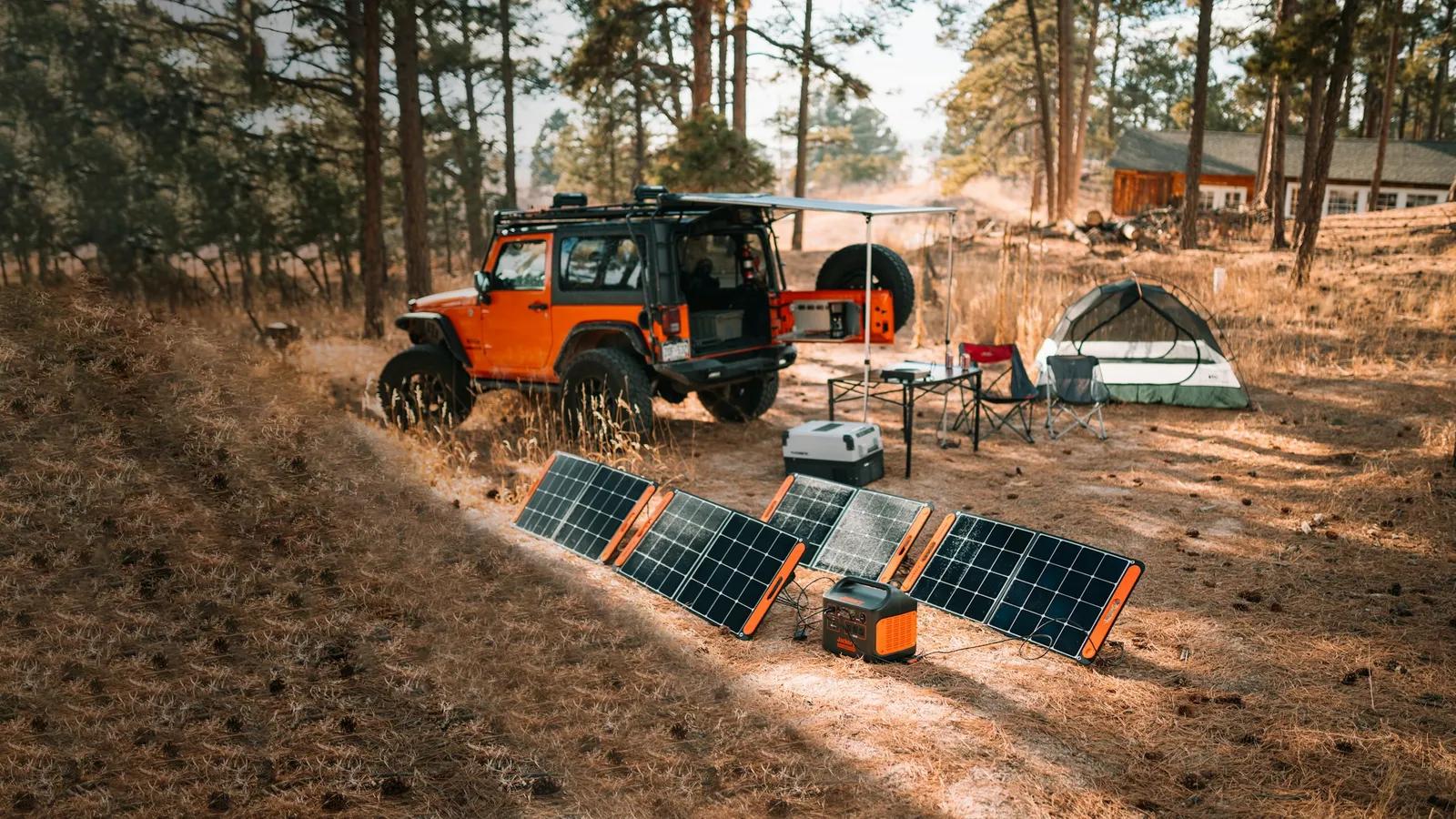
Jeep camp with a tent, solar panels and a portable power station at a pine forest campsite

At a glance

Our top picks

Only one listing offers a true 250W foldable format, a solar blanket that packs into a bag. To give buyers more than one path, this guide adds a rigid 250W panel for fixed installs and a 400W foldable for bigger stations, and says plainly where each one fits.

Three options were compared on stated wattage, form factor, voltage, shade handling and weather rating. Few listings target this exact size, so treat the order as a guide to your camping style rather than a long shortlist.

RV Gear Lab field notes

The Campsite Fit Check

Start with the job
ZOUPW 250W Portable Solar Panel for Power Station leads this shortlist for Foldable 250W for car camping. Use that fit as a reference point, then compare the alternatives against your own space and workload.
Specs that separate the picks
The first details to compare are 250W N-type, 25.6%, 400W, 36V foldable, 250W N-type, 25% efficiency. Confirm the exact model and included components before ordering.
Trade-off to plan for
Needs a flat open area to unroll

Before you buy

What Matters Before You Choose a 250w Foldable Solar Panel

Key buying criteria so you get the right fit the first time.

  1. 01

    Form factor sets the use

    A blanket or foldable rides in a car and sets up on the ground, while a rigid glass panel mounts on a roof. Pick based on whether the array moves or stays. Check the listing for folded size and whether it ships with mounting hardware.

  2. 02

    Partial shade behavior

    Shade across even one cell can pull down a whole panel, because cells are wired in series. Panels with independent zones and bypass diodes keep the lit zones producing. Look for zone counts or bypass diodes named on the listing.

  3. 03

    Voltage must fit the station

    A 36V or 40V panel can exceed the solar input limit of some portable stations. Read the maximum input voltage in your station manual and compare it with the panel's open-circuit voltage. A mismatch can damage the station.

  4. 04

    Real output versus rating

    A 250W panel seldom produces 250W, because heat and sun angle usually hold it to 60 to 80 percent. Rear-side gain on a bifacial panel adds only when light reaches the back. Plan around real watts, not the sticker.

  5. 05

    Weight, size and setup

    A 250W blanket weighs around 12 lbs yet unrolls to over four feet on each side, so check your camp space. Look at stakes, carabiners and straps in the box. Folded and open dimensions are on the listing.

Our standards

Why You Can Trust RV Gear Lab

At RV Gear Lab, we compare products based on campsite fit, verified specifications, usability, setup requirements, weight, durability, and real-world trade-offs. We do not rank products purely on marketing claims or commission rates.

We have not personally tested every product listed. Where hands-on testing is not available, recommendations are based on verified manufacturer specifications, product documentation, use-case fit, and comparative research.

How we review camping gear →

Detailed reviews

The 3 best 250w foldable solar panels, explained

01
ZOUPW 250W Portable Solar Panel for Power Station
  • 250W N-type, 25.6%
  • 3-zone partial-shade design
  • 12.3 lb, shoulder straps
Check price on Amazon for ZOUPW 250W Portable Solar Panel for Power Station (opens in a new tab)
Best for: Foldable 250W for car camping

Our take

The only true 250W foldable in the list, with shade-tolerant zones.

Why it made the shortlist

The ZOUPW 250W is a solar blanket rated 250W with N-type cells at 25.6 percent efficiency. It unfolds to 51.4 by 53.8 by 1.2 inches, packs to 16.6 by 17.7 by 3.1 inches and weighs 12.3 lb.

Its three independently wired zones with bypass diodes keep the unshaded sections producing when part of the blanket is covered. Against the CTOLITY it packs into a bag with shoulder straps, and compared with the Renogy rigid panel it moves with you.

It suits campers who want a true 250W format that carries like a pack. Four corner loops with stakes, carabiners and hook-and-loop joining give several ways to set it up.

What works

  • Three zones help in partial shade
  • Packs small with carry straps
  • IP67-rated panel and tough fabric
  • Stakes and carabiners included

Watch out for

  • Needs a flat open area to unroll
  • Larger sibling costs about twice as much
The catch
A big blanket needs open ground, and a 500W sibling exists if you want more.
02
Best for: Faster charging for larger stations

Our take

A 400W foldable for campers who want more watts than the 250W size.

Why it made the shortlist

The CTOLITY is a 400W foldable panel rated 36V with 23.4 percent monocrystalline cells and ETFE lamination. It includes MC4 connectors, DC, XT60 and Anderson cables, QC3.0 USB outputs and adjustable kickstands.

It delivers 150 watts more than the ZOUPW 250W Blanket at a lower price, and it adds USB output. Compared with the Renogy, it folds to carry while the Renogy stays fixed.

What works

  • More watts than a 250W panel
  • Kickstands for tilting
  • QC3.0 USB outputs
  • Multiple cable types included

Watch out for

  • Higher voltage needs a compatible station
  • Weight is not stated on the listing
The catch
At 36V it is not for every station's input range.
03
Renogy Bifacial Solar Panel 250W N-Type
  • 250W N-type, 25% efficiency
  • Bifacial, 80% bifaciality
  • IP68, tempered glass
Check price on Amazon for Renogy Bifacial Solar Panel 250W N-Type (opens in a new tab)
Best for: Permanent 250W mount

Our take

A durable rigid 250W panel for fixed installs, not for carrying.

Why it made the shortlist

The Renogy 250W is a rigid panel with 16BB N-type cells at 25 percent efficiency and an 80 percent bifaciality factor. It lists a temperature coefficient of minus 0.29 percent per degree C, IP68 protection, low-iron tempered glass and a corrosion-resistant aluminum frame.

It is the choice for a permanent mount where durability and rear-side gain matter more than carry.

It suits van and trailer installs, off-grid cabins and fixed ground mounts with a charge controller. Low temperature loss helps in hot climates.

What works

  • Rear-side gain adds output
  • Low temperature coefficient
  • IP68 protection stated
  • Glass and aluminum frame last

Watch out for

  • Rigid, not foldable
  • Needs a controller and mounting
The catch
It does not fold, so it suits a fixed mount rather than a moving camp.

Methodology

How We Built This Shortlist

Each pick was assessed across 5 criteria weighted for real-world use.

01

True 250W format

Listings were checked for a stated 250W rating in a foldable or portable form.

02

Form factor

Blanket, foldable and rigid designs were separated and labeled.

03

Shade handling

Zone wiring and bypass diodes were noted.

04

Voltage

Panel voltage was compared with typical station inputs.

05

Weather rating

IP ratings and surface materials were compared.

Decision guide

Match a 250w Foldable Solar Panel to Your Camp Setup

By Camp Style

Your situationRecommended pickWhy
Car camp, carry in a bagZOUPW 250W BlanketPacks to 16.6 x 17.7 in with straps.
Bigger station, accepts 36VCTOLITY 400W FoldableMore watts with USB output.
Permanent roof or ground mountRenogy 250W BifacialRigid glass, IP68, rear-side gain.

By Budget

BudgetRecommended pick
$230 to $240Renogy 250W Bifacial
$260 to $270CTOLITY 400W Foldable
$290 to $300ZOUPW 250W Blanket

Foldable vs Rigid

Foldable

A foldable or blanket packs away and goes where the camp goes, at the price of a lower rating for abuse. The ZOUPW 250W Blanket and CTOLITY 400W Foldable work this way.

Rigid

A glass panel stays mounted and lasts for years, with higher durability ratings. The Renogy 250W Bifacial is the only rigid pick.

Most campers should start with the ZOUPW 250W Blanket and only go rigid for a permanent install.

By Station Size

StationRecommended pick
Small to mid stationZOUPW 250W Blanket
Large station with high inputCTOLITY 400W Foldable
Fixed battery bankRenogy 250W Bifacial

Partial Shade Under Trees Specifically

Look for

Zone-wired panels with bypass diodes, and a form factor you can reposition through the day.

In this comparison

The ZOUPW 250W Blanket lists three independent zones, which helps when branches shade part of it.

When to Spend More

Spend more if

Spend more on the CTOLITY 400W Foldable if your station accepts 36V and you want faster charging, or on the Renogy 250W Bifacial for a permanent install.

Save if

Save with the ZOUPW 250W Blanket if a single carry-in 250W panel covers your weekend loads.

FAQ

Before You Bring One Home

Is there a true 250W foldable panel?

Yes, the ZOUPW 250W Blanket is one. Listings at this exact size are scarce, so many buyers look at 200W or 400W options instead.

What is the biggest mistake with 250W panels?

Ignoring the voltage. A 36V CTOLITY 400W Foldable will not suit every station. Match the panel voltage to the station before buying.

Is the 400W foldable worth it over the 250W?

If your station accepts the voltage and watts, yes, since it charges faster. For a small station the ZOUPW 250W Blanket is lighter and easier to place.

How do I set up a solar blanket?

Lay it flat in open sun, stake the corner loops and keep the cable clear of foot traffic. Tilt it toward the sun if possible. Connect to the station before turning the station on.

Can a rigid panel be used portably?

It can sit on the ground, though it is heavy and fragile on a bumpy trip. A fixed panel such as the Renogy 250W Bifacial is better bolted to a roof.

Bottom line

The short version

Browse more 250w foldable solar panels on Amazon →
Danny Walker, Camping Editor at RV Gear Lab

About the author

Danny Walker

Camping Editor at RV Gear Lab

Danny covers camping gear, campsite setup, outdoor power, sleep systems and practical camping advice, with a focus on helping campers make better gear decisions.

More from Danny →Editorial standards

Keep reading

Related guides