

We research everything we recommend. When you buy through our links, we may earn a commission. Learn more

Buying guide · 10 min read · Updated October 2, 2026

5 Best D Cell Battery Camping Fans in 2026: A Practical Camping Guide

Best D cell battery camping fans compared on cell count, runtime claims, noise, lantern features and USB backup for tents and power outages.

Danny WalkerBy Danny WalkerCamping Editor at RV Gear Lab5 products comparedSpec-sheet researched
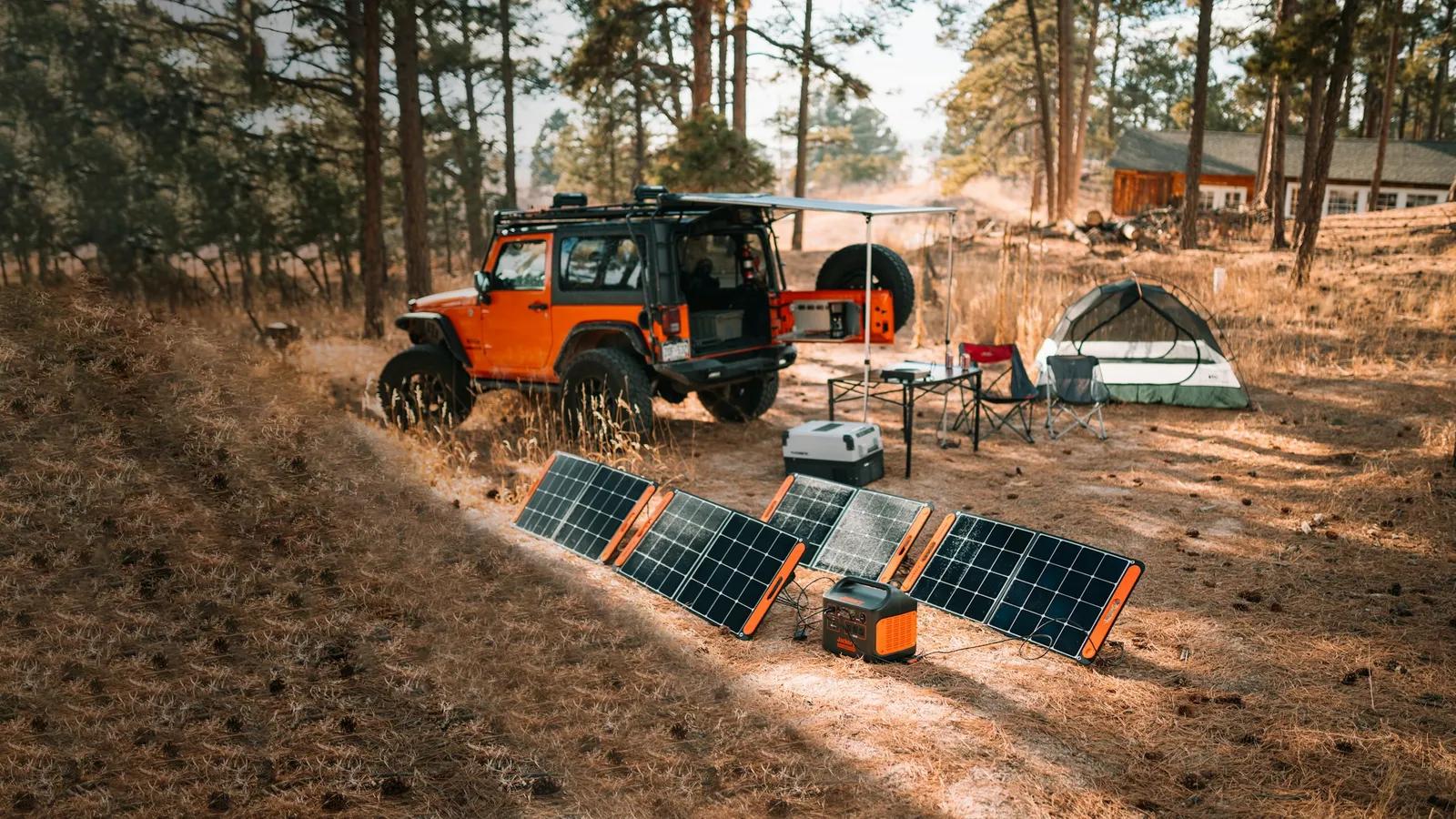
Jeep camp with a tent, solar panels and a portable power station at a pine forest campsite

At a glance

Our top picks

A D-cell fan has one big advantage over a rechargeable: you can buy fresh batteries almost anywhere and it runs when the power bank is dead. The trade-offs are cell count, how long the listing says a set lasts, and noise on low speed.

Five fans were compared on how many D cells they take, the runtime or current figures on the listing, noise, size, lantern or timer features and USB backup power. A rechargeable fan with a built-in pack was left out because it is not a D-cell design.

RV Gear Lab field notes

The Campsite Fit Check

Start with the job
Wavmill Battery Operated Fan [200H Max] leads this shortlist for Tent use with a remote. Use that fit as a reference point, then compare the alternatives against your own space and workload.
Specs that separate the picks
The first details to compare are 4 D cells, up to 200 hours, 4 D cells or USB, Six D cells, 8 inch fan. Confirm the exact model and included components before ordering.
Trade-off to plan for
Motor speed is lower than the XZK's

Before you buy

What Matters Before You Choose a D Cell Battery Camping Fan

Key buying criteria so you get the right fit the first time.

  1. 01

    Cell count and cost

    A fan on six D cells costs more per hour than one on four, and D cells are heavy. Alkaline D cells cost a few dollars each. Count cells and weight before you commit.

  2. 02

    Runtime claims

    Listings state runtime like '200 hours' as a maximum, usually at the lowest speed. A fan at 700 mA on high will drain a set of D cells in about a day of use. Use the current figures when they are given.

  3. 03

    Noise on low

    Fans quoted under 30 dB are near silent, and 50 dB is like a quiet conversation. A tent amplifies motor hum. Check the decibel figure on the listing.

  4. 04

    USB backup

    A fan with a USB option runs from a power bank when D cells run out. Look for a cable or adapter in the box. The adapter may be sold separately.

  5. 05

    Lantern and timers

    A lantern with low and high modes gives light and air from one device, and timers save batteries overnight. SOS modes add emergency use. Check the lantern's level count.

Our standards

Why You Can Trust RV Gear Lab

At RV Gear Lab, we compare products based on campsite fit, verified specifications, usability, setup requirements, weight, durability, and real-world trade-offs. We do not rank products purely on marketing claims or commission rates.

We have not personally tested every product listed. Where hands-on testing is not available, recommendations are based on verified manufacturer specifications, product documentation, use-case fit, and comparative research.

How we review camping gear →

Detailed reviews

The 5 best d cell battery camping fans, explained

01
Wavmill Battery Operated Fan [200H Max]
  • 4 D cells, up to 200 hours
  • 4 speeds, under 30 dB
  • Remote, timers, USB backup
Check price on Amazon for Wavmill Battery Operated Fan [200H Max] (opens in a new tab)
Best for: Tent use with a remote

Our take

A four-D-cell fan with a remote, timers and USB backup at the lowest price.

Why it made the shortlist

The Wavmill runs on four D cells for a stated 200 hours maximum, or from USB. It has four speeds at under 30 dB, three timers, two LED levels and a remote control, with an ABS body, a vertically adjustable head and non-slip pads.

Against the XZK, it adds a remote and costs less, while the XZK lists a faster 3950 r/min motor. Compared with the Gazeled, it has more speeds, a lantern and a quieter listing.

It suits campers who want to adjust speed and light without getting out of a sleeping bag. The remote handles timer, speed and light.

What works

  • Remote controls speed, timer and light
  • Runs on four D cells or USB
  • Under 30 dB on low

Watch out for

  • Motor speed is lower than the XZK's
  • Runtime depends on battery quality
The catch
The 200 hour figure is a maximum, and real runtime depends on speed.
02

Best Airflow · 2 of 5

Battery Operated Fan

Battery Operated Fan
  • 4 D cells or USB
  • 3950 r/min, 5.2 m/s, under 30 dB
  • 365-day service, 90-day replacement
Check price on Amazon for Battery Operated Fan (opens in a new tab)
Best for: Stronger airflow in a tent

Our take

A four-D-cell fan with a 3950 r/min motor and named support terms.

Why it made the shortlist

The XZK takes four D cells for up to 200 hours, or runs on USB power. It lists a 3950 r/min motor with 5.2 m/s wind speed, four speeds, three timers and two LED modes, with a 365-day service promise and a 90-day replacement guarantee.

Its listed motor is stronger than the Wavmill's 2950 r/min, and the support terms are named.

It suits campers who want the strongest airflow in a four-cell body. The vertically adjustable head directs air up or down.

What works

  • Faster motor than the Wavmill
  • Support terms are named
  • Four speeds and three timers
  • Runs below 30 dB

Watch out for

  • No remote control
The catch
Real runtime at high speed is shorter than the 200 hour maximum.
03

Best Lantern Fan · 3 of 5

Camping Fan with LED Lantern

Camping Fan with LED Lantern
  • Six D cells, 8 inch fan
  • Stepless speed, under 25 dB
  • 16 LED beads, SOS mode
Check price on Amazon for Camping Fan with LED Lantern (opens in a new tab)
Best for: Quiet tent fan with a lantern

Our take

The quietest D-cell fan here, with stepless speed and a built-in lantern.

Why it made the shortlist

The LEMOISTAR is an 8 inch fan on six D cells with 16 LED beads at three brightness levels and an SOS mode. It lists stepless speed control, a velocity of 26 ft/s, a brushless pure copper motor under 25 dB and a 180 degree adjustable angle.

Compared with the Shinebella, it is a few dollars cheaper with a similar lantern.

It suits campers who want one device for light and air in a tent. A handle and USB power add flexibility.

What works

  • Quietest listing at under 25 dB
  • Stepless speed control
  • Lantern with three brightness levels
  • Handle and 180 degree angle

Watch out for

  • Six D cells add weight and cost
  • Batteries are not included
The catch
Six D cells make it heavier and costlier to run than the four-cell fans.
04

Best Large Fan · 4 of 5

D Battery Powered Camping Fan

D Battery Powered Camping Fan
  • Six D cells, 8.5 inch fan
  • 4 timer modes, 180 degree rotation
  • Lantern, SOS, one-year warranty
Check price on Amazon for D Battery Powered Camping Fan (opens in a new tab)
Best for: Big fan for powered or unpowered sites

Our take

The largest D-cell fan here, with a lantern and a plug-in option.

Why it made the shortlist

The Shinebella is an 8.5 inch fan using six D cells or a plug-in adapter, with four timer modes, an LED lantern with three brightness settings and an SOS light. The listing gives 180 degree rotation, a handle and a one-year warranty.

It is the largest fan in the group and the priciest. Against the LEMOISTAR, it adds a plug-in adapter option and a stated one-year warranty.

It suits campers who want the biggest fan and the option to plug in at a powered site. The adapter is sold separately.

What works

  • Largest fan of the five
  • Plug-in adapter option
  • Four timer modes
  • One-year warranty

Watch out for

  • Priciest D-cell fan here
  • Adapter and batteries not included
The catch
Six D cells and a separate adapter add to the cost.
05

Best Compact · 5 of 5

Gazeled Battery Operated Fan

Gazeled Battery Operated Fan
  • Four D cells, 5 inch fan
  • 68 mA low, 700 mA high
  • 180 degree rotation, handle
Check price on Amazon for Gazeled Battery Operated Fan (opens in a new tab)
Best for: Compact backup fan

Our take

A compact four-cell fan with spelled-out current draw and a USB option.

Why it made the shortlist

The Gazeled is a 5 inch fan on four D cells with three speeds, a timer, 180 degree rotation and a handle. Its listing states current draw of 68 mA on low, 280 mA on the middle setting and 700 mA on high, and it can run on USB power from a power bank.

The current figures let you estimate battery life.

It suits campers who want a small backup fan for a sleeping bag or a power outage. USB power adds a second option.

What works

  • No charging needed
  • Runs by USB when needed
  • Current draw is spelled out
  • Timer and carry handle

Watch out for

  • 50 dB is louder than most rechargeables
  • Smaller airflow than the 8 inch fans
The catch
At 50 dB it is the loudest fan in the group.

Methodology

How We Built This Shortlist

Each pick was assessed across 5 criteria weighted for real-world use.

01

Cell count

Four-cell and six-cell designs were separated, since cells are the running cost.

02

Runtime claims

Listed runtime or current figures were compared.

03

Noise

Decibel claims were compared for sleeping.

04

Extras

Lanterns, timers, remotes and USB backup were counted.

05

Support

Named warranty or replacement terms were noted.

Decision guide

Match a D Cell Battery Camping Fan to Your Camp Setup

By Priority

Your situationRecommended pickWhy
Remote control and lowest priceWavmill D-Cell FanRemote, timers and USB at the lowest price.
Strongest airflowXZK D-Cell Fan3950 r/min motor.
Quiet with a lanternLEMOISTAR 8 Inch FanUnder 25 dB and 16 LEDs.
Biggest fanShinebella 8.5 Inch Fan8.5 inch blades.
Small backupGazeled 5 Inch FanSpelled-out current draw.

By Budget

BudgetRecommended pick
$10 to $30Wavmill D-Cell Fan or Gazeled 5 Inch Fan
$20 to $30LEMOISTAR 8 Inch Fan or XZK D-Cell Fan
$30 to $40Shinebella 8.5 Inch Fan

Four D Cells vs Six D Cells

Four cells

Four-cell fans are lighter and cheaper to run, with runtimes up to 200 hours on low. The Wavmill D-Cell Fan, XZK D-Cell Fan and Gazeled 5 Inch Fan take four.

Six cells

Six-cell fans are larger and have lanterns, at the cost of more batteries. The LEMOISTAR 8 Inch Fan and Shinebella 8.5 Inch Fan take six.

Most campers should start with the Wavmill D-Cell Fan.

By Noise

NoiseRecommended pick
Quietest at under 25 dBLEMOISTAR 8 Inch Fan
Under 30 dB with remoteWavmill D-Cell Fan
Under 30 dB, stronger motorXZK D-Cell Fan
Loudest, smallestGazeled 5 Inch Fan

Power Outages and Tent Backups

Look for

D cells that are easy to find, a USB backup, and a low-speed noise level you can sleep with.

In this comparison

The Wavmill D-Cell Fan and XZK D-Cell Fan both run on four D cells or USB, and the LEMOISTAR 8 Inch Fan lists under 25 dB.

When to Spend More

Spend more if

Spend more on the Shinebella 8.5 Inch Fan if you want the largest fan with a lantern and a plug-in option.

Save if

Save with the Wavmill D-Cell Fan, the cheapest and most featured four-cell fan.

FAQ

Before You Bring One Home

Are D-cell fans worth it over rechargeable fans?

They are for emergencies and campsites with no charging, since D cells are easy to buy. Rechargeable fans cost less to run but need power.

What is the biggest mistake with D-cell fans?

Believing the maximum runtime. A '200 hour' claim is for low speed, and high speed drains cells much faster.

Do I need six D cells?

Only for the larger fans with lanterns, like the LEMOISTAR 8 Inch Fan. Four-cell fans such as the XZK D-Cell Fan are lighter.

How do I load D cells?

Open the battery door, match the plus and minus marks and use fresh cells of the same brand. Close the door fully. Remove cells before long storage.

How do I maintain a battery fan?

Wipe the blades and grille, remove cells when not in use and keep it dry. Check the battery contacts for corrosion.

Bottom line

The short version

Browse more d cell battery camping fans on Amazon →
Danny Walker, Camping Editor at RV Gear Lab

About the author

Danny Walker

Camping Editor at RV Gear Lab

Danny covers camping gear, campsite setup, outdoor power, sleep systems and practical camping advice, with a focus on helping campers make better gear decisions.

More from Danny →Editorial standards

Keep reading

Related guides