

We research everything we recommend. When you buy through our links, we may earn a commission. Learn more

Buying guide · 10 min read · Updated October 2, 2026

2 Best Foldable Solar Panels For Backpacking in 2026: A Practical Camping Guide

Two foldable USB solar panels sized for backpacking, a 28W and a 40W, compared on stated weight, ports, weather rating and how they carry on a pack.

Danny WalkerBy Danny WalkerCamping Editor at RV Gear Lab2 products comparedSpec-sheet researched
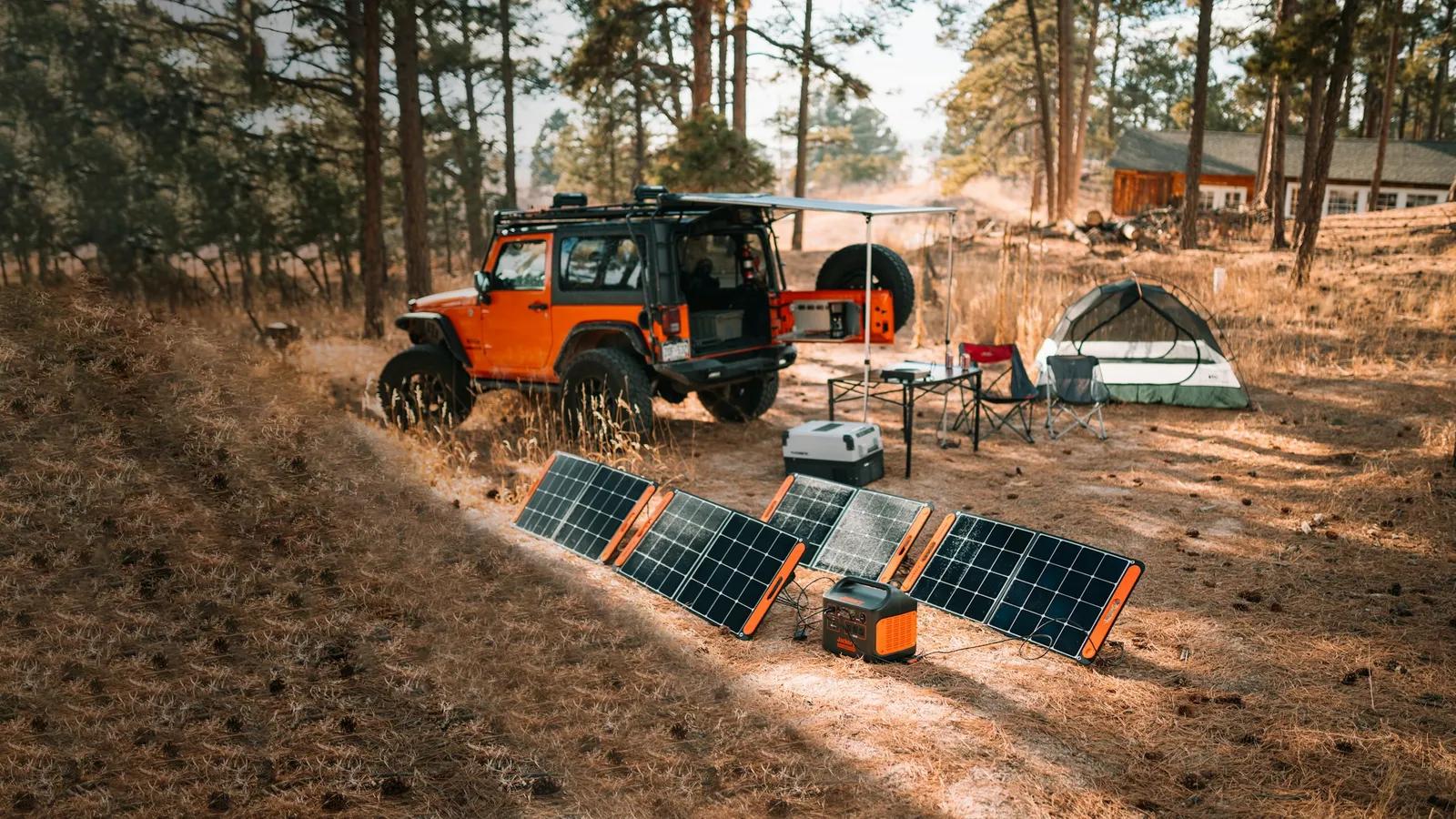
Jeep camp with a tent, solar panels and a portable power station at a pine forest campsite

At a glance

Our top picks

Backpackers need a panel that weighs a pound or two, not the 10 pound suitcase kits that fit car camping. Only two listings here fit the pack-sized USB class, so this guide compares a 28W panel with a stated weight against a 40W panel with a higher water rating.

Both were compared on stated wattage, ports and per-port output, weight and folded size, water rating and the carry features each listing names. Panels this small charge phones, headlamps and power banks, not power stations.

RV Gear Lab field notes

The Campsite Fit Check

Start with the job
BigBlue 28W High-Efficiency Solar Panel Charger with Dual USB-C and USB-A leads this shortlist for Sharing one panel across several devices. Use that fit as a reference point, then compare the alternatives against your own space and workload.
Specs that separate the picks
The first details to compare are 28W, 25.4% efficiency, 40W, 24% cells, IP67. Confirm the exact model and included components before ordering.
Trade-off to plan for
IP44 handles splashes only

Before you buy

What Matters Before You Choose a Foldable Solar Panel For Backpacking

Key buying criteria so you get the right fit the first time.

  1. 01

    What backpack panels can do

    A 28W to 40W panel in full sun can top up a phone in a couple of hours and a small power bank over a day. It cannot run a laptop reliably. Look for the per-port output on the listing.

  2. 02

    Weight versus watts

    Roughly 1.5 pounds buys 28W, and more watts add ounces. Add up what you actually charge. Look for a printed weight.

  3. 03

    Charge a bank, not a phone

    Plugging a phone directly into a panel works, but clouds interrupt charging. Charging a power bank in the sun and the phone later from the bank is steadier. Check for pass-through or smart chip wording.

  4. 04

    Water rating

    IP44 handles splashes, and IP67 handles heavy rain and brief dunks. A panel hanging on a pack in rain needs the higher rating. Look for the IP number.

  5. 05

    Hanging and angling

    Panels charge best facing the sun at about 45 degrees. A pack-mounted panel changes angle as you walk. Look for loops, carabiners or grommets.

Our standards

Why You Can Trust RV Gear Lab

At RV Gear Lab, we compare products based on campsite fit, verified specifications, usability, setup requirements, weight, durability, and real-world trade-offs. We do not rank products purely on marketing claims or commission rates.

We have not personally tested every product listed. Where hands-on testing is not available, recommendations are based on verified manufacturer specifications, product documentation, use-case fit, and comparative research.

How we review camping gear →

Detailed reviews

The 2 best foldable solar panels for backpacking, explained

01
Best for: Sharing one panel across several devices

Our take

A small, light panel with stated weight and three ports.

Why it made the shortlist

The BigBlue 28W has two USB-C ports and one USB-A port at 5V and 3A each, with 4.8A combined, and folds to 11 by 6 by 1.4 inches. It weighs 1.5 pounds, lists 25.4 percent cell efficiency with a shadow-free surface and carries an IP44 rating.

It suits hikers and small groups who share one panel across several phones and headlamps. The size fits in a pack's lid pocket.

What works

  • Stated 1.5 pound weight
  • Three ports charge at once
  • Stated folded size
  • Shadow-free cell surface

Watch out for

  • IP44 handles splashes only
  • Priciest panel per watt
The catch
IP44 means keep it out of heavy rain.
02
FlexSolar 40W Foldable Solar Panel Charger
  • 40W, 24% cells, IP67
  • USB-A QC3.0 and USB-C PD2.0, 18W each
  • DC output, IC chip, 2 carabiners
Check price on Amazon for FlexSolar 40W Foldable Solar Panel Charger (opens in a new tab)
Best for: Rainy trips with two devices

Our take

A 40W panel with fast ports and an IP67 rating.

Why it made the shortlist

The FlexSolar 40W has 24 percent monocrystalline cells, two fast outputs (USB-A with QC3.0 and USB-C with PD2.0) rated 18W apiece, plus a 19V DC output. A smart IC chip detects each device, an LED shows charging status, and the panel carries an IP67 rating with 2 carabiners for hanging it from a pack.

It states per-port wattage clearly and has the higher water rating. Compared with the BigBlue, it adds 12 watts and a DC output.

It suits backpackers who charge a phone and a power bank together and expect rain. The carabiners let the panel dry on a pack while walking.

What works

  • Two fast ports at 18W each
  • Smart chip detects devices
  • Carabiners included

Watch out for

  • No weight is printed
  • No folded size is printed
The catch
Weight and folded size are not printed, so judge its carry feel by the images.

Methodology

How We Built This Shortlist

Each pick was assessed across 5 criteria weighted for real-world use.

01

Stated weight

Printed pounds and folded size were compared, since both decide pack space.

02

Wattage and ports

Panel watts and per-port output were compared.

03

Weather rating

IP44 and IP67 ratings were compared.

04

Carry features

Carabiners and fold design were noted.

05

Use case

Panels were judged for phones, headlamps and power banks only.

Decision guide

Match a Foldable Solar Panel For Backpacking to Your Camp Setup

By Trip Style

Your situationRecommended pickWhy
Weight matters, shared chargingBigBlue 28W1.5 pounds and three ports.
Rain and two fast portsFlexSolar 40WIP67 and 18W per port.
Want a stated sizeBigBlue 28W11 by 6 by 1.4 inches.
Want more wattsFlexSolar 40W40 watts.

By Budget

BudgetRecommended pick
$60 to $70FlexSolar 40W
$70 to $80BigBlue 28W

28W vs 40W

28W

Light and compact with a stated weight, charging phones and small gear. The BigBlue 28W is in this group.

40W

More watts and a higher water rating, at an unstated weight. The FlexSolar 40W is in this group.

Pick the BigBlue 28W for weight planning and the FlexSolar 40W for wet trips.

By Budget

PickRecommended pick
Lower price per panelFlexSolar 40W
Higher price, stated weightBigBlue 28W

Multi-Day Hikes With a Power Bank

Look for

A pack-sized panel with a printed weight, USB ports and a rating that matches the weather.

In this comparison

The BigBlue 28W prints weight and folded size, and the FlexSolar 40W adds IP67 and carabiners.

When to Spend More

Spend more if

Spend more on the BigBlue 28W for stated weight and size.

Save if

Save with the FlexSolar 40W for more watts at a lower price.

FAQ

Before You Bring One Home

Are these panels good enough for backpacking?

For phones, headlamps and power banks, yes. Both the BigBlue 28W and FlexSolar 40W are pack-sized. They do not run laptops.

What is the biggest mistake with backpacking panels?

Charging a phone directly in changing light. Cloud interruptions stop and restart charging. Charge a power bank in the sun instead.

Is the FlexSolar worth it over the BigBlue?

For rainy trips, yes, because it lists IP67. For weight planning, the BigBlue 28W states its weight.

How do I use a panel on the trail?

Clip it to the pack facing the sun, plug in a power bank and check the charging light. Angle it toward the sun when you stop.

How do I care for a folding panel?

Fold along the seams, keep it dry and out of heat. Wipe off dirt that shades the cells.

Bottom line

The short version

Browse more foldable solar panels for backpacking on Amazon →
Danny Walker, Camping Editor at RV Gear Lab

About the author

Danny Walker

Camping Editor at RV Gear Lab

Danny covers camping gear, campsite setup, outdoor power, sleep systems and practical camping advice, with a focus on helping campers make better gear decisions.

More from Danny →Editorial standards

Keep reading

Related guides