

We research everything we recommend. When you buy through our links, we may earn a commission. Learn more

Buying guide · 10 min read · Updated October 2, 2026

5 Best Portable Solar Panels For Caravans in 2026: A Practical Camping Guide

Best portable solar panels for caravans compared on wattage, 12V battery kits, weight and connectors for towing campers that run off-grid.

Danny WalkerBy Danny WalkerCamping Editor at RV Gear Lab5 products comparedSpec-sheet researched
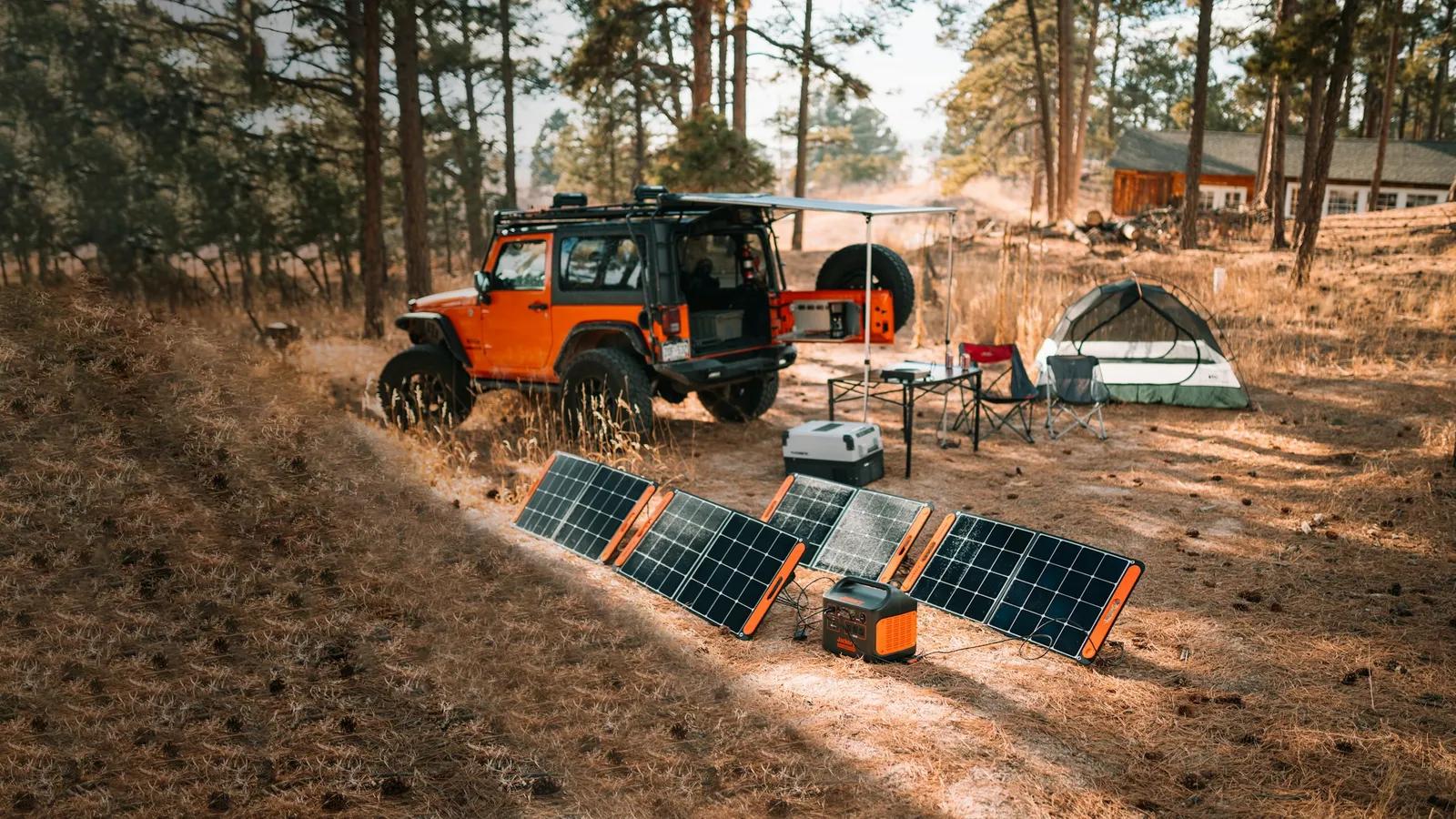
Jeep camp with a tent, solar panels and a portable power station at a pine forest campsite

At a glance

Our top picks

A caravan lives on a 12V leisure battery, so the useful solar panel is one that charges that battery or a power station when you park without a hookup. A foldable panel you set on the grass beside the van suits that job better than roof glass for many owners.

Five panels made the list, from a 200W panel for power stations to small 12V maintainers that keep the leisure battery from sagging between trips. They were sorted by listed wattage, controller or regulator, weight and connector set.

RV Gear Lab field notes

The Campsite Fit Check

Start with the job
200W Portable Solar Panel for Power Station Generator leads this shortlist for Power-station recharging at the van. Use that fit as a reference point, then compare the alternatives against your own space and workload.
Specs that separate the picks
The first details to compare are 200W, up to 23.5% cells, 100W, smart PWM controller, 50W monocrystalline 12V. Confirm the exact model and included components before ordering.
Trade-off to plan for
No built-in battery controller

Before you buy

What Matters Before You Choose a Portable Solar Panel For Caravans

Key buying criteria so you get the right fit the first time.

  1. 01

    Leisure battery versus power station

    A leisure battery needs a charge controller between the panel and the battery, while a power station has one built in. Plugging a bare panel into a battery risks overcharge. Check whether you are charging a battery directly or a station, then buy the matching panel.

  2. 02

    Panel watts per day

    A 100W panel in good sun yields roughly 300 to 500Wh across a day, and a 20W panel far less. Compare that with how much your fridge, lights and chargers draw. Match panel watts to your daily use, not the sticker alone.

  3. 03

    Connector type

    Anderson plugs are common on caravan leads, while power stations use XT60, DC7909 and DC5521. A panel with the wrong plug needs an adapter. Check the plug list in the box contents.

  4. 04

    Foldable versus fixed

    A foldable panel stores in a locker and sits where the sun is, which suits shady pitches. A rigid fixed panel is permanent and always charging. Pick by how you park.

  5. 05

    Weather and handling

    Wind can flip a panel and rain can sit on it. Look for a stated waterproof rating and kickstands. A heavy panel needs a tie-down in wind.

Our standards

Why You Can Trust RV Gear Lab

At RV Gear Lab, we compare products based on campsite fit, verified specifications, usability, setup requirements, weight, durability, and real-world trade-offs. We do not rank products purely on marketing claims or commission rates.

We have not personally tested every product listed. Where hands-on testing is not available, recommendations are based on verified manufacturer specifications, product documentation, use-case fit, and comparative research.

How we review camping gear →

Detailed reviews

The 5 best portable solar panels for caravans, explained

01
200W Portable Solar Panel for Power Station Generator
  • 200W, up to 23.5% cells
  • 10.14 lbs, 1.77 inch fold
  • Four-connector set with Anderson
Check price on Amazon for 200W Portable Solar Panel for Power Station Generator (opens in a new tab)
Best for: Power-station recharging at the van

Our take

The caravan pick for anyone feeding a power station each day.

Why it made the shortlist

The GRECELL UB200 is a 200W monocrystalline panel with cells listed at up to 23.5% and a flexible ETFE surface. It weighs 10.14 lbs, folds to 21.46 by 22.95 by 1.77 inches and carries DC7909/8, XT60, Aviation and Anderson connectors.

The Anderson plug suits many caravan power-station leads.

It fits caravaners who run a power station for lights, a fridge and chargers beside the van. A single panel gives a daily recharge for stations in the 500Wh class.

What works

  • Most watts in this list
  • Lightweight for a 200W panel
  • Anderson and XT60 connectors
  • Auto-reconnect after cloud interruption

Watch out for

  • No built-in battery controller
  • Large folded footprint for small lockers
The catch
It outputs to a power station, so a leisure battery still needs a separate charge controller.
02
Best for: Leisure battery top-ups

Our take

The easiest way to put real solar into a caravan battery without extra gear.

Why it made the shortlist

The DOKIO 100W suitcase panel clips straight onto a 12V battery with alligator leads and a smart PWM controller. It lists a 9.8 ft cable, built-in 5V 2A USB ports and a 25-year transferable output warranty.

Compared with the Buachois 50W it doubles the panel size and adds a rubber handle.

It suits caravaners who want to top up a leisure battery on a campsite with no mains. The listing names vented, AGM and gel battery types.

What works

  • Clips straight onto the 12V battery
  • Long cable keeps battery in shade
  • USB ports charge phones
  • 25-year output warranty listed

Watch out for

  • Reverse polarity must be checked on clipping
  • PWM controller is less efficient
The catch
Clip polarity matters, so match red to positive carefully.
03
Best for: Small battery and phone charging

Our take

A versatile 50W panel for small caravan battery jobs and USB charging.

Why it made the shortlist

The Buachois 50W is a monocrystalline 12V kit with two USB ports, a Type-C port and a DC port, plus an integrated voltage regulator. It uses ABS construction and has pre-drilled holes on the back so it can be mounted on a caravan, RV or boat.

It sits between the small maintainers and the DOKIO, with more outputs than either. The mix of USB, Type-C and DC lets one panel run chargers while it tops up a battery.

It suits caravaners who want a fixed or semi-fixed panel for a small leisure battery and phones. The listing says it can charge a vehicle battery while powering other devices.

What works

  • Four output types on one panel
  • Voltage regulator keeps output stable
  • Pre-drilled holes for mounting

Watch out for

  • Weight and size are not listed
The catch
No controller amp figure is listed, so size the battery accordingly.
04
Best for: Low-cost battery top-up

Our take

A cheap panel for small caravan batteries and USB gadgets.

Why it made the shortlist

The Hosrivae 30W is a 12V monocrystalline kit with a USB charger, listed for caravans, boats, trucks and campers. It lists weather resistance for wind, snow and extreme temperatures and an internal diode that blocks current leakage at night.

It is the lowest priced panel here, at less than half the Buachois. The diode is a named protection that the cheaper maintainers do not list.

It suits caravan owners who want a cheap panel to keep a small battery fed. The listing names portable and lightweight use.

What works

  • Diode stops night-time current leakage
  • Weather-resistant build named
  • Light enough to carry

Watch out for

  • Controller and port details are thin
  • 30W is limited for bigger batteries
The catch
The listing gives few specs, so keep expectations modest.
05
Hoysicy 12V Solar Battery Charger Maintainer 20W Solar Panel Kit
  • 20W, 10A PWM controller
  • Aluminum frame, tempered glass
  • Cables with clips and O-rings
Check price on Amazon for Hoysicy 12V Solar Battery Charger Maintainer 20W Solar Panel Kit (opens in a new tab)
Best for: Winter battery maintenance

Our take

A set-and-forget maintainer for a stored caravan.

Why it made the shortlist

The Hoysicy 20W kit is a monocrystalline panel with a 10A PWM controller and two 6.5 ft cables with alligator clips and O-ring terminals. It lists an anodized aluminum frame, tempered glass and under-voltage, over-voltage, short circuit and anti-reverse protections.

Against the DOKIO it trades output for a rigid frame with corner protectors and pre-drilled holes.

It suits caravan owners who store the van over winter and want the leisure battery to stay topped up. It is a 12-month warranty product.

What works

  • Controller with named protections included
  • Rigid frame with corner protectors
  • Cables and clips in the box
  • 12-month warranty listed

Watch out for

  • 20W is only a trickle
  • Fixed panel, not foldable
The catch
Twenty watts keeps a battery up but will not recover a deeply flat one.

Methodology

How We Built This Shortlist

Each pick was assessed across 5 criteria weighted for real-world use.

01

Wattage

Listed panel watts from 20W to 200W were matched to caravan jobs.

02

Battery or station

Each panel was sorted by whether it feeds a 12V battery or a power station.

03

Controller

Named controller or regulator and amp ratings were compared.

04

Weight and fold

Listed weights and folded sizes were weighed for van storage.

05

Connectors

Anderson, XT60, clips and DC plugs were compared for caravan compatibility.

Decision guide

Match a Portable Solar Panel For Caravans to Your Camp Setup

By Caravan Setup

Your situationRecommended pickWhy
Power station beside the vanGRECELL 200W PanelFour connectors including Anderson.
Clip onto the leisure batteryDOKIO 100W SuitcaseAlligator clips and a PWM controller.
Small battery plus USB chargingBuachois 50W KitDC, Type-C and USB outputs.
Cheapest panel to tryHosrivae 30W KitLowest price with a diode.
Winter storage maintenanceHoysicy 20W Maintainer10A controller included.

By Budget

BudgetRecommended pick
$10 to $30Hosrivae 30W Kit or Hoysicy 20W Maintainer
$30 to $90Buachois 50W Kit or DOKIO 100W Suitcase
$180 to $190GRECELL 200W Panel

Power Station vs Battery Direct

Power station

The GRECELL 200W Panel feeds a power station with its own controller, which suits caravaners who rely on a portable battery.

Battery direct

The DOKIO 100W Suitcase, Buachois 50W Kit and Hoysicy 20W Maintainer put solar straight onto a 12V battery.

Most caravanners with a leisure battery will find the DOKIO 100W Suitcase the simpler start.

By Budget

BudgetRecommended pick
Under $20Hosrivae 30W Kit
Around $30Hoysicy 20W Maintainer
Around $33 for 50WBuachois 50W Kit
Around $85DOKIO 100W Suitcase
Around $190GRECELL 200W Panel

Winter Storage Specifically

Look for

A panel with a controller and a steady trickle rating.

In this comparison

The Hoysicy 20W Maintainer lists a 10A PWM controller with full protections, and it includes alligator clips for the battery.

When to Spend More

Spend more if

Spend more on the GRECELL 200W Panel if you run a power station for a fridge and lights, as 200W gives a day-long recharge.

Save if

Save with the Hosrivae 30W Kit if you only need to keep a small leisure battery from going flat.

FAQ

Before You Bring One Home

Can a portable panel replace roof solar on a caravan?

For light use, yes. A foldable panel like the GRECELL 200W Panel can recharge a power station beside the van. Roof glass is permanent and charges as you travel.

What mistake do caravan owners make?

Connecting a panel directly to a battery with no controller. This can overcharge the battery. Use a kit with a controller, like the DOKIO 100W Suitcase.

Is 200W worth it over 100W?

If you run a fridge or a laptop daily, yes. If you only top up lighting and a phone, 100W is plenty. Match panel watts to your daily draw.

How do I connect it?

Connect the battery to the controller first, then plug in the panel. For a power station, use the right plug from the box. Place the panel in full sun.

How do I maintain it?

Wipe the surface and check cables. Store panels flat and dry. Keep the clips clean of corrosion.

Bottom line

The short version

Browse more portable solar panels for caravans on Amazon →
Danny Walker, Camping Editor at RV Gear Lab

About the author

Danny Walker

Camping Editor at RV Gear Lab

Danny covers camping gear, campsite setup, outdoor power, sleep systems and practical camping advice, with a focus on helping campers make better gear decisions.

More from Danny →Editorial standards

Keep reading

Related guides