

We research everything we recommend. When you buy through our links, we may earn a commission. Learn more

Buying guide · 10 min read · Updated October 2, 2026

6 Best Power Inverters Under 150 in 2026: A Practical Camping Guide

Best power inverters under $150: six 12V inverters from a 150W power strip to a 3,000W battery-bank unit, compared on pure sine output, surge and safety.

Danny WalkerBy Danny WalkerCamping Editor at RV Gear Lab6 products comparedSpec-sheet researched
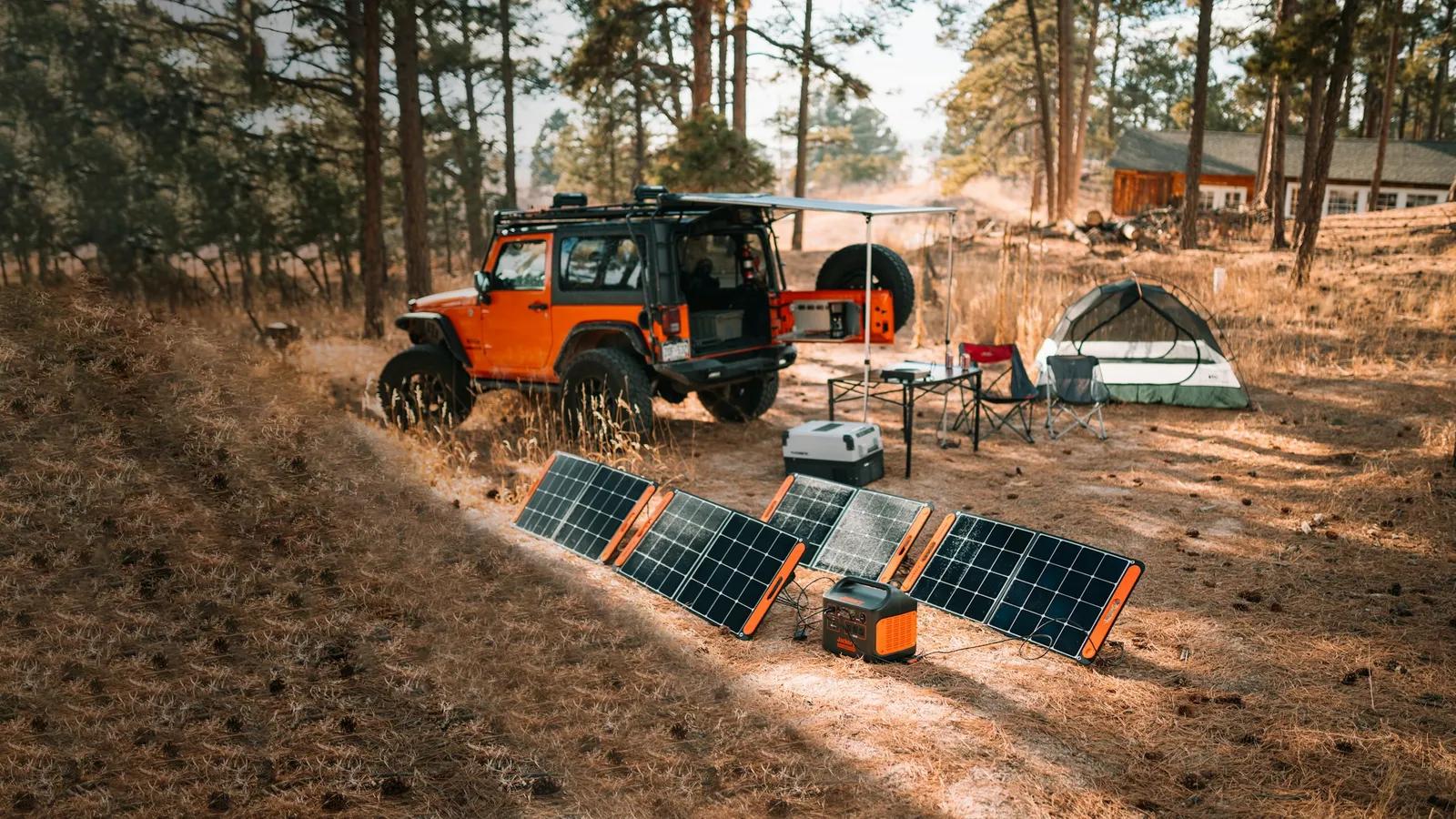
Jeep camp with a tent, solar panels and a portable power station at a pine forest campsite

At a glance

Our top picks

A $150 budget covers everything from a plug-in power strip for phones to a 3,000W inverter that can run a microwave off a battery bank, and the price gap hides a bigger difference in waveform, cable gauge and protections. The six here run from about $44 to $150.

The ranking asks what the last hundred dollars buys: continuous watts, a pure sine wave, a remote and heavier cables. The top spot goes to the best capability near the cap, and the small inverters are placed by the load they actually serve.

RV Gear Lab field notes

The Campsite Fit Check

Start with the job
3000W Power Inverter Car/Home 12V DC to 110V/120V AC Car Converter leads this shortlist for RV and van battery banks. Use that fit as a reference point, then compare the alternatives against your own space and workload.
Specs that separate the picks
The first details to compare are 3,000W continuous, 6,000W peak, 3,000W continuous, 6,000W surge, 1,000W continuous, 2,000W peak. Confirm the exact model and included components before ordering.
Trade-off to plan for
Needs a large battery bank

Before you buy

What Matters Before You Choose a Power Inverter Under 150

Key buying criteria so you get the right fit the first time.

  1. 01

    Continuous vs peak watts

    A 1,000W peak inverter may only hold 750W continuously, so a 700W appliance can overload it after a few minutes. Continuous watts are what the unit delivers for hours, and peak is a short surge for motor starts. Match your appliance label watts to the continuous number, and leave 20 percent as a margin.

  2. 02

    Pure sine vs modified sine

    Pure sine wave matches household power and runs CPAPs, fridges and laptops with less heat and noise, while modified sine is cheaper and fine for heaters and basic tools. Some electronics hum or fail on modified sine. Look for the words pure sine wave in the product title.

  3. 03

    Connection and cable gauge

    A cigarette lighter socket supports roughly 150W at most, because the fuse and wire behind it are thin. Anything above 300W needs a direct battery connection with thick cables and an inline fuse close to the battery. Check what cables, fuses and terminals come in the box, and budget extra if the included cables are short or thin.

  4. 04

    Battery bank size

    A 3,000W inverter pulls more than 250 amps from a 12V battery at full load, which a starter battery cannot supply and which will shut the inverter down or damage the cells. You need a deep-cycle or lithium bank rated for that current, with cables sized to match. Check your battery capacity and cable rating before you choose an inverter this large.

  5. 05

    Protections and remote

    Low-voltage, overload, over-temperature and reverse-polarity protections keep a wiring mistake from turning into a fire or a ruined battery. A remote or display lets you switch off the inverter from camp without walking to the battery box. Count the listed protections, and prefer units that name reverse polarity and low-voltage shutdown specifically.

Our standards

Why You Can Trust RV Gear Lab

At RV Gear Lab, we compare products based on campsite fit, verified specifications, usability, setup requirements, weight, durability, and real-world trade-offs. We do not rank products purely on marketing claims or commission rates.

We have not personally tested every product listed. Where hands-on testing is not available, recommendations are based on verified manufacturer specifications, product documentation, use-case fit, and comparative research.

How we review camping gear →

Detailed reviews

The 6 best power inverters under 150, explained

01
3000W Power Inverter Car/Home 12V DC to 110V/120V AC Car Converter
  • 3,000W continuous, 6,000W peak
  • Two 20A outlets, 30W Type-C
  • 200 ft remote, ten protections
Check price on Amazon for 3000W Power Inverter Car/Home 12V DC to 110V/120V AC Car Converter (opens in a new tab)
Best for: RV and van battery banks

Our take

The most capable inverter under $150, with safeguards.

Why it made the shortlist

The TOPBULL 3000W converts 12V DC to 120V AC at 3,000W continuous and up to 6,000W peak. It has two 20A AC outlets, a 3.4A USB port, a 30W Type-C port, a 200 ft wireless remote and ten built-in protections, with thickened pure copper battery cables.

It is the strongest unit in the group by a wide margin over the BELTTT 1000W.

It suits RV and van owners with a 12V battery bank who want to run a coffee maker or microwave. A remote shuts it down from the camp chair.

What works

  • Runs high-draw appliances
  • Ten-layer safety protection
  • Thick pure copper cables included
  • 200 ft remote switches it off

Watch out for

  • Needs a large battery bank
  • Not suited to a car lighter socket
The catch
It needs heavy wiring and a fused connection to a big battery.
02
Cantonape 3000W Power Inverter 12V to 110V/120V DC to AC with LCD Display
  • 3,000W continuous, 6,000W surge
  • 4 AC outlets, 4 USB ports
  • LCD and remote controller
Check price on Amazon for Cantonape 3000W Power Inverter 12V to 110V/120V DC to AC with LCD Display (opens in a new tab)
Best for: Multi-device camp power

Our take

A lot of outlets for the money, if you can live with modified sine.

Why it made the shortlist

The Cantonape is a 3,000W continuous, 6,000W surge inverter with four AC outlets, four USB ports, an LCD screen and a remote controller. It has six protections and an aluminum body.

It costs about $140, $10 under the TOPBULL 3000W, and it has more outlets than any other pick. Its output is modified sine wave, which is a step behind the pure sine of the BELTTT 1000W for sensitive electronics.

It suits campers who run tools, lights and chargers at once from a big battery. The remote lets you put the unit near the battery.

What works

  • Four AC outlets and four USB ports
  • Remote keeps the screen at camp
  • Six protections and an aluminum body
  • LCD shows voltage and load

Watch out for

  • Modified sine wave
  • Needs heavy cables and a large battery
The catch
Sensitive electronics may hum on modified sine.
03
BELTTT 1000Watt Pure Sine Wave Inverter 12V DC to 120V AC
  • 1,000W continuous, 2,000W peak
  • Pure sine wave, 90% efficient
  • Dual AC outlets, LCD
Check price on Amazon for BELTTT 1000Watt Pure Sine Wave Inverter 12V DC to 120V AC (opens in a new tab)
Best for: CPAPs and laptops

Our take

The pick for clean power with fridges, CPAPs and laptops.

Why it made the shortlist

The BELTTT is a 1,000W continuous, 2,000W peak pure sine wave inverter with a conversion efficiency above 90 percent. It has dual AC outlets, a 2.1A USB port, a smart LCD display and 3 foot thicker cables with an installation tool.

Pure sine runs inductive loads such as fans and refrigerators with less wear than the Cantonape.

It suits campers with a CPAP, laptop, fridge or power tools that need clean power. The LCD shows input and output voltage.

What works

  • Pure sine suits sensitive gear
  • Over 90 percent efficiency
  • LCD shows voltage and load
  • Cables and tool included

Watch out for

  • Only 1,000W continuous
The catch
It cannot run a microwave above 1,000W.
04
Best for: Car camping electronics

Our take

A small pure sine inverter for laptops and camera gear.

Why it made the shortlist

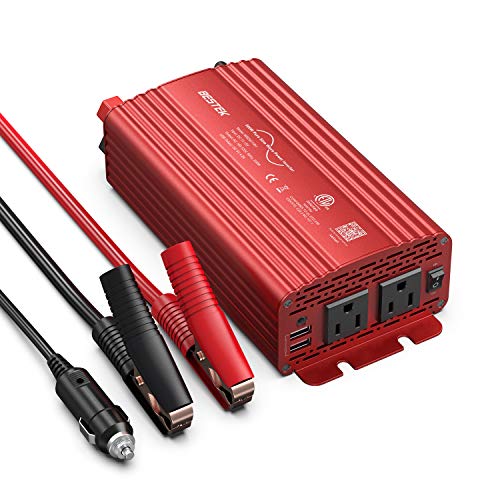
The BESTEK 500W is a pure sine inverter offering two outlets plus dual USB charging. It connects through the cigarette lighter plug or direct battery clips and has two 40 amp external fuses, thermal protection and a cooling fan.

It suits car campers who want clean power for laptops and camera chargers. It can also clip onto a battery.

What works

  • Pure sine for sensitive electronics
  • Plug or direct clip connection
  • Replaceable external fuses
  • Thermal protection and fan

Watch out for

  • 500W limits loads
  • Not for large appliances
The catch
It tops out at 500W.
05
Best for: Truckers and tools

Our take

A cheap 750W unit for rugged loads.

Why it made the shortlist

The TWING is a modified sine wave inverter with two AC outlets, a QC 3.0 USB port and a 30W PD USB port. It carries a digital display, a cooling fan and a slip fuse, and its page notes 750W continuous output.

It costs about $69, around $50 under the BELTTT 1000W, and it is modified sine. The 1000W in the title is a peak figure and the continuous rating is 750W.

It suits truckers and campers who want a mid-power plug-in inverter for tools and chargers. It suits non-sensitive loads.

What works

  • 30W PD and QC 3.0 USB ports
  • Digital display shows status
  • Slip fuse and fan protection

Watch out for

  • Modified sine wave
The catch
Read the 750W continuous number, not the headline.
06

Best Power Strip Style · 6 of 6

PowerDrive PWD150S 150 Watt Power Strip Inverter

Best for: Phones and tablets

Our take

A small inverter for gadgets in a car.

Why it made the shortlist

The PowerDrive PWD150S is a 150W power strip inverter with three 3-prong AC outlets, a 2.4A USB port, a 3.0A USB-C port and a 12V DC socket. It protects against short circuit, overheating and overload.

It costs about $44, the lowest in the group, and it plugs into a car's 12V socket for phones and tablets. It handles small loads that the BESTEK 500W Pure Sine would exceed in size and price.

It suits commuters and campers who charge phones, tablets and cameras in the car. Three outlets let a family plug in at once.

What works

  • Three AC outlets in one strip
  • USB-C and USB-A ports
  • 12V socket for accessories
  • Short-circuit and overheat protection

Watch out for

  • Only 150W continuous
  • No pure sine claim
The catch
It cannot run a fridge or laptop charger over 150W.

Methodology

How We Built This Shortlist

Each pick was assessed across 5 criteria weighted for real-world use.

01

Continuous watts

Rated continuous output was compared against peak.

02

Waveform

Pure sine and modified sine were separated.

03

Connection

Cigarette plug, clips and cables were compared.

04

Protections

Fuses, shutoffs and displays were credited.

05

Price against the cap

All six are under $150.

Decision guide

Match a Power Inverter Under 150 to Your Camp Setup

By load

Your situationRecommended pickWhy
Microwave or coffee maker off a battery bankTOPBULL 3000W3,000W continuous with ten protections.
Many devices at onceCantonape 3000WFour AC outlets and four USB ports.
CPAP, laptop or fridgeBELTTT 1000W Pure SineClean pure sine at 1,000W.
Laptop in the carBESTEK 500W Pure SinePlug-in pure sine.
Power tools and chargersTWING 1000W Modified Sine750W continuous.
Phones and tabletsPowerDrive PWD150SThree outlets and USB-C.

By Budget

BudgetRecommended pick
$40 to $70PowerDrive PWD150S or BESTEK 500W Pure Sine
$60 to $120TWING 1000W Modified Sine or BELTTT 1000W Pure Sine
$130 to $150Cantonape 3000W or TOPBULL 3000W

Pure sine vs modified sine

Pure sine

The BELTTT 1000W Pure Sine and BESTEK 500W Pure Sine run sensitive electronics smoothly.

Modified sine

The TOPBULL 3000W, Cantonape 3000W, TWING 1000W Modified Sine and PowerDrive PWD150S cost less per watt and suit heaters and tools.

Choose the BELTTT 1000W Pure Sine for a CPAP or laptop and the TOPBULL 3000W for brute power.

By price tier

Price tierRecommended pick
About $44PowerDrive PWD150S
About $65BESTEK 500W Pure Sine
About $69TWING 1000W Modified Sine
About $120BELTTT 1000W Pure Sine
About $140Cantonape 3000W
About $150TOPBULL 3000W

For van and RV builds specifically

Look for

Look for 2,000W or more continuous, a remote or display and thick cables with a fuse.

In this comparison

The TOPBULL 3000W has a 200 ft remote and thickened copper cables, and the BELTTT 1000W Pure Sine has an LCD and thick 3 foot cables.

When to Spend More

Spend more if

Spend more if you run large appliances: the TOPBULL 3000W adds 3,000W continuous and a remote, and the BELTTT 1000W Pure Sine adds clean power.

Save if

Save if you only charge small devices: the PowerDrive PWD150S is about $44, and the BESTEK 500W Pure Sine about $65.

FAQ

Before You Bring One Home

Can I plug a 3,000W inverter into my car outlet?

No. A cigarette lighter socket supports about 150W, and a 3,000W inverter needs heavy cables directly to a large battery bank with an inline fuse. The TOPBULL 3000W and Cantonape 3000W are for battery banks only. Use the PowerDrive PWD150S in the lighter socket.

What do buyers get wrong about inverters?

They trust the headline wattage. The TWING 1000W Modified Sine is a 750W continuous inverter, and a peak figure is not a rating you can run all day. They also forget a big inverter needs thick cable and a fuse.

Is pure sine worth about $50 more?

For a CPAP, laptop or fridge, yes. The BELTTT 1000W Pure Sine delivers clean power at 1,000W for about $50 more than the TWING 1000W Modified Sine, and it runs motors cooler and quieter. For simple tools and heaters, modified sine works fine and costs less.

How do I connect an inverter to a battery?

Use the shortest, thickest cable you can, connect the positive lead through an inline fuse and keep the inverter in a ventilated spot. The TOPBULL 3000W includes thickened copper cables for this. Turn the inverter off before you make or break the connection.

How long will an inverter run on my battery?

Divide the battery's watt-hours by the load watts, then subtract about 15 percent for conversion losses. A 100Ah 12V battery holds about 1,200Wh, so a 300W load runs roughly 3 hours. Do not drain lead-acid batteries below half, and lithium batteries should keep a small reserve.

Bottom line

The short version

Browse more power inverters under 150 on Amazon →
Danny Walker, Camping Editor at RV Gear Lab

About the author

Danny Walker

Camping Editor at RV Gear Lab

Danny covers camping gear, campsite setup, outdoor power, sleep systems and practical camping advice, with a focus on helping campers make better gear decisions.

More from Danny →Editorial standards

Keep reading

Related guides