

We research everything we recommend. When you buy through our links, we may earn a commission. Learn more

Buying guide · 10 min read · Updated October 2, 2026

5 Best Solar Generators Under 300 in 2026: A Practical Camping Guide

Best solar generators under $300: five budget power stations and panel kits compared on stored watt-hours, output and what is in the box for campers.

Danny WalkerBy Danny WalkerCamping Editor at RV Gear Lab5 products comparedSpec-sheet researched
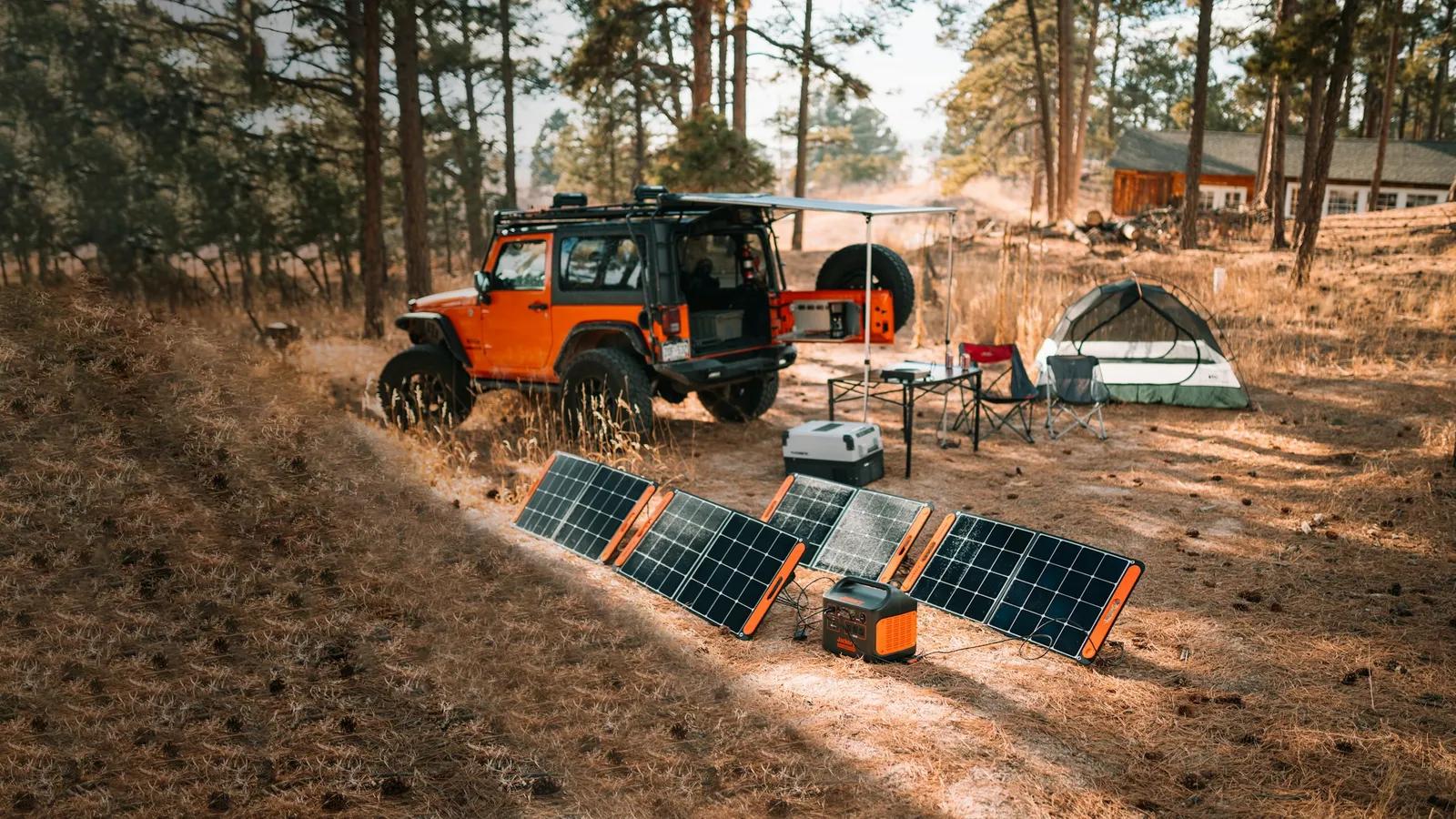
Jeep camp with a tent, solar panels and a portable power station at a pine forest campsite

At a glance

Our top picks

Three hundred dollars is where a solar generator stops being a toy. Under this cap you can buy a full kilowatt-hour of storage with no panel, or a small station that ships with its own panel and works the day it arrives.

Five units made the cut, spanning about $171 to $300. The notes below explain what each step up in price buys and which corners get cut near the bottom.

RV Gear Lab field notes

The Campsite Fit Check

Start with the job
Portable Power Station 1000W 999Wh Solar Generator for Outdoor Camping leads this shortlist for Two-night trips with a fridge. Use that fit as a reference point, then compare the alternatives against your own space and workload.
Specs that separate the picks
The first details to compare are 999Wh, 1000W with 2000W peak, 288Wh LiFePO4, 3500 cycles, 280Wh, 300W pure sine wave. Confirm the exact model and included components before ordering.
Trade-off to plan for
No solar panel in the box

Before you buy

What Matters Before You Choose a Solar Generator Under 300

Key buying criteria so you get the right fit the first time.

  1. 01

    Watt-hours per dollar

    Watt-hours (Wh) measure stored energy, so a 999Wh unit runs a 50W fridge for roughly 15 to 18 hours after inverter losses while a 192Wh unit manages about 3. At this price you can find anything from about 0.9 to 3.3 Wh per dollar, which makes this the single best number for comparing value. Divide the Wh figure by the price before you read anything else.

  2. 02

    Panel included or not

    A kit with a 30W to 60W panel is ready on arrival, while a bare station needs a panel that costs $60 to $150 more. That extra cost can erase the apparent saving, and a 30W panel recovers only about 120Wh on a good day. Add the panel price to the station price, then compare totals.

  3. 03

    Continuous AC wattage

    Continuous watts are what the inverter can hold, while surge watts only cover a split second of motor start. A 300W unit handles laptops and a CPAP, a 600W unit adds a small kettle or fan, and a 1000W unit handles a mini-fridge plus a coffee maker in turns. Look for the continuous figure and the number of AC outlets in the product title.

  4. 04

    Battery chemistry and cycles

    LiFePO4 cells are typically rated for 3000 or more cycles, while the lithium-ion cells in cheaper units give about 500 to 1000 before capacity fades noticeably. For a weekend user that gap is 8 years versus 2 or 3. Look up the cell type and cycle count, and treat a missing cycle rating as a reason to pick another.

  5. 05

    Solar input limits

    The controller accepts a limited voltage, and a panel above that limit can damage the station. The GRECELL 500W caps input at 23V, which leaves almost no margin for a 100W panel whose open-circuit voltage sits near 22V. Compare the station's maximum input volts and amps with the panel's open-circuit voltage before buying either.

  6. 06

    Weight and carry

    A 5.84 lb station goes anywhere, while a 17 lb one is a two-hand lift and a 14 lb one sits between. Weight matters most for tent campers who carry gear from a parking area. Read the lb figure and compare it with your longest carry.

Our standards

Why You Can Trust RV Gear Lab

At RV Gear Lab, we compare products based on campsite fit, verified specifications, usability, setup requirements, weight, durability, and real-world trade-offs. We do not rank products purely on marketing claims or commission rates.

We have not personally tested every product listed. Where hands-on testing is not available, recommendations are based on verified manufacturer specifications, product documentation, use-case fit, and comparative research.

How we review camping gear →

Detailed reviews

The 5 best solar generators under 300, explained

01
Best for: Two-night trips with a fridge

Our take

The only pick here with a full kilowatt-hour, and it is light enough to carry.

Why it made the shortlist

GRECELL 1000W packs 999Wh into a 17 lb case and puts out 1000W of pure sine wave AC with a 2000W peak. Ten ports include a 60W USB-C PD jack, fast-charge USB-A ports and a Qi pad, and an MPPT input takes a solar panel you add later.

A wall charge takes 7 to 8 hours, which is the cost of that capacity.

Buy it if you want a mini-fridge, CPAP and laptops to last two nights at camp. It suits campers who plan to add a panel of 100W or more.

What works

  • Most stored energy under the cap
  • Pure sine wave output for sensitive gear
  • 60W USB-C and a wireless pad
  • Pass-through charging while in use

Watch out for

  • No solar panel in the box
  • Wall recharge takes 7 to 8 hours
The catch
Budget another $100 or so for a panel.
02

Best LiFePO4 Power · 2 of 5

Daran Portable Power Station 600W

Daran Portable Power Station 600W
  • 288Wh LiFePO4, 3500 cycles
  • 600W AC, 1200W surge
  • 80% charge in about 2 hours
Check price on Amazon for Daran Portable Power Station 600W (opens in a new tab)
Best for: Frequent weekend campers

Our take

A longer-lived battery in a compact body.

Why it made the shortlist

Daran 600W is a 288Wh LiFePO4 station with two 600W AC outlets (1200W surge), a 60W USB-C PD port and a digital display. The battery is rated for 3500 cycles and charges to 80 percent in about 2 hours from the wall.

It costs about $210 and holds less than the GRECELL 1000W, so it is a quality choice over a capacity choice.

Pick it if you will use the station often, such as weekend after weekend. The LiFePO4 cells keep their capacity for years of regular camping.

What works

  • LiFePO4 cells outlast lithium-ion
  • 600W covers a small kettle or fan
  • Quick 2 hour wall charge
  • Digital display shows input and output

Watch out for

  • No panel included
  • 288Wh runs out fast with a fridge
The catch
Add a panel separately.
03
Best for: First-time buyers wanting a kit

Our take

The cheapest complete solar setup in this guide.

Why it made the shortlist

ZeroKor ships a 280Wh battery, a 300W pure sine wave inverter and a 60W solar panel in one box. It has two AC outlets, a DC port, USB and quick-charge ports, an SOS light and a built-in MPPT controller.

At about $171 it has the lowest price tag here and ships a panel big enough to recharge a phone and a laptop over a day. The Daran 600W has sturdier cells, and this kit has the panel.

First-time buyers who want to unbox, plug in and charge from sunshine will like it. It suits weekend car campers with phones, lights and a laptop.

What works

  • MPPT controller built in
  • SOS light for emergencies
  • Two AC sockets for small gear

Watch out for

  • Lithium-ion cells wear out sooner
  • 60W panel needs a full day
The catch
Plan on a full sunny day to refill it.
04

Best Mid Capacity · 4 of 5

500W Portable Power Station

500W Portable Power Station
  • 519.48Wh, 500W pure sine wave
  • 14.1 lb, 10 ports
  • Wireless pad and 60W USB-C
Check price on Amazon for 500W Portable Power Station (opens in a new tab)
Best for: Overnight CPAP or cooler runs

Our take

Strong capacity for the price, with a few comforts.

Why it made the shortlist

GRECELL 500W stores 519.48Wh in a 14.1 lb body and outputs 500W of pure sine wave AC from two outlets. It adds a wireless charging pad and a 60W USB-C port, runs 10 devices at once and uses NCM lithium cells with a smart BMS.

It sits between the 288Wh class and the 999Wh GRECELL 1000W: about 80 percent more energy than the Daran, for the same $200 price. The GRECELL 1000W doubles it again for $100 more.

Choose it if you want to run a 12V cooler or CPAP overnight without paying the top price. It suits solo and two-person trips.

What works

  • Over 500Wh at about $200
  • Light for its capacity
  • Wireless pad is a handy extra
  • Pure sine wave AC output

Watch out for

  • No panel in the box
  • Input is limited to 23V maximum
The catch
Match any panel to the 23V input limit.
05
DaranEner 300W Portable Power Station with 30W Solar Panel
  • 192Wh LiFePO4, 3500 cycles
  • 5.84 lb with 30W panel
  • Two 300W AC, 60W USB-C
Check price on Amazon for DaranEner 300W Portable Power Station with 30W Solar Panel (opens in a new tab)
Best for: Light trips and day outings

Our take

A pocketable kit for devices, not appliances.

Why it made the shortlist

DaranEner is a 192Wh LiFePO4 station weighing 5.84 lb that comes with a 30W solar panel. It powers eight outputs including two 300W AC outlets and a 60W USB-C PD port, and it refills from the wall at up to 90W in about 2 hours.

It is the smallest and lightest pick, about a third of the weight of the GRECELL 500W.

Backpackers with a car and day-trippers who want phones, cameras and lights covered will like it. It fits in a daypack or a footwell.

What works

  • Only 5.84 lb for easy carrying
  • LiFePO4 cells rated for 3500 cycles
  • Eight output ports
  • Panel and wall charging both work

Watch out for

  • 30W panel is slow
  • Smallest capacity of the five
The catch
Do not plan on running a fridge from it.

Methodology

How We Built This Shortlist

Each pick was assessed across 5 criteria weighted for real-world use.

01

Stored energy

Watt-hours were the first sort, from 192Wh to 999Wh, because capacity sets how long any load runs.

02

Output and ports

AC wattage, pure sine wave output and USB-C power delivery were checked against what a camper actually plugs in.

03

Solar readiness

Whether a panel is included, how big it is and what solar input the controller accepts decided how self-sufficient each pick is.

04

Battery chemistry

LiFePO4 and lithium-ion cells were separated, since cycle life drives how many seasons a station lasts.

05

Price against the cap

Each pick sits at or under $300, and the ranking rewards watt-hours per dollar over the lowest sticker price.

Decision guide

Match a Solar Generator Under 300 to Your Camp Setup

By night length

Your situationRecommended pickWhy
Two nights, fridge and CPAPGRECELL 1000W999Wh covers about 15 hours of a small fridge.
One night, CPAP and phonesGRECELL 500W519Wh is enough for a CPAP and charging.
Weekend of laptop and lightsDaran 600W288Wh with long-life cells.
Beginner who wants panel includedZeroKor 60W KitPanel in the box, nothing to match.
Day trips and phone top-upsDaranEner 192Wh Kit5.84 lb with a 30W panel.

By Budget

BudgetRecommended pick
$170 to $200ZeroKor 60W Kit or GRECELL 500W
$190 to $210DaranEner 192Wh Kit or Daran 600W
$290 to $300GRECELL 1000W

Kit vs bare station

Kit with panel

A kit saves the guesswork of connectors and voltage limits. The ZeroKor 60W Kit and the DaranEner 192Wh Kit each ship with a panel, though a 30W or 60W panel recharges slowly.

Bare station

A bare station gives more capacity per dollar and lets you pick a panel later. The GRECELL 1000W, GRECELL 500W and Daran 600W all need a separate panel.

Most buyers who camp more than a few weekends should take the GRECELL 1000W and add a panel.

By budget

Budget bandRecommended pick
About $170ZeroKor 60W Kit
About $200DaranEner 192Wh Kit
About $200GRECELL 500W
About $210Daran 600W
Up to $300GRECELL 1000W

For a weekend car campsite specifically

Look for

Aim for at least 500Wh and a pure sine wave inverter so a CPAP, laptop and small fan run without strain.

In this comparison

The GRECELL 500W gives 519Wh at about $200, and the GRECELL 1000W gives 999Wh at the cap for two-night trips.

When to Spend More

Spend more if

Spend more if you need to run a fridge or a CPAP for two nights, since the GRECELL 1000W doubles the energy of the next unit for about $100 more. The Daran 600W also justifies a little extra for its LiFePO4 cells.

Save if

Save if your loads are phones, lights and a laptop, because the ZeroKor 60W Kit and DaranEner 192Wh Kit already cover that and include a panel.

FAQ

Before You Bring One Home

Can I charge these from solar panels I already own?

Yes for the GRECELL and Daran units that accept a panel through an MPPT input, but the panel must stay below the maximum input voltage. For example the GRECELL 500W accepts up to 23V. Check the panel's open-circuit voltage on its label, and use the right connector adapter.

Is a 1000W unit overkill under $300?

Only if you never run a heater, kettle or fridge. The GRECELL 1000W costs about $100 more than the 500W class but doubles the storage, so it covers a second night of CPAP. If your trips are one night, the GRECELL 500W is enough.

Are lithium-ion cells a problem for camping?

They are fine for occasional use but wear faster, often to 500 to 1000 cycles. The ZeroKor 60W Kit uses them, which keeps the price low. If you camp every weekend, a LiFePO4 pick like the Daran 600W saves a replacement later.

How do I store a power station over winter?

Charge it to about 50 to 80 percent and keep it indoors away from freezing and heat. The GRECELL 500W maker advises recharging every 90 days during storage. Never leave a unit in a hot car, since heat shortens lithium battery life.

Can I run a hair dryer or space heater from these?

No. Hair dryers and heaters draw 1000 to 1800W, above the continuous rating of every pick here, and the GRECELL 1000W would trip at its limit. Use these for fans, lights, laptops, CPAPs and mini-fridges, and use a generator for heaters.

Bottom line

The short version

Browse more solar generators under 300 on Amazon →
Danny Walker, Camping Editor at RV Gear Lab

About the author

Danny Walker

Camping Editor at RV Gear Lab

Danny covers camping gear, campsite setup, outdoor power, sleep systems and practical camping advice, with a focus on helping campers make better gear decisions.

More from Danny →Editorial standards

Keep reading

Related guides