

We research everything we recommend. When you buy through our links, we may earn a commission. Learn more

Buying guide · 10 min read · Updated October 2, 2026

5 Best Solar Panels Under 200 in 2026: A Practical Camping Guide

Best solar panels under $200: five 200W rigid, bifacial and portable panels compared on cell type, voltage, USB ports and weight for RVs and stations.

Danny WalkerBy Danny WalkerCamping Editor at RV Gear Lab5 products comparedSpec-sheet researched
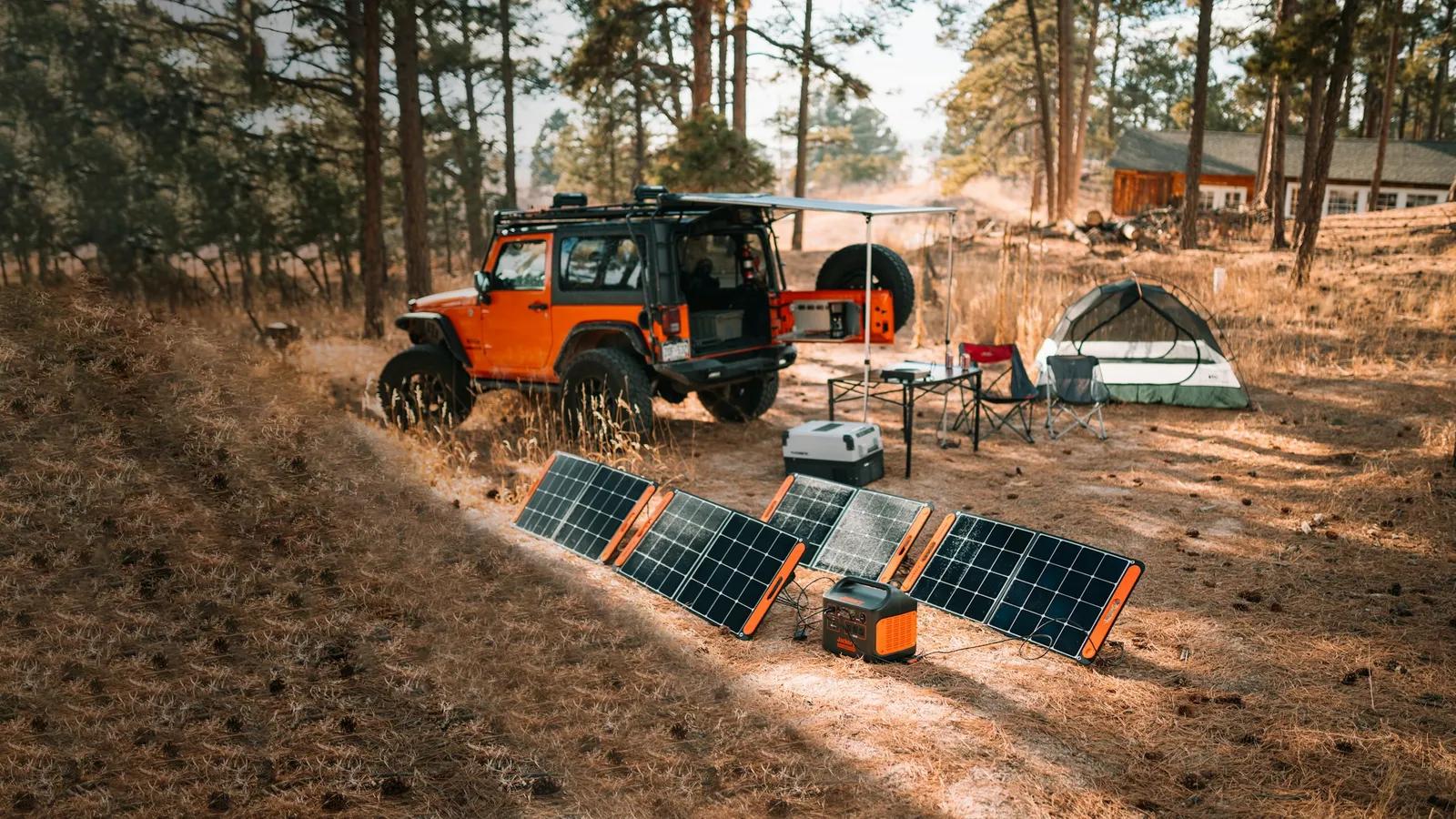
Jeep camp with a tent, solar panels and a portable power station at a pine forest campsite

At a glance

Our top picks

Two hundred dollars is the 200W tier, and every pick here makes 200W. They cost from about $130 to $185 and split into rigid roof panels and portable panels for power stations.

At this price the details matter: voltage, bifacial design, weight and ports. The notes below help you pick on the details, not on the wattage that everyone shares.

RV Gear Lab field notes

The Campsite Fit Check

Start with the job
HQST 200W Solar Panel leads this shortlist for Ground mounts and vans. Use that fit as a reference point, then compare the alternatives against your own space and workload.
Specs that separate the picks
The first details to compare are 200W bifacial N-type, 25.4%, 200W N-type, up to 25.6%, 200W N-type, 25% efficiency. Confirm the exact model and included components before ordering.
Trade-off to plan for
Needs a controller

Before you buy

What Matters Before You Choose a Solar Panel Under 200

Key buying criteria so you get the right fit the first time.

  1. 01

    Rigid or portable

    A rigid 200W panel gives the same watts for $20 to $55 less and lasts for decades on a roof, while a portable panel folds and plugs straight into a station. Portables weigh 14 to 19 lb and run hotter. Decide whether the panel stays or moves.

  2. 02

    Voltage

    A 12V or 24V rigid panel needs a controller, while a portable panel with 18 to 24V output connects to a station. A 24V panel needs MPPT for a 12V battery. Check the nominal and open-circuit voltage, and a 24V panel into a controller built only for 12V can overheat it or trip its input protection, so read the controller manual before you buy.

  3. 03

    Bifacial and N-type

    N-type cells lose less in heat and low light, and a bifacial panel adds 10 to 30 percent over a reflective surface. On a dark RV roof the bifacial gain is small. Check what the panel will sit over, and mounting a bifacial panel a foot above light gravel or sand gives a more honest gain than laying it flat on a dark roof.

  4. 04

    USB-C power delivery

    A USB-C PD port at 45 to 60W charges a laptop or phone directly from the panel without a station. It only works in good sun, and output drops in cloud. Check the PD wattage in the specs, and since a laptop needs 45 to 65W while sun is strongest at midday, plan on charging it during the day, not at night.

  5. 05

    Weight and carry

    A 13.89 lb portable panel is easy to carry, while a 19 lb panel is a chore after a long day. Rigid panels weigh about 25 lb. Check the weight and the folded size, so lift a 19 lb panel from your trunk to the picnic table in your mind before you buy it, because a heavy panel often stays at home.

  6. 06

    Degradation and warranty

    Panels lose 1 percent in year one and about 0.4 percent a year after, so a 25-year panel still makes about 90 percent. Warranties run from 5 to 25 years. Check the output and workmanship terms, so a longer output warranty only helps if the maker still exists when you need to claim, which favors established brands.

Our standards

Why You Can Trust RV Gear Lab

At RV Gear Lab, we compare products based on campsite fit, verified specifications, usability, setup requirements, weight, durability, and real-world trade-offs. We do not rank products purely on marketing claims or commission rates.

We have not personally tested every product listed. Where hands-on testing is not available, recommendations are based on verified manufacturer specifications, product documentation, use-case fit, and comparative research.

How we review camping gear →

Detailed reviews

The 5 best solar panels under 200, explained

01

Best Value Under $200 · 1 of 5

HQST 200W Solar Panel
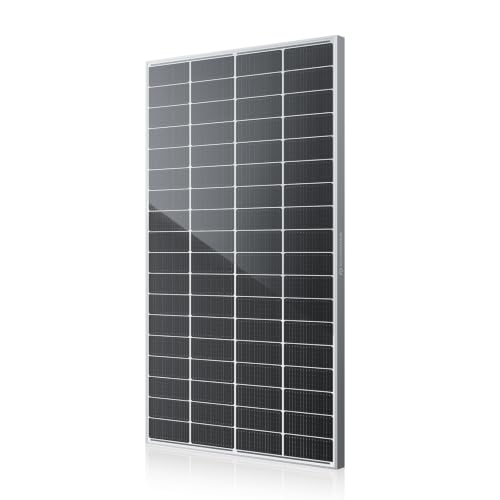
HQST 200W Solar Panel
  • 200W bifacial N-type, 25.4%
  • IP68, 30-year life claim
  • 13% smaller, 13.3% lighter
Check price on Amazon for HQST 200W Solar Panel (opens in a new tab)
Best for: Ground mounts and vans

Our take

The cheapest 200W panel, with a bifacial bonus.

Why it made the shortlist

HQST is a 200W bifacial N-type panel with 16BB Grade A+ cells at up to 25.4 percent efficiency, an IP68 rating, 2400Pa wind and 5400Pa snow load capacity and a 30-year service life claim.

Choose it for a camper van, a ground mount or a shed where reflected light helps. It is sized for Class B vans.

What works

  • Bifacial back side adds output
  • Compact for campervans

Watch out for

  • Needs a controller
  • Rigid, not portable
The catch
Mount it over a light surface for the extra gain.
02

Best Shade Tolerance · 2 of 5

ECOBOSS 200 Watt Solar Panels

ECOBOSS 200 Watt Solar Panels
  • 200W N-type, up to 25.6%
  • Bypass diodes, 16BB cells
  • IP68, 2400Pa wind, 5400Pa snow
Check price on Amazon for ECOBOSS 200 Watt Solar Panels (opens in a new tab)
Best for: Roofs with partial shade

Our take

A high-efficiency rigid 200W panel.

Why it made the shortlist

ECOBOSS is a 200W N-type panel with 182mm Grade A+ 16BB cells at up to 25.6 percent efficiency and bypass diodes that cut losses from partial shading. The panel is rated IP68 and 2400Pa wind and 5400Pa snow loads, and several can be wired for a 12V system.

At about $150 it costs $20 more than the HQST and has the highest efficiency of the four rigid panels. It is a standard rigid panel with no bifacial design.

Choose it for an RV or cabin roof where vents or antennas cast shade. It is easy to expand with more panels.

What works

  • Up to 25.6 percent efficient
  • Bypass diodes handle partial shade
  • IP68 waterproof
  • Expandable for 12V systems

Watch out for

  • No bifacial gain
  • Costs $20 more than the HQST
The catch
Plan the layout around vents.
03

Best Brand Support · 3 of 5

Renogy Solar Panels 200 Watt

Renogy Solar Panels 200 Watt
  • 200W N-type, 25% efficiency
  • 24V operation, 16BB cells
  • 0.4% annual degradation
Check price on Amazon for Renogy Solar Panels 200 Watt (opens in a new tab)
Best for: RV roofs and expandable systems

Our take

A brand-name 200W panel for a growing system.

Why it made the shortlist

Renogy's 200W N-type panel uses 16BB cells at 25 percent efficiency and operates at 24V to cut current loss, with a low temperature coefficient for hot climates.

At about $152 it costs about the same as the ECOBOSS and offers a well-known brand with a stated degradation rate. It is a 24V panel, so it needs an MPPT controller for a 12V battery.

Choose it for an RV or van where brand support matters. It suits a larger system you may expand.

What works

  • Well-known brand and support
  • Low temperature coefficient for heat
  • Stated degradation rates
  • Compact for Class B vans

Watch out for

  • 24V needs an MPPT controller
  • No bifacial gain
The catch
Budget for an MPPT controller.
04
ZOUPW 200W Portable Solar Panel for Power Station
  • 200W foldable, 23.5% cells
  • IP67 ETFE, 5-in-1 cable
  • USB-C PD 60W, QC3.0
Check price on Amazon for ZOUPW 200W Portable Solar Panel for Power Station (opens in a new tab)
Best for: Car camping with a laptop

Our take

A portable panel with a laptop-class USB-C port.

Why it made the shortlist

ZOUPW is a 200W foldable panel with 23.5 percent monocrystalline cells, IP67 ETFE lamination and a 5-in-1 cable that fits most power stations. It has a USB-C PD 60W port and QC3.0 USB-A and weighs 18.96 lb.

At about $161 it is the heaviest pick and the one with the strongest USB-C port, which charges a laptop directly.

Choose it for car camping with a power station and for the ability to charge a laptop from the panel. It is bulky when folded.

What works

  • USB-C PD 60W charges a laptop
  • 5-in-1 cable fits most stations
  • IP67 ETFE coating
  • 23.5 percent cells

Watch out for

  • Heaviest panel here at 18.96 lb
  • Bulky folded size
The catch
Plan the carry for 19 pounds.
05
Renogy 200W Portable Solar Panel for Power Stations
  • 200W portable, 25% N-type
  • 13.89 lb, magnetic fold
  • USB-C PD 45W, UL 61730
Check price on Amazon for Renogy 200W Portable Solar Panel for Power Stations (opens in a new tab)
Best for: Light car camping

Our take

The lightest portable 200W panel here.

Why it made the shortlist

Renogy's 200W portable panel uses 25 percent N-type cells, folds with magnets and weighs 13.89 lb. It has a USB-C PD 45W port plus USB-A and carries UL 61730 certification.

At about $185 it is the most expensive pick and about 5 lb lighter than the ZOUPW. The ZOUPW has a stronger USB-C port.

Choose it for car camping and a power station if weight and brand matter. The magnetic fold makes it easy to carry.

What works

  • 25 percent N-type cells
  • Magnetic closure for carry
  • USB-C PD 45W plus USB-A
  • UL 61730 certified

Watch out for

  • MC4 output only for stations
The catch
Check the adapter you need for your station.

Methodology

How We Built This Shortlist

Each pick was assessed across 5 criteria weighted for real-world use.

01

Cell type

N-type and PERC cells from 23.5 to 25.6 percent efficiency were compared.

02

Format

Rigid roof and portable panels were separated.

03

Weight

Weights from 13.89 lb to 18.96 lb for portables were compared.

04

Ports

USB-C power delivery and connectors were compared.

05

Price against the cap

Every pick is under $200, and the top pick gives 200W for the lowest price.

Decision guide

Match a Solar Panel Under 200 to Your Camp Setup

By use

Your situationRecommended pickWhy
Cheapest 200WHQST 200W Bifacial200W for about $130.
Shaded roofECOBOSS 200WBypass diodes and 25.6%.
Brand support, RV roofRenogy 200W N-Type24V with stated degradation.
Laptop charging in campZOUPW 200W PortableUSB-C PD 60W.
Light car campingRenogy 200W Portable13.89 lb.

By Budget

BudgetRecommended pick
$120 to $150HQST 200W Bifacial or ECOBOSS 200W
$150 to $170Renogy 200W N-Type or ZOUPW 200W Portable
$180 to $190Renogy 200W Portable

Rigid vs portable

Rigid

The HQST 200W Bifacial, ECOBOSS 200W and Renogy 200W N-Type give 200W for $130 to $152 and last for decades. They need a mount.

Portable

The ZOUPW 200W Portable and Renogy 200W Portable fold, weigh 14 to 19 lb and plug into a station. They cost $161 to $185.

Most buyers with a roof should take the HQST 200W Bifacial, and campers with a station should take the Renogy 200W Portable.

By budget

Budget bandRecommended pick
About $130HQST 200W Bifacial
About $150ECOBOSS 200W
About $152Renogy 200W N-Type
About $161ZOUPW 200W Portable
About $185Renogy 200W Portable

For a power station specifically

Look for

Look for a connector your station accepts, an output voltage within its input range and a weight you can carry.

In this comparison

The ZOUPW 200W Portable has a 5-in-1 cable, and the Renogy 200W Portable is lighter at 13.89 lb.

When to Spend More

Spend more if

Spend more if you need a portable panel, which costs $30 to $55 more than the HQST 200W Bifacial. The Renogy 200W Portable is the lightest.

Save if

Save if you can mount a panel, since the HQST 200W Bifacial gives 200W for about $130.

FAQ

Before You Bring One Home

Can I use a 200W panel with a 100W power station?

Yes, but the station will cap the input at its limit, so you gain no charging speed. Check the station's maximum solar input and match the panel. A larger panel helps in cloudy conditions and it also helps on cloudy days.

How many 200W panels do I need?

One 200W panel makes about 600 to 800Wh a day, so a fridge and lights need one or two. A power station of 1000Wh needs one or two panels for a day. Add panels for faster refills.

Is MPPT worth it with a 200W panel?

Yes, an MPPT controller gets 10 to 30 percent more from the panel than PWM, which pays back the $40 or more in a season. The Renogy 200W N-Type at 24V needs it. Check that the controller handles your panel voltage.

Do portable panels last as long as rigid?

Portable panels use ETFE coating that lasts several years of regular travel, but they get folded, which wears the cells. Rigid panels last 25 years. Treat portables as a 5 to 10 year purchase, and store them dry and flat.

How do I keep panels working at their best?

Keep them clean, angled toward the sun and out of shade, and keep cables from sharp edges. Heat cuts output, so allow airflow. Check connectors for corrosion each season, and wipe off dust with a soft cloth and plain water.

Bottom line

The short version

Browse more solar panels under 200 on Amazon →
Danny Walker, Camping Editor at RV Gear Lab

About the author

Danny Walker

Camping Editor at RV Gear Lab

Danny covers camping gear, campsite setup, outdoor power, sleep systems and practical camping advice, with a focus on helping campers make better gear decisions.

More from Danny →Editorial standards

Keep reading

Related guides