

We research everything we recommend. When you buy through our links, we may earn a commission. Learn more

Buying guide · 10 min read · Updated October 2, 2026

5 Best Solar Power Bank For Survival in 2026: A Practical Camping Guide

Best solar power banks for survival: five hand-crank and rugged banks from 20,000 to 49,800mAh, compared on backup charging, lights and weather rating.

Danny WalkerBy Danny WalkerCamping Editor at RV Gear Lab5 products comparedSpec-sheet researched
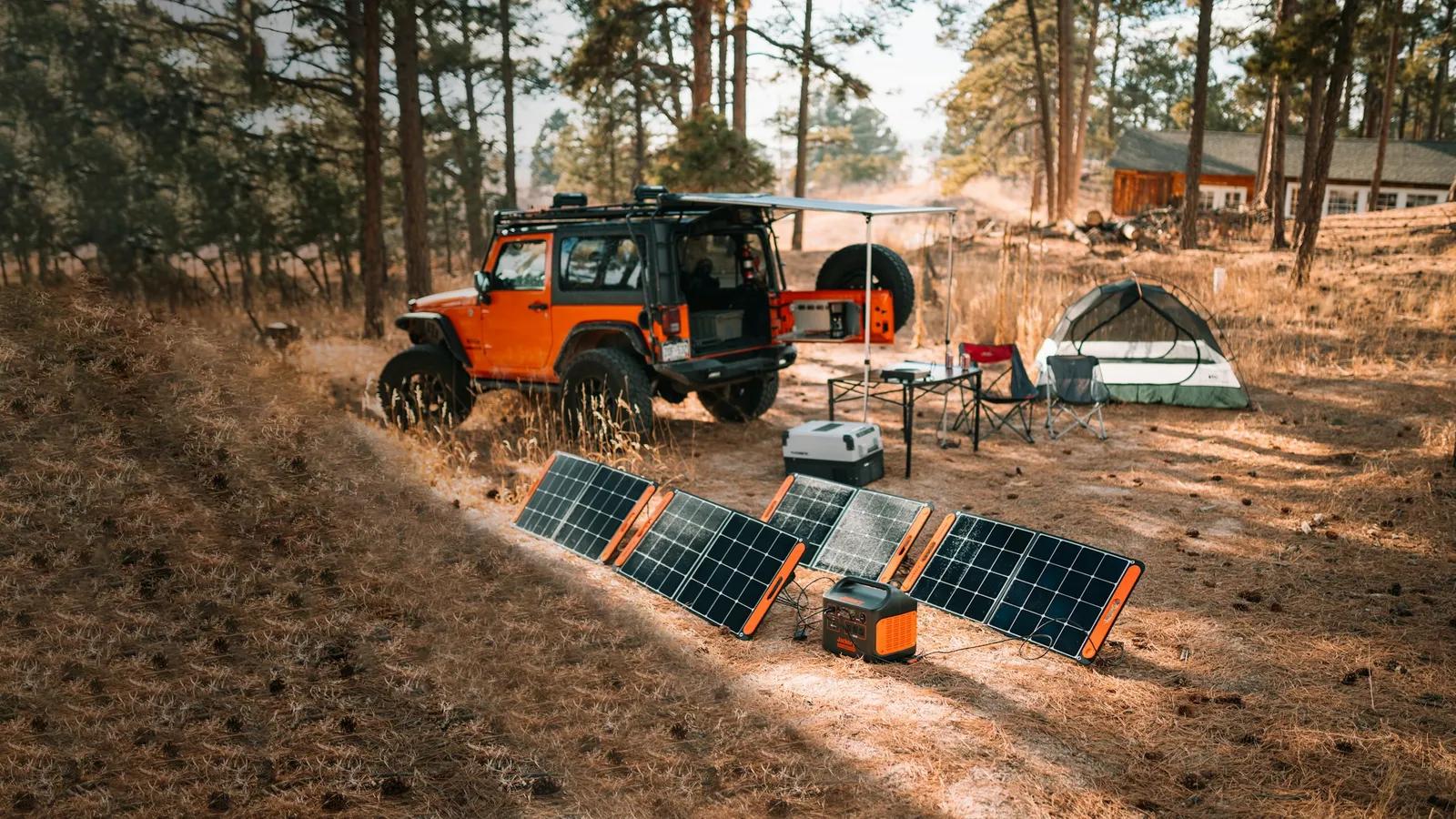
Jeep camp with a tent, solar panels and a portable power station at a pine forest campsite

At a glance

Our top picks

A survival power bank earns its place when the grid, the car and the wall outlet are all gone. That means a battery that is already charged, a way to add energy without a plug and a case that survives rough handling.

These five lean on hand cranks, IP-rated cases, built-in lights and compasses, since survival kits value redundancy over raw capacity.

RV Gear Lab field notes

The Campsite Fit Check

Start with the job
FEELLE Solar Power Bank 50000mAh Magnetic Solar Charger with Hand Crank leads this shortlist for Long outages. Use that fit as a reference point, then compare the alternatives against your own space and workload.
Specs that separate the picks
The first details to compare are 50,000mAh, hand crank, 20,000mAh, hand crank, 27,000mAh, hand crank. Confirm the exact model and included components before ordering.
Trade-off to plan for
Heavy for a go bag

Before you buy

What Matters Before You Choose a Solar Power Bank For Survival

Key buying criteria so you get the right fit the first time.

  1. 01

    Backup charging

    A hand crank works when the sun is gone. Crank output is small, so treat it as a last resort. Check if a crank is built in.

  2. 02

    Capacity versus weight

    A 50,000mAh bank is heavy in a go bag, while 20,000mAh is lighter. Match capacity to the number of phones and days. Check weight and mAh.

  3. 03

    Weather rating

    IP65 means dust-tight and resistant to water jets. Without a rating, rain is a risk. Look for IP numbers.

  4. 04

    Built-in lights

    An LED flashlight with SOS and strobe is useful in an emergency. A lantern mode lights a whole room, while a single beam only lights one spot. Check light modes.

  5. 05

    Pre-charge discipline

    A bank does nothing if it is empty. Charge it and check it every three months. Keep it out of hot cars.

  6. 06

    Redundancy

    Pack two small banks instead of one large one so a failure does not leave you without power. A single dropped or flooded bank can end your charging plan. Keep one in a waterproof bag.

Our standards

Why You Can Trust RV Gear Lab

At RV Gear Lab, we compare products based on campsite fit, verified specifications, usability, setup requirements, weight, durability, and real-world trade-offs. We do not rank products purely on marketing claims or commission rates.

We have not personally tested every product listed. Where hands-on testing is not available, recommendations are based on verified manufacturer specifications, product documentation, use-case fit, and comparative research.

How we review camping gear →

Detailed reviews

The 5 best solar power bank for survival, explained

01
Best for: Long outages

Our take

The most backup in one bank. A good anchor for a survival kit.

Why it made the shortlist

The FEELLE has a 50,000mAh lithium polymer battery, 15W magnetic wireless charging, four built-in cables and a hand crank with a compass. It powers up to six devices at once, and a redesigned panel improves sun absorption.

It has the largest battery in the group and a crank, which the TecoHikee and Durecopow skip. That makes it the best fit for a long outage with multiple phones.

It fits go-bag and bunker kits that need capacity first and redundancy second. The compass and crank add two more tools to one bank.

What works

  • Largest battery in this group
  • Hand crank for backup
  • Compass included
  • Six devices at once

Watch out for

  • Heavy for a go bag
  • Crank output is slow
The catch
It is heavy and the crank is slow.
02
Best for: Bug-out bags

Our take

The most survival features in the smallest package. Good for a go bag.

Why it made the shortlist

The BLAVOR bank has a 20,000mAh battery that the listing says can charge an iPhone 17 about 4.1 times, a hand crank, 15W wireless charging and a flashlight and camping lantern. A compass, thermometer and carabiner round out the survival gear.

It fits bug-out bags where weight matters and a compass and thermometer are useful. The lantern doubles as camp light.

What works

  • Hand crank backup
  • Compass and thermometer built in
  • Flashlight and camping lantern
  • Charges seven devices

Watch out for

  • Smaller 20,000mAh capacity
  • Crank is slow
The catch
It holds less than half of the FEELLE.
03
Best for: Vehicle and cabin kits

Our take

A crank bank with four lights at a low price. Good for a vehicle kit.

Why it made the shortlist

The boogostore bank has a 27,000mAh Li-polymer battery, four outputs, three inputs and four LED lights. A hand crank and solar charging provide backup, and the listing notes dual inputs through Type-C and Micro.

It sits between the 20,000mAh BLAVOR and 50,000mAh FEELLE, giving a crank at a lower price than either. Four LEDs make it a useful lantern.

It suits vehicle kits and cabins that want a crank and lights. The dual inputs give a second way to refill.

What works

  • Hand crank backup
  • Four LED lights
  • Dual inputs Type-C and Micro
  • Mid-size 27,000mAh

Watch out for

  • Few details on certifications
  • Solar charge takes many hours
The catch
Solar charging takes many hours.
04
TecoHikee 49800mAh Solar Power Bank
  • 49,800mAh, 22.5W
  • IP65, shockproof
  • 4 built-in cables, LED light
Check price on Amazon for TecoHikee 49800mAh Solar Power Bank (opens in a new tab)
Best for: Wet or rough conditions

Our take

The toughest case here with fast charging. Good for wet climates.

Why it made the shortlist

The TecoHikee has a 49,800mAh battery, 22.5W fast charging, four built-in data cables and an IP65-rated enclosure that is shockproof and dustproof. A built-in LED flashlight provides light.

It fits hikers and flood-prone households who value a sealed case. The four built-in cables keep wet-weather cord handling to a minimum.

What works

  • IP65 enclosure
  • 22.5W fast wired charging
  • Four built-in cables
  • Shockproof and dustproof

Watch out for

  • No hand crank
  • Solar panel recharges slowly
The catch
It does not have a crank for backup.
05

Best Budget Kit · 5 of 5

Durecopow Solar Charger Power Bank 20

Durecopow Solar Charger Power Bank 20
  • 20,000mAh, 4 cables
  • CE, FCC and RoHS certified
  • Compass, 2 LEDs, carabiner
Check price on Amazon for Durecopow Solar Charger Power Bank 20 (opens in a new tab)
Best for: Budget kits

Our take

The cheapest way to get a compass bank. Pack one in each bag.

Why it made the shortlist

The Durecopow has 20,000mAh capacity, four cables and three ports and can charge six devices. It lists CE, FCC and RoHS certification, a compass, two LED lights and a carabiner.

It is the least expensive pick here and adds a compass for the price. It recharges by solar or outlet.

It fits budget survival kits, kids' packs and car glove boxes. The carabiner clips it to a pack or a belt loop.

What works

  • Compass and carabiner included
  • CE, FCC and RoHS certified
  • Two LED lights

Watch out for

  • No crank
  • Smaller battery
The catch
No crank means a dead bank stays dead.

Methodology

How We Built This Shortlist

Each pick was assessed across 5 criteria weighted for real-world use.

01

Backup charging

Crank and solar.

02

Capacity

mAh.

03

Weather rating

IP.

04

Lights

LED.

05

Weight

Carry.

Decision guide

Match a Solar Power Bank For Survival to Your Camp Setup

By Kit Type

Your situationRecommended pickWhy
Home bunker kitFEELLE 50000mAh SurvivalLargest battery and crank
Go bagBLAVOR 20000mAh CrankCrank, compass, thermometer
Vehicle kitboogostore 27000mAh CrankCrank and four LEDs
Wet conditionsTecoHikee 49800mAhIP65 case
Budget kitDurecopow 20000mAhCompass at the lowest cost

By Budget

BudgetRecommended pick
$10 to $40Durecopow 20000mAh or TecoHikee 49800mAh
$40 to $50boogostore 27000mAh Crank or BLAVOR 20000mAh Crank
$60 to $70FEELLE 50000mAh Survival

Crank vs Sealed Case

Crank

Adds power without a source. FEELLE 50000mAh Survival, BLAVOR 20000mAh Crank and boogostore 27000mAh Crank.

Sealed Case

IP65 for wet conditions. TecoHikee 49800mAh and Durecopow 20000mAh for budget.

Most survival kits should choose FEELLE 50000mAh Survival for capacity and a crank.

By Weight Priority

PreferenceRecommended pick
LightestDurecopow 20000mAh
BalancedBLAVOR 20000mAh Crank
Heavy but bigFEELLE 50000mAh Survival
RuggedTecoHikee 49800mAh

For Emergency Kits Specifically

Look for

A crank, an IP rating and a way to light the room.

In this comparison

BLAVOR 20000mAh Crank offers a crank, lantern and compass in one.

When to Spend More

Spend more if

Spend more on FEELLE 50000mAh Survival for capacity and a crank.

Save if

Save with Durecopow 20000mAh for glove-box kits.

FAQ

Before You Bring One Home

Does a hand crank really work?

Yes, but slowly. It is a last resort rather than a main charger.

How should I store a survival power bank?

Store it charged in a cool, dry place. Top it up every few months.

Is IP65 worth it?

If you expect rain or dust, yes. TecoHikee 49800mAh lists IP65.

How many phone charges can I expect?

About four from 20,000mAh and about ten from 50,000mAh. Conversion losses lower both.

Is solar enough to recharge it?

Not alone. Use sun as a top-up, and crank or wall for the rest.

Bottom line

The short version

Browse more solar power bank for survival on Amazon →
Danny Walker, Camping Editor at RV Gear Lab

About the author

Danny Walker

Camping Editor at RV Gear Lab

Danny covers camping gear, campsite setup, outdoor power, sleep systems and practical camping advice, with a focus on helping campers make better gear decisions.

More from Danny →Editorial standards

Keep reading

Related guides