We research everything we recommend. When you buy through our links, we may earn a commission. Learn more

Buying guide · 10 min read · Updated October 2, 2026

2 Best Solar Power Banks For Backpacking in 2026: A Practical Camping Guide

Two solar power banks for backpacking compared on capacity, weight, charging speed and weather protection, with honest limits on what a tiny panel can do.

Danny WalkerBy Danny WalkerCamping Editor at RV Gear Lab2 products comparedSpec-sheet researched
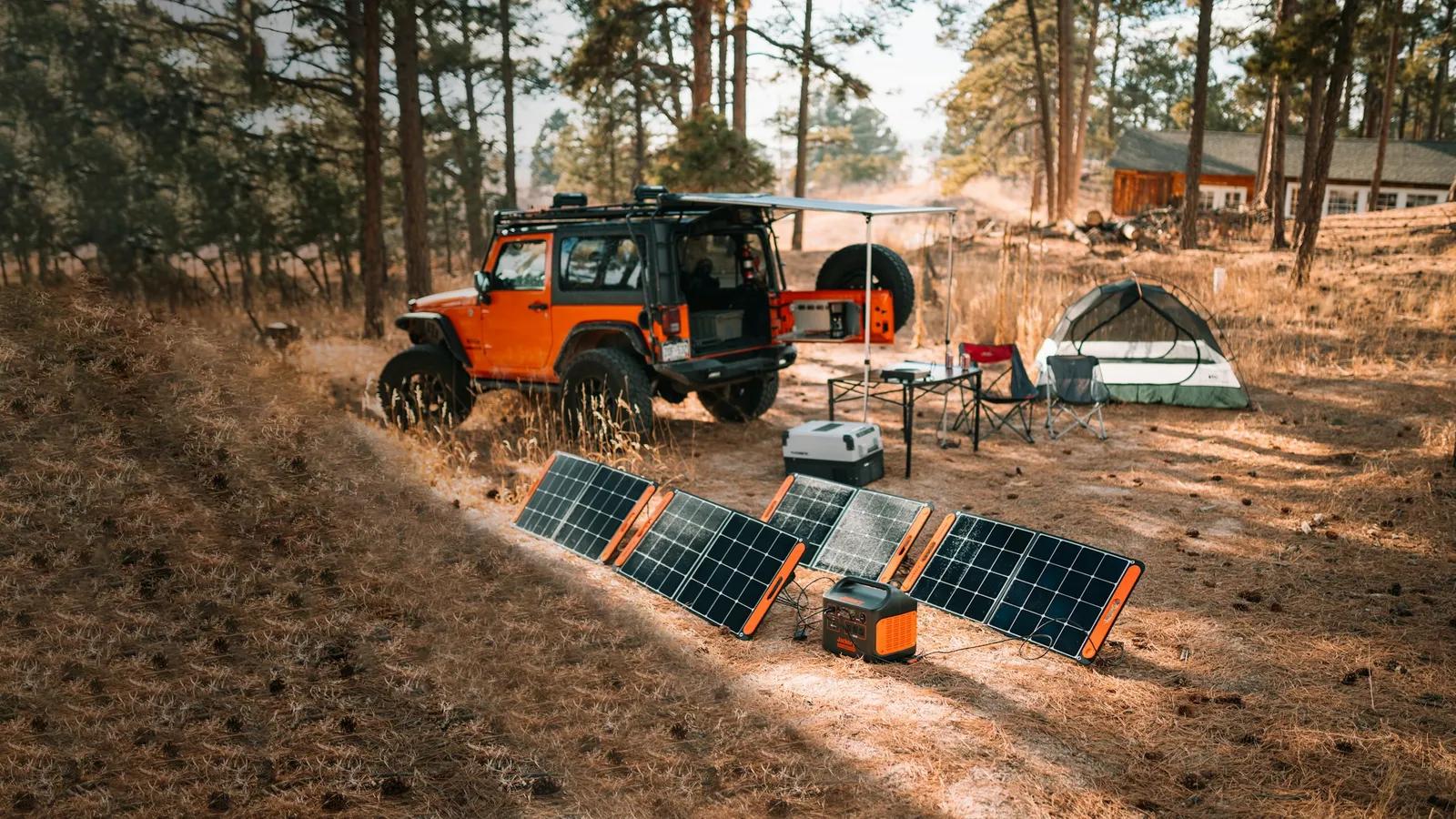
Jeep camp with a tent, solar panels and a portable power station at a pine forest campsite

At a glance

Our top picks

Backpackers carry a phone for maps, photos, a satellite messenger or a headlamp backup, and every one of those devices drains a battery that cannot be replaced in the backcountry. A solar power bank looks like a neat answer: a battery that charges itself from the sun while it dangles off your pack. The reality is more modest, and understanding it is the difference between a useful piece of kit and a gadget that adds ounces for nothing. The tiny panels on these banks are trickle chargers, good for topping up on a sunny rest stop and not for filling a battery in a day.

What really matters for backpacking is the stored capacity, the weight and the toughness. Every ounce counts on a long trail, so a smaller bank is easier to justify, yet a bank that is too small leaves your phone dead on day three. A rough rule is that a 10000mAh bank gives a couple of full phone charges and a 20000mAh bank gives roughly double that, with a weight penalty to match. Water and dust protection matter too, since packs get rained on and gear gets dropped in dirt.

This guide compares two products that approach the job from opposite ends. The BLAVOR Solar Power Bank 10 at $29.99 is the smallest and lightest solar bank we found, with 10000mAh, a 20W USB-C port, an IPX5 rating and Qi wireless charging. The Solar Charger Power Bank 20000mAh at $19.99 doubles the capacity, adds three built-in cables that can charge six devices and a wireless pad. We studied the published numbers and hiker comments for both, and we are open about where those numbers are thin.

Because there are only two picks, the decision is a clean one: do you trade capacity for weight, or weight for capacity? The sections below map that choice to the type of trip, the devices you carry and the way you plan to recharge, so you can pick without reading a long list of near-identical products. If you are still undecided after reading, ask how often you actually run out of phone battery on a typical trip, because that single number answers most of the question.

A final word on expectations. Solar charging on the trail works best when the bank is left in direct sun at midday, angled toward the sun and clipped outside the pack. Cloud, shade, forest cover and a dirty panel all cut the trickle to almost nothing. Treat the panel as a bonus and plan your energy budget around the stored capacity, charging by wall or car cable before you leave the trailhead.

RV Gear Lab field notes

The Campsite Fit Check

Start with the job
BLAVOR Solar Power Bank 10 leads this shortlist for Ultralight trail use. Use that fit as a reference point, then compare the alternatives against your own space and workload.
Specs that separate the picks
The first details to compare are 10000mAh, 20W USB-C, 20000mAh, 15W fast charge. Confirm the exact model and included components before ordering.
Trade-off to plan for
10000mAh gives only about two phone charges

Before you buy

What Matters Before You Choose a Solar Power Bank For Backpacking

Key buying criteria so you get the right fit the first time.

  1. 01

    Capacity in mAh

    Milliamp hours measure stored charge, and a typical phone battery is around 3000 to 5000 mAh. Conversion losses mean a 10000mAh bank delivers roughly two phone charges, and a 20000mAh bank roughly four. Check the stated capacity on the listing, and divide by your phone's battery size to estimate the real number of charges.

  2. 02

    Weight and size

    Weight is the main cost of a bigger battery, and on a long hike every ounce adds fatigue. The BLAVOR is the lightest here, and the 20000mAh bank is heavier. Look for a stated weight in the product details, and compare it with the other items you plan to carry.

  3. 03

    Output speed

    A 20W USB-C port charges a phone much faster than an older 5W port, and faster charging means less time waiting at a campsite. Check the wattage listed for each port, and confirm that your phone supports the fast charge standard on the listing.

  4. 04

    Water and dust protection

    An IPX5 rating means the bank can handle water jets, and it is a useful margin for rain and splashes. It does not mean submersion. Check the rating and whether it covers the ports, and use a cover or a dry bag in heavy rain.

  5. 05

    Solar panel realism

    A small solar panel adds only a trickle charge, and clouds or shade reduce it to almost nothing. It can extend a trip slightly but cannot replace a wall charge. Check the panel size, and treat any claim of full solar charging with skepticism.

  6. 06

    Cables and wireless charging

    Built-in cables mean fewer items to carry, and a Qi pad lets you charge a phone without a cable. They also add weight and potential failure points. Check which cable types are included and whether your devices use them, and bring a spare cable if not.

Our standards

Why You Can Trust RV Gear Lab

At RV Gear Lab, we compare products based on campsite fit, verified specifications, usability, setup requirements, weight, durability, and real-world trade-offs. We do not rank products purely on marketing claims or commission rates.

We have not personally tested every product listed. Where hands-on testing is not available, recommendations are based on verified manufacturer specifications, product documentation, use-case fit, and comparative research.

How we review camping gear →

Detailed reviews

The 2 best solar power banks for backpacking, explained

01

Best Overall · 1 of 2

BLAVOR Solar Power Bank 10

BLAVOR Solar Power Bank 10
  • 10000mAh, 20W USB-C
  • IPX5, dustproof
  • Qi wireless charging
Check price on Amazon for BLAVOR Solar Power Bank 10 (opens in a new tab)
Best for: Ultralight trail use

Our take

The ounce-saver for hikers. Fast USB-C and a rugged shell in a small body.

Why it made the shortlist

The BLAVOR Solar Power Bank 10 is a 10000mAh bank described as the smallest and lightest solar bank in its class, with a 20W USB-C port, Qi wireless charging and IPX5 water and dust protection. Lithium-cobalt cells support more charge cycles, and it sells for $29.99.

Compared with the 20000mAh bank below it, the BLAVOR gives a faster 20W USB-C port and a much lighter load on the shoulders. That makes it the one to carry when every ounce counts on a long trail.

It is the best match for thru-hikers, fastpackers and weekend backpackers who want a trail-ready bank with rugged protection and quick phone charging.

What works

  • Smallest and lightest solar bank listed
  • 20W USB-C fast charge
  • IPX5 water and dust protection
  • Lithium-cobalt cells for more cycles

Watch out for

  • 10000mAh gives only about two phone charges
  • Panel is tiny
The catch
Capacity covers only a couple of phone charges on longer trips.
02

Best Capacity · 2 of 2

Solar Charger Power Bank 20000mAh

Solar Charger Power Bank 20000mAh
  • 20000mAh, 15W fast charge
  • 3 built-in cables, 6 devices
  • Wireless pad, solar panel
Check price on Amazon for Solar Charger Power Bank 20000mAh (opens in a new tab)
Best for: Multi-day trips

Our take

More charges on longer hikes with cables built in.

Why it made the shortlist

The Solar Charger Power Bank 20000mAh holds 20000mAh, 2x the BLAVOR's 10000mAh capacity at $19.99. Three built-in cables serve six devices, a wireless pad is included, and the listing states a phone reaches 60 percent in 30 minutes on 15W fast charge.

Compared with the BLAVOR above it, this bank carries enough energy for several more phone charges, plus built-in cables so nothing gets left behind. It delivers more stored power at a lower price.

It suits week-long trips, car campers and two hikers sharing one charger, who want built-in cables and extra capacity for phones, a watch and a headlamp.

What works

  • Twice the capacity of the BLAVOR
  • Three built-in cables
  • Wireless charging pad
  • Phone to 60 percent in 30 minutes

Watch out for

  • Heavier than the BLAVOR
  • 15W is slower than 20W
The catch
More weight in the pack for the extra cell.

Methodology

How We Built This Shortlist

Each pick was assessed across 5 criteria weighted for real-world use.

01

Capacity against weight

The core backpacking tradeoff is energy versus ounces. We compared the 10000mAh BLAVOR, which the listing describes as the smallest and lightest solar bank, with the 20000mAh model that doubles capacity and weighs more.

02

Charging speed

A fast port saves time at a campsite or shelter. We compared the 20W USB-C fast charge on the BLAVOR with the 15W fast charge on the 20000mAh bank, which the listing says takes a phone to 60 percent in 30 minutes.

03

Weather and dust protection

Packs get wet and dusty. We noted the IPX5 water and dust protection on the BLAVOR and the lithium-cobalt cells that the listing says allow more charge cycles, and we noted the less specific protection claims on the larger bank.

04

Ports, cables and wireless charging

More ports let you charge more gear. We compared the USB-C port and Qi pad on the BLAVOR with the three built-in cables, six-device support and wireless pad on the 20000mAh bank.

05

Realism of the solar panel

Both banks include small panels, and we treated them as trickle chargers. The BLAVOR listing describes a tiny panel and the other bank adds a panel with a wireless pad, so neither replaces a wall charge before the trip.

Decision guide

Match a Solar Power Bank For Backpacking to Your Camp Setup

By Trip Length

Capacity is only useful in proportion to the days you spend away from a wall socket, so start with trip length.

TripBank to pickWhy
Overnight or weekend with one phoneBLAVOR Solar Power Bank 1010000mAh gives about two phone charges at the lowest weight.
Three to five days with a phone and a headlampSolar Charger Power Bank 20000mAhTwice the capacity of the BLAVOR for $19.99.
Week-long trek with several devicesSolar Charger Power Bank 20000mAhThree built-in cables and support for six devices.
Ultralight fastpackingBLAVOR Solar Power Bank 10The smallest and lightest solar bank listed.

By Budget

The two banks are priced close together, and the larger one is actually cheaper, which makes this a question of weight, not cost.

BudgetBank to pick
Under $20Solar Charger Power Bank 20000mAh at $19.99, with twice the capacity.
Around $30BLAVOR Solar Power Bank 10 at $29.99, paying a little more for lower weight and a 20W port.
If you want bothCarry the 20000mAh bank for long trips and the BLAVOR for short ones, for $49.98 combined.

Light and Fast vs High Capacity

Backpacking power banks pull in opposite directions, and there is no way to get both extremes in one unit.

Light and fast

The BLAVOR is the smallest and lightest solar bank listed, with 10000mAh and a 20W USB-C port that charges fast. IPX5 protection and lithium-cobalt cells add durability. It gives only about two phone charges.

High capacity

The 20000mAh bank holds twice as much, with three built-in cables, a wireless pad and a 15W fast charge that gets a phone to 60 percent in 30 minutes. It weighs more, which adds up on a long hike.

Choose the BLAVOR for short trips and low weight, and the 20000mAh bank when you will be out several days.

By Devices You Carry

Think next about what you plug in, since each device has its own port and speed needs.

Your devicesBank to pickWhy
A modern phone with USB-C fast chargeBLAVOR Solar Power Bank 1020W USB-C delivers fast charging.
A phone, a watch and a headlampSolar Charger Power Bank 20000mAhThree built-in cables handle multiple gadgets.
A phone that supports Qi wirelessEither oneBoth include a Qi wireless pad.
A shared charger for two hikersSolar Charger Power Bank 20000mAhSupports up to six devices.

For Ultralight Thru-Hikers Specifically

Long-distance hikers count every gram and plan resupply stops around charging, so a bank has to earn its weight.

Look for

The lowest weight that still gives you a full phone charge or two between town stops, a fast port to refill the bank quickly at a hostel and enough weather protection to survive a long season.

In this comparison

The BLAVOR at $29.99 is the smallest and lightest solar bank listed, with a 20W USB-C port and IPX5 protection, so it matches those needs. The 20000mAh bank is a second choice if you carry several devices.

When to Spend More

Given a $10 gap and the cheaper bank holding more, spending more is a choice about weight and port speed.

Spend more if

Pay $29.99 for the BLAVOR if weight and the 20W USB-C port matter more than capacity, and if you want IPX5 protection and lithium-cobalt cells for more charge cycles.

Save if

Pay $19.99 for the 20000mAh bank if you care about capacity and extra cables. It gives more energy for less money, and the extra weight is acceptable on shorter hikes or car-camping trips.

FAQ

Before You Bring One Home

Will a solar power bank fully charge from its panel?

In practice, no. The panels are small, and filling a 10000mAh or 20000mAh bank from them could take many days of strong sun. Charge the bank by cable before the trip, and use the panel for a small extra top-up. A useful habit is to clip the bank on the outside of the pack during a sunny stretch of trail, then check the indicator lights at the next break to see whether the trickle added anything at all.

What is a common mistake with backpacking power banks?

Bringing too large a bank for the trip, or too small a one. Estimate your phone use and divide the bank's capacity by your phone battery size. Another mistake is leaving the bank fully drained in a hot car, or tucking it into the bottom of the pack where a cold night can sap its charge. Keeping it in a jacket pocket or sleeping bag overnight preserves capacity in freezing weather.

Is the BLAVOR worth more than the $19.99 20000mAh bank?

If weight and a 20W USB-C fast charge matter, yes. The 20000mAh bank holds twice the energy and costs $10 less. For short trips choose the BLAVOR, and for multi-day trips choose the larger one. There is no wrong answer here, only a tradeoff between a few ounces and a few extra phone charges, and many hikers keep both and pick one by trip.

How should I charge a phone from the bank on the trail?

Put the phone in airplane mode and charge it while resting, not while walking. Keep the bank and the cable in a pocket or the lid of the pack. Charging overnight in the tent keeps the phone ready for morning. Turn off background apps, lower the screen brightness and download offline maps before you leave, since those habits stretch a bank further than any hardware choice. Cold weather also reduces battery output, so keep both phone and bank warm.

Can I take a bank on a plane?

Yes, in your carry-on, and both banks are well below airline limits for lithium batteries. Never put a power bank in checked luggage. Keep the label visible in case security asks about capacity. Most airlines also ask that you keep the bank within reach during the flight, so that crew can respond quickly if a battery ever overheats, and a small pouch in the seat pocket works well.

How do I care for the bank?

Keep it dry and out of direct heat, and charge it a little every few months in storage. Wipe dirt from the ports before use. A clean panel catches more light on the trail, so wipe it with a soft cloth when it gets dusty. Inspect the rubber port covers now and then, because a cover that no longer seats properly takes the water protection with it.

Bottom line

The short version

For a typical backpacking trip, the BLAVOR Solar Power Bank 10 at $29.99 is the best overall choice, since it is the smallest and lightest solar bank listed and adds a 20W USB-C port, IPX5 protection and Qi wireless charging. The 20000mAh bank at $19.99 is the pick for longer trips and several devices, with three built-in cables and a wireless pad.

Remember that the solar panel is only a trickle charger, so charge by cable before you leave. Estimate how many phone charges you need, match the weight to your trip and keep the bank dry and cool. A well-chosen bank turns a dead phone on day three into a non-issue, and the small weight it adds is easy to forget once you have used it to find the trail in fading light. Pack it near the top of the bag, keep a short cable handy and give it a full charge the night before you leave.

Browse more solar power banks for backpacking on Amazon →
Danny Walker, Camping Editor at RV Gear Lab

About the author

Danny Walker

Camping Editor at RV Gear Lab

Danny covers camping gear, campsite setup, outdoor power, sleep systems and practical camping advice, with a focus on helping campers make better gear decisions.

More from Danny →Editorial standards

Keep reading

Related guides