We research everything we recommend. When you buy through our links, we may earn a commission. Learn more

Buying guide · 10 min read · Updated October 2, 2026

2 Best Waterproof Solar Power Banks in 2026: A Practical Camping Guide

Two waterproof solar power banks for RV trips and trailheads, compared on IPX5 rating, 10000mAh vs 20000mAh capacity, fast charging and built-in cables.

Danny WalkerBy Danny WalkerCamping Editor at RV Gear Lab2 products comparedSpec-sheet researched
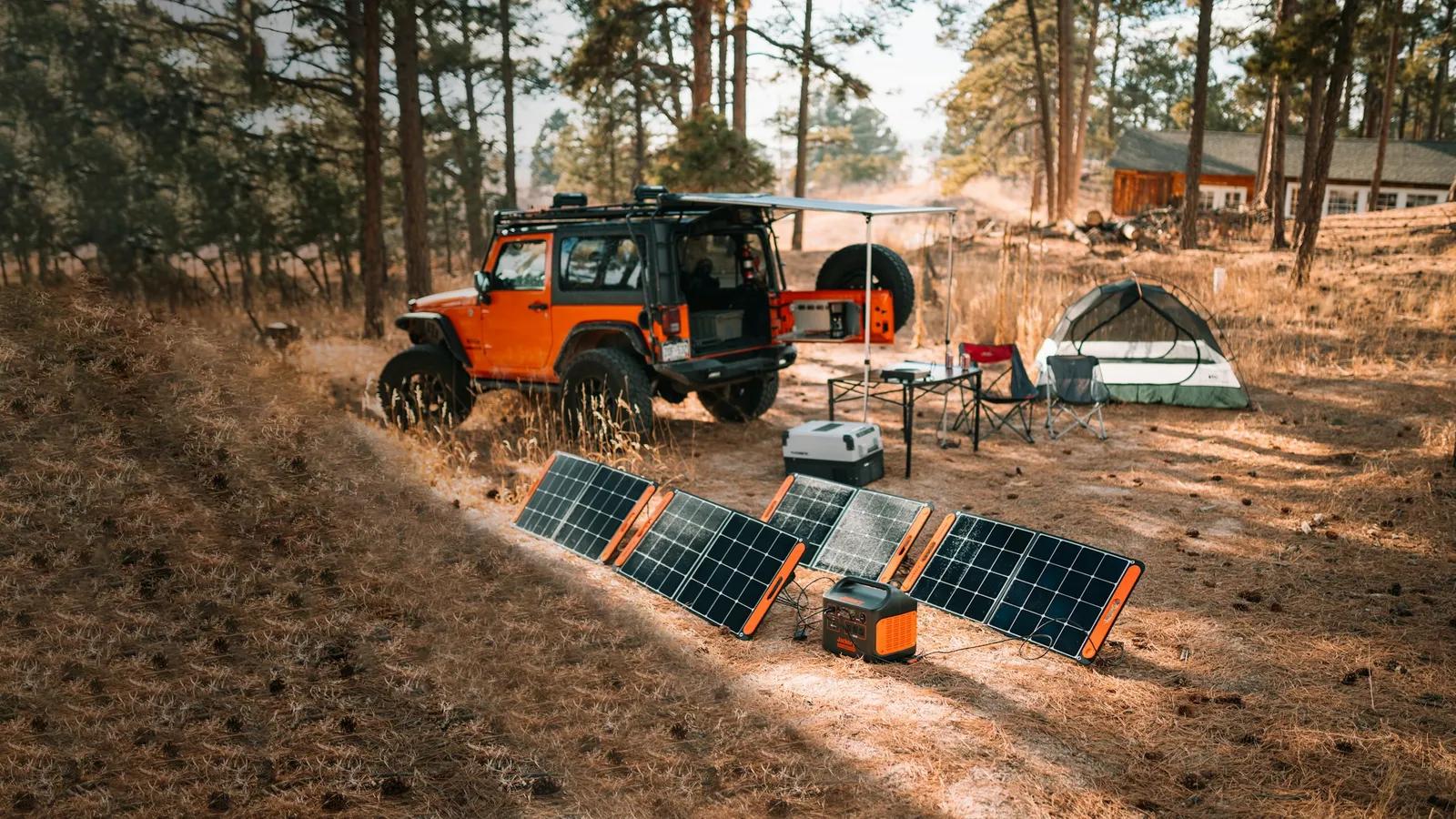
Jeep camp with a tent, solar panels and a portable power station at a pine forest campsite

At a glance

Our top picks

A solar power bank sounds like the perfect gadget for an RV owner who wanders off the grid: a battery pack for phones and lights with a small solar panel on top for topping up in daylight. In practice the two halves of that description need different expectations. The battery is the part that does the real work, and the panel is a slow trickle that helps on a long trip but will not recharge a large pack quickly. The water protection is the third thing worth examining, because it is the one claim that shoppers most often take at face value.

Waterproof is a loose word on product listings. Some packs state an actual ingress protection rating, a code such as IPX5 that tells you what kind of water exposure the case was built to handle, and others describe the shell as waterproof, dustproof and shockproof without naming a standard. Neither is a guarantee of surviving a dunk in a lake, and IPX5 in particular covers jets of water from a hose or heavy rain, not submersion. For campsite use that is usually enough, but it helps to know exactly what you are getting.

This guide covers the two packs in this category that give real water-protection information. We evaluated them on the stated water claim, capacity, charging speed, built-in cables, extra features such as lights and wireless charging, and price, based on product specs and buyer feedback. The BLAVOR is the one that names an IPX5 rating and adds Qi wireless and 20W USB-C. The GULLVEN doubles the capacity to 20000mAh, builds in three output cables and adds a camping light with SOS mode.

With only two picks, the choice comes down to a clear tradeoff: a named rating and faster charging against double the stored energy and built-in cables at a lower price. The sections below map that tradeoff onto real situations, from hiking a wet trail to keeping a family's phones alive through a long weekend at a campsite, so you can pick the pack that matches how you travel. Prices here are modest, which makes it easy to own one of each if you split time between day hikes and longer family camping weekends.

One honest note before the picks: neither pack replaces a proper power station or a dedicated folding solar panel. A 10000mAh or 20000mAh pack is meant for phones, small lights, headlamps and similar low-draw devices, not for running a fridge or a laptop all day. Think of these as pocket insurance for the days when the campsite outlet is far away, and choose the one whose strengths line up with the devices you actually carry.

RV Gear Lab field notes

The Campsite Fit Check

Start with the job
BLAVOR Solar Power Bank 10 leads this shortlist for Rainy trails and compact carry with fast charging. Use that fit as a reference point, then compare the alternatives against your own space and workload.
Specs that separate the picks
The first details to compare are 10000mAh, IPX5, 20000mAh, certified UN38.3. Confirm the exact model and included components before ordering.
Trade-off to plan for
Only 10000mAh

Before you buy

What Matters Before You Choose a Waterproof Solar Power Bank

Key buying criteria so you get the right fit the first time.

  1. 01

    Stated IP rating

    An ingress protection rating such as IPX5 is a code that tells you how the case was designed to handle water, with the X meaning dust was not rated. IPX5 covers jets of water from any direction, which means rain and splashing, but it does not cover being dropped in a lake. Look for the IPX number in the product title or bullet points, and treat plain waterproof wording without a number as a general claim.

  2. 02

    Battery capacity in mAh

    Capacity measures how much energy the pack stores, and a 20000mAh pack holds about twice as much as a 10000mAh one. A typical phone needs one to three charges from a pack this size depending on its battery, though conversion losses mean you will not get the full figure. Check the capacity in the title and compare it with the size of the devices you carry.

  3. 03

    Output wattage and ports

    A pack that stores a lot of energy can still charge slowly if its ports are limited. A 20W USB-C port can fast charge many phones, while an older output may take hours. Look for the wattage next to each port in the listing, and note when a listing gives no fast-charge figure, since that suggests basic charging speed.

  4. 04

    Solar panel expectations

    The small panel on top of a power bank trickles energy in, and it is meant for emergencies and slow top-ups rather than daily charging. A larger battery takes much longer to refill from sun alone. Treat the solar feature as a bonus, plan to charge the pack from an outlet before a trip, and place it in direct sun with the panel facing up if you need a top-up. Do not rely on a cloudy day or a dashboard behind tinted glass to produce meaningful charge, since both cut the energy reaching the panel sharply.

  5. 05

    Certifications

    Lithium batteries can be a safety concern, so certifications give some assurance about how a pack is built and shipped. The GULLVEN lists UL, CE, FCC, RoHS and UN38.3, which includes the transport test for lithium cells. Look for named certifications in the listing, and be cautious with packs that give no information about the cell or the safety testing.

  6. 06

    Built-in cables and extras

    Built-in cables mean you do not need to carry a cord, but they can break and are hard to replace. Lights and SOS modes add use after dark. Check which connector types are included, such as Type-C, Lightning and Micro USB, and confirm they match your devices before you buy. If a built-in cable fails, a pack with a spare input port still lets you use your own cord, so check that a standard USB-C or USB-A port is available as a backup.

Our standards

Why You Can Trust RV Gear Lab

At RV Gear Lab, we compare products based on campsite fit, verified specifications, usability, setup requirements, weight, durability, and real-world trade-offs. We do not rank products purely on marketing claims or commission rates.

We have not personally tested every product listed. Where hands-on testing is not available, recommendations are based on verified manufacturer specifications, product documentation, use-case fit, and comparative research.

How we review camping gear →

Detailed reviews

The 2 best waterproof solar power banks, explained

01

Best Rated Protection · 1 of 2

BLAVOR Solar Power Bank 10

BLAVOR Solar Power Bank 10
  • 10000mAh, IPX5
  • 20W USB-C, Qi wireless
  • Flame-retardant ABS and PC
Check price on Amazon for BLAVOR Solar Power Bank 10 (opens in a new tab)
Best for: Rainy trails and compact carry with fast charging

Our take

The only bank here with a named IP rating.

Why it made the shortlist

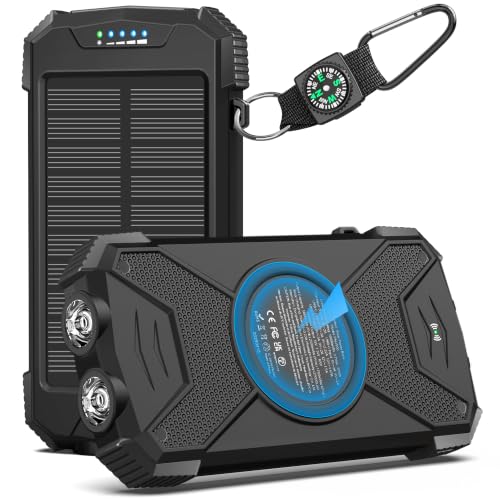
The BLAVOR is a 10000mAh solar power bank that states its protection as IPX5, along with dustproof and shockproof claims and a waterproof silicone seal on the case. The shell is flame-retardant ABS and PC, and the pack pairs a 20W USB-C port with Qi wireless charging. It costs $29.99 and carries the clearest water claim in this comparison.

The 20W USB-C port also gives it a faster charging path for a modern phone, and Qi wireless means a compatible phone can top up without a cable.

It is the pick for hikers, campers and RV owners who want a compact pack that can ride in a pocket or a day bag through rain and spray, and who value a named rating and wireless charging over raw capacity.

What works

  • 20W USB-C charges quickly
  • Qi wireless included
  • Silicone seal on the case

Watch out for

  • Only 10000mAh
  • IPX5 does not cover submersion
The catch
IPX5 handles jets, not submersion.
02

Best Capacity · 2 of 2

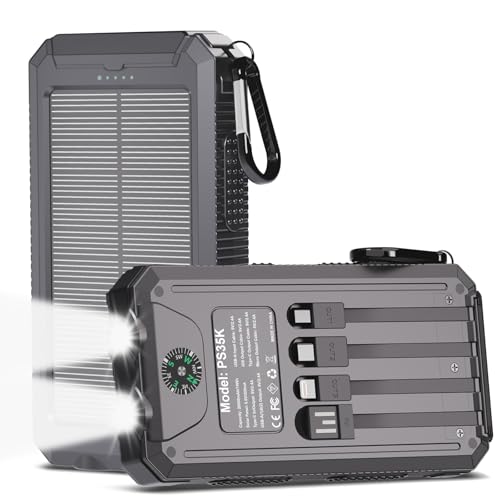
GULLVEN Solar Power Bank 20000mAh

GULLVEN Solar Power Bank 20000mAh
  • 20000mAh, certified UN38.3
  • 3 built-in output cables
  • Camping light and SOS
Check price on Amazon for GULLVEN Solar Power Bank 20000mAh (opens in a new tab)
Best for: Multi-device trips needing the most stored power

Our take

A bigger bank with built-in cables and a light. Treat the water claim as splash protection only.

Why it made the shortlist

The GULLVEN is a 20000mAh lithium-polymer solar power bank with UL, CE, FCC, RoHS and UN38.3 certifications listed. It has three built-in output cables in Type-C, Lightning and Micro USB, plus a USB-A input cable, and the ABS and PC shell is described as waterproof, dustproof and shockproof. A camping light with SOS flashing mode is built in, and it costs $23.99.

The three built-in cables remove the need to carry a separate cord for most devices, and the camping light gives it a second job after dark at the campsite or in the coach.

It is the pick for families, weekend campers and anyone charging several devices on a trip, who want the most stored energy and the most built-in connectors for the money.

What works

  • Twice the capacity of the BLAVOR
  • Three built-in output cables
  • UL, CE, FCC, RoHS certifications
  • Camping light with SOS

Watch out for

  • No fast-charge wattage listed
The catch
Without a rating, keep it out of heavy rain.

Methodology

How We Built This Shortlist

Each pick was assessed across 5 criteria weighted for real-world use.

01

Water and dust protection

We compared the BLAVOR's named IPX5 rating with the GULLVEN's general waterproof, dustproof and shockproof description. A stated rating is easier to interpret, so it earns more weight than an unnamed claim, and we note that IPX5 does not cover submersion.

02

Capacity

Stored energy decides how many charges you get. We compared 10000mAh against 20000mAh and considered how that translates into phone top-ups on a multi-day trip when no outlet is available.

03

Charging speed and ports

Output matters as much as capacity. We looked at the BLAVOR's 20W USB-C port and Qi wireless charging against the GULLVEN's three built-in cables, and noted where a listing does not give a fast-charge wattage.

04

Certifications and build

We looked at the flame-retardant ABS and PC case on the BLAVOR and the UL, CE, FCC, RoHS and UN38.3 certifications listed for the GULLVEN, since certifications and materials say something about how the battery is built and shipped.

05

Extras and value

Camping lights, SOS modes, wireless charging and built-in cables add real day-to-day use. We weighed these against the $29.99 and $23.99 prices to judge which pack gives more for the money.

Decision guide

Match a Waterproof Solar Power Bank to Your Camp Setup

By Water Exposure

The kind of wet weather you expect decides whether a named rating matters. Think about whether the pack will get rain, spray or just damp air.

Your exposureRecommended pickWhy
Hiking in rain or wet trailheadsBLAVOR Solar Power Bank 10000mAhStates IPX5, which covers jets of water, with a silicone seal on the case.
Sitting on a dashboard or picnic table in light weatherGULLVEN Solar Power Bank 20000mAhDescribed as waterproof, dustproof and shockproof, which suits ordinary campsite use.
Beach or boat with splashingBLAVOR Solar Power Bank 10000mAhA named rating is the better guide for spray and splashes.
Mostly inside the coach with an occasional carry outsideGULLVEN Solar Power Bank 20000mAhWater protection matters less, so capacity wins.

By Budget

The two packs are priced within six dollars of each other, so the question is what each dollar buys.

BudgetRecommended pick
About $24GULLVEN at $23.99 with 20000mAh, three built-in cables and a camping light.
About $30BLAVOR at $29.99 with a named IPX5 rating, 20W USB-C and Qi wireless.
Above $30 for serious power needsNeither pack; a dedicated power station or a folding solar panel is a better fit for laptops or a fridge.

Named Rating vs Bigger Battery

The central tradeoff in this guide is simple. You can have a stated water rating and wireless charging in a compact pack, or double the stored energy at a lower price.

Named rating, faster ports

The BLAVOR lists IPX5, a 20W USB-C port and Qi wireless charging in a 10000mAh pack. That is enough for a couple of phone charges and suits people who want a rating they can read and quick top-ups. Its smaller battery fills faster from the panel too.

Bigger battery, more cables

The GULLVEN stores 20000mAh and builds in three output cables plus a camping light with SOS. That gives roughly twice the charges and fewer cords to carry, which suits anyone sharing the pack among several people or devices.

Most RV owners will get more everyday value from the GULLVEN's capacity unless wet weather exposure is the main concern.

By Devices You Charge

Different gadgets want different features. Match the pack to the gear that actually travels with you.

DevicesRecommended pick
One modern phone with USB-C or wireless chargingBLAVOR, using 20W USB-C or Qi wireless.
Phones, a tablet and a headlamp for a familyGULLVEN, with 20000mAh and three built-in output cables.
Older phones with Micro USB or LightningGULLVEN, which includes Lightning and Micro USB cables built in.
A night light for the coach or tentGULLVEN, with its built-in camping light and SOS mode.

For Hikers and Overlanders Specifically

Weight and weather matter more on foot than at a campsite. The pack has to be small, survive rain and keep a phone alive for navigation.

Look for

A stated water rating, a compact body, fast output for a short charge stop and a rugged case. Capacity matters, but every ounce is carried, so choose the smallest pack that covers your phone for the length of the trip.

In this comparison

The BLAVOR fits this use best with IPX5, a flame-retardant case and 20W USB-C in a 10000mAh body. The GULLVEN is the better choice if the trip is long and you are charging more than one device.

When to Spend More

With such a narrow price gap, the question is which features are worth the extra six dollars, or whether to step up to a different product entirely.

Spend more if

Choose the BLAVOR at $29.99 if you want the named IPX5 rating, 20W USB-C and Qi wireless charging, and you care more about those features than total capacity.

Save if

Choose the GULLVEN at $23.99 if you mainly want capacity and built-in cables. It stores twice the energy, includes three cables and a camping light, and costs six dollars less.

FAQ

Before You Bring One Home

Can I use a solar power bank to charge my phone in the rain?

An IPX5 rating such as the BLAVOR's covers jets of water, so light to moderate rain is within its design. Keep the ports closed and the silicone seal in place while charging. Avoid leaving it submerged or in standing water, because IPX5 does not cover immersion, and dry the case before storing it. After a wet day, wipe the seals and ports and let the pack air out before you stash it in a bag, since trapped moisture is harder on connectors than the rain itself.

How long does it take to charge a power bank from the sun?

It takes much longer than charging from a wall outlet, because the panel is small. Treat solar charging as a slow top-up that helps on a long trip rather than a primary power source. Charge the pack from an outlet before you leave, and use the panel only when you are stuck without a socket.

Is the 20000mAh GULLVEN better than the BLAVOR?

It depends on your priorities. The GULLVEN holds twice the energy, includes three built-in cables, adds a camping light and costs $23.99. The BLAVOR at $29.99 names its IPX5 rating and adds 20W USB-C and Qi wireless. For capacity choose the GULLVEN, and for a named rating and faster charging choose the BLAVOR.

Can I take a power bank on a plane?

Rules apply to lithium batteries, and the UN38.3 transport certification listed for the GULLVEN is related to that testing. Airlines generally require power banks in carry-on bags, and capacity limits apply, so check your airline's current rules before you fly rather than assuming a pack is allowed.

How should I store a power bank between trips?

Store it in a cool, dry place with a partial charge rather than empty or completely full. Avoid leaving it in a hot parked vehicle or direct sun, since heat shortens battery life. Top it up every few months so the cell does not drain too far, and keep the port covers closed to keep out dust. A small padded pouch in the glove box or day bag protects the case from knocks and scratches that can wear down the seal over time.

Can a power bank run RV appliances?

No. Packs this size are meant for phones, small lights and similar devices, not for a refrigerator, a microwave or a laptop that draws steadily. For those loads you need a power station or the coach's battery bank. Use the power bank as backup for small electronics, and keep it charged before each trip.

Bottom line

The short version

For most RV owners the GULLVEN is the better all-round buy at $23.99, giving 20000mAh, three built-in cables and a camping light for less than the BLAVOR. The BLAVOR is the better pick if you want a named IPX5 rating, 20W USB-C and Qi wireless charging in a compact 10000mAh pack at $29.99.

Keep expectations realistic: the solar panel is a slow top-up, and these packs suit phones and small lights rather than appliances. Charge the pack before each trip, protect the ports from water, and RV Gear Lab suggests pairing either choice with a proper power source if your trips run longer than a long weekend. Whichever pack you choose, test it at home before a trip: charge a phone from empty, check that the cables fit your devices and make sure the light and ports work, so surprises happen on the driveway rather than at a remote campsite.

Browse more waterproof solar power banks on Amazon →
Danny Walker, Camping Editor at RV Gear Lab

About the author

Danny Walker

Camping Editor at RV Gear Lab

Danny covers camping gear, campsite setup, outdoor power, sleep systems and practical camping advice, with a focus on helping campers make better gear decisions.

More from Danny →Editorial standards

Keep reading

Related guides