
Practical Camping Guide · 13 min read
How to Size a Solar Panel for Camping
Size a camping solar panel from daily watt-hours and peak sun hours, then match it to your power station or battery with worked examples and a sizing table.

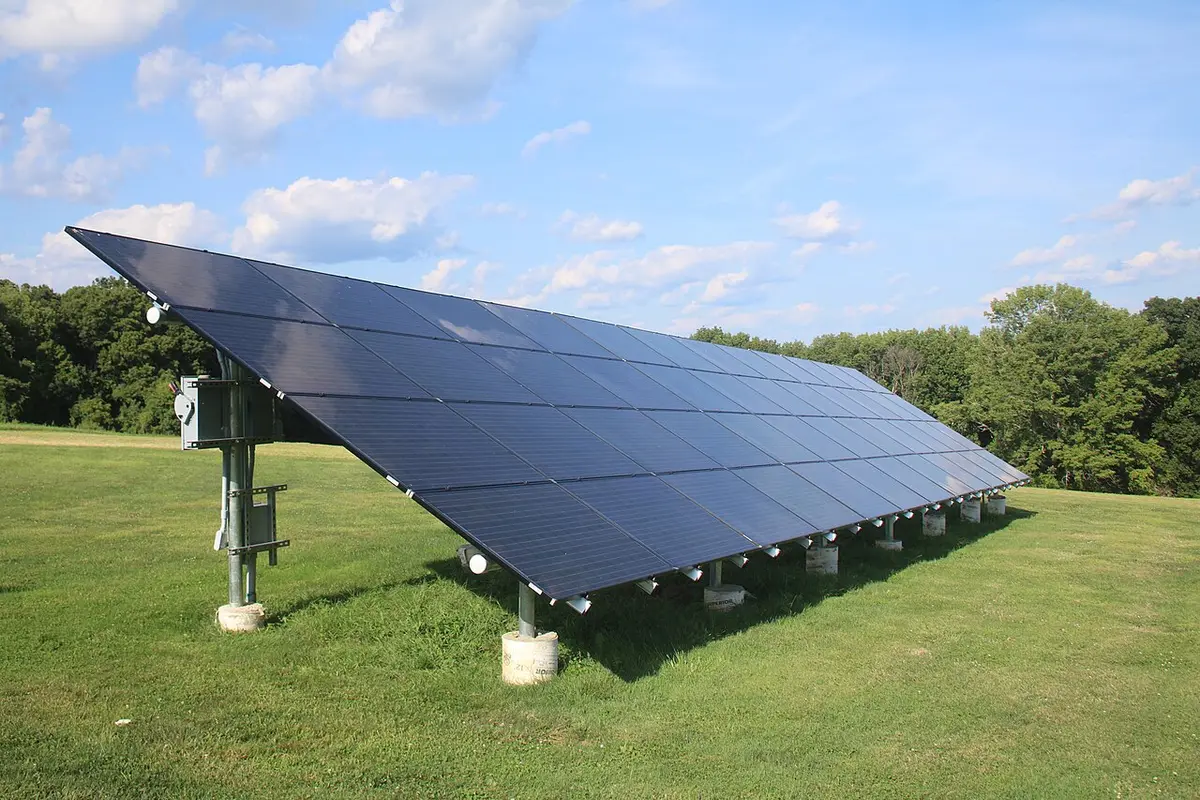
Size a camping solar panel with one formula: panel watts = daily watt-hours you need, divided by the effective sun hours at your site (typically 3 to 5), divided by about 0.7 to account for real-world losses. A phone, headlamp and a few lights (about 40 Wh a day) are covered by a 20 to 50 W folding panel, a laptop and camera by 100 W, and a 12 V fridge with lights and phones (about 600 Wh a day) by 200 to 300 W. Add margin for shade and cloud, and make sure your battery or power station can accept the panel's voltage and current.
Most camping solar disappointments come from skipping that arithmetic. A panel labeled 100 W rarely delivers 100 W, because the label describes laboratory conditions that you will almost never see on a campsite. Below is how to estimate your daily energy, convert sun into watt-hours, match a panel to your battery, and avoid the mistakes that leave a power station half empty on day three.
Step 1: add up your daily watt-hours
Start with what you actually run. For each device, multiply its power draw in watts by the hours you use it per day. Add the results and then add a 20 to 25 percent buffer for conversion losses if you use an inverter or a charge controller.
| Device | Typical draw | Hours per day | Wh per day |
|---|---|---|---|
| Smartphone charging | 10 to 15 W | 1.5 | 15 to 22 |
| LED lantern or string lights | 3 to 8 W | 4 | 12 to 32 |
| Headlamp, rechargeable | 2 to 5 W | 2 | 4 to 10 |
| Laptop charging and use | 45 to 65 W | 3 | 135 to 195 |
| Camera batteries | 10 W | 1 | 10 |
| Small fan | 10 to 25 W | 6 | 60 to 150 |
| 12 V compressor fridge, 40 to 50 quart | 45 W running, about 35 percent duty | 24 | 300 to 450 |
| CPAP, no humidifier | 30 to 40 W | 8 | 240 to 320 |
| Portable speaker | 5 to 10 W | 4 | 20 to 40 |
| Electric blanket, low | 40 to 60 W | 4 | 160 to 240 |
The explainer on watt-hours versus mAh shows how to convert device battery labels into watt-hours if the draw is not printed on the device. For fridges, see how long a power station runs a 12V fridge, because the duty cycle changes with temperature.
A few typical daily totals:
- Minimalist weekend: phone, headlamp, lantern, speaker, about 50 to 80 Wh.
- Comfort car camping: phones, lights, laptop for an hour, fan, about 200 to 350 Wh.
- Fridge camper: the above plus a 12 V fridge, about 500 to 800 Wh.
- Remote worker: laptop all day, hotspot, phone and fridge, about 800 to 1,200 Wh.
Step 2: estimate your sun hours
Solar panels produce power in proportion to the sunlight they receive. Peak sun hours are the equivalent number of hours per day at a standard intensity of 1,000 watts per square meter. They are not the same as daylight hours. A site may have 12 hours of daylight and only 4 to 5 peak sun hours in summer.
| Season and conditions | Typical peak sun hours (continental US) |
|---|---|
| Summer, clear, open sky | 5 to 6 |
| Spring or fall, mostly sunny | 3.5 to 5 |
| Winter, clear, low latitude | 3 to 4 |
| Winter, northern states | 1.5 to 3 |
| Partly cloudy | 2 to 4 |
| Overcast, rain | 0.5 to 1.5 |
| Forest shade | Often under 1 |
These are planning ranges. The southwestern United States sits at the top of the range, and the Pacific Northwest and northeastern states sit lower, especially in winter. For trip planning, use the number for the month you will camp and the shadiest campsite you might get, rather than a perfect day.
Step 3: apply the real-world factor
A panel rated at 100 W produces that figure at 1,000 W/m2 of sunlight at 25 degrees C cell temperature. In the field, a number of things reduce output:
| Loss | Typical effect |
|---|---|
| Panel heat (cells above 25 C reduce voltage) | 5 to 15 percent |
| Angle not perfectly toward the sun | 5 to 20 percent |
| Charge controller or power station conversion | 5 to 15 percent |
| Cable and connector resistance | 1 to 3 percent |
| Dust, haze, morning and evening low light | 5 to 10 percent |
| Partial shade | Can exceed 50 percent |
Multiplying these together, a total derate of about 0.7 is a reasonable rule of thumb for hand-aimed folding panels: a 100 W panel in 5 peak sun hours yields about 100 x 5 x 0.7 = 350 Wh. Fixed, perfectly aimed panels with MPPT charging in cool, clear weather can reach 0.8 or better. In poor conditions the figure can drop to 0.5.
The sizing formula, with examples
Panel watts = Daily Wh / (Peak sun hours x 0.7)
| Daily need | Sun hours | Panel size needed | Common panel choice |
|---|---|---|---|
| 60 Wh (minimalist) | 4 | 21 W | 20 to 40 W foldable |
| 200 Wh (comfort) | 4 | 71 W | 100 W |
| 350 Wh (comfort plus fan) | 4 | 125 W | 100 to 150 W |
| 600 Wh (with fridge) | 4 | 214 W | 200 to 300 W |
| 600 Wh (with fridge) | 2.5 (shoulder season) | 343 W | 300 to 400 W |
| 1,000 Wh (remote work) | 4 | 357 W | 400 W |
| 1,000 Wh (remote work) | 2.5 | 571 W | 500 W or more |
Round up and consider future needs. If you will bring more gear next year, a slightly larger panel is cheap insurance. If the figure is higher than your roof or campsite allows, reduce loads or supplement with the car, a generator or a wall outlet at the end of the trip. See the best 40W portable solar panels, the best 50W portable solar panels and the best 40W foldable solar panels for small phone and light setups, and the best 50W foldable solar panels for the same size in a folding format.
Step 4: match the panel to your battery or power station
Wattage is not the only number. The panel's voltage and current must suit the device you charge.
Power stations. Each station lists a solar input range, for example 12 to 28 V and up to 10 A, or 11 to 60 V and 500 W maximum. The panel's open-circuit voltage (Voc) must stay below the maximum input voltage, even in cold weather when Voc rises. Its power must not exceed the maximum input wattage, or the station will clip the excess. Check the connector type, such as DC5521, Anderson, MC4 or XT60, and use the adapter your station maker recommends. If you plan to run AC gear from the station, the waveform matters too, as covered in pure sine wave versus modified sine wave inverters.
Batteries via charge controller. A separate battery needs a charge controller sized for the array. The relationship between panel wattage, battery voltage, and controller current is in the guide on MPPT versus PWM controller sizing, and the key step is to divide array watts by battery volts and add a 25 percent margin.
USB panels. Small foldable panels with USB output charge phones and power banks directly. Their output varies with sun, and many phones stop charging when the current dips. A power bank buffers it, so charge the bank from the panel and the phone from the bank.
If you plan to buy a power station along with panels, the best 400W foldable solar panels, best 400W portable solar panels, best 450W portable solar panels and best 500W portable solar panels show what the larger end looks like. Always check the power station's input limit first.
Series and parallel: what happens when you add panels
When you use two or more panels, how you connect them changes voltage and current.
| Connection | Voltage | Current | Result |
|---|---|---|---|
| Single panel | V | I | Baseline |
| Two in series | 2V | I | Higher voltage, same current |
| Two in parallel | V | 2I | Same voltage, higher current |
Power stations usually accept a defined voltage window, so series connection is useful when your station has a high maximum voltage and you want to push more watts through. Parallel connection works with low-voltage stations that cap voltage but accept higher current. Do not connect panels in a way that pushes Voc over the input limit. The cold-weather correction is real: a panel's voltage rises when cold, and a string that was safe in summer can exceed the limit on a frosty morning.
What the panel spec sheet is telling you
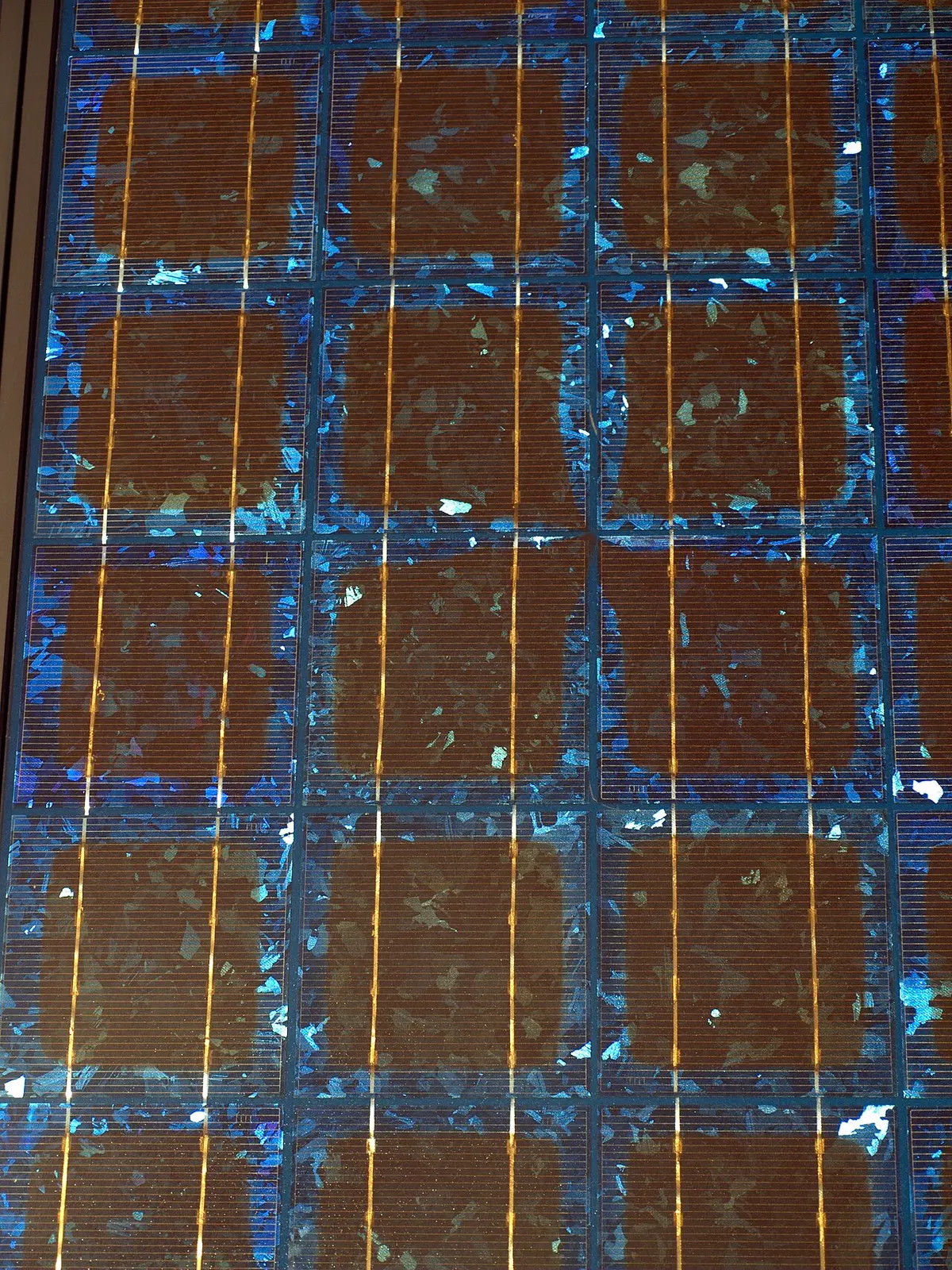
The sticker on the back of a panel lists a handful of numbers, and each one answers a sizing question.
- Pmax (maximum power). The rated watts under standard test conditions. This is the number on the box.
- Vmp and Imp. The voltage and current at the maximum power point. Multiply them and you get Pmax. For a charge controller or a power station, these show where the panel wants to operate.
- Voc. Open-circuit voltage, the highest voltage with nothing connected. This is the figure that must stay under your device's input limit, with extra margin for cold.
- Isc. Short-circuit current, the highest current. It matters for fuse and wire sizing.
- Temperature coefficient. How output changes as the panel heats up. A coefficient of minus 0.35 percent per degree C means a panel at 55 C (30 degrees above test) loses about 10 percent of its power, so a black panel on a hot rock produces less than the same panel with airflow behind it.
- Efficiency. Percent of sunlight converted to power. A higher efficiency means fewer square feet for the same watts, which matters for a pack or a roof, but not for the energy you get per rated watt.
When you compare two panels at the same wattage, the better choice for camping is usually the one that is lighter, folds smaller, has a well-protected junction box and cable, and comes with the connector your station uses, not the one with the highest efficiency number.
A worked sizing example, start to finish
A couple plans a four-night trip in early October in Colorado, with a 40 quart 12 V fridge, two phones, a laptop for two hours a day, LED lights and a fan. Here is the full calculation.
Loads. The fridge at about 350 Wh a day in cool autumn weather, phones 30 Wh, laptop 90 Wh, lights 30 Wh and a fan 50 Wh total 550 Wh. Adding 20 percent for conversion losses gives 660 Wh a day.
Sun. Early October in Colorado gives roughly 4.5 peak sun hours on a clear day, but the couple expects one cloudy day in four, so they plan on an average of 3.5.
Panel size. 660 / (3.5 x 0.7) = 269 W. They round to 300 W of panels, which is three 100 W folding panels or one 300 W folding panel.
Battery. To ride through a cloudy day without charging, the battery needs about 660 Wh, so a 700 to 1,000 Wh power station is the match. A 1,000 Wh station gives them a full day of reserve.
Check the station's solar input. If the station accepts up to 300 W and 11 to 60 V, three 100 W panels in series with a Voc of 22 V each give 66 V and exceed the limit. In parallel, they stay at 22 V and 17 A, which may exceed the current limit. The couple chooses two panels in series (44 V Voc, with margin for cold) and a third in a parallel string only if the manual allows it. This is the point where reading the station's manual saves hardware.
Result. The setup roughly matches daily use on average and holds the battery near full, with the large battery providing a cushion. If the forecast is poor, they can reduce fridge use or add a car charge.
Placement and angle
Placement matters as much as size.
- Face the sun. In the Northern Hemisphere, face the panel south. A tilt equal to your latitude is a good all-year compromise, and tilting steeper in winter and flatter in summer improves output.
- Re-aim during the day. Moving the panel every 2 to 3 hours can add 10 to 25 percent to daily energy, compared with a fixed panel pointing at noon sun.
- Avoid partial shade. A shadow across even one cell of a panel can cut output sharply, because the cells are wired in series. A branch shadow across a quarter of the panel can reduce output by half or more.
- Keep the panel cool and clean. Allow airflow behind it, and wipe off dust and pollen.
- Put the panel in the sun, not the tent. Use a long extension cable so the station can stay in the shade. A cord of 10 to 20 feet is common, but use thick enough wire to avoid voltage drop.
- Secure it. Wind can turn a foldable panel into a sail, so weigh down the corners.
Real-world scenarios
A weekend backpacking trip with a phone and a GPS. Daily need is about 30 Wh. A 20 to 30 W folding panel on the pack in 4 peak sun hours yields about 60 to 80 Wh a day while walking, though movement and angle reduce it. A 10,000 mAh power bank (37 Wh) is easier than relying on a panel directly. Weight matters, so a small panel is fine and a large one is overkill.
A family car campsite with lights, phones and a fan for four days. Daily need is about 250 Wh, so 1,000 Wh for the trip. A 500 Wh power station and a 100 W panel produce about 300 Wh on a clear day, so the system roughly breaks even and holds the battery near full. A cloudy day would draw the battery down, and a second panel or a car charge would fix it.
A fridge camper in a shaded forest. Daily need is about 600 Wh. In deep shade, even a 400 W panel might produce under 400 Wh. The practical solution is to place the panels in a sunny clearing with a long cable, plan to charge from the vehicle, or reduce fridge consumption. Without sun, no panel works.
A remote worker in the desert. Daily need is about 1,000 Wh. With 5 to 6 peak sun hours, a 300 W panel reaches the target, and a 400 W panel adds margin. High temperatures reduce efficiency, so provide airflow and consider the panel's temperature coefficient.
Common mistakes to avoid
- Trusting the label wattage. Expect 60 to 80 percent of it in good conditions, and far less in shade or haze.
- Ignoring the power station's input limit. A larger panel than the station accepts just wastes watts.
- Forgetting cold-weather voltage rise. It can exceed the input limit on a cold morning.
- Putting the panel in the shade. A small shadow can cut output dramatically.
- Using a long, thin cable. Voltage drop reduces charging.
- Sizing for sunny days only. Plan for the typical conditions, not the best.
- Buying a panel without checking the connector. The wrong connector means adapters and loose connections.
- Leaving panels unattended in wind. They can fall and crack.
Frequently asked questions
How many watts of solar do I need to charge a phone?
Very little. A phone uses about 15 Wh per full charge, so a 20 W panel in good sun can charge it in a few hours. Many hikers carry 10 to 30 W panels with a power bank to smooth out the variable output.
How many solar panels do I need to run a camping fridge?
A 12 V compressor fridge uses 300 to 450 Wh a day in mild weather, so you need roughly 150 to 250 W of panels in 4 sun hours, and more in the shade, in heat or in winter. Place panels in direct sun with a long cable.
Is a 100 W solar panel enough for camping?
For phones, lights, a laptop and a fan, yes, especially with a mid-size power station. For a fridge, a CPAP and a laptop, you will usually want 200 W or more, or a battery large enough to carry you through cloudy days.
Can I charge a power station with a panel while using it?
Many stations support simultaneous charging and discharging, called passthrough. The panel's output goes to the load first, with any excess charging the battery. It is efficient for daytime use, but check the station's manual, because some limit passthrough to protect the battery.
Does a bigger panel charge faster in cloudy weather?
It produces more in absolute terms, because it receives more light, but clouds cut output to 10 to 25 percent of rated power regardless of panel size. A larger panel helps, but it does not fix a lack of sun.
How should I store and transport a folding panel?
Fold it along its seams, and store it in its protective case, away from sharp objects and heavy loads. Keep the connectors clean and capped. Avoid leaving it in a hot car, and never fold a panel that has cracked glass or loose cells.
Sources & further reading
- TheGreenWatt: Solar charge controller size calculator
- Renogy: Solar charge controller sizing and how to choose one
- Renogy: mAh to Wh conversion guide
Image credits
- "Ground mounted solar panels.gk" by Grendelkhan, CC BY-SA 4.0, via Wikimedia Commons.
- "Photovoltaic panel at the National Solar Energy Center in Israel" by David Shankbone, CC BY 3.0, via Wikimedia Commons.


Ready to buy?
Compare the gear: Camp Power
6 Best 400w Foldable Solar Panels in 2026
Best 400W foldable solar panels compared on weight, voltage, IP rating, folded size and station compatibility for RV and large power station charging.
6 Best 400w Portable Solar Panels in 2026
Best 400W portable solar panels compared on blanket and quad-fold builds, USB output, kickstands, voltage and weight for big stations and RV power.
5 Best 40w Foldable Solar Panels in 2026
Best 40W foldable solar panels compared on efficiency, USB-C and QC output, DC ports, weight and IP rating for phones, power banks and small stations.
4 Best 40w Portable Solar Panels in 2026
Best 40W portable solar panels compared on rugged builds, DC output, USB-C PD, IP ratings and weight for phone and small station charging on trips.
4 Best 450w Portable Solar Panels in 2026
Best 450W portable solar panels compared on bifacial cells, voltage, weight, anti-shade zones and station compatibility for very large power stations.
5 Best 500w Portable Solar Panels in 2026
Best 500W portable solar panels compared on weight, voltage, HPBC and N-type cells, anti-shade zones and cable length for the largest power stations.
3 Best 50w Foldable Solar Panels in 2026
Best 50W foldable solar panels compared on weight, folded size, USB-C and DC output and kickstands for phones, power banks and small 12V devices.
6 Best 50w Portable Solar Panels in 2026
Best 50W portable solar panels compared on flexible and rigid builds, controllers, cell type and weight for RV, van and small battery charging.
Keep reading