
Practical Camping Guide · 12 min read
Pure Sine Wave vs Modified Sine Wave Inverters
Learn how pure sine and modified sine inverters differ, which camping devices need clean power, and how to size an inverter and its cables safely.

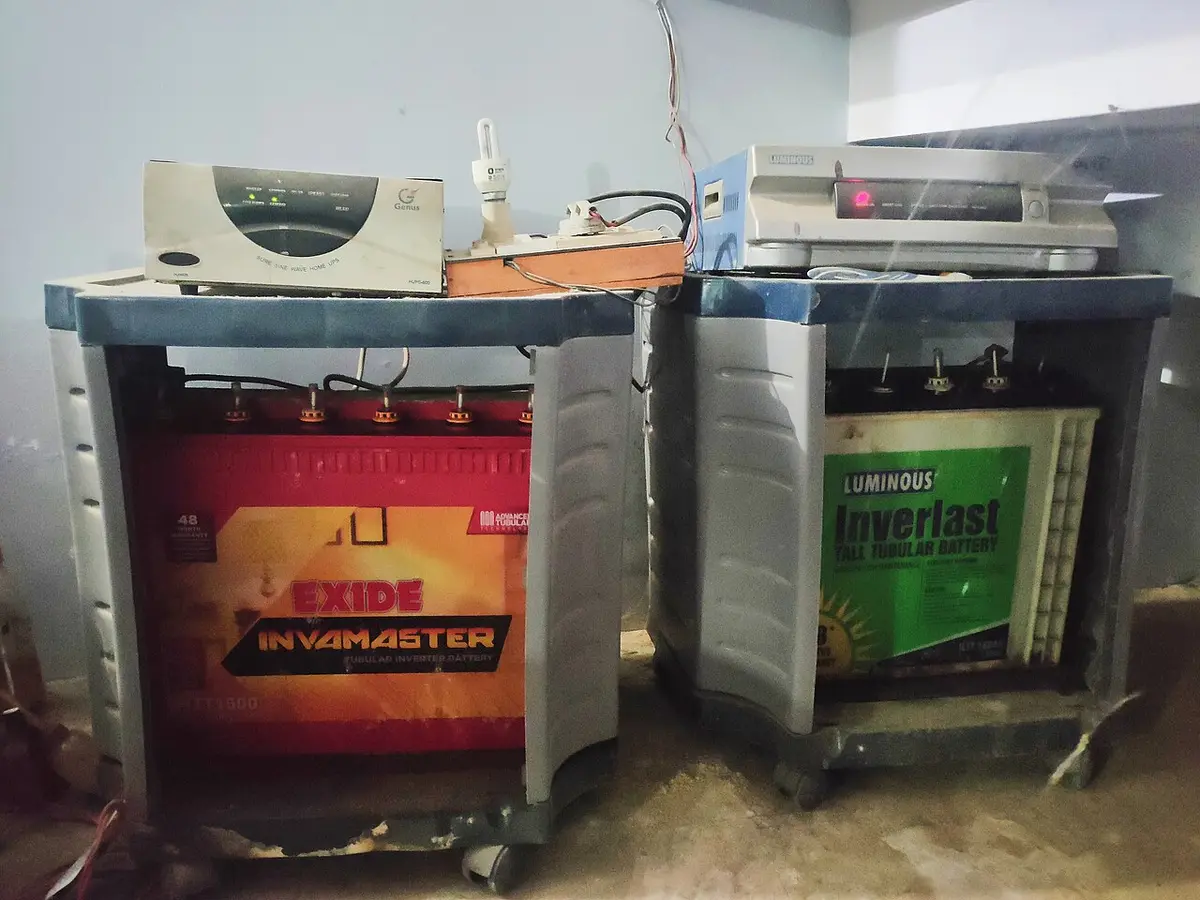
A pure sine wave inverter produces the smooth alternating current your house outlets deliver, so it runs everything safely: laptops, CPAP machines, fridges, power tools and anything with a motor or a sensitive circuit board. A modified sine wave inverter produces a blocky, stepped approximation that works for simple loads such as incandescent lights and basic chargers, but can cause buzzing, heat, shortened life or outright failure in electronics. For camping and RV use, pure sine is the safer default, and modified sine is a budget compromise for a short list of known-tolerant loads.
The price gap between the two has narrowed enough that many campers no longer have a reason to choose modified sine. Still, plenty of cheap inverters in car-socket form factors use it, and plenty of devices tolerate it. The rest of this guide explains what the waveform actually is, which devices are at risk, and how to size and choose an inverter for a camp setup.
What a sine wave is and why it matters
Household AC in the United States alternates 60 times a second, and the voltage rises and falls in a smooth curve called a sine wave. Most appliances were designed around that curve. Their transformers, motors and power supplies expect voltage to change gradually.
An inverter makes AC from a DC battery by switching transistors on and off. A pure sine inverter switches very quickly and filters the output into a smooth curve. A modified sine inverter does much less switching: it outputs a positive pulse, then a flat zero, then a negative pulse, then zero again, forming a stepped shape. That shape contains extra harmonic energy at higher frequencies, which is what causes problems.
Some devices ignore harmonics. A resistive heating element or an incandescent bulb does not care about waveform. Others, particularly motors, transformers and switching power supplies, treat those harmonics as wasted energy, and respond with heat, noise or errors.
Which devices struggle on modified sine
| Device | Modified sine result | Pure sine result |
|---|---|---|
| Incandescent lights, resistive heaters | Works | Works |
| Phone and laptop chargers | Usually works, may run warm or buzz | Works |
| CPAP machines | Often works for basic models, risky for humidifiers and sensitive models | Works, preferred |
| Compressor fridges and freezers | May run hot, reduced life, possible stalling | Works |
| Variable-speed power tools, drills | Reduced power, noise, heat | Works |
| Microwave ovens | Reduced heating, buzzing | Works |
| LED lighting with dimmers | Flicker or hum | Works |
| Audio equipment | Audible buzz | Works |
| Battery chargers for tools and e-bikes | May fail to charge or run hot | Works |
| TVs, game consoles, laser printers | Possible interference or damage | Works |
The pattern is clear: anything with a motor, a transformer or sensitive electronics wants pure sine. If a manufacturer explicitly warns against modified sine, such as many medical device makers and e-bike charger makers, believe them. The cost of a pure sine unit is trivial compared with the cost of a damaged device.
Efficiency, heat and standby draw
Modified sine inverters have a reputation for being more efficient. That used to be true, because fewer switching events means less loss. Modern pure sine designs reach similar efficiency, often 85 to 92 percent at moderate loads. The more important efficiency factor is load: an inverter running at 10 to 20 percent of its rating is usually less efficient than one at 50 percent, and every inverter draws some idle power even with nothing attached, typically 5 to 30 W depending on size and design.
At camp, idle draw matters. A 12 V system that powers an inverter overnight just to keep a clock alive will lose perhaps 100 to 250 Wh. If you want to see how that compares with a fridge load, review how long a power station runs a 12V fridge. The solution is the same for both waveforms: turn the inverter off when it is not in use, or choose a unit with a low-power sleep mode.
Heat is a related issue. Devices running on modified sine often draw more current for the same work because the waveform is inefficient for motors, and they dump the extra into heat. Over time that shortens the life of a fridge compressor or a power tool.
Sizing the inverter: continuous watts and surge watts
An inverter's rating is a continuous wattage, plus a short surge. To size one, list the AC devices you will run at the same time and add their running watts. Then check the largest surge: motors and compressors may draw two to seven times their running wattage for a fraction of a second.
- List each device and its rated watts (found on the label or in the manual).
- Add the running watts of everything you will use simultaneously.
- Identify the largest startup surge among those devices and add it to the running total of the others.
- Add 20 percent headroom so the inverter does not run at its limit.
- Divide by 0.85 to find the DC power the battery must supply, then divide by battery voltage to get amps.
| Typical camping load | Running watts | Startup surge |
|---|---|---|
| Laptop charger | 45 to 90 | None |
| CPAP with heated humidifier | 40 to 90 | Small |
| Small compressor fridge on AC | 60 to 100 | 150 to 300 |
| Electric blanket | 50 to 100 | None |
| Coffee maker | 600 to 1,000 | None |
| Microwave (1,000 W cooking) | 1,400 to 1,600 | Moderate |
| Hair dryer | 1,000 to 1,800 | None |
| Circular saw | 1,200 to 1,800 | 2 to 3 times |
For most campers, an inverter between 300 W and 1,000 W covers laptops, a CPAP, a fridge and small kitchen items. A 1,500 to 2,000 W unit lets you run a coffee maker or microwave, but the battery cable and fuse also need to handle the current. At 12 V, a 2,000 W inverter can pull over 170 A at full load, which needs heavy cable, a proper fuse and a battery that can deliver it.
Wiring and cable thickness
The inverter's DC side is where most installation mistakes happen. High current at low voltage needs thick copper, short runs and a fuse close to the battery. A 1,000 W inverter at 12 V draws about 90 A at full load, which requires something like 2 AWG or 4 AWG cable for a short run, and a fuse of 125 to 150 A. Using thin cables can cause voltage drop, overheating and fire risk.
Never plug a high-wattage inverter into a vehicle cigarette lighter socket. Those sockets are generally fused at 10 to 15 A, which means a safe limit near 120 to 180 W. For anything bigger, connect directly to the battery with proper cables and a fuse. The best car power inverters for cigarette lighter sockets list is where small units that fit that limit are collected, while the best 800W car power inverters and best 1000W car power inverters cover the next tier that needs a direct battery connection.
Price and choosing a size
Pure sine inverters cost more than modified sine at the same wattage, but the gap shrinks as the volumes rise. At the low end, a 300 W pure sine unit costs only a little more than a modified one. At 2,000 W the difference is larger, but still modest next to the cost of the battery that feeds it. If you are on a strict budget and plan to run only a phone charger and a lamp, modified sine can be a sensible choice. See the best power inverters under $50 for what that budget looks like, and check whether any listed unit specifies pure sine.
When you step up in size, look at the best 1,500W inverters for camping and the best 2,000W inverters for camping. If your priority is waveform quality across all capacities, go straight to the best pure sine wave inverters for camping.
Inverter generators versus inverters
The word "inverter" shows up in two places in camping. A standalone DC to AC inverter converts battery power. An inverter generator is a gas engine that runs an alternator and then converts the output to a clean sine wave. The two are different products solving different problems, though both rely on the same waveform principle. Inverter generators produce clean power that is safe for sensitive devices, at a quieter volume than conventional generators. If you want to run power from fuel rather than a battery, look at the best portable inverter generators for camping.
How to tell which type you are buying
Product pages are not always clear. Here is how to check:
- Look for "pure sine wave", "true sine wave" or "PSW" in the title or spec. If the listing says "modified sine wave", "MSW", "quasi sine wave" or does not mention waveform at all, assume modified.
- Check the Total Harmonic Distortion (THD). A good pure sine inverter lists THD under 3 percent, and under 5 percent is acceptable. Modified sine can be 20 percent or higher.
- Check the price against the size. A 2,000 W unit that is extremely cheap is likely modified sine or exaggerates its ratings.
- Check protections. Look for low-voltage cutoff, overload, over-temperature and short-circuit protection.
- Check the outlets. Standard US three-prong outlets, USB ports and a ground fault feature where appropriate.
- Check the warranty. Reputable makers offer at least a year, and often two.
If you cannot confirm the waveform, contact the seller before buying. A vague answer is itself an answer.
Using a modified sine inverter safely
If you already own one or have a good reason to buy it, you can reduce risk:
- Run only simple loads such as incandescent or resistive-heater equipment, and basic phone chargers.
- Avoid connecting expensive electronics, medical devices, battery chargers for tools and anything with a motor.
- Never connect devices that say "do not use with modified sine".
- Test a new device for a few minutes and feel it for unusual heat, listen for buzzing, and watch for flicker.
- Keep wattage under 70 to 80 percent of the rating.
Modified sine is a tool for a specific set of simple jobs, not a general-purpose power source.
Real symptoms of a waveform problem
People rarely diagnose waveform trouble directly. They notice symptoms, and then blame the appliance. Knowing the common signs saves time at a campsite where you cannot swap gear easily.
- A humming or buzzing transformer. Many phone and laptop chargers contain small transformers or inductors that vibrate audibly when fed a stepped waveform.
- A device that runs hot. If a charger, a fan motor or a fridge compressor housing feels noticeably warmer than it does on household power, the harmonic energy is turning into heat.
- Flickering or dimming LEDs. Dimmable LED bulbs and some LED strips read the waveform to decide brightness, so they often flicker on modified sine.
- A clock or timer that drifts. Some appliances with built-in clocks count AC cycles, and a nonstandard waveform can throw the count off.
- Battery chargers that refuse to start. Chargers for power tools and e-bikes may detect a faulty input and shut down.
- Audio and video interference. Speakers can pick up a buzz, and some TVs show faint bars.
If you see any of these, stop using that combination and move to a pure sine source before assuming the appliance is broken.
A worked sizing example for a weekend camp
Suppose you want to run a 12 V battery with an inverter at a campsite to power a laptop (65 W), a CPAP (50 W average), a string of lights (10 W) and a small electric blanket (60 W), though not all at the same time. The worst-case simultaneous load is the laptop, the CPAP and lights at 125 W, or the CPAP, blanket and lights at 120 W. A 300 W inverter has plenty of headroom. For a pure sine unit, idle draw might be 8 to 12 W, so across an eight-hour night that is another 60 to 100 Wh before you plug anything in.
Over the night, the CPAP uses roughly 400 Wh at 50 W for eight hours, the lights use 40 Wh at 10 W for four hours, and the laptop uses 130 Wh for two hours. Add the idle draw, and you land near 650 Wh. Divide by an efficiency of 0.85 to account for conversion, and the battery must supply around 765 Wh, which is 60 Ah at 12.8 V. A 100 Ah LiFePO4 battery covers it, while a 100 Ah lead-acid battery, which you should only discharge to about half, would be marginal. If you also add a small 12 V fridge on a DC circuit, the daily total rises noticeably. That is why campers often feed the CPAP directly from a 12 V DC adapter and keep the inverter for the laptop only, since the DC route avoids the idle and conversion losses completely.
Sizing for a coffee maker or a microwave is a different calculation, because those loads are so heavy that the inverter, cables and battery all need to be larger. A 1,000 W coffee maker running for ten minutes uses only about 170 Wh, but it pulls 90 A or more from a 12 V system, which stresses cheap cables and low-quality batteries. If you need that kind of load, move up to a 24 V or 48 V system or a power station with a built-in high-output inverter, or consider cooking on a stove instead.
Where each type still has a place
Modified sine is not useless. It is a simple, cheap and robust design, which suits an emergency kit that runs a single light bulb, a soldering iron or a resistive heater pad. A tradesperson who runs a corded drill from a work van may also find that a modified sine unit works acceptably, though they should expect reduced torque and extra motor heat. If you hold a modified sine inverter already, you do not need to throw it away. Just assign it to the right jobs and label it so that nobody plugs a CPAP into it by accident.
Pure sine belongs in every other use case. It suits the daily driver in a van build, the weekend camper with a laptop, and every household backup system. It also tends to include better protections and surge handling in the same product class, which is a quiet advantage.
Common mistakes to avoid
- Assuming wattage is the only spec that matters. Waveform, surge and idle draw are just as important.
- Using a cigarette lighter socket for a big load. The fuse or wiring will fail before the inverter does.
- Skipping the fuse on the DC cable. A short circuit at 12 V and hundreds of amps is a fire hazard.
- Leaving the inverter on all night with no load. Idle draw can drain a small battery.
- Buying by peak watts. Continuous watts decide what runs; surge only helps the first second.
- Putting the inverter in a sealed compartment. It needs airflow to shed heat.
Frequently asked questions
Can a CPAP run on a modified sine inverter?
Some can, but it is risky. Many CPAP makers recommend pure sine or DC power directly, particularly for units with heated humidifiers. Check the manual. A pure sine inverter or a DC cable from a battery is safer, and a failure of a medical device is not a place to save money.
Is a modified sine inverter okay for charging a laptop?
Usually, yes, because many laptop chargers are designed for wide input ranges. However, the charger may run warmer and produce noise. If you charge laptops frequently or the charger is expensive, a pure sine inverter reduces the risk of heat and early failure.
Do power stations use pure sine wave?
Most modern portable power stations use pure sine wave inverters, since they are designed for general consumer use. Some very cheap units use modified sine, so confirm in the spec sheet. Our guide to watt-hours versus mAh explains how to compare the batteries inside them.
How much bigger should the inverter be than my load?
Aim for the continuous rating to be at least 20 to 25 percent above the total of your running loads, and make sure the surge rating covers the largest motor startup. An inverter running constantly at its limit runs hot and fails sooner.
Will a pure sine inverter drain my battery faster?
Not meaningfully. The waveform itself does not change energy use much. Idle consumption and efficiency matter more, so look at the no-load draw and the efficiency curve, and turn the inverter off when idle.
Can I tell the waveform with a multimeter?
A basic multimeter cannot show the waveform shape, and many cheap meters read incorrectly on modified sine output. An oscilloscope or a true-RMS meter helps, but the easiest method is the spec sheet and the THD figure.
Sources & further reading
Image credits
- "Inverter & Battery- The power cut fighter" by Deepanshu.sr9, CC BY-SA 4.0, via Wikimedia Commons.

Ready to buy?
Compare the gear: Camp Power
6 Best 2000w Inverters For Camping in 2026
Best 2000W camping inverters compared on surge rating, sine wave type, outlets and remote control, for campers running a fridge, kettle or tools off a 12V bank.
5 Best 1000w Car Power Inverters in 2026
Best 1000W car power inverters compared on pure versus modified sine, outlets, cables and fast-charge ports for vehicle and battery-bank camping.
5 Best 1500w Inverters For Camping in 2026
Best 1500W inverters for camping compared on sine wave type, outlet count, remote control and protections, for campers wiring a 12V battery bank.
6 Best 800w Car Power Inverters in 2026
Best 800W car power inverters compared on wave type, outlets and cables, for road-trippers and campers running mid-size loads from a 12V battery.
5 Best Car Power Inverters For Cigarette Lighter Sockets in 2026
Best car power inverters that plug into cigarette lighter sockets, compared on real watt limits, ports and fuses for charging laptops, phones and cameras.
4 Best Pure Sine Wave Inverters For Camping in 2026
Best pure sine wave inverters for camping, compared on wattage tier, outlets and cables, for campers powering sensitive electronics and motors.
4 Best Portable Inverter Generators For Camping in 2026
Best portable inverter generators for camping compared on weight, noise, running watts, CO protection and parallel options for tent and RV sites.
6 Best Power Inverters Under 50 in 2026
Best power inverters under $50: six 200 to 750W car inverters compared on continuous watts, sine wave type, outlets and USB ports for camping and road trips.
Keep reading