
Practical Camping Guide · 12 min read
Inverter Generator vs Conventional Generator
Compare inverter and conventional generators on noise, fuel use, power quality, weight and cost to pick the right portable generator for camping or RV use.

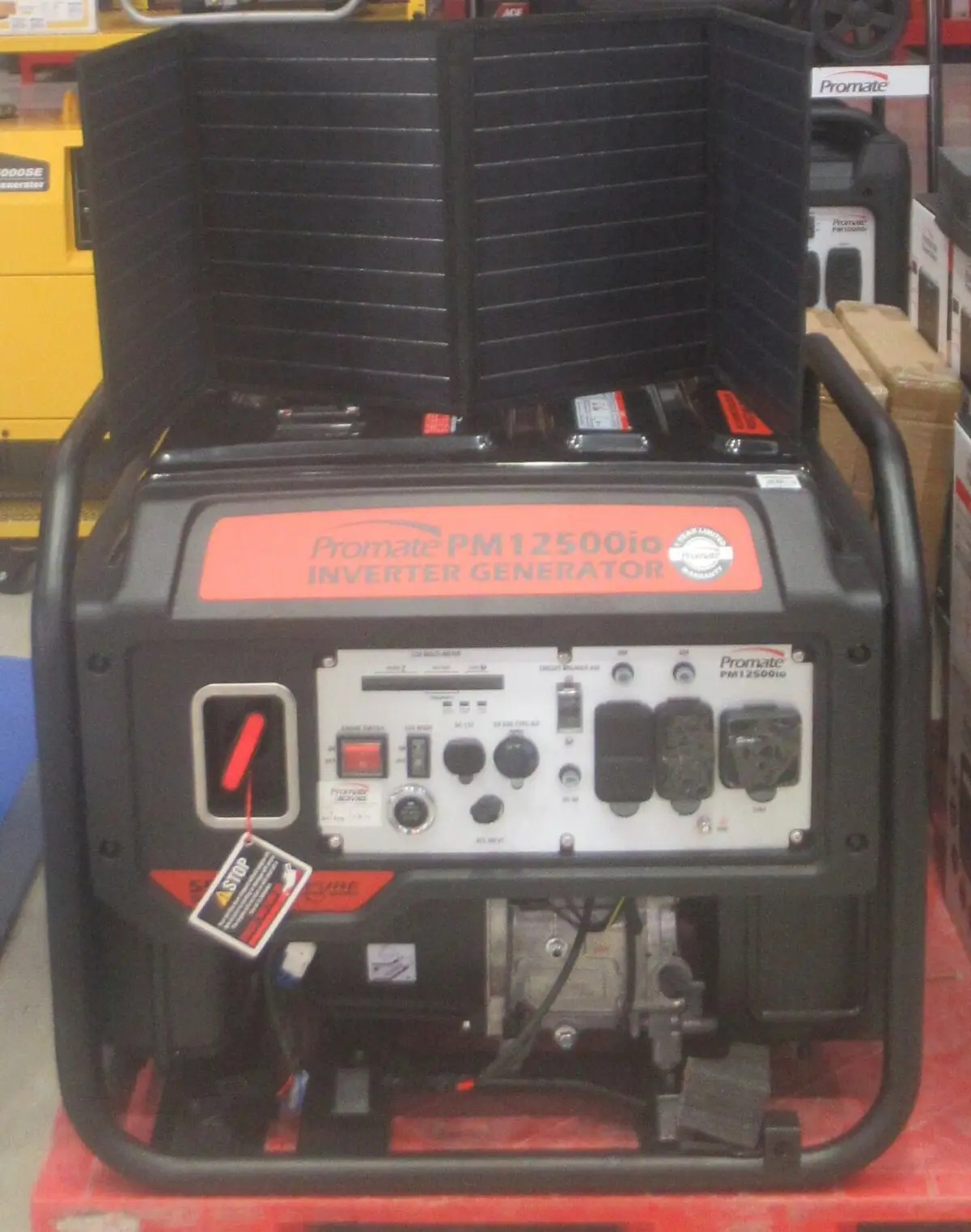
For camping, an inverter generator is the better choice for almost everyone: it runs at variable engine speed, so it is quieter (often 50 to 60 dBA at 23 feet versus 70 to 80 dBA for open-frame conventional units), uses noticeably less fuel at partial load, and produces clean power that is safe for laptops, phones, CPAP machines and fridges. A conventional generator costs less per watt and handles big, rough loads like power tools and well pumps, but it is loud, thirsty and hard on electronics.
The difference comes down to how each machine controls its output. Once you understand that, the trade-offs in noise, weight, cost, fuel and power quality stop looking like marketing and start looking like predictable engineering. This guide explains the mechanisms, gives sizing and runtime tables, and ends with rules of thumb for matching a generator to a campsite.
How a conventional generator works
A conventional portable generator uses a gasoline engine that drives an alternator directly. The alternator produces AC at a frequency that depends on how fast it spins. To deliver 60 Hz power, the engine must run at a fixed speed, typically 3,600 rpm for a two-pole alternator, regardless of how much power you draw. Run a 3,000 W conventional generator with a 100 W light bulb and the engine still turns at full speed. Load changes only change how hard the engine works, not how fast it spins.
That fixed speed has consequences. The engine is always noisy, and it burns fuel even when the load is small. The output voltage and frequency vary slightly with load, and the waveform is a rougher sine wave with total harmonic distortion (THD) that can reach 9 to 25 percent, depending on design. That is fine for heaters, work lights and many motors, and hard on sensitive electronics.
How an inverter generator works
An inverter generator also has an engine and an alternator, but the alternator produces high-frequency, multi-phase AC that is first rectified to DC. Then an electronic inverter converts that DC to clean 60 Hz AC. Because the output frequency is made electronically, the engine does not have to hold a constant speed. A controller raises or lowers the engine speed to match the load, sometimes called an eco mode or idle control.
The results are lower noise at light load, better fuel economy, smaller and lighter alternators, and clean output with THD usually under 3 percent. The trade-offs are higher upfront cost per watt, more complex electronics, and lower maximum output for portable sizes: most camping inverter generators range from 1,000 to 4,500 W, while conventional units extend to 10,000 W and beyond.
Side-by-side comparison
| Factor | Inverter generator | Conventional generator |
|---|---|---|
| Engine speed | Varies with load | Fixed, about 3,600 rpm |
| Typical noise at 23 ft | About 50 to 65 dBA | About 65 to 85 dBA |
| Power quality (THD) | Under 3 percent, safe for electronics | 5 to 25 percent, risky for sensitive gear |
| Fuel use at light load | Much lower | Nearly as high as at full load |
| Weight per watt | Lower | Higher for same output |
| Typical camping output | 1,000 to 4,500 W | 2,000 to 10,000 W |
| Price per watt | Higher | Lower |
| Parallel capability | Common, links two units | Rare |
| Maintenance | Similar, more electronics | Simple, easy to repair |
| Best for | Camping, RV, tailgating | Job sites, home backup, heavy loads |
The noise figures are typical ranges reported by manufacturers at light to moderate load, and actual numbers vary with model, enclosure and surroundings. The pattern holds, though: inverter models are the quiet ones.
Fuel use and runtime
Because an inverter generator throttles down, its fuel economy depends strongly on load. At a quarter load, a 2,200 W inverter model may burn about 0.1 to 0.15 gallons an hour. A conventional generator of the same rating may burn 0.3 gallons an hour at the same electrical load because the engine keeps spinning at full speed. Over a 10-hour day, that difference adds up to a full tank.
| Load | Inverter generator (2,200 W class), approx. fuel | Conventional generator (3,000 W class), approx. fuel |
|---|---|---|
| 25 percent | 0.10 to 0.15 gal/h | 0.25 to 0.35 gal/h |
| 50 percent | 0.18 to 0.25 gal/h | 0.35 to 0.5 gal/h |
| 100 percent | 0.35 to 0.5 gal/h | 0.6 to 0.9 gal/h |
These are rough, class-level estimates, and your model's specification sheet will give a better number. The key point is that a conventional generator is a poor match for light loads. If your campsite load is a fridge, lights and phone chargers, the inverter model uses far less fuel for the same work. For the underlying energy math of such loads, see how long a power station runs a 12V fridge and the load table in watt-hours versus mAh.
Power quality and your electronics
Modern electronics contain switching power supplies and microcontrollers that expect a clean sine wave. A conventional generator's output can have voltage spikes, frequency drift and harmonic distortion that cause laptop chargers to run hot, LEDs to flicker, and some medical devices, such as CPAP machines with humidifiers, to misbehave. Inverter generators produce a waveform much closer to wall power, which makes them the safe choice for any sensitive load.
If a conventional generator is your only option, you can reduce risk by running only simple loads on it, using a surge protector or a line conditioner, and plugging sensitive devices into a battery station charged from the generator. To understand the waveform side of the story, read pure sine wave versus modified sine wave inverters, which covers why clean output matters.
Noise and campground etiquette
A generator that disturbs the camp next door is a generator that gets you a visit from the host. Many campgrounds limit hours and noise, and some bar generators in tent areas entirely. Inverter models are quieter, but they are not silent. At 50 to 60 dBA, they sound like a normal conversation to a loud conversation at 23 feet, and in the quiet of a forest that carries a long way.
Tips for keeping things civil:
- Position the generator downwind from neighbors and away from sleeping areas.
- Use eco mode when the load is light.
- Run it only during allowed hours, and charge batteries in a block rather than all day.
- Consider an acoustic baffle or enclosure only if the manufacturer approves it, as airflow and heat matter.
- Keep the exhaust pointed away from tents and vehicles.
If quiet matters most, see the best quiet inverter generators for camping.
Safety rules that apply to both
Both types burn fuel and produce carbon monoxide. The U.S. Consumer Product Safety Commission advises running portable generators only outdoors, at least 20 feet from any building a person could enter, with the exhaust pointed away. For campers, treat tents, trailers and vehicles the same way. Use a battery-powered CO alarm inside your sleeping space, and consider a generator with automatic CO shutoff.
Other safety basics: let the engine cool before refueling, store fuel in approved containers away from living areas, keep the generator on a level surface, and never connect it to a building's wiring without a transfer switch. Use extension cords rated for the load, and keep them out of puddles. If you use a long cord, use a heavy-gauge outdoor cord no longer than you need, since thin or long cords waste power as heat.
Sizing: how many watts do you need?
List what you want to run and add the running watts. Then add the largest startup surge. Motors and compressors can draw two to three times their running watts for a moment.
| Camping load | Running watts | Suggested generator size |
|---|---|---|
| Phones, lights, laptop | 100 to 200 | 1,000 to 1,200 W inverter |
| Plus a small fridge | 250 to 400 | 1,500 to 2,000 W inverter |
| Plus a coffee maker or hot plate | 1,000 to 1,500 | 2,200 to 3,000 W inverter |
| RV 13,500 BTU air conditioner | 1,500 to 2,000, surge 3,000+ | 3,000 to 4,500 W inverter, or two linked units |
| Power tools, circular saw | 1,200 to 1,800, surge 2 to 3 times | 3,000+ W conventional or inverter |
| Well pump, big shop loads | 1,000 to 2,500, big surge | 5,000+ W conventional |
Inverter generators often offer a parallel kit that links two identical units for double the output. Two 2,200 W units are quieter, lighter to carry and more flexible than a single large generator, though they cost more together. If you plan on RV travel, check the best portable generators for RV camping.
Fuel types: gasoline, propane and dual-fuel
Most inverter generators run on gasoline. Dual-fuel models can burn gasoline or propane, which helps with storage because propane does not go stale. Propane output is often about 10 percent lower than gasoline. Gasoline gets stale in a few months and gums up carburetors, so stabilizer or running the carburetor dry before storage helps. If you prefer propane or want fuel flexibility, look at the best dual-fuel inverter generators for camping or the best dual-fuel portable generators for camping.
Is a battery generator a better idea?
For light loads, a solar generator (a battery power station) removes noise and fumes completely. A 500 Wh or 1,000 Wh unit handles phones, a laptop and a fridge for a day or two, and panels or a car refill it. See the best 500W solar generators, the best 1000W solar generators and the best solar generators for off-grid camping to see where that line sits. For sizing the panels that accompany them, how to size a solar panel for camping has the math. Many campers pair a power station with a small inverter generator, using the generator only when the sun does not cooperate.
Features worth paying for
Not every spec on the box matters equally. When you compare two inverter generators, these are the features that change the experience at a campsite:
- Eco throttle. This is the switch that lets the engine slow down at light load. Without it, an inverter model loses much of its fuel and noise advantage.
- Low-oil shutoff. The engine stops when oil is low, which prevents a ruined engine on a long run.
- CO shutoff. An onboard sensor that stops the engine when carbon monoxide builds up around the unit. It is not a substitute for a CO alarm in your sleeping space, but it adds a margin.
- Electric start or remote start. Handy for cold mornings and for runs where the generator sits 20 feet away from the camper.
- Parallel ports. They let you add a second unit later instead of buying a bigger one now.
- Outlet mix. A 30 A RV outlet matters for a trailer, while 12 V DC and USB ports matter for simple setups. Check that the outlets match your plugs.
- Fuel gauge and runtime display. Seeing remaining runtime and load at a glance prevents surprises.
- Handles and wheels. A 50 pound generator is manageable with a good handle and unpleasant without one.
A worked example: two nights in a travel trailer
A couple with a 22 foot trailer wants to run a 13,500 BTU air conditioner for part of the afternoon, a microwave for a few minutes, the converter that charges the house battery, and a few small items. The air conditioner draws about 1,500 W running, with a startup surge of 2,500 to 3,500 W unless it has a soft-start device. The converter adds 200 to 400 W while the battery charges. The microwave pulls up to 1,500 W but not at the same time as the air conditioner if they manage it.
A 2,200 W inverter generator would handle everything except the air conditioner. A single 3,000 to 4,000 W inverter model handles the air conditioner and a few small loads at once. Two 2,200 W units in parallel give 4,400 W of combined capacity and, because each engine can idle down, may be quieter at moderate load than one large unit working hard. They can also be carried one at a time and used separately when the trailer is not along.
Fuel use is where the difference becomes visible. Running the air conditioner and converter at 2,000 W on a 4,000 W inverter model is a 50 percent load, roughly 0.2 to 0.3 gallons an hour for many models. Over six hours that is about 1.5 gallons. A conventional 4,000 W unit running the same load might use 0.5 gallons an hour, or 3 gallons. Across a season of weekends, that difference pays for part of the higher purchase price.
When a conventional generator still makes sense
Conventional generators are not obsolete. They offer more watts per dollar, they are simpler to repair, and they handle heavy, dirty loads with less fuss. If you run a power saw at a remote build site, keep a well pump alive during a storm, or need 7,000 W or more at a basecamp, the conventional design is cost-effective. Many have wheels and large tanks that run all day. The trade-offs, noise and fuel use, matter less when the generator sits far away from where people sleep.
For a campsite, a conventional unit works if you place it far away, use long, heavy-gauge cords, and run only simple loads directly. Protect electronics by plugging them into a battery station or a surge protector. Many people in this situation eventually add a small inverter generator or a battery station for the evening, and keep the large unit for daytime work.
Maintenance and storage
Generators are engines, and they need care:
- Oil. Check before each use. Change it after the first 5 to 20 hours of break-in, then at intervals the manual states, commonly every 50 to 100 hours or once a season.
- Air filter and spark plug. Inspect and clean or replace yearly.
- Fuel. Use fresh fuel and a stabilizer. Do not leave fuel in the carburetor for months. Many models have a fuel valve so you can run the carburetor dry.
- Exercise. Start and run it under load for 10 to 15 minutes every month or two if you store it.
- Storage. Keep it dry, covered and ventilated, away from heat sources.
- Spark arrestor. Many public lands require a spark arrestor. Check that your model has one, and keep it clean.
Common mistakes to avoid
- Buying by peak watts. Compare running watts, and look at the real fuel use at your load.
- Oversizing. A 4,000 W unit running a 200 W load wastes fuel and weight.
- Running it under a tarp or in a tent vestibule. CO and fire risk are real.
- Using a thin extension cord. Voltage drop and heat can damage the cord and the load.
- Ignoring altitude. Engines lose about 3 percent of power per 1,000 feet of elevation.
- Neglecting fuel stabilizer. Stale fuel is the most common cause of a generator that will not start.
Frequently asked questions
Is an inverter generator worth the extra money for camping?
Usually yes. You get quieter operation, better fuel economy at light loads and clean power for electronics. If your needs are heavy tools and big loads and you do not mind noise, a conventional unit gives more watts per dollar.
Can I run a CPAP on a conventional generator?
It is possible, but not wise. Waveform distortion and voltage swings can harm sensitive devices, and many CPAP makers recommend clean power. An inverter generator, or a battery power station charged by the generator, is safer.
Are inverter generators actually quiet?
They are quieter than conventional units, typically 50 to 65 dBA at 23 feet at moderate load. They are not silent, and the noise rises with load. In quiet campgrounds, you may still need to follow quiet hours or choose a battery solution.
What size inverter generator do I need for an RV air conditioner?
A 13,500 BTU unit often needs a 3,000 W or larger generator because of startup surge. Some campers use two 2,200 W units in parallel. Check the air conditioner's running and surge watts and the generator's continuous and surge ratings.
How long can a generator run on a tank of gas?
It depends on tank size and load. A 1 to 1.5 gallon tank on a small inverter generator may last 8 to 10 hours at a quarter load and 3 to 4 hours at full load. Check the stated runtime at a given load on the spec sheet.
Can I use a generator in the rain?
Only with proper protection. Use a manufacturer-approved cover or canopy that allows ventilation and keeps water off the outlets, and never run a generator in an enclosed space. Keep it on dry ground and away from tents.
Sources & further reading
- U.S. CPSC: Portable generator safety alert (PDF)
- U.S. CPSC: Carbon monoxide fatalities and generator safety
- Anker: battery capacity basics
Image credits
- "Promate PM12500io 2026-08-12 inverter generator 02" by P1898, CC BY 4.0, via Wikimedia Commons.

Ready to buy?
Compare the gear: Camp Power
6 Best Dual Fuel Inverter Generators For Camping in 2026
Best dual fuel inverter generators for camping compared on gas versus propane output, runtime, noise figures and CO shutdown, from 1600W to 5100W.
6 Best Inverter Generators For Camping in 2026
Best inverter generators for camping compared on running watts, weight, runtime, CO protection and outlets, from 1900W lightweights to 3400W RV-ready units.
5 Best Quiet Inverter Generators For Camping in 2026
Best quiet inverter generators for camping compared on stated noise, running watts, weight and CO protection for campgrounds that enforce quiet hours.
4 Best 1000w Solar Generators in 2026
Best 1000W solar generators compared as complete kits with a 200W panel, judged on battery size, output, solar recharge time and connectors.
5 Best 500w Solar Generators in 2026
Best 500W solar generators compared: true 500W stations and 500W-panel kits, judged on battery size, output, recharge time and RV-ready ports.
6 Best Dual Fuel Portable Generators For Camping in 2026
Best dual fuel portable generators for camping compared on gas and propane watts, outlets, runtime and CO shutdown for RV and campsite power.
5 Best Portable Generators For RV Camping in 2026
Best portable generators for RV camping compared on running watts, RV outlets, noise and CO protection for travel trailers and motorhomes.
4 Best Solar Generators For Off Grid Camping in 2026
Best solar generators for off-grid camping compared as small kits with panels, judged on battery size, panel wattage, weight and port selection.
Keep reading