
Practical Camping Guide · 12 min read
Portable Solar Panel Efficiency and Real-World Output Explained
Understand portable solar panel efficiency versus real output, why a 100W panel delivers 50 to 80W, and how heat, aim and shade change your charging.

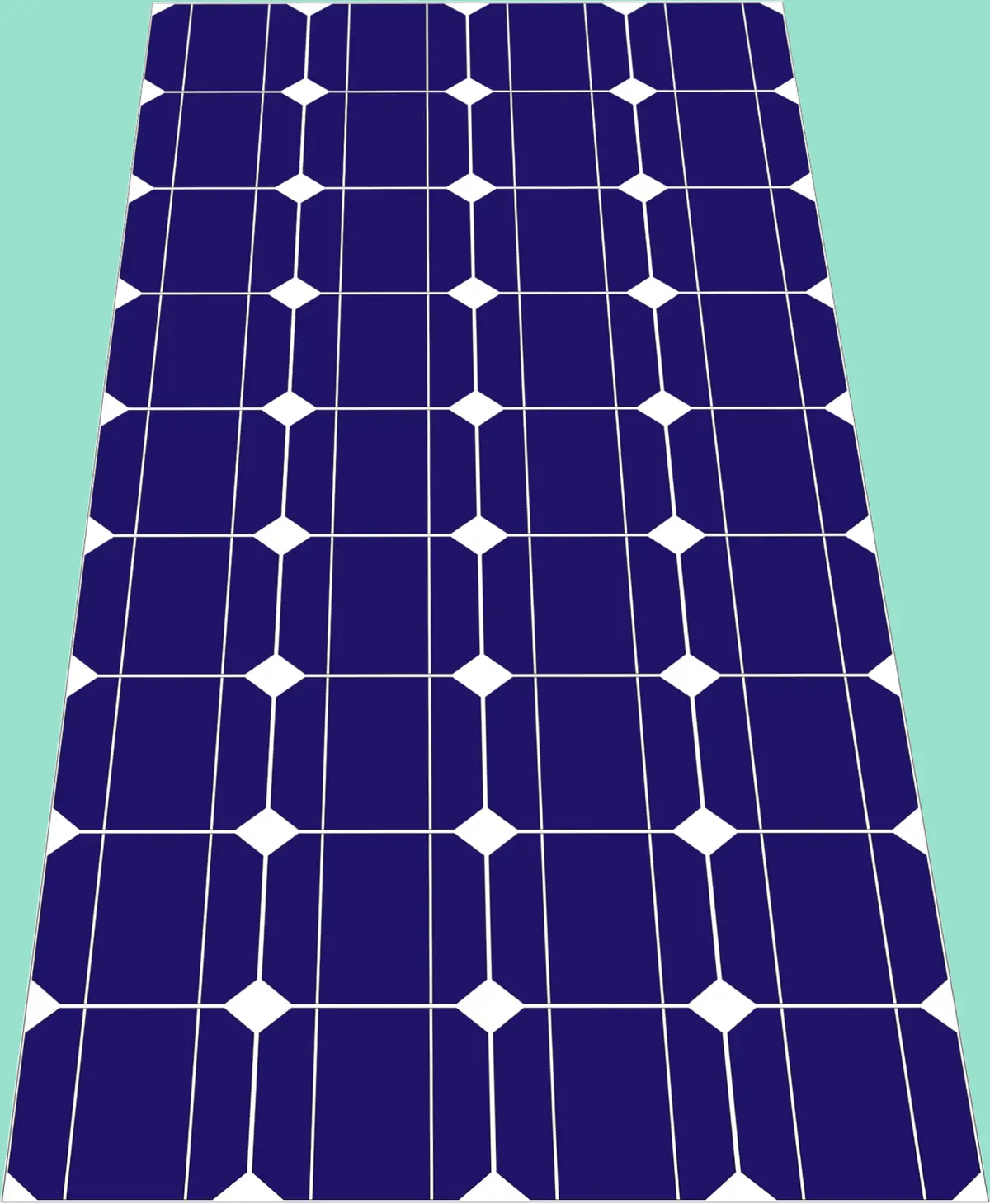
A portable solar panel's efficiency percentage (typically 18 to 23 percent for current monocrystalline folding panels) tells you how much sunlight each square foot converts to power, not how many watts you will actually collect. In the field, a hand-aimed 100 W folding panel usually delivers about 50 to 80 W at best and 250 to 400 Wh over a full sunny day, because heat, angle, shade, haze and charge-controller losses all subtract from the label. Judge a panel by its rated watts, its watts per pound and square foot, and its connector, not by the efficiency badge.
Efficiency is the most advertised number on a solar panel and one of the least useful for planning a trip. What matters at camp is the energy that reaches your battery between breakfast and dinner. This guide separates efficiency from output, shows where the missing watts go, gives realistic output tables and explains how to measure what your own panel does.
Efficiency versus watts versus watt-hours
Three different quantities get mixed up.
- Efficiency (percent). The fraction of incoming sunlight energy that the panel converts to electricity under standard test conditions. A 22 percent efficient panel converts 22 percent of the light that hits it.
- Rated power (watts). The maximum power the panel produces under those same test conditions: 1,000 W/m2 sunlight, 25 degrees C cell temperature and a standard light spectrum. A 100 W label means 100 W at that standard.
- Energy (watt-hours). What you actually collect over time, which depends on how long and how intensely the sun shines on the panel and how well it is aimed.
Two panels with the same rated power but different efficiency will produce the same electricity in the same sun. The more efficient one is smaller. So when you compare a 100 W panel at 18 percent with a 100 W panel at 23 percent, the second one folds smaller and weighs less, but both give about the same watt-hours. The explainer on watt-hours versus mAh shows how to turn those watt-hours into phone charges or fridge hours.
Where the missing watts go
A panel never delivers its label in the field. Here are the main losses and typical ranges.
| Loss factor | Typical reduction | Notes |
|---|---|---|
| Sunlight below 1,000 W/m2 | 10 to 30 percent | Peak sun at the equator is about 1,000. Haze, clouds and sun angle reduce it |
| Cell temperature above 25 C | 5 to 15 percent | Panels in direct sun reach 50 to 70 C |
| Angle not facing the sun | 5 to 30 percent | A flat panel loses more at low sun angles |
| Partial shade | 20 to 80 percent | Even a small shadow can cut output sharply |
| Charge controller or station conversion | 3 to 15 percent | MPPT is better than PWM |
| Cable and connector losses | 1 to 5 percent | Thin or long cable adds loss |
| Dust, dirt and moisture | 2 to 10 percent | Wipe the surface |
| Panel tolerance and aging | 0 to 5 percent | Panels are rated with a tolerance |
The combined effect gives the 0.5 to 0.8 multiplier that is commonly used for planning: a 100 W panel gives 50 to 80 W in good conditions, and often less. Several of the losses are within your control, which is why two campers with the same panel can see very different results.
What you can realistically collect
Using peak sun hours (the equivalent hours at 1,000 W/m2), you can estimate daily energy as rated watts x peak sun hours x system factor. The system factor is typically 0.6 to 0.75 for hand-aimed folding panels.
| Panel size | Summer clear (5 sun hours, 0.7) | Spring/fall (3.5 hours, 0.65) | Winter or cloudy (2 hours, 0.55) |
|---|---|---|---|
| 20 W | 70 Wh | 45 Wh | 22 Wh |
| 50 W | 175 Wh | 114 Wh | 55 Wh |
| 80 W | 280 Wh | 182 Wh | 88 Wh |
| 100 W | 350 Wh | 228 Wh | 110 Wh |
| 200 W | 700 Wh | 455 Wh | 220 Wh |
| 400 W | 1,400 Wh | 910 Wh | 440 Wh |
| 800 W | 2,800 Wh | 1,820 Wh | 880 Wh |
For context, a phone uses 15 Wh per charge, a laptop 50 to 70 Wh, and a 12 V camping fridge 300 to 450 Wh a day. These are estimates, not guarantees. To turn them into a sizing decision, follow the method in how to size a solar panel for camping.
Why a bigger efficiency number is not always better
Higher efficiency is valuable when space or weight is limited. It is not valuable when the extra efficiency is paid for with fragility or cost.
Where efficiency matters:
- Backpacking and bike touring, where folded size and weight are everything. See the best portable solar panels for backpacking.
- Van and RV roofs with limited area.
- Situations in which you carry the panel on a pack and need to charge on the move.
Where efficiency matters less:
- Car camping, where the panel lies on the ground or the roof of a vehicle and weight is not an issue.
- Fixed arrays with plenty of space.
When comparing, check the weight per watt: a good folding panel might weigh 0.07 to 0.12 pounds per watt (7 to 12 pounds for 100 W), and lightweight backpacking panels weigh much less in smaller sizes. Look at how large the panel is when folded, and whether it fits in a bag or on a roof rack.
Output depends on temperature
Solar cells produce a higher voltage when cold and a lower voltage when hot. The temperature coefficient of power on the datasheet, typically around minus 0.3 to minus 0.4 percent per degree C for monocrystalline panels, tells you how much power falls as the panel warms. A panel at 60 C (35 degrees above the 25 C test point) loses roughly 10 to 14 percent of its rated power.
A practical consequence: a black panel lying on hot ground or a dark picnic table runs hotter than one propped up with air flowing behind it. The same panel on a cool, bright spring day can produce more than on a scorching summer afternoon, even though the sun is weaker. Cool, clear, high-altitude days often give the best output per rated watt.
Cold also raises open-circuit voltage, and that can matter for power station input limits. The charge-controller arithmetic in RV solar guides covers the same effect. For portable stations, check the station's maximum solar input voltage against the cold Voc of your panel or string.
Angle and aiming: the cheapest efficiency upgrade
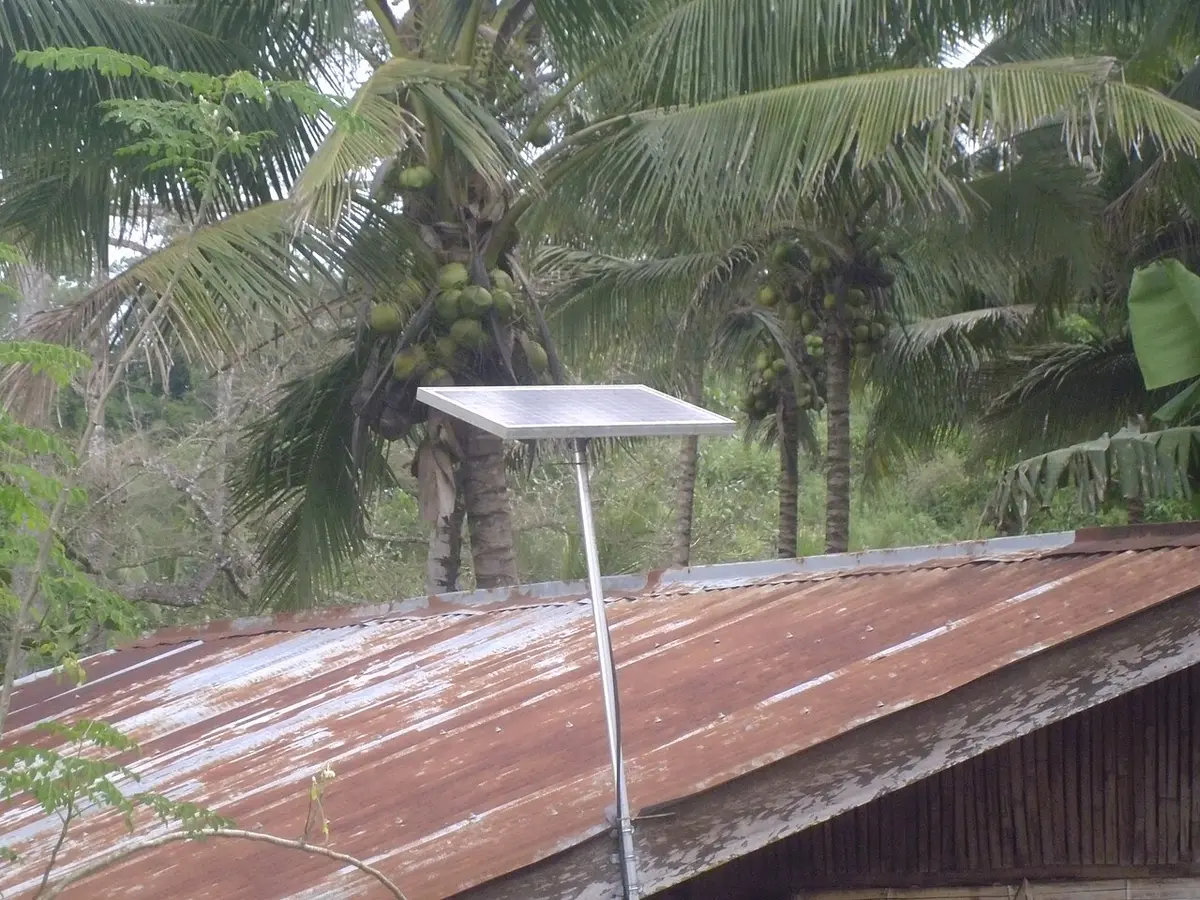
Aim is the biggest variable you control. A panel produces its maximum power when the sun's rays hit it at a right angle. If the panel is flat on the ground, the angle between the sun and the panel surface changes with the time of day and season.
| Placement | Typical share of potential output over a sunny day |
|---|---|
| Flat on the ground | 65 to 80 percent |
| Fixed tilt, facing south at latitude angle | 85 to 95 percent |
| Re-aimed every 2 to 3 hours | 95 to 100 percent |
| Standing nearly vertical in winter, low sun | Can beat a flat panel by 20 to 40 percent |
Tips for aiming:
- Face the panel toward the sun, not just south. In the morning, face east, at noon south and in the afternoon west.
- Use the shadow trick. A thin object (a pen) held perpendicular to the panel should cast almost no shadow when aimed correctly.
- Tilt more steeply in winter and flatter in summer.
- Use a kickstand or a rolled-up jacket to prop up a folding panel.
- Move the panel, not the station. A long cable (10 to 20 feet of proper gauge) lets the panel sit in the sun while the station stays cool.
Shade: the silent output killer
Solar cells in a panel are connected in series strings. A shadow that covers one cell can reduce the current of the whole string, and many panels use bypass diodes to limit the damage by shorting out the shaded section. A branch shadow across a quarter of a panel can reduce output by half, and a hand or a tent pole shadow over one cell can drop it more than the covered area suggests.
Practical defenses:
- Check shade at different times of day before you set up.
- Use panels with multiple strings and bypass diodes, and avoid putting a single shadow across a string.
- Clear leaves and stray gear from the surface.
- In partial shade, a parallel connection of multiple smaller panels is more forgiving than a single series string.
The charge controller and station matter too
Between the panel and the battery sits a controller that converts and regulates power. MPPT controllers track the panel's maximum power point and can add 15 to 30 percent over simple PWM designs, according to common estimates, with more benefit in cold weather and with low batteries. Most power stations include MPPT, but cheaper USB panels and small banks use simple regulation. The panel's output is limited by the controller's input rating. If you connect 200 W of panels to a station that accepts 100 W, the extra 100 W is wasted.
Look at the station's solar input specifications: voltage range, maximum current and maximum power. Foldable panels intended for power stations are built to match common input windows. See the best foldable solar panels for portable power stations for panels chosen with that in mind. The related concept of conversion losses inside a station is covered in how long a power station runs a 12V fridge.
Reading a panel's specs without being fooled
| Spec | What it tells you | Red flag |
|---|---|---|
| Rated watts | Power at standard conditions | Rating far above what the size could support |
| Cell efficiency | Conversion of the cells | Listed without module efficiency |
| Module efficiency | Whole-panel efficiency | Not given |
| Voc and Vmp | Voltage behavior | Voc above your device's limit |
| Isc and Imp | Current behavior | Exceeding the connector or cable rating |
| Weight and folded size | Portability | Missing |
| Connector type | Compatibility | Proprietary with no adapter |
| Warranty | Maker confidence | Very short or unclear |
Note that "cell efficiency" is often higher than "module efficiency" because cells are measured on their own, while a finished panel loses some area to gaps, frames and edges. If a page quotes only cell efficiency, expect the panel's overall figure to be a point or two lower.
Budget choices
For smaller panels, you can find usable options at modest prices. See the best solar panels under $50 and under $75 for entry-level choices and the best 80W foldable solar panels for a common mid-size format. For larger panels and power station pairing, the best solar panels under $500, under $750 and the best 800W portable solar panels show how the market scales up. Price correlates with build quality, folding design and connectors more than with the efficiency badge.
How to measure what your panel actually does
You do not have to rely on estimates. A small measurement routine shows your real output.
- Use a power meter or your station's display. Many stations show input watts. For a battery bank, an inline USB meter shows watts for small panels.
- Measure at midday with the panel aimed. Record the watts at a clear time, and compare with the rated watts. You should see 60 to 85 percent in good conditions.
- Record a full day. Note the watt-hours the station gained, with the unit disconnected from loads if possible.
- Change one variable at a time. Aim, shade, cable length and station settings can all change output.
- Repeat in different seasons to build a table for your locations.
After one or two trips, you will have a personal number, such as "my 100 W panel gives 320 Wh in June in the mountains," which is far more useful than any efficiency figure.
A side-by-side thought experiment: two 100 W panels
Imagine two 100 W folding panels, one at 23 percent efficiency and one at 19 percent. The first is about 4.7 square feet and the second about 5.7 square feet. Both are placed side by side on a clear June day at 40 degrees north latitude, aimed at the sun and kept off hot ground. The 23 percent panel is physically smaller, so it needs a slightly smaller bag and weighs a bit less. Their output curves, however, are nearly identical, because both are rated at 100 W. Measured by a power meter at noon, both might show 75 to 82 W, and over the day each might deliver 330 to 380 Wh.
Now change one variable. Put the smaller panel flat on a dark rock at midday, with no airflow underneath, and tilt the larger one on a stand with air passing behind it. The flat, hot panel might show 62 W because of temperature and angle, while the propped one shows 80 W. The "better" panel by efficiency loses to the better-placed panel by almost 30 percent. That is the lesson of this whole topic in one comparison: placement and temperature management beat a few points of efficiency.
Next, add a shadow from a tent guy line crossing one cell of the larger panel. Its output may drop to 45 W for as long as the shadow lies across it, which is a much bigger loss than any efficiency difference. A small adjustment of the panel's position fixes it. In practice, the campers who collect the most solar energy are not those with the highest efficiency panels, but those who walk over every couple of hours and nudge the panel to face the sun and clear of shadows.
Efficiency trends and what to expect from new panels
Commercial solar cell efficiency has improved steadily over the past decade, and new cell designs such as PERC, TOPCon and heterojunction continue to push module efficiencies higher. For campers, these gains show up as slightly smaller and lighter folding panels at a given wattage, not as dramatically higher output from the same sun. The laws of physics put a ceiling on single-junction silicon cells in the high twenties, and real modules sit below that. If a product claims efficiency far above 25 percent for a flexible or folding panel, ask for independent test data. Claims of 30 to 40 percent on consumer panels are marketing, and they usually refer to laboratory cells, concentrator systems or different test definitions.
The practical advice is to buy the wattage and format you need, check that the connector and voltage match your station, and put the effort into aim and shade. If you replace a panel after five years, you may get the same watts in a smaller package, but the old panel will keep producing nearly as much as it did on day one.
Common mistakes to avoid
- Treating efficiency as output. It tells you size, not watts.
- Expecting the label wattage. Plan for 50 to 80 percent.
- Leaving the panel flat on hot ground. Heat and angle cost output.
- Ignoring shade. One shadow can ruin a string.
- Using a thin, long cable. Voltage drop wastes watts.
- Oversizing beyond the station's input limit. Extra watts are clipped.
- Forgetting to clean the surface. Dust and pollen add up.
- Judging by a single reading. Measure over a full day.
Frequently asked questions
How many watts will a 100 W portable panel actually produce?
In good midday sun with good aim, expect 60 to 85 W. Over a full sunny day, that comes to about 250 to 400 Wh. In haze, shade or winter, output can be much lower.
Is a higher efficiency panel always worth the money?
Not always. Efficiency gives you a smaller or lighter panel for the same watts. If weight and size matter, it is worth it. If you have space, a less efficient panel with the same watts and a lower price produces the same energy.
Do portable panels work in the shade?
Poorly. Even partial shade can cut output sharply, and full shade produces only a small fraction of rated power. Place the panel in direct sun, and use a long cable if the station sits in shade.
Why does my panel produce less in summer than I expected?
High temperatures reduce voltage and power, and hot, hazy summer days often carry less direct sun than crisp spring days. Airflow behind the panel and good aim help recover some of the loss.
Does a bigger panel always charge faster?
Only up to the station's input limit. A panel larger than the station's maximum solar input is clipped, so the extra watts do nothing. Check the station's specs.
How often should I clean a solar panel?
Wipe off dust, pollen and bird droppings when you see them, and before each trip. Use water and a soft cloth, and avoid abrasives. A clean surface can restore a few percent of output.
Sources & further reading
Image credits
- "Solar Panel tilted" by CharlesMJames, CC BY-SA 4.0, via Wikimedia Commons.
- "Solar Panel Warehouse" by Bonvallite, CC BY-SA 3.0, via Wikimedia Commons.


Ready to buy?
Compare the gear: Camp Power
5 Best 800w Portable Solar Panels in 2026
Best 800W portable solar panel setups compared on pairing, voltage, weight and mounting for big camp batteries, with two 400W singles as alternates.
2 Best 80w Foldable Solar Panels in 2026
Best 80W foldable solar panels compared on ports, weight, folded size and warranty for phones, tablets and small camp batteries.
3 Best Foldable Solar Panels For Portable Power Stations in 2026
Best foldable solar panels for portable power stations compared on wattage, connectors, input voltage and carry weight, for matching panel to station.
4 Best Portable Solar Panels For Backpacking in 2026
Best portable solar panels for backpacking compared on weight, folded size, port speed and waterproofing for multi-day trails.
5 Best Solar Panels Under 50 in 2026
Best solar panels under $50: five 50 to 100W rigid and foldable panels compared on watts per dollar, efficiency, size and connectors for camping and RVs.
5 Best Solar Panels Under 500 in 2026
Best solar panels under $500: five 400 to 800W panel sets compared on cell type, voltage, portability and mounting for RV, cabin and station arrays.
5 Best Solar Panels Under 75 in 2026
Best solar panels under $75: five 30 to 100W panels compared on watts, frameless and foldable designs, controllers and fit for RVs and camping.
4 Best Solar Panels Under 750 in 2026
Best solar panels under $750: four 200 to 990W rigid and portable panel sets compared on bifacial design, voltage, weight and what the budget buys.
Keep reading