

We research everything we recommend. When you buy through our links, we may earn a commission. Learn more

Buying guide · 11 min read · Updated October 2, 2026

6 Best Budget RV Air Conditioners for Truck Campers in 2026: A Practical RV Guide

Six budget air conditioners for truck campers, from 12V split units that run off the truck battery to 18,000 BTU rooftop units for shore-power rigs.

Bowen HigginsBy Bowen HigginsRV Editor at RV Gear Lab6 products comparedSpec-sheet researched

At a glance

Our top picks

At a glance · 6 picks

A truck camper rides in a pickup bed, so every pound over the rear axle and every inch of roof matters more than in a trailer. That shapes the air conditioner decision. Most of the budget picks below are 12 volt DC split systems that run from the truck or camper battery with the engine off, because a conventional 115 volt rooftop unit needs shore power or a generator. Two full-size rooftop units are included for owners who mostly camp on a pedestal, since a camper that lives at campground hookups has different needs from one that sits on a ridgeline for a week.

The 12 volt units deserve a careful read of the amp figures. The AClengda lists 850 watts and a 60 to 70 amp current requirement, and the Sokaiso and the unbranded 12000 BTU unit list 800 watts, which at 12 volts works out to roughly 65 to 70 amps while the compressor runs. That is a heavy load on a single lead-acid battery and a real test even for a good lithium bank, so the practical question is how much battery capacity and what cable gauge you have. Answer that first and the shortlist narrows quickly.

Truck campers vary widely, from a pop-up shell with a vent hole to a hard-sided cabover with a flat roof. Budget here means the least expensive route to cool air, which is why four of the six picks are split units that cost noticeably less than the rooftop alternatives. Each one is placed against a named neighbor so you can see exactly what the step up buys, whether that is a quieter evaporator, a variable-speed compressor or a heat pump. Read the power figures twice before ordering, since that is where most buyers go wrong.

RV Gear Lab field notes

The Rig Fit Check

Start with the job
VEVOR Truck Air Conditioner, 12V 10000 BTU Mini Split AC Unit, 400 m3/h Airflow leads this shortlist for Truck campers on a battery bank that want inverter-style efficiency.. Use that fit as a reference point, then compare the alternatives against your own space and workload.
Specs that separate the picks
The first details to compare are 10,000 BTU, 12V mini split, 9,000 BTU, 12V DC, 850W, 12,000 BTU class, 2,500W cooling. Confirm the exact model and included components before ordering.
Trade-off to plan for
Amp draw is unspecified, so size wiring generously

Before you buy

What Matters Before You Choose a Budget RV Air Conditioner for Truck Campers

Key buying criteria so you get the right fit the first time.

  1. 01

    Battery capacity versus the unit's amp draw

    At 800 to 850 watts, a 12 volt split pulls roughly 65 to 70 amps at 12 volts, which is close to the listing's 60 to 70 amp figure on the AClengda. A starter battery cannot sustain that for long, so a dedicated deep-cycle or lithium bank is the realistic source. Divide the bank's usable amp-hours by the draw to estimate run time. Expect the compressor to cycle, so real-world runtime is longer than the continuous figure suggests.

  2. 02

    12 volt split versus 115 volt rooftop

    A split system has an indoor evaporator and an outdoor compressor and condenser, so it needs two mounting locations and a refrigerant line between them. A rooftop unit is one box through a roof opening, usually 14.25 inches square, and needs shore power or a generator. Splits suit boondocking, and rooftops suit campgrounds. Decide where you sleep most nights before choosing.

  3. 03

    Inverter versus fixed compressor on DC units

    An inverter or variable-frequency compressor, as described on the VEVOR, adjusts its speed to the cabin load instead of running at full draw. In a battery-powered camper that translates into longer runtime and a gentler load. Units that list a plain electric scroll compressor run at their rated draw whenever they are on. Read the listing body for the compressor description.

  4. 04

    Refrigerant and installation

    Several 12 volt splits list R134a at about 600 grams and leave the refrigerant for you to add, which needs gauges, a vacuum pump and some experience. The VEVOR is described as pre-charged, which makes installation more accessible. The rooftop units use sealed systems and bolt through the roof. If you are not comfortable handling refrigerant, pay a shop or choose a pre-charged unit.

  5. 05

    Cooling size and the camper's volume

    Cabin volume in a truck camper is small, so 9,000 to 12,000 BTU of cooling is usually plenty for a split unit. An 18,000 BTU rooftop is sized for a trailer or motorhome and will cycle quickly in a small cabover. Oversizing also raises the surge on a generator. Match the capacity to the cabin volume and the sun load on your roof.

  6. 06

    Noise and sleeping comfort

    Indoor noise is listed as low as 40 dB on the AClengda, while the VEVOR lists 65 dB and the 18,000 BTU rooftop units list 50 dB. Noise matters more when the bed is a few feet from the evaporator. Check whether the figure refers to the indoor head or the whole system. A quieter indoor unit is worth a step up if you are a light sleeper.

Our standards

Why You Can Trust RV Gear Lab

At RV Gear Lab, we compare products based on rig fit and power or hookup compatibility, verified specifications, usability, setup requirements, weight, durability, and real-world trade-offs. We do not rank products purely on marketing claims or commission rates.

We have not personally tested every product listed. Where hands-on testing is not available, recommendations are based on verified manufacturer specifications, product documentation, use-case fit, and comparative research.

How we review RV gear →

Detailed reviews

The 6 best budget rv air conditioners for truck campers, explained

01
Best for: Truck campers on a battery bank that want inverter-style efficiency.

Our take

The listing says it can bring a sun-heated cab down quickly, with noise as low as 65 dB.

Why it made the shortlist

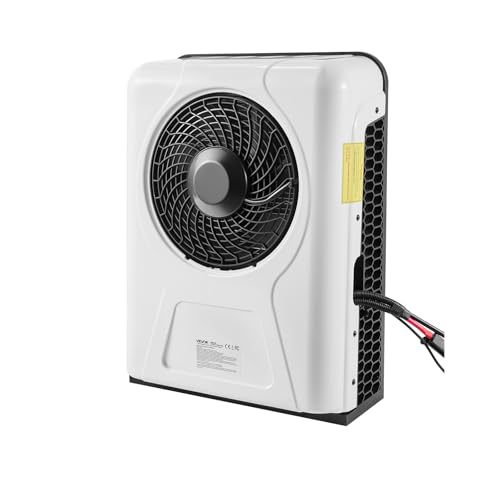
The VEVOR 12V Split is the most balanced pick for a truck camper, pairing 10,000 BTU of cooling with 400 cubic meters per hour of airflow on a 12 volt supply. Per the listing, an automotive-grade inverter and a variable-frequency scroll compressor adjust speed to cut power use, which is the feature a battery-powered cabin benefits from most.

It arrives pre-charged with refrigerant, which spares the installer a step that the unbranded units leave to the buyer. Next to the AClengda, it cools with a larger rated capacity and a variable-speed compressor, and the ABS housing is built to resist deformation and corrosion on rough roads, which matters when the camper rattles down a washboard track.

Truck camper owners who run the unit off a dedicated battery, want a ready-to-install package and dislike hunting for refrigerant and gauges will find it the practical default. It is the practical default for anyone who wants cool air by the next trip.

What works

  • Variable-speed compressor saves battery
  • Arrives pre-charged with refrigerant
  • Strong 400 m3/h airflow
  • Durable ABS housing

Watch out for

  • Amp draw is unspecified, so size wiring generously
02
AClengda 12V DC Air Conditioner, Truck Split Air Conditioner 9000btu
  • 9,000 BTU, 12V DC, 850W
  • 60 to 70 amp current requirement
  • Indoor unit as low as 40 dB
Check price on Amazon for AClengda 12V DC Air Conditioner, Truck Split Air Conditioner 9000btu (opens in a new tab)
Best for: Light sleepers in a cabover bunk with a strong 12V battery setup.

Our take

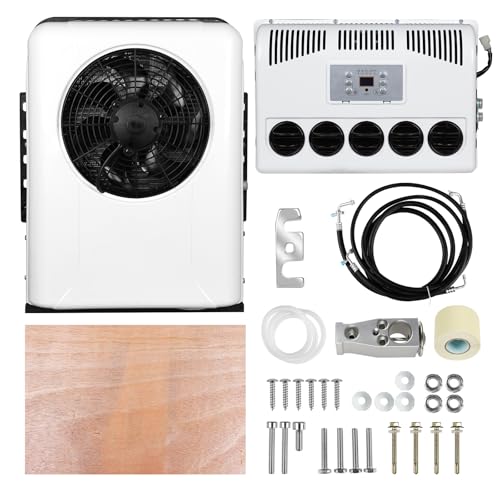
Remote control and evaporator panel buttons give five wind speeds plus mode and temperature settings.

Why it made the shortlist

The AClengda 9000 is the pick for light sleepers, with an indoor unit rated as low as 40 decibels. Five air outlets distribute airflow around a small cabin, and the unit runs from the vehicle battery without the engine, so it keeps cooling after the truck is parked for the night and the engine is off.

The listing is unusually specific on power: 12 volt DC, 850 watts and a 60 to 70 amp current requirement, with a 9,000 BTU rating. That openness helps a buyer size a cable, a fuse and a battery bank with real numbers instead of guesses, and it uses R134a refrigerant at 600 grams, a type most refrigeration shops already stock.

Positioned above the VEVOR on price and below the rooftop units, it suits a buyer who values a quiet bunk and clear published numbers. Hard-sided cabovers on a solid lithium or AGM bank suit it, since a quiet bunk is worth a bit of extra wiring effort.

What works

  • Quiet 40 dB indoor unit
  • Clear published wattage and amps
  • Five outlets and five fan speeds
  • Remote and panel controls

Watch out for

  • Refrigerant is not included
  • High amp draw needs big wiring
03
12V Universal Electric RV Truck Air Conditioner Camper A/C Unit, 12000 BTU Split AC
  • 12,000 BTU class, 2,500W cooling
  • 12 or 24V DC, 800W consumption
  • Electric scroll compressor
Check price on Amazon for 12V Universal Electric RV Truck Air Conditioner Camper A/C Unit, 12000 BTU Split AC (opens in a new tab)
Best for: Owners who may move to a 24V system or drive with the unit running.

Our take

It shares its rated figures with the unbranded 12000 BTU unit, and what sets it apart is the stated electric scroll compressor and the clear dual-voltage rating.

Why it made the shortlist

The Sokaiso 12000 uses an electric scroll compressor on a 12 or 24 volt DC supply, rated at 2,500 watts of cooling for 800 watts of consumption. That dual-voltage rating gives a buyer room to change battery systems later without replacing the air conditioner, which is useful when a camper moves between trucks or a bank is upgraded.

The listing says the unit works while parked and while driving, powered from the vehicle battery, which saves fuel compared with idling the engine for cooling.

Best for an owner who wants a straightforward DC split with cooling headroom for a larger cabover or a sunny roof, and who values the freedom to move between 12 and 24 volt systems.

What works

  • Works on 12V or 24V systems
  • Electric scroll compressor runs parked or driving
  • Headroom for a larger cabin

Watch out for

  • Refrigerant must be added separately
  • Sparse listing detail on installation
04
Best for: Budget-first owners who will supply their own refrigerant and wiring.

Our take

The Sokaiso 12000 shares the same rated figures with this unit, so the choice is mostly about price and seller.

Why it made the shortlist

The Generic 12000 is the entry pick of this shortlist and the least expensive way to get 12 volt split cooling into a truck camper, with no brand markup added on top. As a 12 or 24 volt electric parking air conditioner with a 2,500 watt cooling rating and 800 watts of consumption, it competes on capacity rather than on extras, and the numbers on the nameplate match units that cost a little more.

The listing highlights engine-off operation for fuel savings and promotes cooling for up to 8 to 12 hours after the engine is shut down, which depends on the battery system behind it. Marketed for sleeper cabs, vans and RVs, it is the sort of unit a handy owner buys when the goal is a working cooling system at the lowest outlay.

DIY builders with a deep-cycle bank, comfort with refrigerant handling, and a camper where cost matters more than brand support get the most from it. It rewards the owner who likes to do the work in the driveway.

What works

  • Same rated cooling as the Sokaiso
  • Runs with the engine off
  • Works on 12V or 24V

Watch out for

  • Unbranded seller with thin support
  • Refrigerant not included
05
JULIBA 18000 BTU RV Air Conditioner with Heat Pump, 110-120V Non-Ducted Rooftop
  • 18,000 BTU cooling, 10,236 BTU heat
  • 50 dB, 23 to 115 degree range
  • 115V plus 12V, non-ducted
Check price on Amazon for JULIBA 18000 BTU RV Air Conditioner with Heat Pump, 110-120V Non-Ducted Rooftop (opens in a new tab)
Best for: Hard-sided truck campers on shore power that want a heat pump.

Our take

Against the Arsenda 18K it adds an explicit heating figure and a four-season description, while sharing the same capacity and noise rating.

Why it made the shortlist

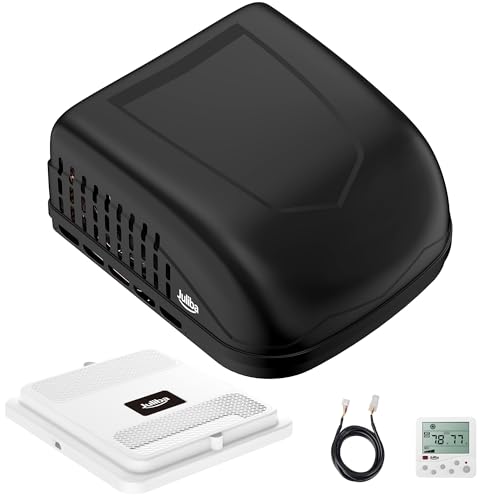
The Juliba 18K is a full-size rooftop unit with a heat pump, and the step up from the 12 volt splits buys 18,000 BTU of cooling, 10,236 BTU of heating and a 50 dB sound rating. It operates in outdoor temperatures from 23 to 115 degrees Fahrenheit, which covers shoulder-season trips as well as summer heat.

The housing is a UV-resistant design made for sun, road vibration and long-distance travel, so it stands up to a camper that spends its summers parked in direct sunlight. Like the other rooftop pick, it needs 115 volt power plus a 12 volt connection, so it suits a camper that spends its nights at hookups or runs a generator.

Large hard-sided cabovers with a roof opening for a rooftop unit, and owners who camp at powered campgrounds year-round, benefit most, since one unit handles both summer cooling and cold mornings with the same controls.

What works

  • Heat pump covers cool mornings
  • Wide outdoor temperature range
  • UV-resistant rooftop housing

Watch out for

  • Needs shore power or a generator
  • Capacity is large for a truck camper
06
Arsenda RV Air Conditioner 18000 BTU with Heat Pump and Cooling, 110-120V Non-Ducted
  • 18,000 BTU with heat pump, R32
  • Fits 14.25 x 14.25 inch opening
  • 23 to 115 degree operating range
Check price on Amazon for Arsenda RV Air Conditioner 18000 BTU with Heat Pump and Cooling, 110-120V Non-Ducted (opens in a new tab)
Best for: Truck campers with a standard 14.25 inch roof opening and hookups.

Our take

Priced the same as the Juliba 18K, it is the pick for owners who care about the refrigerant and the aerodynamic shape.

Why it made the shortlist

The Arsenda 18K is a rooftop heat pump that uses R32 refrigerant, which the listing says cools faster and uses less energy. It fits the standard 14.25 by 14.25 inch roof opening and supports 115 volt power, so it can replace an existing unit without ductwork and without changing the ceiling layout inside the camper.

The aerodynamic profile is meant to reduce drag, which helps when a camper sits above the cab and catches wind on the highway, and the shape sheds air rather than fighting it. The 23 to 115 degree operating range suits year-round trips. Cooling and heating come from the same 18,000 BTU system, and the UV-resistant materials are built for road and weather.

Truck campers that already have a standard roof opening, camp mostly on shore power and want a modern R32 unit with heat are the match, which rewards owners who plan long stays at powered sites.

What works

  • Modern R32 refrigerant
  • Fits the standard roof opening
  • Aerodynamic profile reduces drag
  • Heat pump included

Watch out for

  • Needs both 115V and 12V connections
  • Capacity is large for a truck camper

Methodology

How We Built This Shortlist

Each pick was assessed across 5 criteria weighted for real-world use.

01

Fit for a truck camper

We read each listing for the vehicles it names and the space it assumes, separating cab and camper splits from full rooftop units. Truck campers are small and travel on a moving truck bed, so weight, roof space and battery supply were weighed first. Units described for semi trucks and construction vehicles were judged on whether the 12 volt design suits a camper.

02

Power source and amp draw

Wattage and amperage figures such as 850 watts, 800 watts and 60 to 70 amps were compared against what a truck battery or a camper bank can deliver. A listing that states its draw ranks above one that does not. Based on product specs, the 12 volt units are a heavy load for a single starter battery.

03

Cooling capacity and airflow

BTU ratings, rated cooling watts and airflow figures such as 400 cubic meters per hour were compared to the small cabin of a camper. Larger is not automatically better in a small space. We favored capacity that suits a cabover instead of a full-size trailer.

04

Installation realism

Pre-charged refrigerant, included hardware, roof opening size and the need to add refrigerant yourself were noted for every pick. A ready-to-install package scored above one that needs gauges and a charge. Our analysis assumes a buyer who wants working cooling without a shop visit.

05

Budget position

Each pick was placed in the entry, mid or top band of this shortlist, and the step between bands was tied to a mechanism such as a variable-speed compressor or a heat pump. The four 12 volt splits sit noticeably below the two rooftop units. The goal was an honest picture of what each level of spend delivers.

Decision guide

Match a Budget RV Air Conditioner for Truck Campers to Your RV

By Power Source

Where the power comes from sorts these six picks faster than anything else.

Your powerBest pick
Deep-cycle or lithium bank, quiet bunkAClengda 9000
Battery bank, wants efficiencyVEVOR 12V Split
May upgrade to a 24V systemSokaiso 12000
Hookups at campgrounds, wants heatJuliba 18K
Hookups, standard roof openingArsenda 18K

By Budget

Bands describe position in this shortlist, and the rooftop units sit well above the splits.

BandPick and what it buys
Entry of this shortlistGeneric 12000 buys the cheapest 12V cooling with refrigerant to add
Entry of this shortlistSokaiso 12000 adds a stated electric scroll compressor and a 12/24V rating
Mid of this shortlistVEVOR 12V Split adds an inverter compressor and pre-charge
Mid of this shortlistAClengda 9000 adds a quiet indoor head and published amps
Top of this shortlistJuliba 18K and Arsenda 18K add 18,000 BTU and a heat pump, roughly double the entry pick

12V Split vs Rooftop Unit

This is the core fork for a truck camper.

12V split system

Runs from batteries with the engine off and keeps the roof clear, at the cost of heavy amp draw and a two-part install. VEVOR 12V Split, AClengda 9000, Sokaiso 12000 and Generic 12000 belong here.

115V rooftop unit

One box, heat pump heating and quiet running, but it needs hookups or a generator. Juliba 18K and Arsenda 18K belong here.

Pick VEVOR 12V Split for dry camping and Juliba 18K for campground travel.

By Installation Skill

A second axis is how much of the install you can do yourself.

Skill levelBest pick
Wants pre-charged, minimal setupVEVOR 12V Split
Comfortable adding refrigerantGeneric 12000
Comfortable with refrigerant, wants quietAClengda 9000
Replacing a standard roof unitArsenda 18K

For Cabover Campers Specifically

A cabover has little volume and a lot of window.

Look for

A modest BTU rating, a low indoor noise level and a stated amp draw for sizing the bank. AClengda 9000 and VEVOR 12V Split meet that description.

In this comparison

AClengda 9000 is the quietest indoors at 40 dB, and VEVOR 12V Split is the most efficient with its variable-speed compressor.

When to Spend More

The two rooftop units are the real step up in this guide.

Spend more if

You camp mostly on hookups and want heat pump heating, which points to Juliba 18K or Arsenda 18K.

Save if

You boondock and the cabin is small, where Generic 12000 or Sokaiso 12000 deliver working DC cooling at the low end.

FAQ

Before You Bring One Home

Can a truck camper run a 12V air conditioner off the truck battery?

Not for long on a starter battery. An 850 watt unit draws roughly 70 amps at 12 volts, and the AClengda lists a 60 to 70 amp requirement. A dedicated deep-cycle or lithium bank is the realistic source, and heavy cable is needed. Treat the starter battery as a charger, not as the supply.

Are 18,000 BTU rooftop units too big for a truck camper?

In most cases, yes. A truck camper cabin is small, so an 18,000 BTU unit will cool it quickly and then cycle on and off. It also needs shore power or a generator and a roof opening of about 14.25 inches. A 12 volt split in the 9,000 to 12,000 BTU class is a better size match.

What does it mean that refrigerant is not included?

Several of the 12 volt splits list R134a at about 600 grams and leave the charge to you. That requires gauges, a vacuum pump and know-how, and a shop can do it for a fee. The VEVOR is described as pre-charged, which avoids that step. Plan for the cost and the skill before ordering.

Is the Sokaiso different from the Generic 12000?

The two list the same rated cooling and consumption figures, 2,500 watts and 800 watts, and the same 12 or 24 volt rating. The Sokaiso adds an explicit electric scroll compressor description. The choice comes down to price and seller support. Compare both listings before ordering.

How long will a 12V unit run on my batteries?

Divide the bank's usable amp-hours by the unit's draw, such as 60 to 70 amps for the AClengda. A 200 amp-hour lithium bank gives roughly three hours of continuous running at that draw. The compressor cycles, so real runtime is longer. A variable-speed compressor like the VEVOR's stretches it further.

Which is quietest for sleeping?

The AClengda lists an indoor unit as low as 40 dB, the 18,000 BTU rooftop units list 50 dB, and the VEVOR lists 65 dB. The outdoor compressor of a split adds noise outside, not in the cabin. If you sleep lightly, the AClengda is the pick to look at first.

Bottom line

The short version

Browse more budget rv air conditioners for truck campers on Amazon →
Bowen Higgins, RV Editor at RV Gear Lab

About the author

Bowen Higgins

RV Editor at RV Gear Lab

Bowen covers RV power, water systems, towing and leveling, upkeep and interior comfort, with a focus on matching gear to the rig, the hookups and the way you actually travel.

More from Bowen →Editorial standards

Keep reading

Related guides