

We research everything we recommend. When you buy through our links, we may earn a commission. Learn more

Buying guide · 11 min read · Updated October 2, 2026

6 Best Budget 300 Watt RV Solar Panels in 2026: A Practical RV Guide

Six 300 watt RV solar options compared, from a bare rigid bifacial panel to a 600 watt kit, with what each one drops at its price and who should stop there.

Bowen HigginsBy Bowen HigginsRV Editor at RV Gear Lab6 products comparedSpec-sheet researched

At a glance

Our top picks

Three hundred watts marks the point where a travel trailer stops being a weekend-battery-top-up rig and starts running a fridge, a fan and a laptop without generator help. That is why it is the most searched size for budget RV solar, and also why listings at this size vary so widely in what they actually put in the box.

Some picks here are a single rigid glass panel with nothing else, some are a folding suitcase with its own controller, and one is a two-panel kit that adds up to twice the headline wattage. A 300 watt label tells you the peak output under lab sunlight, not whether you also need to buy a charge controller, wire and mounting hardware to make it work.

We evaluated each pick on what the listing includes, the cell technology behind the watt rating, and how the build is meant to be used. The cheapest option here is a long way below the rest on price, and that gap is explained in the entries below rather than hidden. Read the controller line first, because it decides your true cost.

RV Gear Lab field notes

The Rig Fit Check

Start with the job
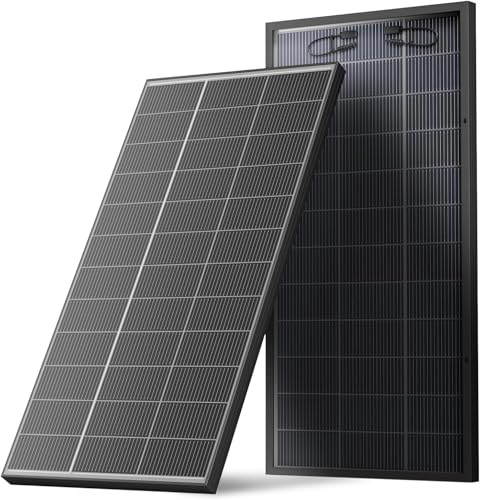
300W Bifacial Solar Panels 25% High Efficiency 18BB N-Type 12V/24V leads this shortlist for buyers comparing capacity, compatibility, included components and storage needs. Use that fit as a reference point, then compare the alternatives against your own space and workload.
Specs that separate the picks
The first details to compare are 52.7 x 26.38 x 1.18 inches, N-type 16BB cells, 25% rated, Folds to 29 x 26 inches. Confirm the exact model and included components before ordering.
Trade-off to plan for
No charge controller included

Before you buy

What Matters Before You Choose a Budget 300 Watt RV Solar Panel

Key buying criteria so you get the right fit the first time.

  1. 01

    Rated Watts Versus Real Harvest

    Peak ratings describe output under laboratory sunlight, and a roof in real life delivers a fraction of that after heat, tilt and shading. On a flat trailer roof expect much less than the label on most days, so a 300 watt panel is a few hundred watt-hours per sunny day rather than a steady 300 watts. Sizing your system from your daily watt-hours divided by peak sun hours is the reliable method. Check the listing for the stated efficiency and cell type to judge whether the wattage is credible.

  2. 02

    Controller Included or Not

    A solar panel cannot charge a battery by itself, because the controller regulates the voltage and current going in. Some picks here include one and some leave it out, which can add a meaningful amount to the true cost. PWM controllers are simpler, while MPPT controllers can recover more harvest, with vendors claiming 20 to 30 percent more. Look in the box contents line and the title for the words controller and amps.

  3. 03

    Rigid Glass Versus Folding Fabric

    A rigid panel is a glass-and-aluminum slab you bolt down once and forget, and it is built to survive years of rain and vibration. A folding panel uses a softer surface such as ETFE on a canvas back so you can store it and move it. The folding pick can be damaged by wind or a drop if left out unattended. Match the construction to whether the panel will live on a roof or travel in a bin.

  4. 04

    System Voltage Compatibility

    Twelve volt and 24 volt battery banks want different panel wiring, and some of these panels are sold for both. A panel wired in series raises voltage, and cold weather raises the open-circuit voltage further, so a controller or power station needs headroom. Connector match does not prove compatibility, so read the input voltage limit of what you are plugging into. Look for the open-circuit voltage line in the spec table.

  5. 05

    Size and Weight at the Roof

    Rigid panels at this wattage run around four and a half feet long and the footprint competes with vents, skylights and AC units. Weight matters when lifting it up a ladder alone and for the roof load. One pick here weighs about 21 pounds and a folding suitcase weighs about 39 pounds. Compare the listed dimensions with a tape-measured clear roof area before ordering.

  6. 06

    Warranty Length and Claim Path

    Panels degrade slowly over decades, so an output warranty matters mostly if the maker is still around to honor it. Stated terms in this guide range from one year to thirty years, and the longer terms mean more only from an established seller. A transferable warranty helps resale value of the trailer. Find the warranty line in the listing and note who services it.

Our standards

Why You Can Trust RV Gear Lab

At RV Gear Lab, we compare products based on rig fit and power or hookup compatibility, verified specifications, usability, setup requirements, weight, durability, and real-world trade-offs. We do not rank products purely on marketing claims or commission rates.

We have not personally tested every product listed. Where hands-on testing is not available, recommendations are based on verified manufacturer specifications, product documentation, use-case fit, and comparative research.

How we review RV gear →

Detailed reviews

The 6 best budget 300 watt rv solar panels, explained

01
300W Bifacial Solar Panels 25% High Efficiency 18BB N-Type 12V/24V
  • 52.7 x 26.38 x 1.18 inches
  • 21.2 lb aluminum frame
  • IP68 junction box, N-type cells
Check price on Amazon for 300W Bifacial Solar Panels 25% High Efficiency 18BB N-Type 12V/24V (opens in a new tab)
Best for: Buyers comparing capacity, compatibility, included components and storage needs

Our take

It also pairs naturally with a 12 volt or 24 volt system, since the listing states both are supported.

Why it made the shortlist

This is a single rigid 300 watt panel built from N-type monocrystalline cells with 18 busbars, rated up to 25.3 percent efficiency. Second from the bottom on price, and the lowest priced pick that is a proper glass-and-aluminum module meant for a permanent roof mount.

The IP68 junction box and tempered glass front are what you want on a roof that sees rain, hail and road vibration for years. The frame profile is 52.7 by 26.38 inches and about 21 pounds, so one person can lift it onto a ladder.

Beside the Xilanseek panel, which is the next step up on price, it gives you the same 300 watt rating and N-type cell family at noticeably lower cost. The step up buys a longer stated warranty and a slightly different bifacial rear layer, not more roof output.

Its bifacial rear side can add output when light reflects from a pale roof or ground surface, which helps on a travel trailer with a white membrane roof.

Owners who already have a charge controller, or will buy a separate MPPT unit, get the most rated wattage per square foot of roof here, and it rewards a permanent install with fixed tilt and short, thick wiring.

What works

  • Real glass and aluminum rigid build
  • N-type cells with 25 percent rated efficiency
  • Slim frame, one person can lift it
  • Bifacial rear can add output

Watch out for

  • No charge controller included
  • Rear gain depends on a bright surface
02
Xilanseek 300W Bifacial Solar Panel, N-Type 16BB Monocrystalline
  • N-type 16BB cells, 25% rated
  • IP65 box, IP67 connectors
  • Pre-drilled black aluminum frame
Check price on Amazon for Xilanseek 300W Bifacial Solar Panel, N-Type 16BB Monocrystalline (opens in a new tab)
Best for: Owners who want a rigid 300 watt panel backed by the longest stated warranty here.

Our take

It works with 12 volt systems and is sold as suitable for homes, boats and off-grid shelters too.

Why it made the shortlist

Xilanseek builds this 300 watt panel on N-type 16 busbar cells rated up to 25 percent efficiency, with a bifacial design that lets the rear face contribute. It sits mid-pack on price, a small step above the other rigid bifacial pick.

The junction box is IP65 and the connectors are IP67, with a black aluminum frame and pre-drilled mounting holes, so it bolts to Z-brackets without drilling the frame.

Against the Bifacial 300W Rigid pick, the step up buys a stated 30 year warranty and copper wiring marketed as anti-corrosion.

For an RV that will keep the same panel for a decade, that paperwork is worth having.

A fixed roof mount with one panel is the target use, for buyers wanting clear weatherproofing ratings on both the box and the plugs. Marine and trailer owners who live near salt air or coastal storms are the target.

What works

  • Long stated warranty for a budget panel
  • Pre-drilled frame speeds up mounting
  • Bifacial rear adds possible gain

Watch out for

  • No controller in the box
03
DOKIO 300W Portable Solar Panel Suitcase with Charge Controller
  • Folds to 29 x 26 inches
  • PWM controller with alligator clips
  • 9.8 ft cable, dual USB ports
Check price on Amazon for DOKIO 300W Portable Solar Panel Suitcase with Charge Controller (opens in a new tab)
Best for: Campers who want to park in the shade and set the panel in the sun, controller included.

Our take

It suits seasonal use and users who will move the panel around the campsite through the day.

Why it made the shortlist

This is a folding suitcase panel that arrives with a PWM charge controller and alligator clips, so it charges a 12 volt battery straight out of the box. It lands in the upper third on price, which pays for the controller, the case and the stand.

The cable runs about 9.8 feet, which lets the panel follow the sun while the battery stays in the shade.

Over the rigid roof panels, the extra spend buys a built-in controller, an adjustable bracket for tilt and two USB ports, so the first charge needs no separate parts. The listing also cites a 25 year transferable output warranty.

Tilt adjustment matters because angling toward the sun is how a portable panel earns its rating.

Folded it measures about 29 by 26 inches.

What works

  • Controller included, works on day one
  • Adjustable bracket for tilt toward the sun
  • Long cable keeps battery in the shade
  • Long output warranty stated

Watch out for

  • Weighs about 39 pounds
  • PWM controller wastes some harvest
04
SUNIVORA 300W Portable Solar Panel for Power Station, MC4 Output
  • 15.9 lb, folds to 24 x 21 inches
  • 22.5% efficient ETFE monocrystalline
  • 4-in-1 MC4 adapter, 9.8 ft cable
Check price on Amazon for SUNIVORA 300W Portable Solar Panel for Power Station, MC4 Output (opens in a new tab)
Best for: Anyone charging a portable power station who wants a light folding 300 watt panel.

Our take

A stated 12 month warranty comes with it, and the package includes instructions and the adapter cable.

Why it made the shortlist

Sunivora folds a 300 watt panel into a 24 by 21 inch bundle that weighs 15.9 pounds, making it the lightest way to carry 300 watts in this guide. The cells are A+ grade monocrystalline rated at 22.5 percent efficiency under an ETFE surface.

A four-in-one MC4 cable adapts to DC5521, DC5525, DC7909 and XT60 inputs.

Alongside the Dokio Suitcase it trades the built-in controller for a much lighter frame and an MC4 output that feeds the MPPT already inside a power station. That is the sensible split, since the station does the regulation.

It costs noticeably more than the rigid panels, and the money goes into the folding build and the adapter set.

Owners with a portable station can move this panel around the site without lifting a heavy case. A handle and a thin backplane make it easy to stash in a truck bed or storage bay.

What works

  • Lightest 300 watt option in this guide
  • Adapter cable fits many station inputs
  • Folds small with a carry handle
  • Waterproof canvas back

Watch out for

  • Needs a station with its own controller
  • Short 12 month warranty
05
Best for: Owners wiring a fresh roof array who want panels and an MPPT controller together.

Our take

The listing covers RVs, yachts and off-grid storage use.

Why it made the shortlist

This is two 300 watt N-type monocrystalline panels with a 30 amp MPPT charge controller, for 600 watts total on a 12 volt system. Most expensive in this guide, roughly the entry pick several times over, and the single option that delivers a whole charging subsystem.

The 10 busbar cells are rated up to 25 percent efficiency.

Over buying a single rigid panel, the step up buys a second panel and an MPPT controller, which recovers extra harvest over a PWM unit. The built-in MC4 connectors and pre-drilled holes mean the panels plug together and screw down.

A trailer whose battery bank is already sized for more than a trickle and the owner wants a coherent kit. Six hundred watts in total matches full-time use better than one 300 watt module.

What works

  • Includes an MPPT controller
  • Two panels for 600 watts total
  • Pre-drilled frames, MC4 plugs ready
  • High rated cell efficiency

Watch out for

  • Most expensive pick here
  • Two panels need more roof area
06
Best for: Tinkerers on the tightest budget who accept a no-name kit and plan to test the output.

Our take

300W Solar Panel Kit DC 12V 24V 50A Solar Charger IP67 with Controller is the better fit when tinkerers on the tightest budget who accept a no-name kit and plan to test the output.

Why it made the shortlist

This is the entry pick here, priced a long way under every other 300 watt option. It bundles a 50 amp waterproof controller and offers protection against over-charge, over-discharge and short circuits.

It aims at 12 and 24 volt systems and is meant for RV and camper use.

Set beside the Bifacial 300W Rigid pick, the low price comes from skipping branded cell specs and a stated warranty. What the listing does emphasize is the controller and the waterproof rating.

For a spare-parts or backup system, that cost position is the point.

Someone building a cheap secondary array for a shed or a gate system, who will measure real output before depending on it. The listing mentions charging phones, laptops and storage devices.

What works

  • Far cheaper than any other option
  • Includes a waterproof controller
  • Works on 12 or 24 volt systems
  • Low regret for backup use

Watch out for

  • No cell type or efficiency stated
  • Real 300 watt output unproven

Methodology

How We Built This Shortlist

Each pick was assessed across 5 criteria weighted for real-world use.

01

What is in the box

We compared listings to see whether the 300 watt figure comes with a controller, cables and mounting holes or stands alone. A bare panel and a complete kit are different purchases even at similar wattage. Included parts changed how we ranked picks more than any other factor.

02

Cell technology

We read each listing for the cell type, busbar count and rated efficiency. N-type monocrystalline cells with a stated efficiency in the mid 20s told us more than a bare watt label. Listings with no cell information were ranked lower for confidence.

03

Build for the use

A roof panel and a folding panel face different stresses, so we weighed junction box ratings, glass versus ETFE and frame design against the intended use. Weather ratings that name the junction box and connectors count for more than a general claim. Weight and folded size mattered for portable picks.

04

Warranty and support

We noted the stated warranty on each listing, from 12 months to 30 years for output. A long output warranty is a signal about the maker's confidence, but we treated it as a promise rather than proof. Short warranties are fine for a backup system.

05

Position on price

We placed each pick relative to the others instead of quoting numbers, since prices move. We then asked what the step up in cost buys, whether a controller, a second panel or a longer warranty. A pick earned its rank by justifying that step.

Decision guide

Match a Budget 300 Watt RV Solar Panel to Your RV

By Mounting Style

How the panel will be installed narrows the field faster than anything else.

MountingBest pickWhy
Permanent roof, one panelBifacial 300W RigidRigid glass build at the low end of the rigid options
Permanent roof, long warrantyXilanseek 300WLongest stated warranty, rated plugs
Set out on the ground, controller built inDokio SuitcaseFolds, includes PWM controller and stand
Set out, feeding a power stationSunivora 300WLightest folding build with MC4 adapters
New roof array with MPPT600W MPPT KitTwo panels and an MPPT controller together

By Budget

Price bands here are relative to this shortlist, since exact prices change.

BandPickWhat you get
Entry of this shortlist50A Value KitA cheap controller bundle with unproven specs
Low-midBifacial 300W RigidA real rigid panel at the lowest credible price
MidXilanseek 300WThe same wattage with a longer warranty
UpperDokio SuitcaseController, stand and case included
Top600W MPPT KitTwice the wattage and an MPPT controller

Rigid Roof Panel vs Folding Portable Panel

This is the choice between set-and-forget and flexible placement.

Rigid roof panel

Bifacial 300W Rigid and Xilanseek 300W bolt down once, survive weather and charge whenever the trailer sits in the sun. They need a controller and some roof work.

Folding portable panel

Dokio Suitcase and Sunivora 300W let you chase the sun and keep the rig in the shade, but you must set them up and store them each trip.

If the trailer is parked in the open most days, go rigid with the Bifacial 300W Rigid.

By Controller Situation

What already regulates the power determines which kit makes sense.

Your setupPickReason
Already own an MPPT controllerBifacial 300W RigidBuy only the panel
No controller, simple 12 volt batteryDokio SuitcaseAlligator clips and PWM included
Portable power station with MPPT insideSunivora 300WMC4 output feeds the station
Building from scratch600W MPPT KitIncludes a 30 amp MPPT

For Full-Time Travel Specifically

Living in the rig makes harvest and durability the priorities.

Look for

Rigid panels, an MPPT controller, a clear warranty and enough wattage to cover daily use such as a fridge and a fan.

In this comparison

600W MPPT Kit gives the most capacity, while Xilanseek 300W gives the longest warranty for a single panel build.

When to Spend More

Moving up the list only makes sense when a specific feature pays you back.

Spend more if

You need a complete charging system or serious capacity, so the 600W MPPT Kit or Xilanseek 300W warranty is worth it.

Save if

You only need a backup or occasional topping off, in which case Bifacial 300W Rigid or 50A Value Kit is enough.

FAQ

Before You Bring One Home

How much can a 300 watt panel really make on an RV roof?

Rated output arrives only under ideal conditions. On a flat roof with heat, shading and an imperfect angle, the day total is usually several hundred watt-hours rather than 300 watts sustained. That is enough for lights, a fan and phone charging, and a fridge on a long sunny day. Size from your daily consumption, not the label.

Do I need a charge controller with these panels?

Yes, any panel that charges a battery needs one. The Dokio Suitcase, the 600W MPPT Kit and the 50A Value Kit include a controller, while the two rigid panels do not. A power station has its own controller built in, so the Sunivora 300W plugs straight into it. Check the input voltage limit first.

Is a bifacial panel worth it on an RV?

A bifacial panel can collect light on its rear face, which helps when the surface below is pale. On a roof mount the rear is close to the roof and gains little. The extra output is a bonus rather than a reason to buy. Choose by cell quality and warranty.

Can I wire two 300 watt panels together?

Yes, in parallel to stay at battery voltage or in series to raise voltage for an MPPT controller. Series raises the open-circuit voltage, and cold mornings raise it more, so stay under your controller's maximum input. Wiring on the 600W MPPT Kit ships already matched to its controller. Read its spec sheet before changing the wiring.

Why is the cheapest kit so far below the rest?

The entry pick leaves out branded cell specs, a stated warranty and a proven record, so the price reflects less assurance. It may still work as a backup system. Measure its real output before relying on it, and expect the listed wattage to be optimistic.

Is a portable suitcase panel enough for full-time living?

It can work for a small system, since you can angle it and keep the battery in the shade. It is bulky and heavy to set up each day, though. Full-timers usually prefer rigid roof panels for hands-off charging and keep a portable one as a supplement.

Bottom line

The short version

Browse more budget 300 watt rv solar panels on Amazon →
Bowen Higgins, RV Editor at RV Gear Lab

About the author

Bowen Higgins

RV Editor at RV Gear Lab

Bowen covers RV power, water systems, towing and leveling, upkeep and interior comfort, with a focus on matching gear to the rig, the hookups and the way you actually travel.

More from Bowen →Editorial standards

Keep reading

Related guides