

We research everything we recommend. When you buy through our links, we may earn a commission. Learn more

Buying guide · 11 min read · Updated October 2, 2026

6 Best Budget Portable Power Stations With Solar Panel in 2026: A Practical RV Guide

Budget portable power stations that ship with a solar panel in the box, compared on panel wattage, battery size and what the bundle can refill in a day.

Bowen HigginsBy Bowen HigginsRV Editor at RV Gear Lab6 products comparedSpec-sheet researched

At a glance

Our top picks

The most common disappointment in this category is opening the box and finding no panel. Many power stations are marketed as solar generators, yet the panel is sold separately and the listing only means the battery accepts solar input. Every pick here is a bundle where the title itself names a panel, so the first question a shopper has, whether a panel is in the box, is answered before price comes into it. That is the check this guide builds everything around, and it is why panel wattage is listed beside every pick.

That does not make the panel size irrelevant. Put simply, a 30W or 40W panel is a trickle charger beside a 288Wh battery, and a 100W panel can refill it in a long sunny day. The useful comparison is panel watts against battery watt-hours, along with the voltage and connector the panel uses to reach the station, since a mismatch means the sun does no work at all. Match those two numbers first and the rest of the shopping gets simple. A matching plug and a matching voltage window are the quiet requirements that decide whether the panel works at all.

We compared these six by what arrives in the box, how fast that panel can realistically refill the battery, and what the station behind it can run. Price appears only as a band, because bundles shift with sales. The order runs from the most capable kit to the leanest, so you can see exactly where the extra spend buys a larger panel or a bigger battery. So the ranking rewards kits whose panel and battery actually work together. Along the way we flag which kits spell out their chemistry and which leave it unstated, since that affects lifespan.

RV Gear Lab field notes

The Rig Fit Check

Start with the job
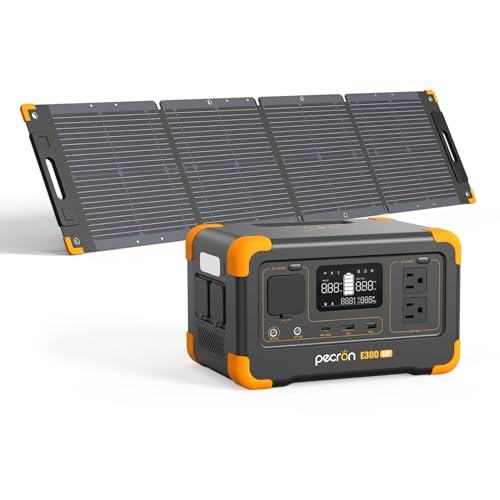
PECRON E300LFP 288Wh 600W Solar Generator with 100W Solar Panel leads this shortlist for First-time solar buyers wanting a 100W panel and a 600W LiFePO4 station.. Use that fit as a reference point, then compare the alternatives against your own space and workload.
Specs that separate the picks
The first details to compare are 288Wh LiFePO4, 600W pure sine wave, 288Wh LiFePO4, 300W DC output, 277.5Wh, 250W running (450W peak). Confirm the exact model and included components before ordering.
Trade-off to plan for
288Wh is modest for a fridge or heater

Before you buy

What Matters Before You Choose a Budget Portable Power Station With Solar Panel

Key buying criteria so you get the right fit the first time.

  1. 01

    What Is Actually in the Box

    Many listings use solar generator in the title yet sell the station alone, with the panel listed as an option. Read the contents list or the what you get line and look for the panel by its wattage. If it only says solar input supported, you are buying a battery that can accept solar, and you will need to purchase the panel on top. Each pick in this guide names its panel, so confirm the wattage before ordering because it varies from 30W to 100W.

  2. 02

    Panel Watts Against Battery Watt-Hours

    A rated panel wattage is the best case under strong direct sun, and real output in ordinary light is meaningfully lower. A 100W panel can return a few hundred watt-hours on a clear day, while a 30W panel returns a fraction of that. Divide the battery size by the panel's realistic daily harvest to see how many days a full refill takes. A 288Wh battery with a 100W panel is a workable day-and-a-half cycle, but the same battery with a 30W panel is a multi-day job.

  3. 03

    Connector and Voltage Match

    Panels reach the station through a DC connector, usually DC5521 or an MC4 style plug, and the station only accepts a voltage window such as 13V to 23V. If the panel's open-circuit voltage sits outside that window, the station may refuse to charge or be damaged. Scan for the input range in the specs and a list of supplied connector tips. Ten DC connector sizes ship with the Takki S811, which makes it easier to use the panel with other gear.

  4. 04

    Pure Sine Wave AC Versus DC Only

    Sensitive electronics, CPAP machines and laptop chargers run best on pure sine wave AC, and cheaper modified output can cause noise or heat. A DC-only station like the Anker C300 skips the inverter and wastes less energy, which suits USB-C laptops. Note the outlet type, its running and peak watts, and whether it is called pure sine wave. If you need wall-plug gear, pick a unit with a real AC outlet and enough continuous watts for it.

  5. 05

    Battery Chemistry in Small Kits

    LiFePO4 is commonly rated for around 3,000 to 4,000 cycles to 80% capacity, while NMC fades after roughly 500 to 800. Small solar kits are often cycled daily, so chemistry decides how many seasons the battery lasts. The Pecron E300LFP and Anker C300 name LiFePO4, while several others do not name a chemistry in the listing. When the chemistry is not stated, ask the seller or treat it as the shorter-lived type.

  6. 06

    Panel Folding and Portability

    A foldable panel packs flat and travels easily, but it also needs positioning toward the sun every hour or so. Look for a stated efficiency, a built-in kickstand or carry handle, and the weight of the panel on its own. Heavier, larger panels harvest more but are harder to stash in a small camper. A panel that fits the battery size and your routine will be used more often than a larger one left at home.

Our standards

Why You Can Trust RV Gear Lab

At RV Gear Lab, we compare products based on rig fit and power or hookup compatibility, verified specifications, usability, setup requirements, weight, durability, and real-world trade-offs. We do not rank products purely on marketing claims or commission rates.

We have not personally tested every product listed. Where hands-on testing is not available, recommendations are based on verified manufacturer specifications, product documentation, use-case fit, and comparative research.

How we review RV gear →

Detailed reviews

The 6 best budget portable power stations with solar panel, explained

01
PECRON E300LFP 288Wh 600W Solar Generator with 100W Solar Panel
  • 288Wh LiFePO4, 600W pure sine wave
  • 100W foldable solar panel included
  • Nine outlets, car and AC charging
Check price on Amazon for PECRON E300LFP 288Wh 600W Solar Generator with 100W Solar Panel (opens in a new tab)
Best for: First-time solar buyers wanting a 100W panel and a 600W LiFePO4 station.

Our take

The warranty runs one year plus a bonus year with registration, and support is available around the clock.

Why it made the shortlist

The E300LFP bundle arrives with a 100W foldable solar panel, an AC charging cable, a car charger and an accessory bag, so nothing else is needed to start collecting sunlight. The station inside pairs a 288Wh LiFePO4 battery with a 600W pure sine wave inverter and nine built-in outlets for phones, laptops and small appliances. The panel plus station arrangement is simple enough to set up in minutes at a campsite.

Anker C300 bundle makes the cleanest comparison, since Pecron E300LFP brings a larger panel and a real AC inverter, which means wall-plug devices such as a CPAP humidifier or a laptop brick run directly. The 100W panel unfolds and packs flat for carrying, and it targets efficient conversion so a clear afternoon puts a useful share of the battery back. It also charges from the wall and a car port, so cloudy days never leave it stranded.

This is the strongest all-round kit for a camper or a household that wants one box to run phones, Wi-Fi and a CPAP, with solar included from day one. Together the pieces make a complete starter solar system without extra purchases.

What works

  • 100W panel included, ready to charge
  • LiFePO4 battery with 600W inverter
  • Nine outlets cover most small devices
  • Accessory bag and cables are in the box

Watch out for

  • 288Wh is modest for a fridge or heater
  • 100W panel takes a full sunny day to refill it
02
Anker SOLIX C300 DC Portable Power Station with 60W Solar Panel, 288Wh
  • 288Wh LiFePO4, 300W DC output
  • 60W solar panel in the bundle
  • Two 140W two-way USB-C ports
Check price on Amazon for Anker SOLIX C300 DC Portable Power Station with 60W Solar Panel, 288Wh (opens in a new tab)
Best for: Van and tent campers running USB-C laptops, phones and 12V gear.

Our take

With the 60W panel, a full recharge takes about four hours in strong light to reach 80%.

Why it made the shortlist

The Anker SOLIX C300 DC bundle combines a 288Wh LiFePO4 battery and 300W output with a 60W solar panel. Two 140W two-way USB-C ports, a 100W USB-C, a 15W USB-C, two USB-A ports and a 120W car socket mean a laptop, phone and camera all charge from one box. Anker C300 kit is built for anyone who already lives on USB-C, from laptops to phones.

Pecron E300LFP makes the cleanest comparison, since Anker C300 kit trades the AC inverter for efficient DC delivery, which pays off for USB-C laptops and 12V gear that would otherwise waste energy converting. Anker rates the unit 30% more compact than similar stations, and a wall outlet brings it to 80% in 50 minutes. Smart temperature control and an impact-resistant build suit a pack that rides in a van every weekend.

Anker C300 kit is built for a van or tent camper whose devices all run on USB-C, who wants an efficient battery with a panel included and no heavy inverter. A small, light panel fits in a daypack alongside it.

What works

  • Efficient DC output for USB-C laptops
  • Wall recharge to 80% in 50 minutes
  • 60W panel brings 80% in about 4 hours
  • Compact LiFePO4 body for packing

Watch out for

  • No AC outlet is listed for wall-plug gear
  • Carry strap is sold separately
03
Takki 75000mAh Portable Power Station, 277Wh, 450W Peak, with 60W Solar Panel
  • 277.5Wh, 250W running (450W peak)
  • 60W foldable panel, up to 23% efficiency
  • 8 ports, 10 DC panel connectors
Check price on Amazon for Takki 75000mAh Portable Power Station, 277Wh, 450W Peak, with 60W Solar Panel (opens in a new tab)
Best for: Campers who want AC, a CPAP and a 60W panel with ten DC tips.

Our take

A two-level light panel doubles as camp lighting, and the listing calls out CPAP use and emergency backup.

Why it made the shortlist

The Takki S811 bundle includes a 60W foldable solar panel with efficiency up to 23% and ten DC connector sizes, so the panel plugs into the station and many other devices. The 277.5Wh battery, equal to 75,000mAh, feeds a pure sine wave AC outlet rated 250W running and 450W peak. That panel and connector set removes the most common compatibility headache in small solar kits.

Pecron E300LFP makes the cleanest comparison, since Takki S811 works with a lighter 60W panel and a 250W running inverter, which suits a laptop, a CPAP and lights without paying for 600W. Eight output ports include two QC 3.0 18W USB ports, two 5V 2.4A USB ports and a 12V DC output. The built-in light panel with two brightness levels adds useful camp lighting on top of power.

Takki S811 is built for a camper who wants a sensible AC outlet and a panel with many connectors in one package at a mid-pack price. The station also charges from a wall socket when the weather lets you down.

What works

  • Pure sine wave AC suits CPAP use
  • Ten DC connectors fit many devices
  • 60W panel with 23% stated efficiency
  • Built-in two-level camp light

Watch out for

  • Battery chemistry is not named in the listing
  • 250W running limit rules out most appliances
04
ZeroKor Portable Solar Generator with Panel, 300W Power Station, 40W Panel
  • 280Wh, 300W AC station plus 100W pack
  • 40W foldable panel included
  • Two 110V pure sine AC outlets
Check price on Amazon for ZeroKor Portable Solar Generator with Panel, 300W Power Station, 40W Panel (opens in a new tab)
Best for: Families wanting a main station, a spare pack and a 40W panel.

Our take

The extra pack is a real convenience on a family camping trip, where phones and a lantern need a separate source.

Why it made the shortlist

The ZeroKor bundle puts two units in the box: a 280Wh, 300W power station and a 100W power pack with its own AC outlet, plus a foldable 40W solar panel. That means one device can charge from the big unit while the little one rides in a backpack or a tent. The bundle gives two separate power sources for devices spread across a campsite.

Takki S811 makes the cleanest comparison, since ZeroKor 300W pulls ahead on versatility, since the 300W station has two pure sine wave 110V AC outlets, a 9V to 12.6V DC port, three 5V USB ports, a QC3.0 port and an SOS flashlight. The built-in BMS covers short circuit, overcurrent, overvoltage and overload. Low-noise, gas-free operation lets it sit inside a tent or camper without fumes.

It makes the most sense for a group that wants spare power for several tents and a modest panel to keep both units topped up. It works as a family charging hub on a weekend away.

What works

  • Two power units in one box
  • Pure sine wave AC on both units
  • SOS flashlight and four protections
  • Panel and bag included in the bundle

Watch out for

  • A 40W panel refills slowly against 280Wh
  • Cell chemistry is not named in the listing
05
Apowking Solar Powered Generator 100W, 146Wh Power Station with 40W Panel
  • 146Wh, 100W (200W peak) AC
  • 40W panel, 20.5% efficiency cells
  • 7 outputs, LED flashlight with SOS
Check price on Amazon for Apowking Solar Powered Generator 100W, 146Wh Power Station with 40W Panel (opens in a new tab)
Best for: Day trips and tent nights charging phones, tablets and a laptop.

Our take

A battery management system controls voltage and temperature, and cooling vents on the back help it stay safe while running.

Why it made the shortlist

The Apowking is a compact 146Wh (39,600mAh) station that arrives with a 40W foldable solar panel built on 20.5% efficient cells, which the listing says perform better in low light. Seven outputs include two 110V AC outlets for devices up to 100W, with a 200W peak. It slips into a daypack and still brings AC, USB and DC outputs to a trailhead or beach.

ZeroKor 300W is the yardstick, and Apowking 146Wh is a lighter, simpler kit, covering a tablet, a laptop, a camera, a drone and a fan across USB-A, USB-C and DC ports. Dual LED flashlights with flashlight, strobe and SOS modes mean the unit also doubles as a camp lantern after dark. The flashlight modes make it a useful emergency item to leave in a glove box.

Apowking 146Wh is built for a hiker, a day-tripper or a tent camper who wants a pocket-sized solar kit for electronics, not appliances. Cooling vents on the back help it run steadily during a long charging session.

What works

  • Light kit for phones, tablets and laptops
  • Panel built on 20.5% efficient cells
  • Flashlight with strobe and SOS modes
  • BMS controls voltage and temperature

Watch out for

  • 100W output skips anything with a motor
  • 146Wh drains fast with a laptop
06
ZeroKor Portable Solar Power Station Bundle, 100W Station with 30W Panel
  • 100W station with two 110V AC outlets
  • 30W foldable panel in the bundle
  • Charges via wall, car or DC5521 panel
Check price on Amazon for ZeroKor Portable Solar Power Station Bundle, 100W Station with 30W Panel (opens in a new tab)
Best for: First-time buyers keeping phones and a Wi-Fi hotspot alive outdoors.

Our take

The station recharges from a wall outlet, a 12V car port or a DC5521 panel at 13V to 23V, and protections span short circuit, overcurrent, overvoltage, overload and overheating.

Why it made the shortlist

The ZeroKor 100W bundle is the entry point to solar charging, pairing a 100W station with a 30W foldable panel and a power bank bag. Two 110V AC outlets rated 100W, a 9V to 12.6V DC port, two 5V 3A USB ports, a QC USB3 port and a USB-C port handle most small electronics. The panel pairs with the station for charging in the sun, or with a wall adapter indoors.

Apowking 146Wh is the yardstick, and ZeroKor 100W sits at the budget end of the shortlist, and the savings come from a 30W panel and a lower-capacity battery. The panel adds a USB-A output at 5V 3A and a USB-C output up to 15V 2A, so it can charge a phone directly in the sun. A power bank bag keeps the pieces together for travel.

ZeroKor 100W is built for a first-time buyer who wants to try solar charging at the lowest cost, with phones as the main target. Here is a friendly way to learn how solar charging fits a trip without a big commitment.

What works

  • Lowest entry point in this guide
  • Panel charges phones directly via USB
  • Five protection circuits built in
  • Carry bag is part of the bundle

Watch out for

  • Capacity is small for laptops all day
  • 30W panel is a slow charger

Methodology

How We Built This Shortlist

Each pick was assessed across 5 criteria weighted for real-world use.

01

What Is Actually in the Box

We started with the bundle contents, because a listing can say solar generator while shipping only the station. Each pick here names a panel in its title or contents list, and we noted the panel wattage and whether a car charger and cables come with it. We evaluated this from listing specs, not from unboxing.

02

Panel Against Battery

We compared panel watts with battery watt-hours to judge how realistic a daily refill is. A small panel against a large battery is a trickle, and real panels rarely reach their label rating in ordinary light. We favored kits where the panel meaningfully matches the battery.

03

Inverter and Port Mix

We looked at whether the station has a real AC outlet, how many watts it sustains and what DC ports it adds. A CPAP or laptop brick needs AC, while a USB-C laptop does better on DC. We kept continuous and peak watts separate.

04

Connectors and Compatibility

We checked which connector the panel uses and what voltage window the station accepts. A panel that does not match the input will not charge, so we noted listings that spell out the range. We based this on the stated specifications.

05

Value Within the Shortlist

We positioned each kit by price band and asked what the step up buys, whether that is a bigger panel, a bigger inverter or a second unit. A kit won points when the added spend produced more energy or more useful ports. Dollar figures are left out because bundles change often.

Decision guide

Match a Budget Portable Power Station With Solar Panel to Your RV

By Panel Wattage

The panel in the box sets how fast the sun can refill the battery, so match it to how often you cycle.

Panel in the boxBest pickWhy
100W, strongest daily harvestPecron E300LFP100W foldable panel with 288Wh LiFePO4
60W, a steady weekend chargerAnker C300 kit60W panel brings 80% in about four hours
60W with many connectorsTakki S811Ten DC tips fit panel and other gear
40W, light daily top-upsZeroKor 300W40W panel plus a spare 100W pack
30W, phones onlyZeroKor 100W30W panel with USB output for direct charging

By Budget

Price tracks the size of the station and the panel together, so each band buys a clear step up.

Budget bandBest pickWhat it buys
Entry of this shortlistZeroKor 100W100W station and a 30W panel for phones
Low of this shortlistApowking 146Wh146Wh and a 40W panel on efficient cells
Mid of this shortlistTakki S811277.5Wh, pure sine AC and a 60W panel
Upper-mid of this shortlistZeroKor 300WTwo power units and a 40W panel
Top of this shortlistPecron E300LFPLiFePO4, 600W and a 100W panel

AC Inverter vs DC-Only Station

Whether your gear plugs into a wall or a USB-C port decides which design wastes less energy.

AC inverter stations

The Pecron E300LFP, Takki S811, ZeroKor 300W, Apowking 146Wh and ZeroKor 100W all have 110V AC outlets for CPAP machines, laptop bricks and small appliances. Inverter losses use a share of the battery.

DC-only station

The Anker C300 kit delivers USB-C and 12V directly, with no inverter loss. It is the efficient choice for USB-C laptops and phones, but a wall-plug device will not run from it.

Choose the Pecron E300LFP for wall-plug versatility, or the Anker C300 kit if every device charges over USB-C.

By Battery Size and Day Plan

A different question from panel size is how long the battery itself needs to carry you between sunny periods.

Day planBest pickWhy
A weekend of phones and a laptopPecron E300LFP288Wh covers two days of electronics
USB-C devices onlyAnker C300 kit288Wh at 300W with no inverter loss
A CPAP overnightTakki S811Pure sine AC and 277.5Wh
Multiple tents and a lanternZeroKor 300WA spare 100W pack as a second source
A day hike or beach tripApowking 146Wh146Wh with flashlight and a 40W panel

For Camping Trips Specifically

Camping asks for a panel that survives packing and a station that can stay warm and dry in a tent.

Look for

A foldable panel with a stated efficiency, an AC outlet only if your gear needs it, and a station that is light enough to carry, as the Apowking 146Wh is.

In this comparison

The Pecron E300LFP is the best camping all-rounder, the Anker C300 kit suits van campers with USB-C devices, and the ZeroKor 300W covers a family group with its spare pack.

When to Spend More

The step up the list is about panel size and battery chemistry, so spend where the sun is your main source.

Spend more if

You rely on solar daily or run a CPAP, since the Pecron E300LFP adds a 100W panel and LiFePO4 cells that survive many cycles.

Save if

You mostly charge phones on short trips, since the ZeroKor 100W or Apowking 146Wh cover that and keep the budget for a spare cable.

FAQ

Before You Bring One Home

Does a solar generator always come with a solar panel?

No, and this is the biggest source of buyer disappointment. Many listings are for the power station alone, with the panel sold separately. Find the panel's wattage in the title or the contents list, as every pick here has.

How long will a 100W panel take to charge a 288Wh battery?

In strong sun you can expect it to take most of a day, since real output sits below the 100W label. A cloudy day stretches the refill further. A 60W or 40W panel takes longer still.

Can I use a different panel with these stations?

Often yes, if the panel's voltage falls inside the station's input range and the connector fits. Ten DC tips ship with the Takki S811 for this reason. Always match the voltage window listed in the specs before plugging in a third-party panel.

Is a 40W panel enough to keep a station charged?

That suffices for phones and a hotspot, but it is a slow refill for a 280Wh battery and is best treated as a top-up. For a daily cycle, a 60W to 100W panel is a better match. Park it in direct sun and angle it toward the sun every hour or so.

Why choose the Anker C300 kit with no AC outlet?

It delivers USB-C and 12V directly, avoiding inverter losses, so a USB-C laptop charges efficiently from the sun. It works best for van and tent campers whose gear is all DC. If you own wall-plug devices, the Pecron E300LFP is the better fit.

Do these stations work during a power outage at home?

Yes, a charged station can power phones, a router and lights, and the bundled panel can top it up in daylight. The larger kits suit a CPAP or a laptop through a night. For refrigerators and larger loads, a bigger station from our home backup guide is a better match.

Bottom line

The short version

Browse more budget portable power stations with solar panel on Amazon →
Bowen Higgins, RV Editor at RV Gear Lab

About the author

Bowen Higgins

RV Editor at RV Gear Lab

Bowen covers RV power, water systems, towing and leveling, upkeep and interior comfort, with a focus on matching gear to the rig, the hookups and the way you actually travel.

More from Bowen →Editorial standards

Keep reading

Related guides