
Practical Camping Guide · 12 min read
Canvas vs Polyester Tents
Canvas and polyester tents differ in weight, breathability, UV life, fire safety and upkeep. See which fits your camping style and budget.

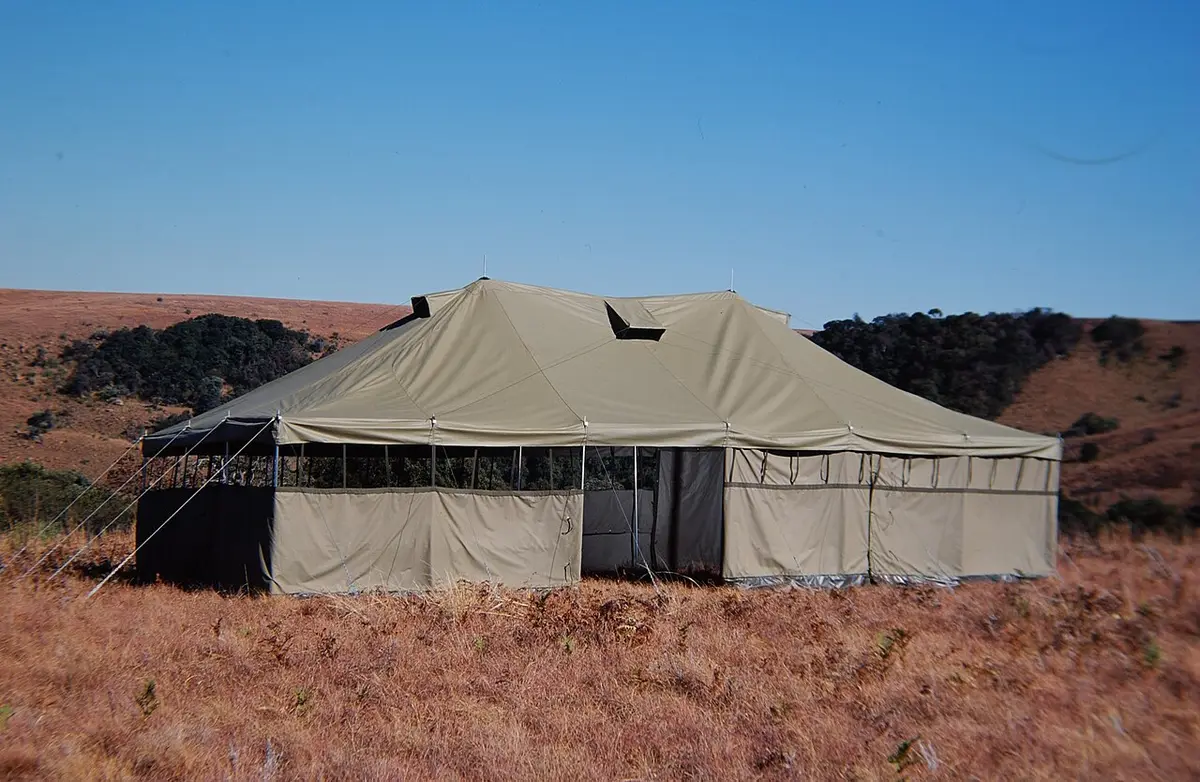
Canvas tents are heavy, breathable, durable and hold up to sun and wood stoves, while polyester tents are light, cheap, quick to dry and easier to pack. Choose canvas for a base camp you will live in for weeks, in four seasons, with a stove. Choose polyester for anything you carry, move or store in a small space, and for most casual camping.
The choice is really about weight, upkeep and how you camp. Canvas, which today usually means a cotton or cotton-polyester blend, behaves differently from synthetic fabric in rain, heat, fire and storage. This guide covers how each material handles water, condensation, UV, fire risk and maintenance, with the numbers you need to compare a heavy 12 by 14 foot wall tent against a 10 by 10 foot nylon family dome.
What "canvas" means in a modern tent
Traditional canvas is a tightly woven cotton duck. Modern camping canvas usually appears as one of three forms: 100 percent cotton, a cotton-polyester blend (often marketed as "poly-cotton"), or a synthetic fabric treated to look like canvas. Weight is stated in ounces per square yard or grams per square meter. A light camping canvas is around 8 to 10 ounces per square yard (roughly 270 to 340 gsm), and a heavy wall-tent canvas can be 12 to 15 ounces or more.
Cotton fibers swell when wet. That swelling closes the gaps in the weave and makes the fabric shed water, which is why untreated canvas is naturally water-resistant after its first soaking. Manufacturers also treat canvas with water-repellent and mildew-resistant finishes. Polyester and nylon, by contrast, are synthetic filaments that repel water by nature but need a coating (polyurethane or silicone) to be waterproof. Hydrostatic-head ratings printed on synthetic tents measure that coating; see our guide to tent waterproof ratings for how to read them.
Weight and pack size
This is the starkest difference. A 10 by 10 foot cotton canvas cabin tent may weigh 50 to 100 pounds with poles, while a polyester tent of the same floor area is typically 15 to 30 pounds. A large wall tent with a frame can weigh over 150 pounds and need a trailer. Canvas also packs bulky, taking the space of a large duffel or a storage tub.
| Feature | Canvas / poly-cotton | Polyester / nylon |
|---|---|---|
| Typical weight, 10x10 ft | 50 to 100 lb | 15 to 30 lb |
| Packed size | Large duffel or tote | Medium bag |
| Setup crew | Two people, often more | One or two |
| Drying time | Slow (hours to a day) | Fast (minutes to an hour) |
| Breathability | High | Low, needs vents |
| Typical lifespan | 10 to 20 years with care | 3 to 8 years |
If you carry your tent from a car to a site, weight is a minor concern. If you set up a long-term site or use a vehicle with limited capacity, weight decides everything.
Breathability, condensation and temperature
Canvas breathes. Water vapor from sleepers passes through the weave and evaporates outside, so condensation inside a canvas tent is usually lower than in a polyester tent. The thick fabric also buffers temperature: in summer it stays cooler than a nylon tent in direct sun, and in cold weather it holds heat slightly better, especially with a stove. Many campers describe a canvas tent as a calmer, quieter space.
Polyester does not breathe at all unless it is designed with mesh and vents, so condensation builds when many people sleep inside, or when humidity is high. Good polyester tents use a double-wall design with a breathable inner and ventilation at both ends. If you plan to camp in hot weather, see our guide on how to ventilate a tent in summer for tips that apply to any fabric.
Rain performance and seams
New canvas can leak. Until the fibers swell, rain can pass through the weave at the stitching. This is why canvas tents need "seasoning": setting up the tent, soaking it with a hose, letting it dry, and repeating once or twice. After seasoning, a quality canvas tent sheds heavy rain well. Touching the wall from inside during a rainstorm can draw water through by capillary action, which is a classic canvas surprise.
Polyester tents ship waterproof, with taped seams on better models. The coating ages, though, and eventually peels. A canvas tent's water resistance does not peel off in the same way; it can be restored with wax or a spray treatment. For ratings and care of synthetic coatings, see how to waterproof a tent. If you want a sealed rain-ready shelter, the best waterproof canvas tents list focuses on models designed for wet climates.
Sun, UV and durability
UV light damages polyester slowly. After a few seasons of sun, the fabric becomes brittle, the coating weakens, and the tent tears more easily. A polyester tent left pitched in the sun for a month will degrade noticeably. Cotton canvas tolerates UV far better, which is why canvas tents last decades in the field and are the traditional choice for hunting camps and seasonal sites. Treated canvas can also be repaired with patches and re-stitched, whereas a torn nylon panel is rarely worth fixing.
Abrasion resistance also favors canvas. A heavy-duty canvas floor handles rocky ground better than a thin polyester floor, which is why many canvas tents sell with a sewn-in or separate heavy floor. Check best heavy duty canvas tents for models that lean into this durability.
Fire safety and stoves
Canvas is a better choice near heat, but it is not fireproof. Untreated cotton burns, though it chars rather than melting. Polyester melts and drips, and it can ignite quickly when sparks land on it. For this reason most wood-stove tents are canvas or poly-cotton, with a fire-resistant stove jack (a heat-proof panel, usually silicone or a metal collar, where the pipe exits). Never use an open flame, a gas heater or a stove inside a tent that is not designed for it, and never run any combustion appliance while sleeping because of carbon monoxide risk. A carbon monoxide alarm is essential with any heater.
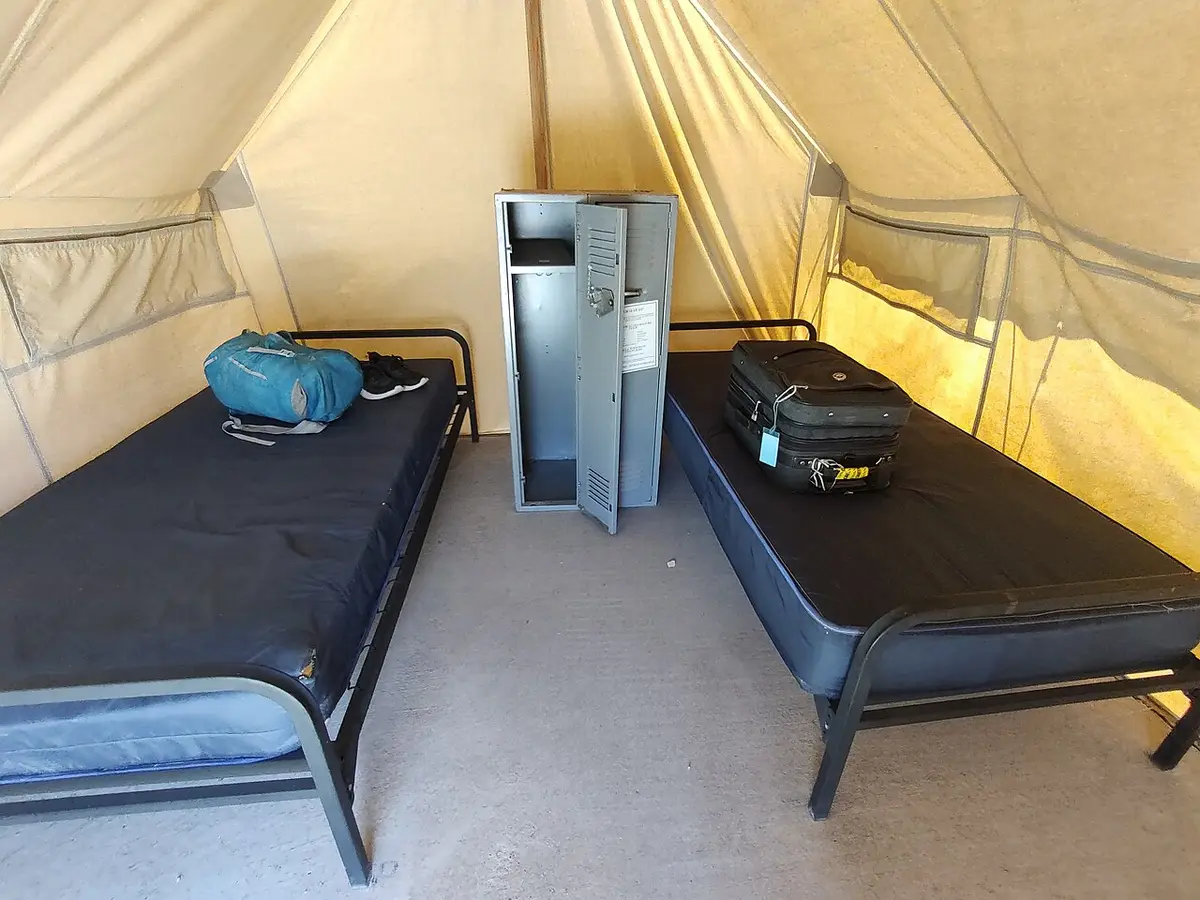
The best canvas tents with a stove jack and best 4 season canvas tents cover models designed for heated use. Look for flame-retardant fabric treatment, a stove jack with a clearly stated pipe diameter, and a placement for the stove away from the walls.
Maintenance, mildew and storage
Canvas demands more care. The enemy is mildew, which grows on damp cotton in a few days. Always dry the tent completely before packing, even if that means setting it up in the yard after a rainy trip. Brush off dirt rather than washing, and spot-clean with a soft brush and cold water; detergents strip the water-repellent finish. Store the tent in a breathable bag, in a dry, cool, rodent-free place. Our guides on how to clean a tent without damaging it and how to store a tent the right way go through the steps.
Polyester needs less care: a rinse, a dry and a loose storage bag. The danger is a coating that ages, especially when stored hot or damp. Both materials suffer from storage in a hot attic or a damp basement. A cotton tent in a mouse-friendly shed will have holes by spring.
Cost over the long run
Canvas tents cost two to five times as much as polyester tents of the same footprint. A well-made cotton-blend model sits in the hundreds to thousands of dollars. Compare that to the price of replacing a polyester tent every few years. If you camp weekly or live outdoors seasonally, canvas can come out cheaper over a decade. If you camp a few times a year, a polyester tent's lower cost wins, and the lifespan is rarely a limit before you move on.
On a budget, the best canvas tents under $150 shows that entry-level options exist, though they are usually blends and lighter weight. Treat very cheap "canvas" listings with care: some are polyester with a canvas-like texture, with the usual thin coating. Confirm the fabric content and weight in the specs.
Special uses: glamping, family and hunting camps
Canvas fits glamping and family base camps. A tall wall, standing height and room for cots, furniture and a stove make it feel like a cabin, and the fabric looks good. The best canvas tents for glamping and best family canvas tents lists highlight models that offer large floor areas and multiple doors. The trade-off is setup: two adults and an hour for a big model is typical.
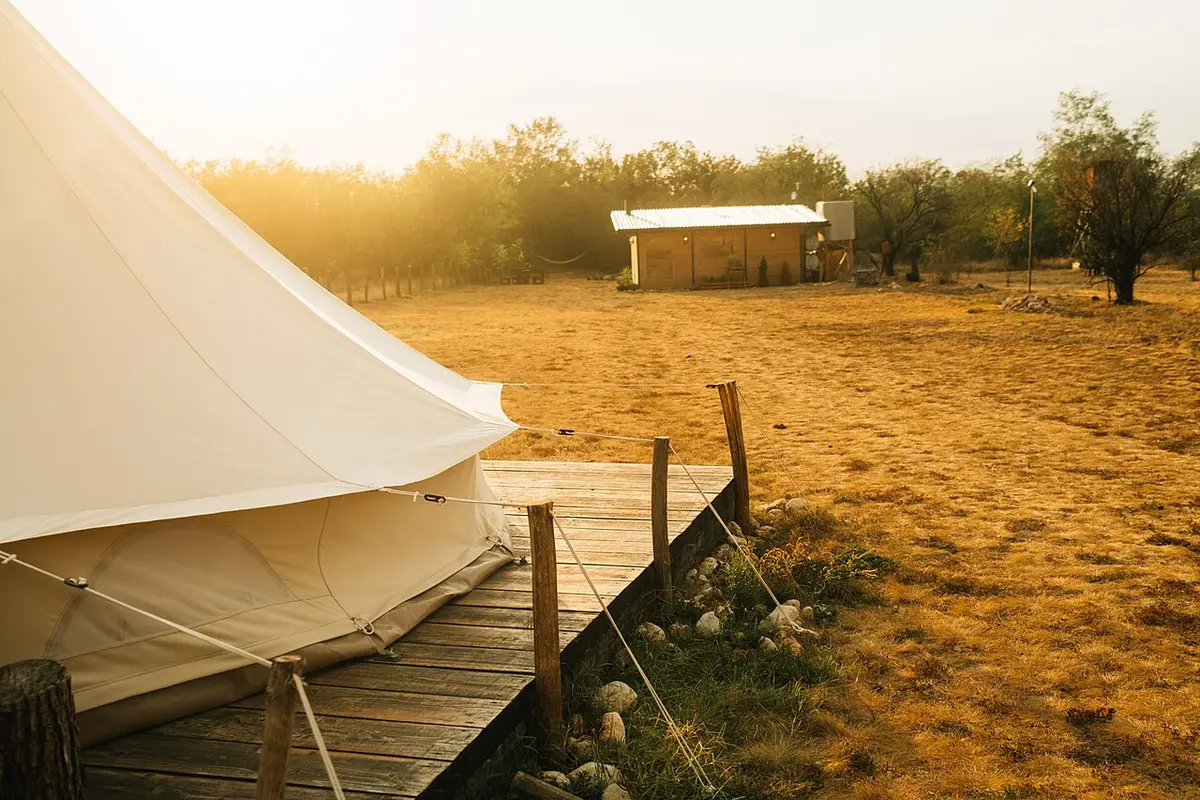
Polyester dominates backpacking, quick trips and festivals, because speed and weight matter more than longevity. Hybrid designs also exist, such as polyester tents with a canvas-like inner layer, or cotton-polyester blends that cut weight by 20 to 30 percent while keeping much of the breathability. These can be a sensible middle path.
Frames, poles and setup differences
Material changes the structure too. A polyester dome flexes with fiberglass or aluminum poles and moves with the wind. A canvas tent is heavy and does not flex, so it needs a stiffer frame: steel tube poles, a ridge pole with uprights, or a full external frame. The frame carries the load of the fabric, which on a 12 by 14 foot wall tent can be 100 pounds of wet canvas after rain. Steel frames are strong, resist snow loading, and are also heavy and sometimes rust at the joints.
Wall tents use a straight ridge and vertical walls, a design that gives full standing room at the edges. Bell tents rely on a single center pole and tension from guylines, which looks simple but needs many stakes and a well-pitched base. Cabin-style canvas models mix a steel frame with canvas panels. Each has setup quirks. A bell tent can go up in 30 minutes with two people, while a frame wall tent may take an hour or more and requires careful squaring of the frame.
Practice before the trip. Lay the tent out at home, check that every pole and stake is present, and rehearse the order of assembly. Mark the poles with colored tape. A canvas tent set up in a rising wind is a hazard, since a large heavy panel catches the gust like a sail. Never raise one alone if you can avoid it, and have stakes and a mallet at hand.
Climate scenarios
Hot and humid summers. Canvas runs cooler under sun and breathes, but heavy cotton takes longer to dry after a thunderstorm, and mildew risk climbs when humidity stays high. A canvas tent with roll-up walls and screened windows can be very comfortable. A polyester tent without good ventilation turns into a greenhouse by 9 a.m.
Cold and snowy winters. A canvas tent with a stove and a snow-rated frame is the standard base-camp choice for hunters and ice anglers. Cotton does not get as brittle in the cold as thin coated nylon, and a stove can keep the interior comfortable. A polyester tent can work if it is a four-season design with a low profile and strong poles, but it will not heat easily and it will condense heavily.
Mixed shoulder seasons with frequent rain. This is where the decision is closest. Seasoned canvas sheds rain well and breathes, but wet canvas is heavy and slow to dry between trips. A polyester tent with a good fly dries on a clothesline in an hour. If you make many short trips with wet gear going straight into storage, polyester is more forgiving.
Desert and high UV. Canvas outlasts polyester under constant sun, but dust gets into the weave and abrades it. Rinse and brush regularly. Polyester faded in desert sun can rip along seams within two or three seasons.
Buying checklist for a canvas or poly-cotton tent
Most of the quality of a canvas tent is in details that the photo does not show. Ask the following before buying.
- Fabric weight and content. Look for the ounces per square yard or grams per square meter, and whether it is 100 percent cotton or a blend. Anything under 8 ounces (about 270 gsm) is light and wears faster.
- Treatment. Check whether the canvas is treated for water, mildew and fire resistance, and whether the treatment is renewable.
- Floor. A sewn-in heavy-duty PVC or polyethylene floor keeps out bugs and moisture. Canvas floors are rare and need separate groundsheets.
- Zippers and stitching. Large, coated zippers (size 8 or bigger) and double-stitched, taped seams matter on heavy fabric.
- Stove jack. If you want heat, check the jack diameter and the location, and whether the panel is fire-resistant.
- Frame material and wall height. Powder-coated steel is common, and wall height decides usable space.
- Packed weight and dimensions. Confirm that your vehicle and storage space can handle the packed tent.
Repairing and reproofing canvas
Canvas is repairable, which is a quiet advantage. Small holes take a patch of matching canvas, either sewn or glued with a flexible fabric adhesive. Torn seams are re-stitched with heavy thread. When the water repellency fades, which happens after several seasons of use, re-treat the fabric with a wax-based or spray-on proofing agent made for canvas, applied to clean, dry cloth. Do not use silicone sprays meant for nylon on cotton, which can leave the fabric slick and unable to be re-treated.
Plan a seasonal inspection: set the tent up on a dry weekend, check seams and corners where the fabric rubs against poles, test the zippers and look at the guy points. Early repairs prevent bigger failures. Over time, this routine is what carries a canvas tent past the decade mark.
How to choose
Answer these questions in order.
- Will you carry the tent more than a short walk from your vehicle? If yes, choose polyester.
- Will you camp more than 20 nights a year, or leave the tent up for weeks? If yes, canvas gets more attractive.
- Do you need a stove or cold-weather performance? Choose canvas or poly-cotton with a stove jack.
- Can you store a large, bulky tent dry? If not, choose polyester.
- Is your budget under a few hundred dollars? Choose polyester or a poly-cotton blend.
Common mistakes to avoid
- Skipping the seasoning process on a new canvas tent and being surprised by leaks.
- Touching the canvas wall from the inside during rain, which wicks water through.
- Packing a canvas tent damp, leading to mildew within days.
- Using a gas or charcoal heater in a tent that is not rated for it.
- Treating "canvas-look" polyester as real canvas.
- Choosing canvas for backpacking or fly-in trips where weight rules.
- Using household detergent that strips the water-repellent finish.
Frequently asked questions
Is canvas better than polyester in the rain?
After seasoning, a quality canvas tent sheds heavy rain very well and breathes better, so the interior is less damp. Polyester arrives waterproof and works well with a rain fly. Canvas leaks if you touch it during a storm or skip seasoning. For occasional campers, polyester is simpler.
How do I season a canvas tent?
Set it up and soak the whole fabric with a hose until it is thoroughly wet, then let it dry fully. Repeat once or twice. The fibers swell and close the weave, and the seams tighten. Do it before the first trip, in daylight, because the tent must dry before packing.
Can I use a stove in any tent?
No. Use a stove only in a tent that is built for it, with a stove jack and flame-resistant fabric, and keep it a safe distance from walls. Never sleep with a combustion heater running, and use a working carbon monoxide alarm. Check the maker's guidance.
Is a poly-cotton blend a good compromise?
For many campers, yes. Blends weigh less than pure cotton, dry faster and resist mildew better, while keeping some of the breathability. They cost more than polyester and less than heavy cotton, and they last much longer than coated synthetics.
Why does my canvas tent smell musty?
Mildew has started growing on damp fabric. Dry the tent in sun, brush off the growth, and treat with a mildew remover made for canvas. Prevent it by drying completely before storage and storing in a ventilated place, not a sealed plastic bin.
How long does a canvas tent last compared with polyester?
With good care, a quality canvas tent can last ten to twenty years, while a polyester tent often lasts three to eight depending on UV exposure and use. Fabric weight, stitching and storage conditions affect both.
Sources & further reading
Image credits
- "Canvas Tents" by Sameerboss786, CC BY-SA 4.0, via Wikimedia Commons.
- "The Inside of a Canvas Tent At the Philmont Training Center" by Stone Road Pirate, CC BY-SA 4.0, via Wikimedia Commons.
- "A spacious canvas tent stands on a wooden deck, basking in the warm glow of the golden hour" by Shixart1985, CC BY 2.0, via Wikimedia Commons.


Ready to buy?
Compare the gear: Tents & Shelter
6 Best Canvas Tents in 2026
Best canvas tents compared: six cotton and cotton blend cabin, bell and wall tents, covering size, stove readiness, floors and care for families and glampers.
5 Best Waterproof Canvas Tents in 2026
Best waterproof canvas tents compared on finish, floor, rainfly and honest rain limits, from bell tents to a wall tent with steel frame.
4 Best 4 Season Canvas Tents in 2026
Best 4-season canvas tents compared on fabric weight, waterproofing, stove readiness and ventilation for camping in every kind of weather.
4 Best Canvas Tents With A Stove Jack in 2026
Best canvas tents with a stove jack compared on jack placement, fabric, ventilation and size for heated cotton-tent camping.
4 Best Heavy Duty Canvas Tents in 2026
Best heavy-duty canvas tents compared on fabric weight, frame, floor and anchoring for campers who want a base camp that lasts for years.
3 Best Canvas Tents For Glamping in 2026
Best canvas tents for glamping compared on bell tent size, stove jack, groundsheet and finish for comfortable basecamp stays.
4 Best Family Canvas Tents in 2026
Best family canvas tents compared on stated capacity, floor size, frame type and stove readiness for car camping with kids and gear.
3 Best Canvas Tents Under 150 in 2026
Best canvas tents under $150 compared on fabric, size, floor and setup, for campers who want a real bell or bushcraft shelter at the lowest price.
Keep reading