
Practical Camping Guide · 12 min read
SUV Tent vs Rooftop Tent
Compare SUV hatch tents and rooftop tents on cost, setup, roof load, space and weather so you can pick the right one for your vehicle and trips.

An SUV tent attaches to the open rear hatch and adds a ground-level room behind the vehicle, while a rooftop tent bolts to a roof rack and unfolds into a sleeping platform above it. SUV tents cost far less, add living space and leave your roof free, but you must take them down to drive away. Rooftop tents set up in minutes and stay attached, but they cost several times more and demand a roof rack rated for the load.
The right pick comes down to four things: how often you move camp, how much living space you want, what your roof can carry, and how much you are willing to spend. This guide compares the two on cost, setup, weight, fuel economy, comfort and weather, then gives a decision framework you can run in five minutes.
How each design works
An SUV tent, also called a hatchback or vehicle tent, is a freestanding or semi-freestanding dome with a sleeve at one end. The sleeve wraps around the open liftgate and seals with straps and elastic, so you walk from the cargo area straight into the tent. The tent has its own floor and poles and typically sleeps four to eight people. When you unhook the sleeve, the tent stays in place as a base camp while you drive.
A rooftop tent mounts on crossbars or a roof rack. There are two main types: a hard-shell, which opens like a clamshell or lifts straight up, and a soft-shell, which folds out like a book and often includes an annex. Sleeping happens on a built-in mattress four to six feet off the ground, reached by a ladder. When packed, the tent forms a low box on the roof and stays there during the drive.
Cost compared
SUV tents sit at the budget end. A solid hatchback tent costs a fraction of a rooftop tent, and the cheapest options are in the range of an ordinary dome. Rooftop tents start in the high hundreds of dollars and climb well past two thousand for hard-shell models with premium fabrics. You also need to budget for the rack: factory crossbars often have a dynamic load limit lower than the tent plus occupants, so aftermarket bars add another few hundred dollars.
Value depends on use. If you camp six nights a year, an SUV tent's low cost is hard to beat. If you camp thirty nights and value ten-minute setups, a rooftop tent's price per night falls quickly. Factor in the rack, a ladder extension if needed, and possible fuel cost increases before judging the sticker price.
Weight, roof load and vehicle compatibility
This is where rooftop tents become a technical decision. Roof ratings have two numbers. The dynamic load is what the roof or rack can carry while driving, usually 100 to 170 pounds for factory crossbars on a crossover. The static load is what it can support when parked, often 400 pounds or more, which has to cover the tent and its sleepers. A soft-shell tent typically weighs 100 to 150 pounds and a hard-shell 130 to 200 or more. If the tent exceeds the dynamic limit, you need a rack designed to carry it.
Check the vehicle manual for roof limits, and note that some small crossovers have a dynamic rating below 100 pounds, which excludes most rooftop tents entirely. SUV tents have no such limit. They are made to fit particular wheel bases and hatch openings, and the buyer's job is to match the opening shape. Our shortlists for the Kia Soul, Kia Sportage, Kia Telluride, Mazda CX-5 and Jeep Grand Cherokee show how listings treat fit. In general, taller hatches need a taller sleeve, and some tents work with a range of vehicle heights.
Setup time and effort
A rooftop tent is the faster of the two once you are practiced. Unlatch the cover, unfold or lift the roof, extend the ladder, and the bed is made, often in 2 to 10 minutes. Soft-shell designs take a little longer because of rain flies and annex poles. Hard-shell clamshells open in under a minute. Packing is just as quick, and bedding can stay inside.
An SUV tent takes 10 to 25 minutes to pitch the first few times. You run the poles, stake out the floor, attach the sleeve to the hatch and tension the straps. Taking it down means disconnecting everything before you can drive. Some campers leave the tent standing while they go sightseeing, which works well for a multi-night stay and not at all for a one-night stopover. For setup technique, see how to set up a tent.
Space and comfort
An SUV tent gives you room. A typical model has a 9 by 9 foot floor or larger, standing height in the middle, and lets you connect the cargo area for storage. Families with children, pets, or cots get a real living room. Some models include awnings to extend shade, as shown in the best SUV tents with awnings. You also gain bathroom privacy and a place to change out of the weather. The largest versions, like those in the best 9 person SUV tents, have separate rooms.
A rooftop tent has less usable room. The mattress is the floor, and headroom is limited to the sitting height near the peak. You get a level, elevated sleeping surface that keeps you away from mud, insects and curious animals, and a built-in mattress that is often thicker than a typical pad. A one- or two-person tent suits couples. For solo travelers, the best 1 person rooftop tents list covers compact models. Climbing a ladder at night to use the restroom is a real cost, and it also excludes small children and anyone with mobility issues.
Driving and fuel economy
A roof-mounted box adds frontal area and weight, and it changes how the vehicle drives. Expect a drop in fuel economy of a few miles per gallon, more at highway speeds. A hard-shell tent has a lower profile and is more aerodynamic than a soft-shell; fabric covers flutter and add wind noise. High winds and crosswinds feel stronger, and the center of gravity is higher, so cornering is slightly more sensitive. Height clearance for garages and drive-throughs becomes a daily concern.
An SUV tent adds nothing to the drive because it is packed in the cargo area. It takes space inside the vehicle, though, so you lose some of the cargo room you would use for gear. For road trips with frequent stops, that trade-off is simple: the SUV tent costs you the packing and unpacking time instead of fuel and noise.
Weather and safety
Rooftop tents have a clear weather advantage in mud and flooding, because you are above ground. They are also stable in gusty wind if the vehicle is parked into the wind, though the large fabric surface requires you to close the tent in high gusts. Soft-shells need rain flies, and a few hold condensation. Lightning is a real hazard on any exposed vehicle-mounted tent; a vehicle with a hard roof gives some protection to people inside, but sleeping on an exposed roof is not safe in a thunderstorm.
SUV tents handle weather like a regular dome tent, but with the vehicle as a windbreak on one side. The sleeve connection can be a leak point in heavy rain, so check the seal and the way water drains off the tent onto the hatch. Pitch with the open hatch pointed away from the wind and avoid low spots. For waterproofing guidance, see how to waterproof a tent.
Security, wildlife and nighttime
A tent on the roof keeps you farther from wildlife. In bear country, an elevated tent is not a substitute for proper food storage, and any food, scented items or trash must be stored away from the sleeping area according to local regulations. SUV tents leave you at ground level, but you remain near the vehicle, which gives quick access to the cab. Theft is a modest worry either way; a rooftop tent is an expensive item that thieves target, so lockable mounts are worth checking.
A decision framework
Use this sequence. Answer each question and the choice usually becomes obvious.
- Does your vehicle have a roof rack with a dynamic load rating above the tent weight, and a static rating above the tent plus sleepers? If not, favor an SUV tent.
- Do you move camp every day? If so, favor a rooftop tent. If you stay put for days at a time, favor an SUV tent.
- Do you travel with children, pets or lots of gear? Favor an SUV tent for space.
- Is your budget under about $500? Favor an SUV tent.
- Will you drive on rough trails or at high speed on long trips? Consider the aerodynamic and handling cost of a rooftop tent.
- Do you want to keep the roof free for kayaks, bikes or cargo? Favor an SUV tent.
Three trip styles, three answers
The weekend campground family. Two adults, two children and a dog go to the same state park a few times a summer, stay two or three nights, and cook at the picnic table. An SUV tent is the clear answer. The floor holds air mattresses, the cargo area connects to the tent for dry storage, and the low price makes sense for six to ten nights a year. A rooftop tent would force the children to climb a ladder at night and offer almost no room to sit out a rainstorm.
The road-trip couple. Two adults drive across several states, stopping at a new site almost every night, sometimes arriving after dark. A rooftop tent earns its cost here. Opening it takes minutes, the bedding is already made, and you leave in the morning without staking or folding anything. If you spend thirty or more nights a year this way, the cost per night drops quickly, and the elevated sleeping surface helps on rocky, wet or uneven pullouts.
The overlander on rough trails. A high-clearance vehicle, a rack already carrying recovery gear, and campsites that may be a rutted pad at the end of a trail. A hard-shell rooftop tent is low-profile and stable on bumpy tracks, but the rack and roof limit must carry the tent plus gear. Some overlanders choose a ground tent instead and keep the roof for cargo. The choice depends on what the rack can handle, and a weight budget written on paper saves guesswork.
What to check on an SUV tent listing
SUV tent listings share a few details worth verifying. First, the vehicle compatibility range: a good listing states the hatch width and height range that the sleeve accommodates, often something like 60 to 80 inches wide and 40 to 70 inches tall. A tent made for a minivan may flop around a compact hatchback, and the sleeve may leak. Second, whether the tent is freestanding. A freestanding model can be moved or used without the vehicle, which is handy when you want to drive to a trailhead with the tent staying behind.
Third, check the sleeve design. Look for a drawcord and straps that cinch around the hatch, and a flap that covers the connection area in rain. A removable sleeve lets you use the tent as a regular dome. Fourth, count the doors and windows; at least one separate door lets people enter without opening the hatch. Fifth, read the fabric details: a polyester fly with taped seams and a floor with a modest hydrostatic head is typical; a lighter fabric will leak sooner. For help decoding numbers, see our guide on how waterproof ratings work.
What to check on a rooftop tent listing
Rooftop tent specs deserve more care because the product carries you above the ground. Look for the weight of the tent and compare it to your roof's dynamic and static ratings. Check the mounting hardware and what rack it requires: some tents ship with brackets for standard crossbars, and others need specific rails. Confirm the ladder length against your vehicle height, since a tall SUV may need a longer ladder than the one included. Check the fabric weight, with 280 to 360 gram canvas-poly blends common in quality tents, and a mattress thickness of two to three inches.
Look at the closed dimensions too. A tent that is 50 inches deep may block a rear hatch from opening if the mount sits too far back. Check the warranty and the availability of replacement parts, because a rooftop tent is a long-term purchase and a broken hinge or torn zipper in the field is a real problem.
Cheaper alternatives to both
Neither option is necessary to camp from your vehicle. A regular dome or cabin tent is cheaper and flexible, with no connection to the vehicle at all. A tent footprint and a good sleeping pad do most of the work that a rooftop tent does for comfort. A truck-bed tent suits pickups. And for solo travelers a folding cot inside the cargo area, with window screens, gives a rooftop-style bed for almost nothing. If your goal is a fast setup, an instant pop-up tent with pre-attached poles goes up in a minute or two at a fraction of the price.
Caring for each type
A rooftop tent needs its fabric dried before closing, a check on the mounting hardware before every trip, and a rinse of the hinge and ladder. SUV tents need standard tent care: wipe, dry and store loose. Cleaning follows the process in how to clean a tent without damaging it, and storage the rules in how to store a tent the right way. Never close a damp rooftop tent for a long trip, because mildew spreads fast in a sealed box.
Common mistakes to avoid
- Ignoring dynamic roof load and fitting a tent that the vehicle cannot carry.
- Assuming factory crossbars are strong enough without checking the manual.
- Buying an SUV tent without confirming the hatch height and the sleeve shape.
- Forgetting height clearance in parking structures and garages.
- Closing a rooftop tent wet and finding mildew weeks later.
- Treating an elevated tent as a safe place to keep food around bears.
- Underestimating the setup time of a big SUV tent on the first trip.
Frequently asked questions
Can a small crossover carry a rooftop tent?
Sometimes, but check the roof's dynamic limit first. Many compact crossovers are rated for 100 to 150 pounds on the roof, and some rooftop tents weigh more than that before gear. If the tent is within the limit, use proper crossbars. If it is not, an SUV tent is the safer choice.
Does an SUV tent work on any vehicle?
Not automatically. The sleeve has to match the opening of your hatch or rear door in width and height. Many tents list a range of compatible vehicle heights. Measure your opening and compare, and consider models built for your vehicle class such as compact crossovers or full-size SUVs.
Which is warmer in winter?
A rooftop tent holds less air and is closer to your body heat, but wind passes under it and the floor is exposed. A SUV tent has more volume but is easier to insulate with ground pads. Neither is a true winter shelter unless it is designed for cold, so check the season rating.
Is a rooftop tent worth the money for occasional trips?
Usually not. Rooftop tents pay off with frequent use, such as dozens of nights a year, or when speed of setup is central to how you travel. For a few trips a year, an SUV tent or a standard dome tent costs far less per night.
How hard is it to drive with a rooftop tent?
You notice the extra weight and wind drag, especially in crosswinds and on highways. Fuel use goes up and you need to watch clearances. After a day it feels normal, but you should drive more gently and check mounting bolts regularly.
Can I use an SUV tent in rain?
Yes, with good pitching and a tight seal at the hatch. Aim the opening away from the wind and use the rain fly. Watch for pooling water around the sleeve and tension the straps to keep the connection snug.
Sources & further reading
Image credits
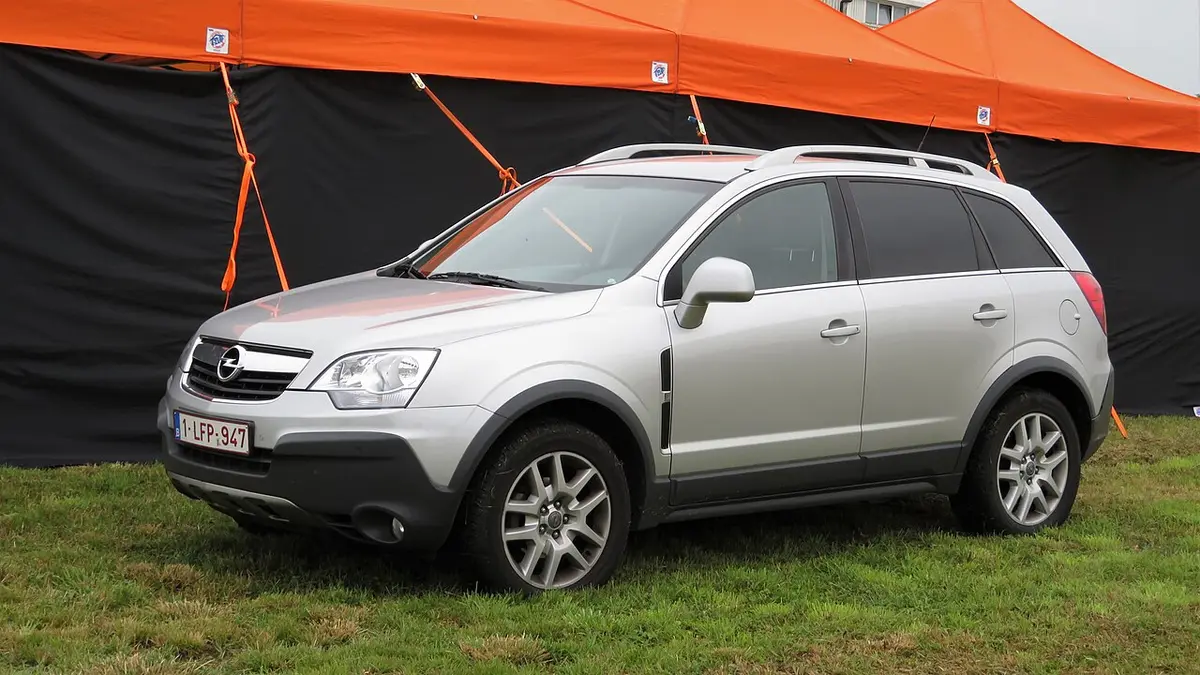
- "Opel Antara behind a tent in Belgium" by Charles01, CC BY-SA 4.0, via Wikimedia Commons.

Ready to buy?
Compare the gear: Tents & Shelter
3 Best 9 Person Suv Tents in 2026
Best 9-person SUV tents compared on floor size, porch, wind rating and vehicle fit, for big groups who want a tent that pairs with the tailgate.
3 Best Suv Tents For Jeep Grand Cherokee in 2026
Best SUV tents for the Jeep Grand Cherokee compared by model-year fit, fabric and setup, for owners who want a rear-hatch shelter cut for their Jeep.
4 Best Suv Tents For Kia Soul in 2026
Best SUV tents for the Kia Soul compared by year coverage, entry design and packed size, for Soul owners who want a hatch shelter that fits their car.
3 Best Suv Tents For Kia Sportage in 2026
Best SUV tents for the Kia Sportage compared on year coverage, doors and rainfly, for owners who want a tailgate shelter cut to the Sportage hatch.
5 Best Suv Tents For Kia Telluride in 2026
Best SUV tents for the Kia Telluride compared on fit, door layout and fabric, for owners of the three-row SUV who want a family-sized hatch shelter.
5 Best Suv Tents For Mazda Cx 5 in 2026
Best SUV tents for the Mazda CX-5 compared on fit, setup and price, for owners who want a tailgate tent or canopy sized to the CX-5 hatch.
3 Best Suv Tents With Awnings in 2026
Best SUV tents with awnings compared on shade size, screened porch and vehicle fit, for campers who want covered space beside the tailgate.
4 Best 1 Person Rooftop Tents in 2026
Best rooftop tents for one person: the smallest 2-person shells compared on size, weather rating and rack load, since none is sold as solo.
Keep reading