
Practical Camping Guide · 13 min read
How Many Watts Do You Need for Camping?
Work out how many watts and watt-hours you need for camping, with tables of real device loads, surge allowances and sizing by camping style.

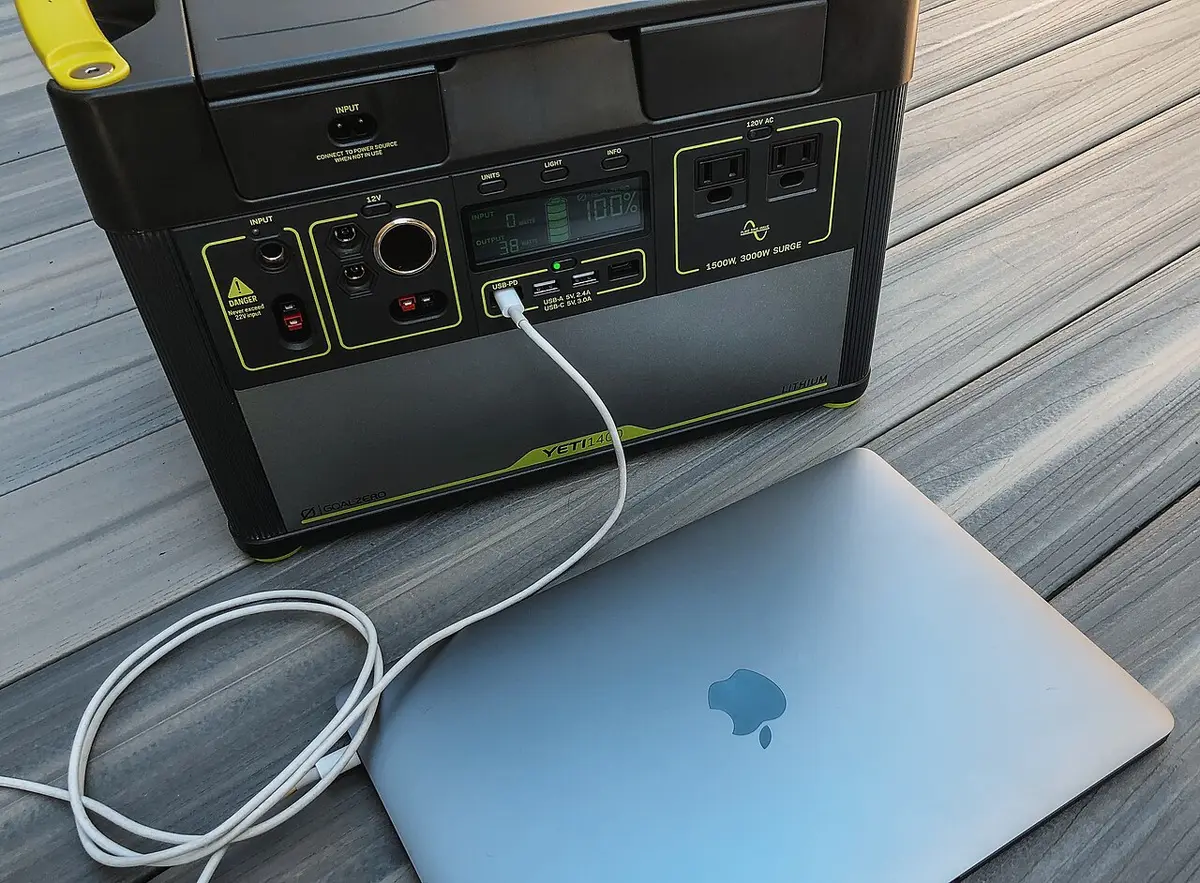
Most campers need between 300 and 1,000 watts of output, and between 300 and 1,200 watt-hours of battery per day, depending on what they run. A tent camper with phones, lights and a fan needs under 300 W and about 100 to 200 Wh a day, a car camper with a 12 V fridge and a laptop needs 500 to 1,000 W of inverter capacity and 600 to 1,000 Wh, and anything with a microwave, a coffee maker or an air conditioner pushes you into the 2,000 to 4,500 W range, usually with a generator. Watts tell you what you can run at once, and watt-hours tell you how long you can run it.
The two numbers get mixed up constantly on product pages, and mixing them up is how people buy a "2,000 W" power station that dies in an hour, or an oversized generator that burns fuel to run a phone charger. Here is a clear way to calculate both, a table of real camping loads and a set of sizing recipes for different camping styles.
Watts versus watt-hours in one minute
Watts (W) measure power, the rate at which a device uses energy at an instant. A 60 W lamp uses 60 W whenever it is on.
Watt-hours (Wh) measure energy, the total amount used over time. The same 60 W lamp running for five hours uses 300 Wh.
A power station or generator has a limit on each. Its rated output in watts is the most it can supply at once. Its capacity in watt-hours is the total energy stored (for a battery) or the fuel on hand (for a generator). If you plug in loads whose watts add up to more than the output rating, the unit shuts off at once, no matter how full the battery is. If you run loads for long enough that the watt-hours add up to more than the capacity, the battery runs out.
A helpful picture is a water tank and a faucet. Capacity is the size of the tank, and output is how wide the faucet opens. See the explainer on watt-hours versus mAh for how these units relate to the labels on power banks.
Typical camping loads
| Device | Running watts | Startup surge | Typical hours per day | Wh per day |
|---|---|---|---|---|
| Phone charging | 10 to 15 | None | 1.5 | 15 to 22 |
| LED lantern | 3 to 8 | None | 4 | 12 to 32 |
| String lights | 5 to 20 | None | 4 | 20 to 80 |
| Laptop | 45 to 90 | None | 3 | 135 to 270 |
| Tablet or e-reader | 5 to 15 | None | 2 | 10 to 30 |
| Camp fan, small | 5 to 15 | Small | 8 | 40 to 120 |
| Fan, 12 inch AC | 30 to 60 | Small | 8 | 240 to 480 |
| 12 V compressor fridge | 40 to 60 | 2 to 4 times | 24 (about 35% duty) | 300 to 450 |
| Mini fridge, AC | 60 to 120 | 3 to 5 times | 24 (about 40% duty) | 600 to 1,100 |
| CPAP (no humidifier) | 30 to 40 | None | 8 | 240 to 320 |
| CPAP with heated humidifier | 60 to 90 | None | 8 | 480 to 720 |
| Electric blanket | 40 to 100 | None | 4 | 160 to 400 |
| Space heater, small | 750 to 1,500 | None | 2 | 1,500 to 3,000 |
| Coffee maker | 600 to 1,000 | None | 0.25 | 150 to 250 |
| Electric kettle | 1,000 to 1,500 | None | 0.2 | 200 to 300 |
| Induction cooktop | 1,200 to 1,800 | None | 1 | 1,200 to 1,800 |
| Microwave | 1,000 to 1,500 | Small | 0.2 | 200 to 300 |
| Blender | 300 to 600 | 2 to 3 times | 0.1 | 30 to 60 |
| Air conditioner, 5,000 to 8,000 BTU window | 500 to 800 | 3 to 4 times | 6 | 3,000 to 4,800 |
| RV air conditioner, 13,500 BTU | 1,300 to 1,800 | 2 to 3 times | 6 | 7,800 to 10,800 |
| Power tools | 600 to 1,800 | 2 to 3 times | 1 | 600 to 1,800 |
| TV, 32 inch | 30 to 60 | None | 3 | 90 to 180 |
| Projector | 50 to 200 | None | 2 | 100 to 400 |
The values are typical ranges from device labels. Read the label on your own devices, because efficiency varies. The table shows why heat-making devices dominate every budget: heaters, kettles, hair dryers and air conditioners use many times more energy than electronics. If you want to run those, you are in generator or large-battery territory.
How to add it up: three steps
- List every device and its running watts. Use the label or the table above.
- Find your peak simultaneous load. Add the watts of everything that might run at the same time, then add the largest startup surge among the motor devices. This sets the output rating you need.
- Estimate the daily watt-hours. Multiply each device's watts by its hours of use and sum them. Add 20 to 25 percent for inverter and conversion losses. This sets your capacity.
Example: a weekend car camper. Peak load is a laptop (60 W), a fan (15 W) and phone chargers (30 W) running at once, 105 W, plus the 12 V fridge at 50 W, for 155 W. The fridge surge adds perhaps 150 W, so the peak is around 300 W. Daily energy is the fridge at 350 Wh, the laptop at 180 Wh, phones at 40 Wh, lights at 40 Wh and the fan at 90 Wh, for 700 Wh. Add 20 percent for losses, and you need about 850 Wh a day. A 1,000 Wh power station with at least a 500 W inverter fits with a little margin, and a 300 W rating would be too tight.
Output sizing: what the inverter must handle
Power stations and generators list continuous output and surge output. Continuous is what the unit can supply all day. Surge, sometimes labeled peak, is what it can supply for a second or two to start a motor.
| Output rating | Runs |
|---|---|
| 100 to 200 W | Phones, lights, a laptop, small fans |
| 300 to 500 W | Plus a 12 V or small AC fridge, CPAP |
| 600 to 1,000 W | Plus a coffee maker, blender or a slow cooker (one at a time) |
| 1,200 to 1,800 W | Plus a microwave, kettle, hair dryer or induction burner |
| 2,000 to 2,400 W | A small window air conditioner, a toaster oven, power tools |
| 3,000 to 3,600 W | An RV air conditioner and a few small loads |
| 4,000 to 4,500 W | An RV air conditioner and a microwave at once |
| 7,000 W and up | A whole-camp or home backup load |
Keep a 20 percent margin. A unit running at its limit runs hot and is more likely to trip.
Capacity sizing: what the battery or fuel must supply
Capacity depends on how long you need to run between charges.
| Daily need | One-day battery | Three-day battery (no charging) | Notes |
|---|---|---|---|
| 100 to 200 Wh | 250 to 300 Wh | 600 to 900 Wh | Tent camping, no fridge |
| 300 to 500 Wh | 500 to 700 Wh | 1,200 to 1,800 Wh | Phones, laptop, fan |
| 600 to 1,000 Wh | 1,000 to 1,500 Wh | 2,000 to 3,000 Wh | With a 12 V fridge |
| 1,000 to 2,000 Wh | 2,000 Wh | 4,000 to 6,000 Wh | With CPAP and cooking |
| 3,000 Wh and up | Generator or large bank | Generator | Air conditioning |
With solar, you can reduce the battery: panels that return 600 Wh a day let a 1,000 Wh battery support a 600 to 700 Wh daily load indefinitely in good sun. To size panels, use the method in how to size a solar panel for camping. If your largest load is a fridge, how long a power station runs a 12V fridge goes through the duty cycle and the DC versus AC difference.
Matching the unit to your camping style
Tent camper, powered or unpowered site. Under 200 W and 200 Wh a day. A power bank or a small 250 to 300 Wh station is plenty.
Weekend car camper with a laptop and a fan. 300 to 500 W and 500 to 700 Wh. A 500 to 1,000 Wh station.
Car or van camper with a 12 V fridge, CPAP and laptop. 500 to 1,000 W and 1,000 Wh or more. See the best 1000Wh portable power stations for camping.
Family basecamp with a kitchen. 1,500 to 2,000 W output for a kettle or induction cooktop, and 1,500 to 2,000 Wh of capacity. See the best 1500W portable power stations for camping, the best 1800W portable power stations for camping and the best 2000Wh portable power stations for camping.
RV or trailer with air conditioning. 3,000 to 4,500 W of generator output, or a very large battery system. See the best 2500 watt portable generators, the best 4000W portable generators, the best 4500 watt portable generators and, for large loads, the best 7000 watt portable generators.
Startup surge: the number that causes surprises
Motors and compressors briefly draw several times their running power when they start. A fridge compressor rated at 60 W may draw 200 W for half a second. A circular saw rated at 1,200 W may draw 3,000 W at startup. An air conditioner compressor may draw three times its running current. The unit's surge rating must exceed the largest surge, and if two motors start together, add them. Staggering starts, such as turning on the fridge before the fan, prevents overloading. Soft-start devices for air conditioners reduce surge and let a smaller generator run them.
Resistive loads, such as heaters, kettles and toasters, do not have a surge, but they are a constant high draw. Reactive loads, such as motors and some electronics, can draw more current than their watt labels suggest, which is why generators are sometimes rated in volt-amps (VA) rather than watts. For camping purposes, treat watts as the main number and keep a margin.
Voltage and amps: a check for RV and campground power
Campground hookups limit how much you can draw, and the limit is in amps.
| Connection | Typical limit | Watts at 120 V |
|---|---|---|
| Household outlet, 15 A | 15 A | 1,800 W |
| Household outlet, 20 A | 20 A | 2,400 W |
| RV 30 A pedestal | 30 A | 3,600 W |
| RV 50 A pedestal | 50 A | 12,000 W (two legs) |
Watts equal volts times amps. A 1,500 W space heater draws 12.5 A, and a 1,500 W microwave draws the same, so running both on a 20 A circuit trips the breaker. When you run on a generator or a station, the same arithmetic tells you whether the outlet can feed your load. A 30 A outlet on a generator (the TT-30 type) is designed for a trailer's single cord. If your unit has only 15 A or 20 A household outlets, an RV cord needs an adapter, and you are limited by the outlet's breaker.
Efficiency and losses: the 20 percent rule
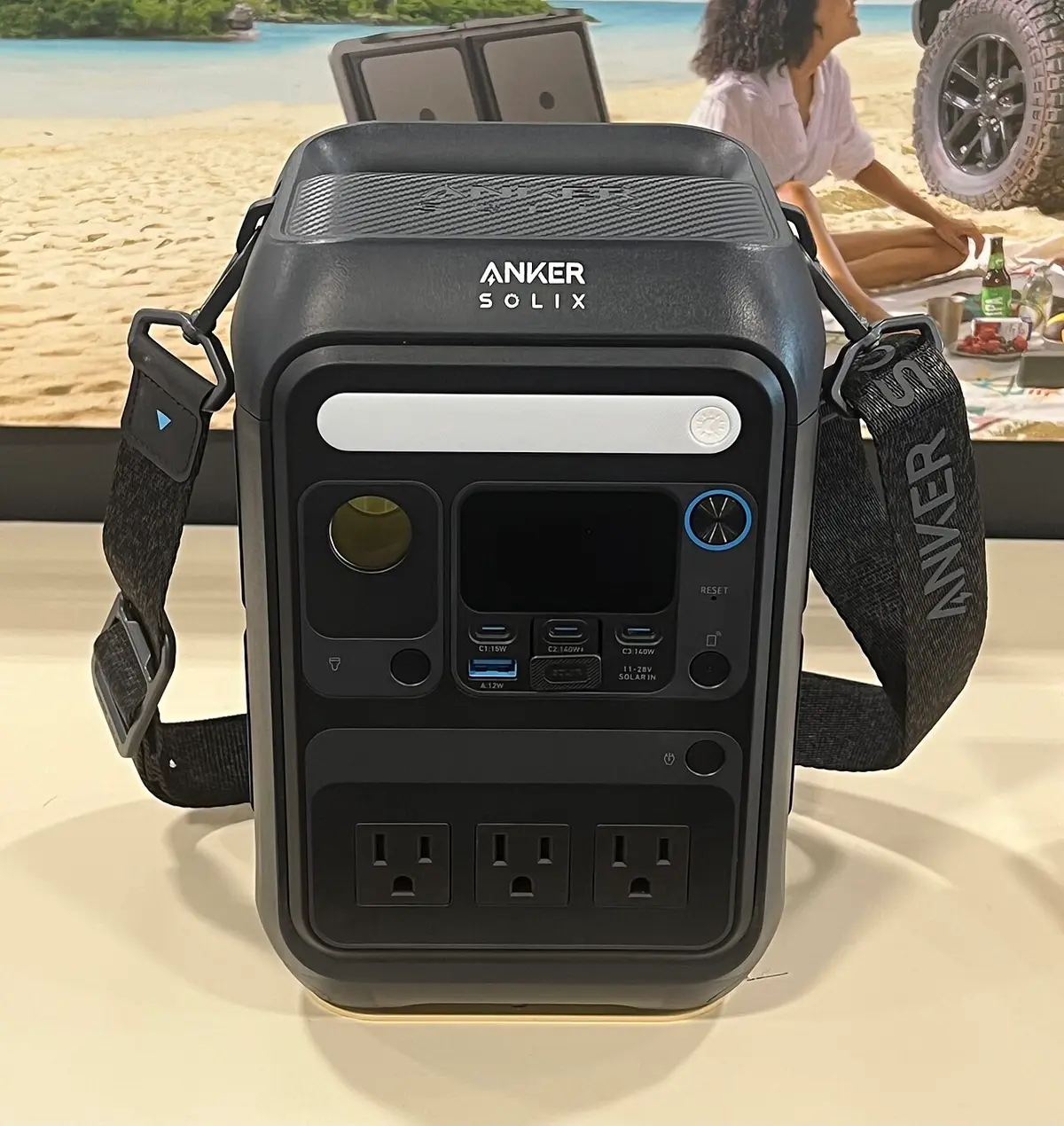
Every conversion wastes energy. A DC to AC inverter is typically 85 to 92 percent efficient at moderate load and worse at a very light load, and it draws a standing power of 5 to 30 W when switched on with nothing plugged in. Chargers, adapters and voltage regulators each lose a few percent. So add about 20 to 25 percent to your daily watt-hours when the loads run through an inverter, and 10 to 15 percent for DC loads. Using DC outlets (12 V ports, USB-C) for fridges, fans, lights and phones is the cheapest way to save energy.
Three complete worked examples
Example A: the minimalist tent weekend
Loads: two phones (30 Wh), a headlamp (6 Wh), an LED lantern at low (20 Wh), a small speaker (15 Wh). Total 71 Wh a day, or about 215 Wh over three days. Peak power is about 30 W. A 20,000 mAh power bank (74 Wh) covers a day, and two such banks cover the weekend, or a 300 Wh power station with a small solar panel does it with plenty of reserve. No inverter is needed, and nothing here justifies a 1,000 W unit.
Example B: the family car camp with a kitchen
Loads: a 12 V fridge (350 Wh), phones and tablets for four (100 Wh), lantern and string lights (80 Wh), a fan (80 Wh), a laptop (100 Wh) and an electric kettle used twice for 6 minutes (1,200 W for 12 minutes in total, which is 240 Wh). Total is about 950 Wh a day. The kettle alone sets the peak at 1,200 W, plus the fridge and fan, around 1,350 W. A station with a 1,500 W inverter and 1,500 to 2,000 Wh covers it for a day and a half, and solar can stretch it. The sensible alternative is to boil water on a propane stove, which drops the daily need to about 710 Wh and the peak to about 150 W, so a smaller 1,000 Wh unit does the job. This is a typical case where changing one habit shrinks the system by a third.
Example C: the RV with one air conditioner
Loads: the roof air conditioner at 1,500 W running for six hours (9,000 Wh), a fridge on DC (300 Wh), lights, a TV and chargers (400 Wh), and a microwave for ten minutes (250 Wh). Total is about 10,000 Wh a day. The peak is the air conditioner's startup surge, perhaps 3,500 to 4,500 W, plus whatever else is on. No portable battery in the consumer range covers that for six hours, so the practical answers are a generator in the 3,000 to 4,500 W range, a shore hookup or a much larger lithium bank with a big inverter. If the air conditioner is the only reason for the generator, consider whether shade, ventilation and a smaller fan solution can cut the need to a few hours a day.
Reading product pages with this in mind
When you shop, translate the headline numbers. A listing that says "2,000 W power station" tells you the output, so find the capacity in Wh to see how long it lasts. "1,000 Wh" tells you capacity, so find the output rating. "Surge 4,000 W" tells you the short-term limit, not what it runs all day. A listing that gives only one of the numbers is incomplete. Look also for the continuous rating of the AC outlets, the 12 V port current, the USB-C wattage and whether the unit supports passthrough charging. A DC port rated 10 A at 12 V can run a fridge on its own, which means you do not need to use the inverter at all for that load.
Reducing your wattage
The best way to lower the size of the system is to lower the load. A few changes matter:
- Swap resistive heat for fuel. Cook on a propane stove, not an induction cooktop, and heat water on a stove, not an electric kettle.
- Use DC devices. A 12 V fridge uses less energy than an AC one.
- Use efficient lighting. LED lights use a tenth of what incandescent bulbs did.
- Choose small fans. A 5 W fan is plenty for a tent.
- Pre-chill the fridge and keep it shaded. It reduces compressor run time.
- Skip the air conditioner if you can. It is the biggest single load by far.
- Turn the inverter off when you do not need AC.
Common mistakes to avoid
- Confusing watts with watt-hours. A big output rating does not mean long runtime.
- Ignoring startup surge. A fridge or pump can trip a small unit.
- Forgetting inverter losses. Add 20 to 25 percent.
- Buying for the biggest load you will ever use. Size for your typical needs and handle exceptions another way.
- Trusting "peak" ratings. Look at continuous output.
- Running a heater or kettle off a small battery. It will drain in minutes.
- Overlooking the outlet and breaker limits. A pedestal or outlet can be the limit, not the generator.
- Skipping a margin. Running at 100 percent of rating is hard on the unit.
Frequently asked questions
How many watts do I need to run a 12 V camping fridge?
The fridge itself uses about 40 to 60 W while the compressor runs, and the average over a day is 15 to 25 W because it cycles. A power station with a 100 W or larger output handles it easily, and the capacity needed is 300 to 450 Wh a day.
Is a 500 W power station enough for camping?
For phones, lights, a laptop, a fan and a small fridge, yes. It will not run a microwave, a kettle or a space heater. Capacity may be the limit, since a 500 Wh unit gives about a day on a fridge plus electronics.
How many watts does a camping air conditioner need?
A small window unit runs 500 to 800 W and an RV roof unit 1,300 to 1,800 W, with a startup surge of two to four times. You need a 2,000 to 4,500 W generator, a shore connection or a very large battery system, and it will drain small batteries in an hour or two.
Do I need a pure sine wave inverter?
For sensitive electronics, medical devices and motors, yes. Most modern power stations include one. See pure sine wave versus modified sine wave inverters for why.
What is the difference between running watts and starting watts?
Running watts are what a device uses continuously, and starting watts are the brief surge a motor needs to start. A generator or station must handle both. A fridge might run at 60 W but need 200 W for an instant.
How do I find the wattage of my device?
Check the label on the device or its power adapter, which lists watts or volts and amps. Multiply volts by amps to get watts. A plug-in watt meter measures real use and is inexpensive and useful.
Sources & further reading
Image credits
- "Goal Zero Yeti 1400 Lithium Portable Power Station with WiFi Battery Pack with MacBook Pro - USB-C Power Delivery Specification (PD spec) (43467687445)" by Tony Webster from Minneapolis, Minnesota, United States, CC BY-SA 2.0, via Wikimedia Commons.
- "Anker SOLIX C300X Portable Power Station" by TaurusEmerald, CC BY-SA 4.0, via Wikimedia Commons.


Ready to buy?
Compare the gear: Camp Power
2 Best 1000Wh Portable Power Stations in 2026
Best 1000Wh portable power stations compared on capacity, weight, ports, solar input and battery chemistry for camping and outage backup.
3 Best 1500w Portable Power Stations in 2026
Best 1500W portable power stations compared on continuous output, capacity, charge speed and chemistry for camp kitchens, RVs and outage backup.
6 Best 1800w Portable Power Stations in 2026
Best 1800W portable power stations compared on charge speed, surge rating, expandability and warranty for camping, RVs and home backup.
3 Best 2000Wh Portable Power Stations in 2026
Best 2000Wh portable power stations compared on capacity, AC output, weight, RV ports and expansion for van life, cabins and outage backup.
5 Best 2500 Watt Portable Generators in 2026
Best 2500 watt portable generators compared on running watts, noise, weight, outlets and CO protection for campsite and small RV use.
3 Best 4000w Portable Generators in 2026
Best 4000W portable generators compared on running watts, outlets, weight and runtime for RV air conditioners and campsite backup.
4 Best 4500 Watt Portable Generators in 2026
Best 4500 watt portable generators compared on running watts, fuel type, RV outlets, CO protection and weight for trailers and campsite power.
3 Best 7000 Watt Portable Generators in 2026
Best 7000 watt portable generators compared on running watts, fuel type, noise and RV outlets for large trailers and home essentials.
Keep reading