
Practical Camping Guide · 12 min read
How to Choose a Power Bank for Camping and Backpacking
Choose a camping or backpacking power bank by daily watt-hours, USB-C output, weight and cold performance, with sizing tables for phones to laptops.

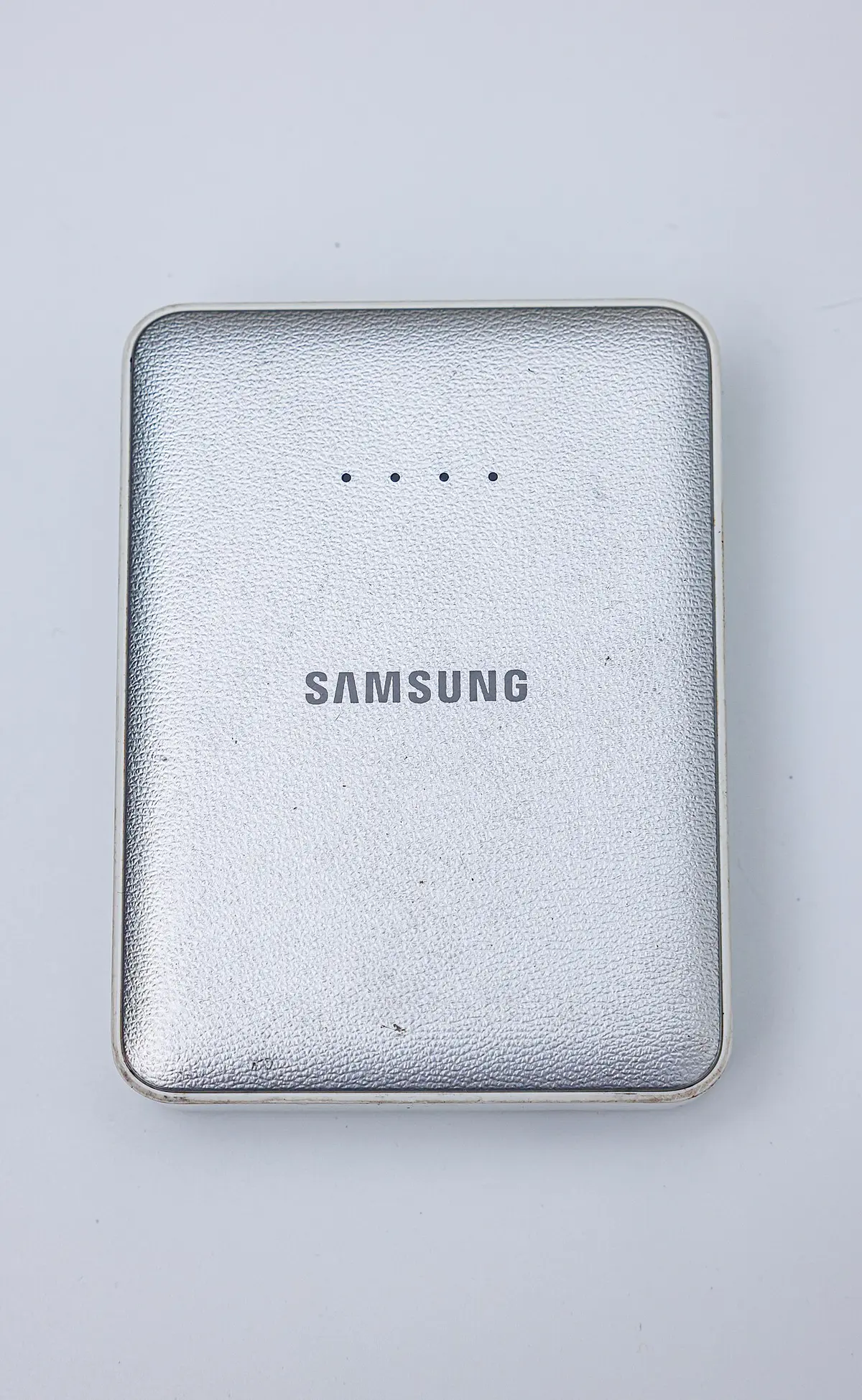
Pick a power bank by working backward from what you need to charge: add up the watt-hours your devices use per day (a phone is about 12 to 15 Wh per full charge, a laptop 40 to 70 Wh), multiply by the number of days between recharges, add 30 percent for conversion losses, and choose a bank that covers it. Then check the output ports (USB-C Power Delivery for laptops), the weight, and the cold-weather rating. For a weekend backpacking trip a 10,000 to 20,000 mAh bank is typical, while car campers with laptops and cameras should look at 100 W USB-C models in the 25,000 to 40,000 mAh range.
The tricky part is that power bank marketing is built around a single number, milliamp-hours, which hides most of what decides whether a bank is right for you. This guide walks through capacity, output, ports, weight, cold performance, solar claims and the specialty types (AC outlet banks, hand-crank units), then ends with a decision table.
Step one: add up what you need to charge
Start with devices, not banks. Write down each item and its battery size in watt-hours. Most devices print the figure on the battery or in the spec sheet, and if only mAh is listed, multiply by the nominal voltage (3.7 V for phones) and divide by 1,000.
| Device | Battery size (approx.) | Wh per full charge |
|---|---|---|
| Smartphone | 4,000 to 5,000 mAh | 15 to 19 |
| Smartwatch | 300 to 500 mAh | 1 to 2 |
| Headlamp, rechargeable | 1,500 to 3,000 mAh | 5 to 11 |
| Action camera | 1,500 to 1,800 mAh | 5 to 7 |
| Mirrorless camera battery | 1,200 to 2,000 mAh at 7.2 V | 9 to 15 |
| Tablet | 7,000 to 10,000 mAh | 27 to 38 |
| Laptop | 40 to 70 Wh | 40 to 70 |
| Handheld GPS or satellite messenger | 1,000 to 2,500 mAh | 4 to 9 |
| Portable speaker | 2,000 to 5,000 mAh | 7 to 18 |
Then total the daily watt-hours for the trip. A backpacker with a phone, a headlamp and a watch might use 25 Wh a day. A car camper with a phone, a tablet, a camera and a speaker might use 60 Wh. A remote worker with a laptop adds 50 to 70 Wh. Multiply by the days between recharge opportunities, add 30 percent for losses, and you have a target capacity. The explainer on watt-hours versus mAh covers the conversion and why a bank's label overstates what you will receive.
Step two: translate mAh into usable capacity
Power banks are rated by the capacity of their internal 3.7 V cells. A 20,000 mAh bank holds about 74 Wh. Real-world delivery is typically 65 to 85 percent of that, so plan on roughly 50 to 60 Wh reaching your devices. That is enough for around three phone charges, not four.
| Bank label | Stored Wh | Likely usable Wh | Roughly equals |
|---|---|---|---|
| 5,000 mAh | 18.5 | 12 to 15 | One phone charge |
| 10,000 mAh | 37 | 24 to 30 | Two phone charges |
| 20,000 mAh | 74 | 48 to 60 | Three phone charges or one laptop top-up |
| 26,800 mAh | 99 | 65 to 80 | Four phones or a laptop plus a phone |
| 40,000 mAh | 148 | 95 to 120 | A laptop twice or a weekend of mixed gear |
| 60,000 mAh | 222 | 145 to 180 | Several days of mixed gear, heavy to carry |
Notice the airline connection: banks at or under 100 Wh (about 27,000 mAh) can fly in carry-on bags without special approval, while larger ones need airline permission and some cannot fly at all. If you fly to your camping destination, check the Wh rating on the label and your airline's policy. The largest sizes, such as the best 60,000mAh power banks and best 70,000mAh power banks, are really portable power stations in a smaller shell and are best suited to car camping.
Step three: check output power and ports
Capacity decides how long you can charge. Output decides what you can charge. Look at three things.
USB-C Power Delivery (PD) wattage. A phone charges happily at 18 to 30 W. A tablet wants 20 to 45 W. A laptop needs 45 to 100 W, and an ultrabook can run on 45 to 65 W while a gaming or workstation laptop may need 100 W or more. A bank that offers a single 100 W USB-C PD port can charge a laptop and a phone, one at a time. A bank with only 18 W USB-C will charge a laptop very slowly or not at all. If you want to charge a laptop, see the labels printed beside the port to read its Power Delivery profile. A 90 W bank covers most ultraportable laptops, and the best 90W power banks list is a good place to start.
Number and type of ports. Two or three ports let you charge a phone, a headlamp and a watch together. Check whether the advertised wattage is per port or shared. A bank advertised as "100 W" may drop to 45 W for the main port when a second device is plugged in.
Pass-through charging. Some banks can charge devices while being recharged themselves. That is handy for a campsite with a single outlet. Pass-through generates heat and may reduce battery life, so it suits occasional use.
Step four: weigh the weight
Weight is the cost of capacity. Cells are heavy, and a bank's weight roughly tracks its Wh. Here is a rough guide for lithium-ion banks:
| Capacity | Typical weight | Good for |
|---|---|---|
| 5,000 mAh | 3 to 5 oz | Day hikes, emergency backup |
| 10,000 mAh | 6 to 8 oz | Weekend backpacking with a phone and light |
| 20,000 mAh | 12 to 16 oz | Multi-day trips, small camera or tablet |
| 26,800 mAh, 100 W | 1.2 to 1.5 lb | Laptop plus phone, car camping |
| 40,000 mAh | 1.8 to 2.5 lb | Remote work, family trips |
| 60,000 mAh and up | 3 to 4 lb | Car camping, extended off-grid |
For backpacking, many hikers use a rule of about 2 to 3 Wh per ounce as a good benchmark. Bring only what you need, and consider a smaller bank plus a few strategies to cut use: airplane mode, low-power screen settings, and a headlamp instead of the phone flashlight.
Step five: cold, heat and durability
Lithium cells lose capacity in the cold, and charging them below freezing can damage them. In practice, you may see 20 to 30 percent less delivered capacity around freezing, and some banks refuse to charge below 32 degrees F. For winter camping, keep the bank in an inner pocket or inside your sleeping bag at night, and charge it when warm. In heat, avoid leaving it in a car or in direct sun, since hot cells age faster and may trigger thermal protection.
Durability ratings are worth a look. Check for an IP rating such as IP65 or IP67 for dust and water, where the first digit covers dust and the second covers water. A rugged case with a rubber bumper helps when a bank is dropped on rocks. Do not assume that a rugged look equals water resistance. Many "rugged" banks have unsealed port flaps that fail a splash test.
Solar power banks: what they can and cannot do
Many camping banks advertise built-in solar panels. The panels are small, often 1 to 3 W in full sun, so they add a few watt-hours across a whole sunny day. That is roughly one to two percent of a 20,000 mAh bank's capacity per day. These banks are best thought of as an emergency trickle, not a charging strategy. If you want real solar, buy a foldable panel of 20 to 50 W with a USB-C output, or a bank that accepts solar input at a decent wattage. For larger setups, see how to size a solar panel for camping.
If you are curious about the higher capacity solar-equipped banks, compare the best 36,000mAh solar power banks, the best 38,800mAh solar power banks and the best 61,200mAh solar power banks. They are bigger, but the solar panel on each is still a trickle charger.
Specialty types
Power banks with AC outlets
Some banks include a 120 V AC outlet, typically rated at 60 to 150 W. These let you plug in a standard laptop charger, a CPAP with a small draw, or a camera battery charger without a car inverter. The trade-off is weight, price and the inverter's idle draw, which drains the bank even when nothing is plugged in. Review the best power banks with AC outlets if you have devices that only come with AC adapters. For anything above 150 W or fridge-size loads, a portable power station is the better tool.
Hand-crank and emergency models
Hand-crank power banks typically produce one to five watts while you turn the crank, so a minute of cranking delivers perhaps one or two minutes of phone use. They are for emergencies, not routine charging. Treat the crank as a backup when the main battery is empty. The best hand-crank solar power banks are mostly safety-kit items, and they often include a flashlight and radio.
Safety and care
Power banks use lithium-ion cells, which are safe in normal use but can fail when damaged, overheated or overcharged. A few simple habits keep risk low:
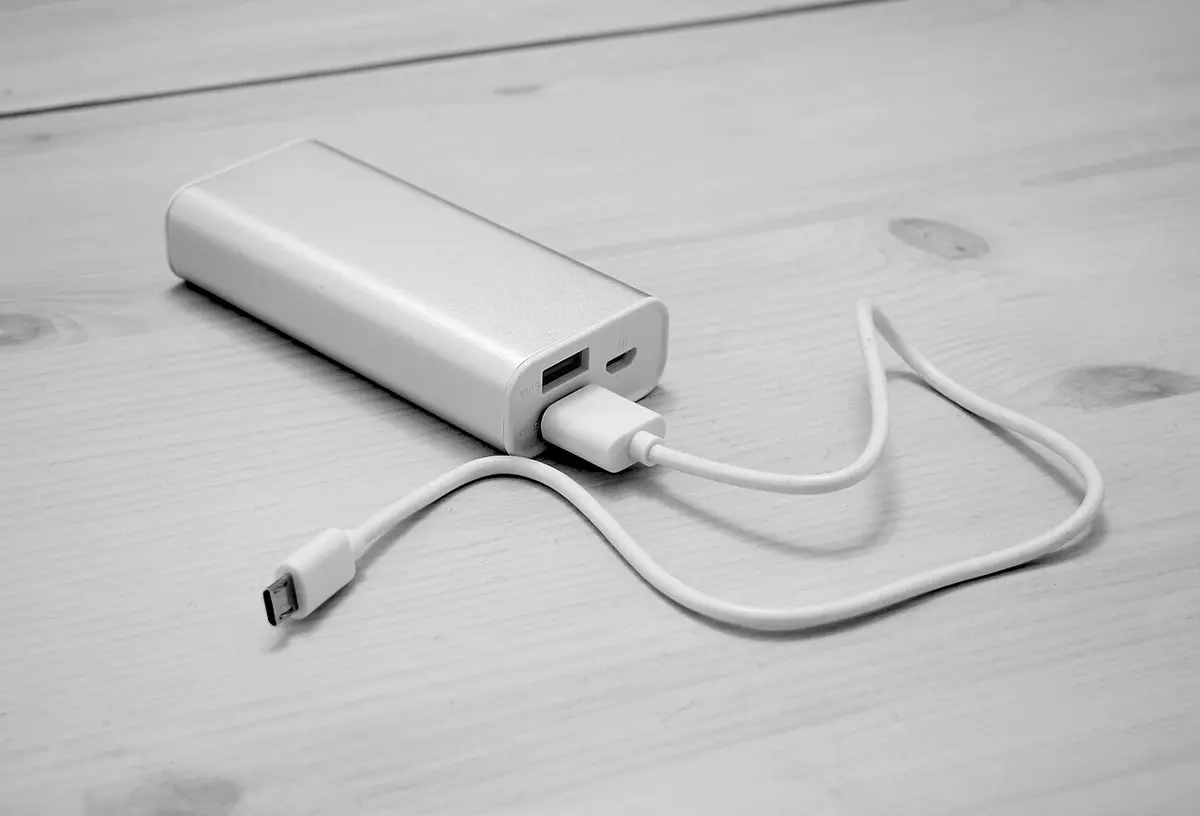
- Use the cable that came with the bank or a quality certified cable.
- Do not charge a bank in a tent, sleeping bag or pocket where heat can build up.
- Do not use a bank that is swollen, dented or hot to the touch while idle.
- Keep the bank out of a hot car.
- Do not leave it plugged in for days at a time, and store it at about half charge for long periods.
- Carry banks in your cabin baggage when flying, not in checked bags.
Look for safety marks and protections, such as over-voltage, over-current, short-circuit and temperature protection, and buy from makers that publish clear specs and a warranty.
Making a bank last through a trip: usage habits
A bank only stretches as far as the habits around it. Experienced backpackers cut daily consumption by a third or more with a few routines, and the same habits help car campers who want to avoid hunting for an outlet.
- Charge devices in a batch, not constantly. Topping up a phone from 60 to 100 percent is less efficient than waiting until it is at 20 percent and charging it once. Every plug-in event wakes the bank's converter.
- Turn on airplane mode overnight. A phone searching for signal in a remote area can use several times the power of one that is idle.
- Lower screen brightness and use dark mode. On OLED phones this saves real energy.
- Use a headlamp with its own battery. A rechargeable headlamp at low output uses a fraction of what a phone flashlight does.
- Download maps in advance. Streaming and GPS fixes both draw power. Offline maps and a saved route cost less.
- Charge from the bank during the day, not at night in the cold. Keep the bank warm, and keep the phone warm too, since a cold phone drains faster.
- Match the cable to the job. Short, quality cables waste less energy as heat than long, thin ones.
What the labels and certifications can tell you
Honest packaging will list the rated capacity in Wh, the input and output specifications for each port, the cell chemistry or type, and the model number. If a bank lists only a giant mAh number and says nothing about Wh or output, treat it with suspicion. A 30,000 mAh bank that weighs less than a 10,000 mAh one cannot be telling the whole truth, because the cells inside weigh what they weigh.
Check also for regulatory marks. Reputable makers test to recognized safety standards, such as UL 2056 for power banks, and list the certification in the product details or on the label. A listed standard is not a guarantee of quality, but its absence is a flag. Cheap unbranded banks sometimes ship with cells that hold well under the stated capacity, so the practical advice is to buy from a maker with a track record and a clear warranty, and to test your new bank at home by running it down on a known load before a trip.
A decision table
| Your trip | Target capacity | Output to look for | Weight target |
|---|---|---|---|
| Day hike with a phone | 5,000 mAh | 18 W USB-C | Under 5 oz |
| Weekend backpacking, phone and headlamp | 10,000 mAh | 20 W USB-C | Under 8 oz |
| Week-long backpacking trip, phone, GPS, camera | 20,000 mAh | 30 W USB-C | Under 1 lb |
| Car camping with tablets and speakers | 20,000 to 26,800 mAh | Two USB-C ports | 1 lb or more is fine |
| Car camping with a laptop | 26,800 to 40,000 mAh | 65 to 100 W USB-C PD | 1.5 to 2.5 lb |
| Remote work and cameras, several days | 40,000 to 60,000 mAh | 100 W USB-C PD, AC option | 2 to 4 lb |
| A fridge, CPAP or heavy loads | A power station | AC output and 12 V DC | See power station guides |
If your needs reach the bottom row, step up to a power station. The guide to how long a power station runs a 12V fridge shows the scale difference.
Common mistakes to avoid
- Buying by mAh alone. Output wattage, weight and real delivered capacity decide whether the bank works for you.
- Expecting solar to charge the bank. Built-in panels are a trickle, not a strategy.
- Using a short or low-quality cable. A thin cable limits wattage and can overheat.
- Ignoring the cold. A bank at 20 degrees F may deliver far less than at room temperature.
- Buying a 100 W bank for a phone. You pay in weight and money for output you will not use.
- Forgetting to charge before the trip. Fully charge the bank and your devices, and leave a margin for delays.
- Carrying an oversized bank on a plane. Check the Wh rating and airline policy.
Frequently asked questions
How many times can a 20,000 mAh power bank charge a phone?
About three full charges for a typical phone with a 4,500 mAh battery. The bank holds about 74 Wh, a phone uses about 17 Wh per full charge, and conversion losses reduce the practical total to three. Older phones with smaller batteries may get four, while large phones may get closer to two and a half.
Can a power bank charge a laptop?
Yes, if it has a USB-C Power Delivery port rated at or above your laptop's charger, usually 45 to 100 W. A 60 W bank can charge a 45 W ultrabook but will not keep up with a 100 W gaming laptop under load. Check your laptop's original charger wattage to match.
Are bigger power banks always better?
No. Bigger banks weigh more, take longer to recharge and cost more. An oversize bank can also be too heavy for backpacking. Choose the size that covers your daily watt-hours with a reasonable margin, not the largest number on the shelf.
How long does a power bank take to recharge?
It depends on the input wattage. A 20,000 mAh bank (74 Wh) with an 18 W input takes about 4 to 5 hours. A bank with 45 to 100 W input can recharge in 1.5 to 3 hours. Large banks of 40,000 mAh or more may need several hours even on fast inputs.
Is it safe to use a power bank while it is charging?
Many banks support pass-through charging and are designed for it, but it makes heat. Use it in a ventilated place and not under bedding. If the bank gets hot, unplug something. Frequent pass-through use can shorten battery life.
How should I store a power bank between trips?
Store it at roughly 40 to 60 percent charge in a cool, dry place, and top it up every few months. Avoid hot cars and freezing garages. Lithium cells age faster when stored full and hot, so partial charge helps them last years.
Sources & further reading
- TSA: Lithium batteries, 100 watt-hours or less
- Anker: Wh to mAh conversion
- Renogy: mAh to Wh conversion guide
- Battery University: How to prolong lithium-based batteries
Image credits
- "SAMSUNG BATTERY PACK (POWER BANK) EB-PG850 (2)" by Dinkun Chen, CC BY-SA 4.0, via Wikimedia Commons.
- "Portable power bank" by Santeri Viinamäki, CC BY-SA 4.0, via Wikimedia Commons.


Ready to buy?
Compare the gear: Camp Power
5 Best 36000mah Solar Power Banks in 2026
Solar power banks near 36000mAh for camping, compared on nearest capacity, panel count, hand crank, built-in cables and wireless charging.
4 Best 38800mah Solar Power Banks in 2026
Best 38800mAh solar power banks for camping, compared on 22.5W fast charge, IP65 and IP67 ratings, built-in cables and flashlights.
5 Best 60000mah Power Banks in 2026
Best 60000mAh power banks for camping, compared on 22.5W fast charging, built-in cables, flashlights, size and weight for multi-day phone power.
3 Best 61200mah Solar Power Banks in 2026
Solar power banks near 61200mAh: one exact crank-and-solar model, a 66800mAh crank bank and a light 20000mAh option, compared.
5 Best 70000mah Power Banks in 2026
Best 70000mAh power banks for group camping, compared on Wh rating, fast-charge ports, built-in cables and the one 140W laptop-class option.
4 Best 90w Power Banks in 2026
Best 90W power banks for campers who need to charge a laptop, compared on dual USB-C output, 20000mAh capacity, cables and port layout.
6 Best Hand Crank Solar Power Banks in 2026
Best hand crank solar power banks for emergency camping, compared on capacity, wireless pads, lights, survival tools and built-in cables.
4 Best Power Banks With AC Outlets in 2026
Best power banks with AC outlets for camping, comparing two true 65W AC models and wall-plug banks that skip the charger brick.
Keep reading