
Practical Camping Guide · 13 min read
How to Stay Cool Camping Without Air Conditioning
Stay cool camping without air conditioning by choosing shade, venting your tent, running a battery fan and cooling your body, with fan power and runtime tips.

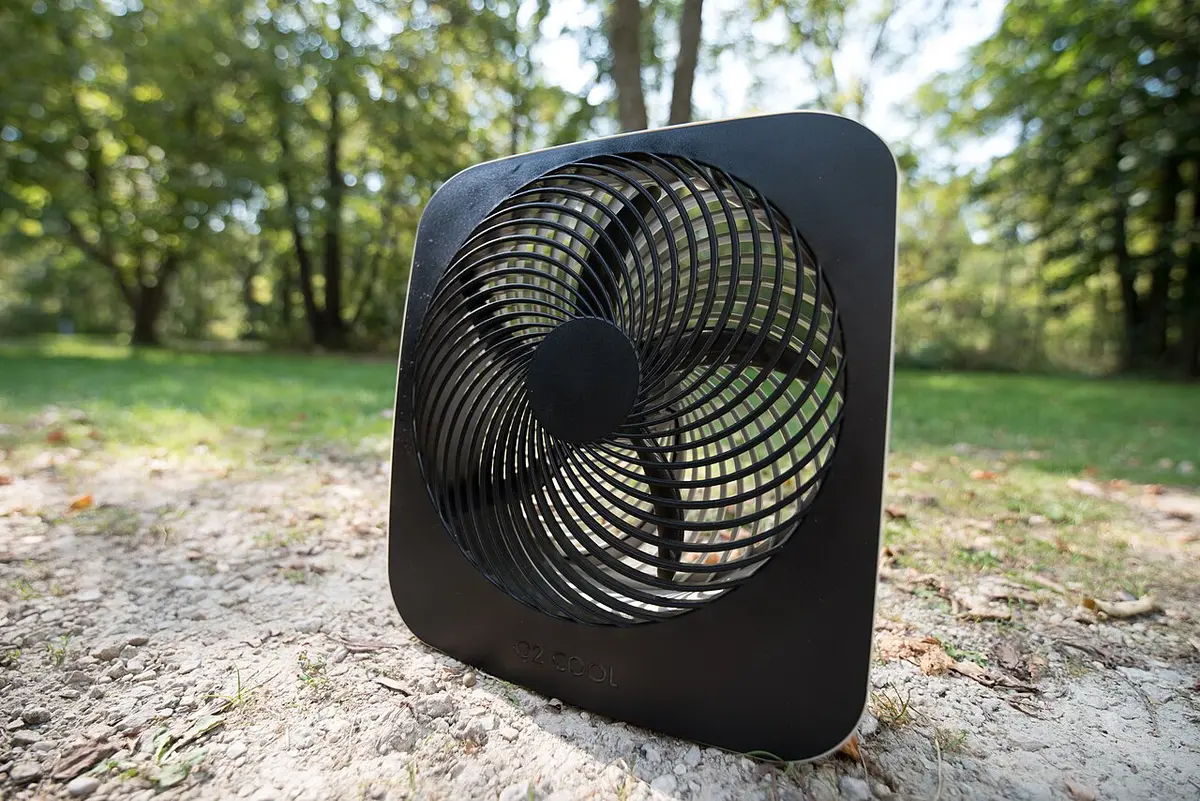
The most effective ways to stay cool without air conditioning, in order of impact, are to choose a shaded, breezy site (or go higher in elevation), keep the tent or camper from heating up in the first place, move air with a battery fan, and manage your body directly with water, light clothing and cooling towels. A shaded campsite can feel 10 to 15 degrees F cooler than an exposed one, and a fan that draws 3 to 6 W runs all night on a small battery. Stack several small measures, because no single trick matches the cooling of an air conditioner.
Heat is not just a comfort issue. Hot nights without relief cause poor sleep, dehydration and, in extreme cases, heat illness. This guide covers the physics of staying cool at camp, how to choose and power a fan, how to set up a tent or camper to shed heat, what to do with your body, and how to plan the day around the sun.
Understand the three ways heat reaches you
Heat gets into a camp in three ways, and each has a different defense.
| Heat source | How it works | Best defense |
|---|---|---|
| Sunlight (radiation) | Direct sun heats tent fabric, vehicle metal and ground | Shade, reflective covers, light colors |
| Warm air (convection) | Hot air surrounds you and enters through openings | Airflow, venting, shade, elevation |
| Hot surfaces (conduction) | Ground, cots and sleeping pads hold heat | Insulation, airflow under the bed, light colors |
Your body also makes heat and loses it by evaporating sweat. Evaporation works best in dry air with moving air over the skin. In humid conditions, sweat does not evaporate easily, so you feel hotter at the same temperature. That is why a fan helps a lot in dry heat and less in thick humidity, and why the best response to a humid night is to move air steadily, reduce your own heat output and stay hydrated.
Choose the site: the cheapest cooling you can get
Site selection is worth more than any gadget. Consider:
- Shade. Deep tree shade, especially on the west and south sides of the tent, blocks the afternoon sun. Dense canopy can lower air temperature by several degrees compared to an open field and reduces radiant heat even more.
- Breeze. Sites on a ridge, a lakeshore or a clearing receive wind. Face the tent door toward the prevailing breeze.
- Elevation. Air temperature falls about 3 to 4 degrees F for every 1,000 feet of elevation gain. A site 3,000 feet higher can be 10 degrees cooler.
- Water. Lakes and rivers cool the air, though they can add humidity and insects.
- Ground cover. Grass and soil stay cooler than bare rock, sand or pavement, which absorb and re-radiate heat.
- Season and time. In summer, shift your trip to spring or fall if you can, or plan for mountain camping.
At the campground, walk the site in the afternoon before you pitch. The place that feels pleasant at noon may bake at 4 p.m. If the only shade is a tree to the east, it will protect the tent in the morning and not in the afternoon, when heat is worst.
Make the tent or camper shed heat
A tent in direct sun acts like a greenhouse. Keep the fabric from absorbing and trapping heat.
- Add a tarp or a shade canopy above the tent. A tarp or a reflective sunshade placed a foot or more above the tent roof, not touching it, blocks sunlight and allows air to flow between them. It can cut interior temperature by 10 degrees F or more.
- Open every vent and window. Open top and bottom vents so that hot air rises out of the top while cooler air enters from below. Mesh doors and windows allow airflow even with the rain fly in place.
- Remove the rain fly on dry nights if the tent has a mesh body, which lets heat escape upward and you see the stars.
- Pick a light-colored tent for summer. Dark fabrics absorb more heat. A light tent reflects more.
- Park cars and gear to cast shade. Position the vehicle so that its shadow falls on the tent in the afternoon.
- Keep the tent unzipped during the day. Open it fully to let heat out and avoid a hot box when you return.
- Avoid dark ground tarps that extend beyond the tent. They heat and radiate upward.
For a camper or RV, reflective window covers, an awning, parking in shade and venting a roof fan are major factors. Sealing windows and doors in the heat of the day and opening them at night, when the outside air is cooler than the inside, reduces heat buildup. The same principle applies to tents and campers alike: air in at the bottom, out at the top.
Fans: the workhorse of off-grid cooling
A fan does not lower air temperature, it increases evaporation from your skin and moves hot air away, which makes you feel cooler. In a closed tent with stagnant, hot air, a fan helps less. Combined with open vents that bring in cooler outside air, a fan is a strong tool.
Fans for camping differ in how they are powered:
| Power source | Typical draw | Runtime | Best for |
|---|---|---|---|
| D-cell batteries | 2 to 5 W | 20 to 60 hours on low | Simple, replaceable, rugged |
| Built-in lithium battery (USB rechargeable) | 3 to 10 W | 8 to 40 hours | Convenience, hanging fans |
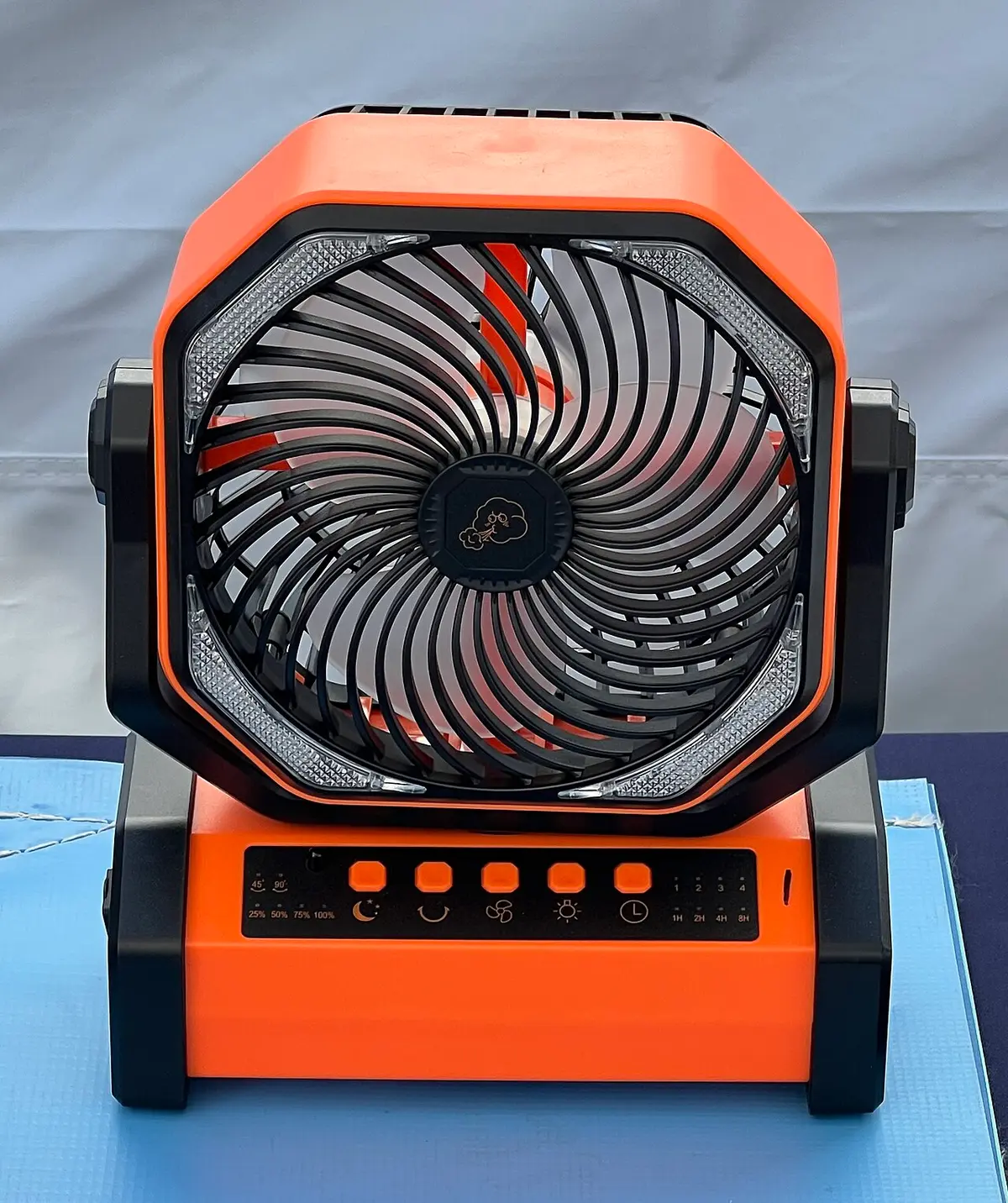
| Large 20,000 mAh fan-bank combos | 4 to 12 W | 10 to 30 hours | Long trips, dual use as a power bank |
| 12 V plug-in fans | 5 to 15 W | Depends on battery | RVs, vans, power stations |
| AC fans through an inverter | 20 to 60 W | Short on small batteries | Powered sites |
A rule of thumb: a 5 W fan uses 40 Wh over eight hours, which is about half of a 20,000 mAh power bank at conversion losses, or 10 percent of a 400 Wh power station. For fridge and fan budgets, see how long a power station runs a 12V fridge and watt-hours versus mAh, which show how to turn wattage into hours.
Choosing a fan:
- Look for several speeds. Low speed saves battery and makes less noise.
- Check runtime at the speed you will use, not the lowest or the highest.
- Hanging fans can clip to a tent loop and blow across your sleeping area. See the best hanging camping fans.
- Rechargeable lithium fans are convenient. See the best lithium battery camping fans and the best small battery camping fans.
- D-cell fans are robust and easy to refuel. See the best D-cell battery camping fans.
- Heavy-duty fans move more air for larger tents. See the best heavy-duty battery camping fans.
- Budget choices are listed in the best camping fans under $30 and best camping fans under $50, and the broader best battery-powered camping fans show the full range.
Placement matters. Put the fan low near the door to push cooler outside air in, or high to exhaust hot air. In a tent with two openings, place it at one and leave the opposite open so air flows through. Aim a fan at your body, not at an empty room, and let the moving air do its job on your skin.
Cool your body directly
Sometimes the best cooling is personal.
Water. Drink regularly, before you feel thirsty. In hot conditions, many adults need 1 liter or more per hour during exertion, and several liters over a day. Add electrolytes if you sweat heavily. The National Weather Service advises drinking plenty of fluids and taking breaks in shade during extreme heat.
Evaporative cooling. A wet bandana on the neck, a wet shirt or a cooling towel works through evaporation. Wring it out, snap it, and drape it over the neck, wrists or head. It works best in dry air with a breeze, and it can be paired with a fan.
Clothing. Wear loose, light-colored, breathable fabrics such as lightweight synthetics or cotton blends, with a wide-brim hat. Long sleeves in thin fabric can be cooler than bare skin in strong sun.
Cool the pulse points. Cold water on the wrists, neck and ankles cools blood near the surface.
Swim or rinse. A dip in a lake or a shower before bed can lower body temperature and help you sleep.
Mist. A spray bottle of water used on the face and arms, in front of a fan, gives instant relief.
Sleep setup. Use a lightweight sleeping bag liner or just a sheet. Skip the insulated sleeping pad if the ground is warm, or choose a pad designed for warm weather. A cot lifts you off the ground and lets air flow underneath, which keeps you cooler than a pad on the floor. Keep your head and feet exposed to the airflow.
Time the day around the heat
The hottest hours are generally 1 to 5 p.m. Plan your trip around them.
| Time of day | Strategy |
|---|---|
| Early morning | Do chores, hikes and cooking while it is cool |
| Mid-morning | Shift to water activities or shaded exploring |
| Midday to late afternoon | Rest in shade, swim, read, nap |
| Evening | Cook, socialize, explore |
| Night | Vent the tent, run a fan and keep cool air moving |
Pre-cooling the sleeping area is another useful trick: open everything in the evening to flush out hot air, and avoid zipping up until the temperature outside has dropped.
Food and cooking in the heat
Cooking adds heat to a camp, so cook outside and away from sleeping areas. Choose cold or no-cook meals at midday, such as salads, wraps and fruit, and cook in the cool of the morning or evening. Keep the cooler in the shade and covered, and open it as little as possible. Hot weather shortens the life of ice and perishable food, so plan for it with more ice and a thorough cleanup.
When the heat is dangerous
Heat illness is real and can escalate. Know the signs:
- Heat exhaustion: heavy sweating, weakness, dizziness, headache, nausea, cool and clammy skin. Move to a cool place, loosen clothing, sip water and cool the body with wet cloths.
- Heat stroke: a medical emergency with hot, red or dry skin, confusion, a rapid pulse, fainting and a body temperature over 103 degrees F. Call emergency services, and cool the person while you wait.
Children, older adults, pets and people with certain medical conditions are especially vulnerable. Never leave a child or pet in a closed vehicle. If conditions are extreme, consider moving to a cooler location or a place with air conditioning for a few hours. There is no shame in a break at a library or a store.
A worked example: a 95 degree weekend in a family tent
Picture a family of four in a large cabin tent in late July, with daytime highs of 95 degrees F and overnight lows near 70. The campsite has some tree cover but gets afternoon sun on the tent from the west. Here is how the measures stack up.
Before pitching. They walk the site and choose the spot where the tent will be shaded from 1 p.m. onward, even though it is a few feet farther from the picnic table. That choice alone is worth perhaps 8 to 12 degrees of interior temperature in the afternoon.
At setup. They hang a reflective tarp above the tent with a gap of a foot and a half, leave the rain fly off the mesh panels and set the door toward the breeze. They place a light-colored ground cloth only under the tent footprint so that no dark fabric sticks out and radiates heat.
During the day. The tent stays fully open with the doors unzipped. The family spends midday at the lake, then rests in the shade with wet bandanas and a small fan clipped to a tree. Meals at noon are cold sandwiches and fruit, and the stove is used only at breakfast and dinner.
At night. At 9 p.m., the interior is still 82 degrees F. They run two small fans, one set low at the tent door blowing in and one high at the opposite side exhausting, each drawing about 4 W. Over a 9 hour night that is 72 Wh in total, which a single 20,000 mAh bank can cover with energy to spare. By midnight the outside air has fallen to 72, and the tent follows within a few degrees. The children sleep on top of their bags in light clothing, and everyone wakes with the tent at a tolerable 74.
The result. No single measure did the work. Shade bought the biggest drop, venting and the tarp took care of the rest, and the fans made the remaining warmth bearable. The same weekend without any of these steps would have meant a tent at 95 degrees at 9 p.m. and a miserable night.
Humid heat versus dry heat
The right tactics differ with the climate. In dry heat, such as the desert Southwest, evaporation is effective. Wet cloths, misting and a fan give strong relief, and nights usually cool off quickly, so the main task is to survive the afternoon and vent aggressively at night. Hydration is critical, because sweat evaporates so fast you may not notice how much you lose.
In humid heat, such as the Southeast or the Midwest in summer, evaporation is weak and nights stay warm. Moving air is still valuable because it reduces the layer of warm, moist air around your skin, but wet cloths do less. The priorities are shade, airflow through the whole tent, light bedding, and water activity in the heat of the day. In the worst conditions, plan an air-conditioned break and avoid strenuous activity at midday. Pick sites near water and in open breezy locations, and keep humidity from building inside the tent by avoiding wet gear indoors.
At altitude, the air is thin and dry, nights are cool and the sun is intense. The risk there is not warm nights but sunburn and dehydration, so shade and water still matter, but sleeping is rarely the issue.
Power planning for fans and cooling gear
Fans and personal coolers draw modest power, but it adds up on a long trip. A 6 W fan running 10 hours a night uses 60 Wh, plus a second one for another sleeper and a small USB fan during the day. If you also run a fridge and phones, a 500 Wh power station will not last long without charging. Plan the budget: list the cooling gear, estimate watt-hours and size your battery and panel to match. The method is in how to size a solar panel for camping. If heat is a frequent issue, choose efficient fans, run them on low, and use passive measures such as shade and reflective covers to reduce the need.
Common mistakes to avoid
- Camping in the sun for convenience. Shade is the biggest single cooling factor.
- Sealing the tent in the heat of the day. It becomes an oven.
- Pointing a fan at nothing. Aim it at your body and keep an opening for air.
- Forgetting water. Dehydration compounds heat stress.
- Running a fan on high all night. Low speed saves battery and noise.
- Using a dark ground tarp. It heats the area.
- Cooking inside or next to the tent. It adds heat and fire risk.
- Ignoring warning signs. Heat illness progresses quickly.
Frequently asked questions
Does a fan really cool a tent?
A fan does not lower the air temperature, but it moves air across your skin and helps sweat evaporate, so you feel cooler. In a tent, it works best when there are vents or open doors so that cooler outside air can flow through and push hot air out.
How much battery does a camping fan use?
Most camping fans draw 3 to 10 W, so a night of 8 hours uses 25 to 80 Wh. A small fan with a 10,000 mAh battery can run all night on low. Check the runtime at the speed you plan to use.
What is the best way to keep a tent cool in the day?
Pitch in shade, add a reflective tarp or a canopy above the tent, open all vents and windows and leave the door unzipped when you are away. These combined measures can lower interior temperatures by 10 degrees F or more.
Is it safe to sleep in a tent in 90 degree weather?
It can be, with precautions: hydrate, wear light clothing, keep air moving, and avoid direct sun on the tent. In heat above the high 90s or in high humidity, take extra care, and consider cooling off in water or moving to a cooler site. Watch for signs of heat illness.
Do cooling towels work?
They can help in dry air by providing evaporative cooling, especially around the neck, but they do little in high humidity. Wet the towel, wring it out and snap it, and re-wet when it dries.
Can I use a swamp cooler or evaporative cooler at camp?
In dry climates, a small evaporative cooler with a fan can lower air temperature a few degrees. In humid areas, it adds moisture and does little. Make sure it has an adequate water supply and power, and check that it is safe for your tent.
Sources & further reading
- National Weather Service: Heat safety
- Anker: Wh to mAh conversion
- Renogy: mAh to Wh conversion guide
Image credits
- "Portable Battery-Powered Fan for Camping O2COOL 10-inch Portable Fan (" by Tony Webster from Minneapolis, Minnesota, United States, CC BY 2.0, via Wikimedia Commons.
- "PANERGY 20000mAh Camping Fan" by TaurusEmerald, CC BY-SA 4.0, via Wikimedia Commons.


Ready to buy?
Compare the gear: Camp Power
3 Best Lithium Battery Camping Fans in 2026
Best lithium battery camping fans compared on named battery chemistry, capacity, build and weather rating, with notes on what listings do not state.
5 Best D Cell Battery Camping Fans in 2026
Best D cell battery camping fans compared on cell count, runtime claims, noise, lantern features and USB backup for tents and power outages.
6 Best Heavy Duty Battery Camping Fans in 2026
Best heavy duty battery camping fans compared on airflow, battery size, build and weather rating for big tents, canopies and job sites.
2 Best Hanging Camping Fans in 2026
Best hanging camping fans compared on battery size, remote control, light modes and mounting, for tent ceilings and awning frames where floor space is scarce.
2 Best Small Battery Camping Fans in 2026
Best small battery camping fans compared on battery type, listed runtime, noise level and size, for solo tents, hammocks and cots where space is tight.
5 Best Camping Fans Under 30 in 2026
Best camping fans under $30: five battery, solar and D-cell tent fans compared on runtime, noise and charging for hot nights at the campsite.
5 Best Camping Fans Under 50 in 2026
Best camping fans under $50: five 12000mAh to 20000mAh tent fans compared on oscillation, battery life and what an extra $20 adds over a $30 fan.
5 Best Battery Powered Camping Fans in 2026
Best battery powered camping fans compared on battery type, listed runtime, noise and hanging options, for campers who want airflow with no outlet.
Keep reading