
Practical Camping Guide · 12 min read
Solar Generator vs Gas Generator for Camping
Compare solar generators and gas inverter generators for camping on noise, safety, runtime, cost and campground rules to choose the right power source.

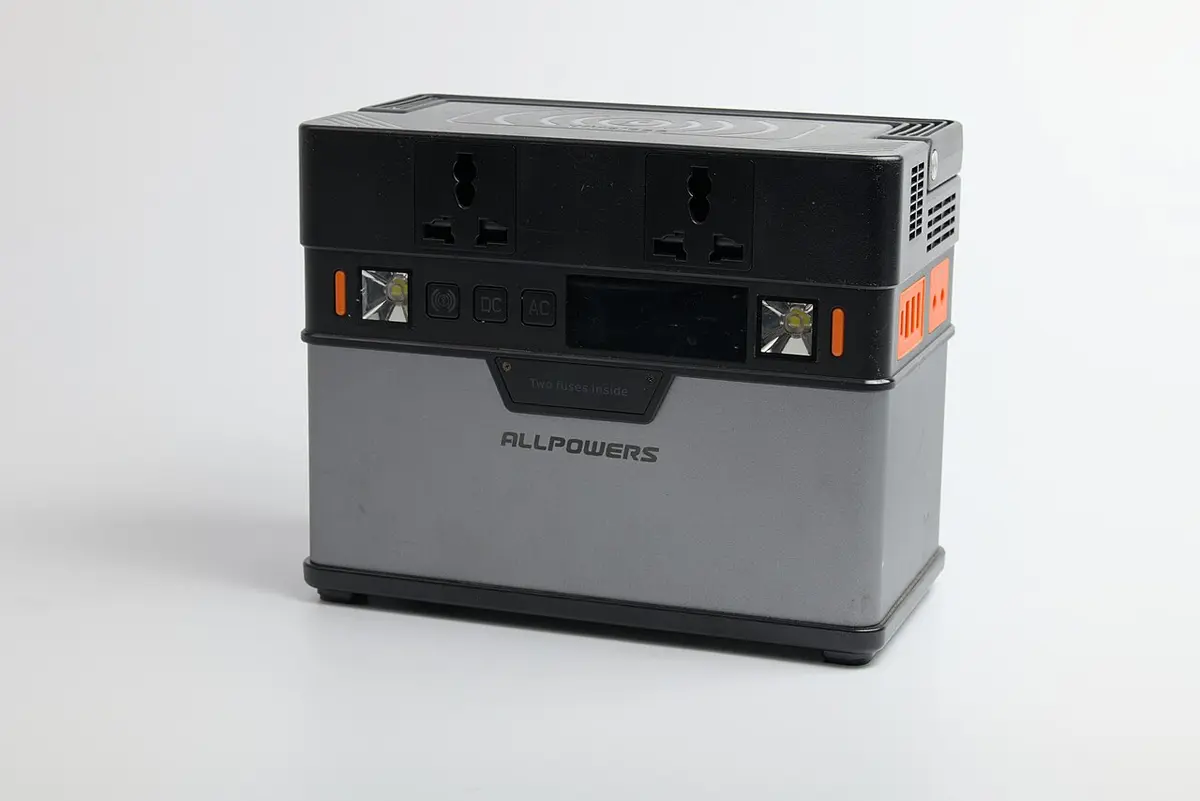
A solar generator (a battery power station plus solar panels) is silent, fume-free and safe to run next to a tent, but it is limited by its battery capacity and by the sun. A gas generator, ideally an inverter model, makes far more power for far longer, but it is loud, needs fuel, and produces carbon monoxide that can kill. For most car campers who run lights, phones, a laptop and a fridge, a solar generator is the better fit. For heavy loads such as an RV air conditioner, power tools or multi-day shade camping, gas still wins.
The question is not which technology is better, but which one matches your loads, your trip length and the rules of the places you camp. Below is a direct comparison, a way to calculate what you need, and a decision table to settle it.
What each one actually is
A solar generator is marketing shorthand for a portable power station (a lithium battery, an inverter and charge controllers in one box) sold with, or able to connect to, solar panels. It produces no power by itself. The panels collect sunlight, the battery stores the energy, and the inverter delivers AC, DC or USB power when you need it.
A gas generator burns gasoline (or propane in dual-fuel models) in an engine that spins an alternator. Conventional generators run the engine at constant speed to hold 60 Hz, which is why they are loud and thirsty. Inverter generators run the engine at variable speed and use electronics to make clean AC, which makes them quieter, more efficient and safer for electronics. If you are considering gas, an inverter model is almost always the right choice for camping.
Side-by-side comparison
| Factor | Solar generator | Gas inverter generator |
|---|---|---|
| Noise | Silent, a faint fan at high load | Roughly 50 to 65 dBA at 23 ft, audible across a campsite |
| Exhaust and fumes | None | Carbon monoxide, must run outdoors |
| Fuel | Sunlight, wall or car charging | Gasoline or propane, must be stored and carried |
| Typical output | 300 to 3,000 W, limited by battery | 1,000 to 4,000 W, limited by fuel |
| Runtime | Limited by battery (a few hours to a few days) | Many hours per tank, refuel to continue |
| Weight (comparable output) | Heavy for the energy stored | Often lighter for the power produced, plus fuel |
| Startup | Instant, no cranking | Pull-start or electric start, needs maintenance |
| Maintenance | Almost none | Oil changes, spark plug, stale fuel issues |
| Campground rules | Allowed nearly everywhere | Often restricted by quiet hours or banned |
| Cost per watt of output | Higher for batteries and panels | Lower upfront, ongoing fuel costs |
The noise numbers are typical ranges from manufacturer specs for inverter models at a light-to-moderate load, and they climb with load. Even a quiet generator is noticeable in a quiet forest, and many campgrounds restrict hours or ban generators in tent-only areas.
Energy math: how much battery are you really replacing?
A solar generator stores energy, and the size of the battery in watt-hours sets how much you can use between recharges. A gas generator converts fuel into power on demand. The comparison lies in how much energy you need per day.
| Daily load | Approx. watt-hours | Solar generator that covers it | Gas generator that covers it |
|---|---|---|---|
| Phones, lights, small fan | 100 to 200 | 300 Wh station, 50 W panel | Overkill |
| Laptop, camera, lights, phones | 200 to 400 | 500 Wh station, 100 W panel | Overkill |
| Plus a 12 V compressor fridge | 600 to 900 | 1,000 Wh station, 200 W panel | Optional |
| Plus a CPAP overnight | 900 to 1,300 | 1,500 Wh station, 300 W panels | Optional |
| Electric cooking (induction, kettle) | 1,000 to 2,000 | 2,000 Wh station, large panel array | 2,000 W generator |
| RV air conditioner, 3 to 5 hours | 3,000 to 6,000 | Impractical for most | 3,000 to 4,000 W generator |
If your daily energy sits in the first four rows, solar is practical. If you need regular multi-kilowatt-hour days, a generator is the economical route. For the battery math behind these rows, see how long a power station runs a 12V fridge and watt-hours versus mAh.
Solar recharge reality check
Panels rarely deliver their label wattage. A 200 W panel might give 120 to 160 W in strong midday sun with good angle, and far less in shade, haze or low winter sun. A useful planning figure is about four effective sun hours a day in many parts of the United States in summer, and two to three in shoulder seasons. Multiply panel watts by that number and by about 0.75 for system losses.
| Panel size | Typical summer daily yield | Typical shoulder-season daily yield |
|---|---|---|
| 100 W | 250 to 350 Wh | 120 to 200 Wh |
| 200 W | 500 to 700 Wh | 250 to 400 Wh |
| 400 W | 1,000 to 1,400 Wh | 500 to 800 Wh |
A tent in a tree-covered campground may get little direct sun, which is a hard limit for a solar generator. In that case you either carry panels and set them in a sunny spot, or you recharge from the car and a wall outlet. Our guide to sizing a solar panel for camping walks through the arithmetic.
Noise, neighbors and rules
Generator noise is the main reason many campers choose solar. A typical inverter generator produces roughly 50 to 60 dBA at about 23 feet when running at light load, with some models quieter and some louder. In a still campground, that sound travels. Many public and private campgrounds restrict generator use to certain hours, impose noise limits, or ban them in tent loops. National and state parks vary widely, so check the rules for each site.
Solar generators avoid these problems entirely, apart from a fan that cycles on during heavy loads. That is a major benefit when you camp near others or in places that value quiet. If you decide on gas anyway, look at the quietest options in the best quiet portable generators for camping and the best quietest portable generators for camping, and check the decibel rating at a stated load and distance, not just a headline number.
Safety: carbon monoxide is the big one
Gas engines make carbon monoxide (CO), a colorless, odorless gas that can kill within minutes at high concentrations. The U.S. Consumer Product Safety Commission advises running portable generators outdoors only, at least 20 feet from any building a person could enter, with the exhaust pointed away. For campers, that also means away from tents, campers and vehicles. Never run a generator inside a tent, a camper, a garage or an enclosed trailer, and never in a covered area.
- Keep the generator downwind and at least 20 feet from sleeping areas.
- Use a battery-powered CO alarm inside the tent, camper or RV.
- Consider a model with an automatic CO shutoff, which CPSC recommends.
- Let the engine cool before refueling. Spilled fuel on a hot engine can ignite.
- Store fuel in approved containers away from living areas and heat sources.
A solar generator has no exhaust, no fuel and no CO hazard. Lithium batteries do have their own risks, such as overheating when damaged, so keep the unit ventilated and out of a hot car. Details on chemistry are in LiFePO4 versus lithium-ion power stations.
Cost over time
A solar generator costs more per watt of output upfront, because you pay for the battery and the panels. After that, running costs are close to zero, aside from eventual battery aging. A gas generator costs less upfront for the same output, but you buy fuel, oil, filters and plugs, and you may need to winterize or drain the fuel for storage. For occasional camping, the difference in total cost can be small. For daily use over years, the fuel and maintenance add up, while a solar setup pays back more slowly.
Use this simple frame: estimate your annual energy use in kilowatt-hours, multiply by about 0.15 to 0.30 gallons of gasoline per kWh for a small inverter generator at moderate load (a rough rule of thumb), and compare that fuel cost against the extra up-front price of the solar setup. Many campers find that convenience and quiet outweigh the cost, while full-time users find that the break-even is clearer.
Weight and portability
Batteries are heavy for what they store. A 1,000 Wh station can weigh 20 to 30 pounds, and panels add more. A 2,000 W inverter generator weighs 40 to 50 pounds without fuel, and gasoline adds about 6 pounds per gallon. The gas generator wins on energy per pound if you count the fuel you burn, but you also carry fuel, a funnel and a can. For backpacking, neither is practical. For car camping, both are fine, and the question becomes where you want the weight to sit.
When a solar generator is the right choice
- You camp mostly in developed or semi-developed campgrounds with quiet hours.
- Your daily load is under about 1,000 Wh, which covers lights, phones, laptops, a fridge and a CPAP.
- You like silence, no fuel handling, and instant power.
- You have sunny campsites or you drive frequently to recharge.
- You want to run power inside a tent vestibule or near sleeping areas without CO concerns.
- You use the same unit for home backup and want low maintenance.
For help narrowing the field, the best solar quiet generators for camping pairs naturally with this use case.
When a gas generator is the right choice
- You camp in shade or in cloudy regions for several days.
- You run heavy loads, such as an RV air conditioner, electric heater, power tools or a welder.
- You need to recharge large batteries quickly, such as a van's house bank.
- You are in a remote area without wall outlets and need sustained output.
- You are willing to manage fuel, noise and safety.
If this is you, compare the best portable generators for camping and the best small portable generators for camping. For a generator in a closed enclosure, noise-reduction boxes exist, but they must allow adequate airflow and cooling, so follow manufacturer guidance. The best portable generator quiet boxes for camping list covers that approach, and the best portable quiet generators for camping list focuses on low-dBA models.
The hybrid approach
Plenty of campers use both. A mid-size LiFePO4 power station handles everyday loads silently, a pair of panels refills it during the day, and a small inverter generator stays in the truck for cloudy stretches or heavy loads. You can even use the generator to charge the station during allowed hours, then run quietly the rest of the day. That flips the usual noise problem on its head: two hours of generator time can add 1,000 Wh or more, and the rest of the day is silent.
A decision checklist
- Write down every device you will run and its watts.
- Estimate daily watt-hours, then add 25 percent for losses.
- Check the campground rules for generator hours, noise and fuel storage.
- Estimate the sun you will actually get at your sites.
- List your longest trip without a hookup.
- Decide how much weight you can lift and carry.
- Decide whether you are willing to handle fuel and engine maintenance.
- If you will run a CPAP or other medical device, choose the option that you can trust to run all night, with a backup plan.
A worked comparison: a five-night trip
Take a family of four on a five-night trip with a 12 V fridge (about 400 Wh a day), phone and tablet charging (about 150 Wh), LED lighting and a small fan (about 120 Wh) and a laptop for an hour each evening (about 60 Wh). The daily total is near 730 Wh, or about 3,650 Wh over five days.
Solar route. A 1,000 Wh LiFePO4 station plus 200 W of panels. On four effective sun hours, the panels add about 500 to 600 Wh a day, so the station loses roughly 150 to 250 Wh a day on net and ends the trip with plenty left, assuming the campsite has sun for at least a few hours a day. If the site is shaded and yields only 150 Wh a day, the station runs dry around day two or three unless you also charge from the car on a drive. Adding a second 200 W panel or planning one day trip with the car charging fixes it.
Gas route. A 2,000 W inverter generator burns roughly 0.1 to 0.2 gallons an hour at a light load. To make 3,650 Wh, you might run it for four to six hours across the trip, a total of about one gallon. That is cheap and simple, but you would be running it daily at the campsite, and if you charge a station with it you can do the whole job in two sessions. The cost is noise, fumes and the work of carrying and storing fuel.
Hybrid route. The same 1,000 Wh station and 200 W of panels, plus a small inverter generator that stays in the truck. On a sunny trip you never start the engine. On a bad-weather trip you run it for an hour during allowed hours and refill the station. Many experienced campers settle here because it covers the worst case without making the best case noisy.
Things the spec sheet will not tell you
- Real noise at your campsite. Decibel ratings are measured at a specific load and distance. A generator running at 75 percent load will be louder than the headline figure, and sound bounces off trees and cliffs.
- Altitude and temperature effects. Gas engines lose roughly 3 percent of power per 1,000 feet of elevation gain, and lithium batteries lose capacity in the cold. Plan for both when camping high or in winter.
- Fuel logistics. Gasoline degrades after a few months without stabilizer, and carrying fuel in a vehicle cabin is not safe. Use approved cans, store them outside the cab, and run the engine dry or stabilize before storage.
- Panel handling. Folding panels are robust but not indestructible. Glass-faced rigid panels crack, and flexible panels can degrade in heat. Protect them in transit.
- Rules about open flames and engines. In fire-restricted areas, spark arrestors and engine bans can apply to gas generators. Confirm with the land manager.
Common mistakes to avoid
- Buying a generator for loads a battery handles easily. If your daily total is 400 Wh, a generator is overkill and noisy.
- Underestimating solar shade. Panels in the shade of a tent or a tree produce a fraction of their rating.
- Running a gas generator near a tent. CO can move with wind and settle in low areas.
- Ignoring campground rules. Rules on generator hours and noise vary, and violations cost you your site.
- Choosing a conventional generator for electronics. Inverter models produce cleaner power.
- Forgetting the idle draw. A solar generator's inverter wastes some energy even with nothing plugged in.
Frequently asked questions
Can a solar generator run an RV air conditioner?
Rarely. An RV air conditioner draws 1,200 to 2,000 W while running and surges higher on startup. Even a large 3,000 Wh station would run for only an hour or two. Some very large systems can, but most campers use a gas generator, shore power or a bigger battery bank for air conditioning.
Is a gas generator allowed in national parks and state parks?
It varies by park and loop. Many have quiet hours, such as 8 a.m. to 8 p.m., and some ban generators in tent-only areas. Check the specific campground's rules before you go and plan on a backup if generators are restricted.
How long will a solar generator last on a cloudy day?
Panels still produce some power in clouds, often 10 to 25 percent of rated output, so a 200 W panel might deliver 20 to 50 W. Plan on the battery alone for cloudy days, and keep a car or wall charge as a backup.
Can I charge a solar generator with a gas generator?
Yes. Most stations accept AC input from any source, including an inverter generator. It is a handy way to refill during allowed hours, though it burns fuel less efficiently than running a load directly.
Which is cheaper to run over five years?
For modest use, solar is cheaper to run because there is no fuel or engine maintenance. For heavy use, a gas generator can cost less per kilowatt-hour upfront, but fuel and upkeep add up. The break-even depends on how often you camp and how much energy you use.
Is a dual-fuel generator a good compromise?
It can be. Propane burns cleaner and stores indefinitely, which suits an emergency or camping setup, though output is usually 10 to 15 percent lower than on gasoline. CO risks are the same, so the safety rules do not change.
Sources & further reading
- U.S. CPSC: Portable generator safety alert (PDF)
- U.S. CPSC: Report on carbon monoxide fatalities and generator safety
- Anker: battery capacity basics
Image credits
- "Allpowers S300 portable solar generator P1110363" by -stk, CC BY-SA 4.0, via Wikimedia Commons.
- "Allpowers S300 portable solar generator P1110390" by -stk, CC BY-SA 4.0, via Wikimedia Commons.


Ready to buy?
Compare the gear: Camp Power
Best Portable Generator for Camping in 2026
Compare portable generator for camping by fit, capacity, safety, compatibility, setup needs, ownership burden, and real product details.
Best Portable Generator Quiet Box for Camping in 2026
Compare portable generator quiet box for camping by fit, capacity, safety, compatibility, setup needs, ownership burden, and real product details.
Best Portable Quiet Generator for Camping in 2026
Compare portable quiet generator for camping by fit, capacity, safety, compatibility, setup needs, ownership burden, and real product details.
Best Quiet Generators for Camping in 2026
Compare quiet camping generators by dBA claim, inverter output, weight, runtime, CO safety, RV outlets, fuel use and campsite fit.
Best Quiet Portable Generator for Camping in 2026
Compare quiet portable generator for camping by fit, capacity, safety, compatibility, setup needs, ownership burden, and real product details.
Best Quietest Portable Generator for Camping in 2026
Compare quietest portable generator for camping by fit, capacity, safety, compatibility, setup needs, ownership burden, and real product details.
Best Small Portable Generator for Camping in 2026
Compare small portable generator for camping by fit, capacity, safety, compatibility, setup needs, ownership burden, and real product details.
Best Solar Quiet Generator for Camping in 2026
Compare solar quiet generator for camping by fit, capacity, safety, compatibility, setup needs, ownership burden, and real product details.
Keep reading