

We research everything we recommend. When you buy through our links, we may earn a commission. Learn more

Buying guide · 11 min read · Updated October 2, 2026

6 Best Budget Portable Power Stations With LiFePO4 Battery in 2026: A Practical RV Guide

Already set on LiFePO4? Six iron phosphate power stations ranked by what each listing proves about cycles, ports and recharge, from a 192Wh starter to 1,024Wh.

Bowen HigginsBy Bowen HigginsRV Editor at RV Gear Lab6 products comparedSpec-sheet researched

At a glance

Our top picks

At a glance · 6 picks

You have already decided on LiFePO4, so the chemistry debate is over and a different question takes its place: which listing proves what it claims? Every unit below states iron phosphate cells, and every one advertises a big cycle number. The difference is in the fine print, namely the capacity the pack is allowed to fall to before it counts as worn out, and whether the maker shows that threshold at all. Two cells can both say 4,000 cycles and mean very different things, which is the trap this guide helps you avoid.

Reading the listings that way changes the ranking. The Jackery Explorer 300 states more than 4,000 cycles before the pack reaches 70 percent capacity, a complete claim. The DaranEner units state 3,000+ and 3,500+ without naming the end-of-life point, and two others state no number at all. A budget buyer is not paying for a bigger number, they are paying for a claim they can trust, so we ordered the six by how much each listing can back up. That ordering also exposes which picks are good buys for reasons other than the cycle claim, such as watt-hours or a bundled panel.

The cheapest honest LiFePO4 option here is small: a 192Wh pack and a 200W inverter. Spending more buys watt-hours, a stronger inverter, a documented claim or a bundled panel, not a better chemistry, because the chemistry is the same on all six. We read each pick's listing and its ports, and where the price includes a panel, we say so. The sections below name the cost of every step up, in terms of what the extra money actually delivers. A buyer who wants only a laptop charger and a lantern can stop at the lowest rung.

RV Gear Lab field notes

The Rig Fit Check

Start with the job
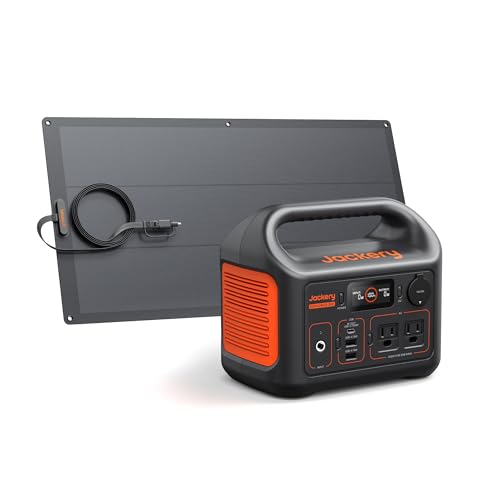
Jackery Solar Generator 300 and SolarSaga 100W Light, 292Wh, 300W AC, Backup LiFePO4 Battery leads this shortlist for First-time buyers wanting LiFePO4, a 100W panel and cables in one order.. Use that fit as a reference point, then compare the alternatives against your own space and workload.
Specs that separate the picks
The first details to compare are 292Wh LiFePO4, 300W (600W surge), 1,024Wh LiFePO4, 1800W (3600W peak). Confirm the exact model and included components before ordering.
Trade-off to plan for
Most expensive pick because the panel is bundled

Before you buy

What Matters Before You Choose a Budget Portable Power Station With LiFePO4 Battery

Key buying criteria so you get the right fit the first time.

  1. 01

    Where the Cycle Claim Comes From

    A cycle number is only as good as the test behind it. Some brands quote cycles at a shallow 50 percent depth, which flatters the figure, or count until 70 percent capacity instead of 80, which stretches it further. The Jackery Explorer 300 states 4,000+ cycles before the pack reaches 70 percent capacity, which is a full claim, while others give only a number. Look for the percentage that follows the cycle figure, and treat a bare number as approximate.

  2. 02

    Capacity Per Dollar of Stored Energy

    Because the chemistry is equal, the cleanest value measure is watt-hours per unit of spend. The CTOLITY AP1000 carries 1,024Wh, roughly 3.5 times the Jackery Explorer 300, at a position noticeably higher on price, which is a better ratio than the small units offer. A small pack is cheap to buy but costs more per stored watt-hour. Compare capacities before comparing badges.

  3. 03

    What a Bundle Hides

    A kit with a panel raises the price without changing the cells, and a shopper who compares sticker prices may think one station costs more than another. The Jackery 300 Solar Kit and the Jackery 300 Station share the same 292Wh pack. Subtract the value of the panel before judging, and ask whether you needed that panel. If you already own a panel, buy the station alone.

  4. 04

    Surge Headroom

    A motor load such as a fridge compressor or a pump starts with a surge well above its running watts. Motors want a surge well above the continuous rating, and the CTOLITY AP1000's 3600W peak over 1800W continuous gives that margin. Small units with 600W surge over 300W continuous also meet it, which is enough for fans and small pumps. Match the appliance's label to both numbers.

  5. 05

    Battery Management Protections

    The battery management system guards against overcharge, over-discharge, short circuit and temperature extremes. It is what keeps a LiFePO4 pack safe in a hot car or a cold tent, and it is listed in several bullets here. Look for named protections rather than a vague safety claim. A listing that names UL or similar certifications adds a documented record.

  6. 06

    Solar Input Fit

    A panel only helps if the unit accepts its voltage and watts. The DaranEner 192Wh accepts up to 60W through its MPPT controller, while the Jackery 300 Solar Kit ships with a matched 100W panel. Check the maximum input watts and voltage range in the listing, and pick a panel under both limits.

Our standards

Why You Can Trust RV Gear Lab

At RV Gear Lab, we compare products based on rig fit and power or hookup compatibility, verified specifications, usability, setup requirements, weight, durability, and real-world trade-offs. We do not rank products purely on marketing claims or commission rates.

We have not personally tested every product listed. Where hands-on testing is not available, recommendations are based on verified manufacturer specifications, product documentation, use-case fit, and comparative research.

How we review RV gear →

Detailed reviews

The 6 best budget portable power stations with lifepo4 battery, explained

01
Jackery Solar Generator 300 and SolarSaga 100W Light, 292Wh, 300W AC, Backup LiFePO4 Battery
  • 292Wh LiFePO4, 300W (600W surge)
  • Includes SolarSaga 100W Light panel
  • 4,000+ cycles to 70% capacity
Check price on Amazon for Jackery Solar Generator 300 and SolarSaga 100W Light, 292Wh, 300W AC, Backup LiFePO4 Battery (opens in a new tab)
Best for: First-time buyers wanting LiFePO4, a 100W panel and cables in one order.

Our take

Chosen for a buyer who wants no second purchase and no compatibility questions, such as a tent camper or van sleeper starting an off-grid routine.

Why it made the shortlist

This kit pairs the Jackery Explorer 300, a 292Wh LiFePO4 station with a 300W inverter and 600W surge, with a SolarSaga 100W Light panel, an AC adapter, a car charger cable and a user guide. Outputs cover a pair of AC sockets, a fast 100W USB-C PD connection, a couple of USB-A ports and a 120W car socket, so a laptop, a phone and a fan can share it.

Compared with the Jackery Explorer 300 sold alone, it adds the 100W panel, and the listing says that panel reaches 80 percent in about 2.8 hours. That solar charging time is the mechanism behind the step up in price, which makes this the dearest pick here and also a complete off-grid starter that needs no extra shopping before the first trip.

The stated 4,000+ cycles before the pack reaches 70 percent capacity means the whole kit comes with a documented chemistry claim, and the 7.5 lb station keeps it portable between car, tent and cabin. The panel's light design makes it simple to prop up at a campsite.

What works

  • Panel, adapter and car cable are all included
  • States 4,000+ cycles to 70% capacity
  • 100W panel reaches 80% in about 2.8 hours
  • Light 7.5 lb station for easy carrying

Watch out for

  • Most expensive pick because the panel is bundled
  • 292Wh fills quickly under a fridge
02
Best for: Buyers who want LiFePO4 at a size that can run a fridge and a coffee maker.

Our take

Recommended for a buyer who wants iron phosphate chemistry at a size that carries a compact fridge, a coffee maker or a work laptop through a full day.

Why it made the shortlist

The CTOLITY AP1000 stores 1,024Wh in LiFePO4 cells behind an 1800W inverter with a 3600W peak. HyperFlash charging refills the pack at up to 1800W, reaching 80 percent in about 45 minutes via AC, and a UPS function switches in under 20ms for devices that dislike an interruption, such as a CPAP, a router or a desktop computer.

It carries roughly 3.5 times the stored energy of the Jackery Explorer 300 and weighs under 25 lb, which is the largest LiFePO4 pack in this guide. AC, compatible solar panels and car charging are all supported, so a camper can refill from whichever source the day offers, and the under 25 lb body carries easily to a truck bed or a camp table.

It sits near the top of this shortlist on price, noticeably below the Jackery 300 Solar Kit once the bundled panel is taken out of the comparison, and the extra money over a small unit buys capacity and a real inverter.

What works

  • Largest iron phosphate pack in this guide
  • 80% wall recharge in about 45 minutes
  • 1800W inverter handles kitchen-class loads
  • Under 25 lb is light for 1,024Wh

Watch out for

  • Listing does not give a clear cycle number
  • No solar panel in the box
03
Jackery Explorer 300 Portable Power Station, 292Wh Backup LiFePO4 Battery, Solar Generator
  • 292Wh LiFePO4, 300W (600W surge)
  • 2 AC, 100W USB-C PD, 120W car port
  • 7.5 lb, 4,000+ cycles to 70%
Check price on Amazon for Jackery Explorer 300 Portable Power Station, 292Wh Backup LiFePO4 Battery, Solar Generator (opens in a new tab)
Best for: Shoppers who want the best-documented LiFePO4 claim without paying for a panel.

Our take

Looks right for a buyer who owns a panel or plans to buy one later, and wants the cleanest LiFePO4 claim for the money.

Why it made the shortlist

The Jackery Explorer 300 holds 292Wh of LiFePO4 behind a 300W inverter with 600W surge, and it weighs 7.5 lb. Its listing states more than 4,000 cycles before the pack reaches 70 percent capacity, the most complete life claim here, and about 11 years of service at its stated use pattern, which gives a buyer a long, specific horizon to plan around.

Versus the Jackery 300 Solar Kit it is the identical station without the panel, which lowers the entry cost considerably and leaves room to choose a panel of any size or brand later. A buyer who already owns solar gear spends nothing on duplication. The same output set, with 100W USB-C PD and a 120W car socket among the choices, handles phones, laptops and lights together.

It sits mid-pack on price, a clear step above the DaranEner units, and the extra spend buys the stated end-of-life point and a lighter-than-average body. For a buyer who reads listings closely, that stated threshold is the best argument for paying more than the DaranEner price.

What works

  • Most complete cycle claim, with end-of-life point
  • Same station as the kit, without the panel
  • Light at 7.5 lb for tent trips
  • 100W USB-C PD charges a laptop fast

Watch out for

  • Solar panel is sold separately
  • 300W ceiling limits kitchen loads
04
DARAN 350W Portable Power Station 600W Surge, 288Wh 6-Port LiFePO4 Camping Power Bank
  • 288Wh LiFePO4, 350W (600W surge)
  • 2 AC, 60W USB-C PD, 2 USB-A
  • 80% in about 2.5 hours, 3,000+ cycles
Check price on Amazon for DARAN 350W Portable Power Station 600W Surge, 288Wh 6-Port LiFePO4 Camping Power Bank (opens in a new tab)
Best for: Budget campers wanting 288Wh of LiFePO4 and 350W for devices and fans.

Our take

Works well for a buyer who wants LiFePO4 at the lowest position that still includes a real laptop-class USB-C port and a screen.

Why it made the shortlist

The DaranEner 350W gives a 288Wh LiFePO4 pack a 350W inverter with 600W surge, and outputs include a pair of AC sockets, one 60W USB-C PD jack and two 18W USB-A ports. A battery management system protects against overcharge, overheating and short circuits, and a smart screen tracks input and output in real time, which makes it easy to see how fast a load drains the pack.

Placed against the Jackery 300 Station it matches the capacity and adds 50W of continuous output, and the listing states 3,000+ deep cycles, which it describes as up to six times the life of conventional cells. It costs noticeably less than the Jackery, and it reaches 80 percent in about 2.5 hours from a 100W wall input.

Wall, car and solar recharging all work, so a weekend camper or a van sleeper can top it up from any source. At the lowest position that includes a screen and a USB-C PD port, it is the value anchor of this shortlist.

What works

  • States 3,000+ deep cycles on LiFePO4
  • Costs noticeably less than the Jackery
  • Screen shows live input and output watts
  • Six ports run several devices together

Watch out for

  • End-of-life capacity for the cycle claim is not stated
  • Wall input tops out at 100W
05
Best for: Lean campers charging phones, a laptop and a fan for a night or two.

Our take

Geared toward a buyer who wants a documented iron phosphate unit at 5.73 lb, compact enough to sit beside a pillow, and whose loads are a laptop, a phone and a light.

Why it made the shortlist

The DaranEner 192Wh holds 192Wh of LiFePO4 behind a pair of 300W AC sockets that surge to 600W, alongside a 60W USB-C PD jack, two 18W USB-A ports and a 12V DC connection. A pure sine wave signal protects phones, laptops and CPAP machines, and the listing states 3,500+ cycles, so the chemistry claim comes with a number attached.

Compared with the DaranEner 350W it keeps the same chemistry and the same 600W surge while trimming the pack to 192Wh, which is how it reaches a clearly lower position on price. A compact body of 5.73 lb carries easily in a backpack or a car door. An onboard MPPT controller takes up to 60W of solar input, and the wall input maxes out at 100W.

It is the cheapest option in this guide that still gives two AC outlets, a 60W USB-C and a stated cycle number, all in a very light unit.

What works

  • Two 300W outlets on a 5.73 lb body
  • States 3,500+ cycles in the listing
  • MPPT accepts up to 60W of solar
  • Pure sine wave protects laptops

Watch out for

  • 192Wh drains fast under a fan and a CPAP
  • No end-of-life capacity is given for its cycles
06
Best for: Day-trippers wanting LiFePO4 at the lowest outlay and 4.7 lb.

Our take

Fits the needs of a first LiFePO4 purchase where the loads are phones, a camera battery and a 12V fan.

Why it made the shortlist

The Powkey 192Wh is a 192Wh LiFePO4 unit with one 120V AC outlet rated 200W, a 3A USB-C jack, two USB ports sharing 3.1A and a pair of 12V 10A DC outputs. At 4.7 lb and about 7 by 5 by 5.5 inches, its foldable handle tucks away for packing. It is among the lightest ways to carry iron phosphate cells in this guide.

Next to the DaranEner 192Wh it matches the capacity and chemistry at the entry of this shortlist, trading the second outlet and the USB-C PD speed for the lowest position on price. A dual white LED flashlight serves as a camp lantern, and the battery management system watches voltage and temperature, adding a layer of protection that a hot trunk or a cold tent tests.

Two 12V 10A DC ports mean a fan runs straight off the pack without inverter loss, which stretches the 192Wh further than the AC outlet could. A 12V fan on that port is the simplest way to turn this small pack into a whole evening of comfort.

What works

  • Cheapest LiFePO4 unit in this guide
  • Two 12V 10A DC ports run fans directly
  • Dual-white LED flashlight built in
  • 4.7 lb fits a small gear bin

Watch out for

  • One 200W AC outlet is the ceiling

Methodology

How We Built This Shortlist

Each pick was assessed across 5 criteria weighted for real-world use.

01

What each listing proves

We started from the claim every listing makes, LiFePO4 and a big cycle number, and asked what the text actually supports. A complete claim names the cycle count and the capacity the pack falls to at the end of that count. We ranked the Jackery listings first for that reason.

02

Cycle claims in context

We read cycle numbers as marketing figures that only compare at the same depth of discharge and end-of-life point. Where a listing gave a number alone, we noted the gap. Where it gave none, we scored the pick on stated chemistry.

03

Bundles against stations

We separated stations from kits, because a bundled panel raises the price without changing the cells. The Jackery 300 Solar Kit and the Jackery 300 Station share one station, and the difference is the panel. We compared the kits by what the extra money buys.

04

Ports, inverter and recharge

We counted usable ports, USB-C wattage, inverter output and recharge inputs for each pick, from the specs the listings state. A 100W USB-C port and a 60W solar input are concrete features a buyer can verify on arrival. See the how we review page for the complete criteria.

05

Price position

Each pick sits in a band within this shortlist, and every step up is explained by watt-hours, inverter size, a bundled panel or a stated cycle claim, with no exact figures.

Decision guide

Match a Budget Portable Power Station With LiFePO4 Battery to Your RV

By Stored Energy

Choose the pack by the hours you need, since the chemistry is the same.

Energy needPick
Phones and a light for a nightPowkey 192Wh and DaranEner 192Wh cover it.
Laptop, phones and a fan for a weekendDaranEner 350W and Jackery 300 Station hold 288Wh to 292Wh.
Off-grid kit with a panel includedJackery 300 Solar Kit ships with a 100W SolarSaga Light.
A fridge or a coffee makerCTOLITY AP1000 holds 1,024Wh with an 1800W inverter.
A minimal day-trip packPowkey 192Wh weighs 4.7 lb.

By Budget

Bands are positions inside this shortlist, not price quotes.

Band within this shortlistPick
Entry of this shortlistPowkey 192Wh for the lowest-outlay LiFePO4.
Low of this shortlistDaranEner 192Wh for two outlets and a stated 3,500+ cycles.
Mid-low of this shortlistDaranEner 350W for 288Wh and a 60W USB-C.
Mid-high of this shortlistJackery 300 Station for the most complete cycle claim.
Top of this shortlistCTOLITY AP1000 for 1,024Wh, and Jackery 300 Solar Kit once its panel is counted.

Kit With Panel vs Station Alone

Two Jackery listings share a station, and the choice is about the panel.

Kit with panel

Jackery 300 Solar Kit includes a SolarSaga 100W Light panel, an AC adapter and a car cable, so charging works on day one. Choose it if you own no panel.

Station alone

Jackery 300 Station is the same 292Wh unit without the panel, which lowers entry cost and leaves the panel choice to you. CTOLITY AP1000 and the DaranEner units also ship without panels. Choose it if you own a panel or want a different size.

If you do not own a panel, Jackery 300 Solar Kit saves a compatibility search, and if you do, Jackery 300 Station is the better value.

By How the Cycle Claim Reads

A claim that states its end point is worth more than one that states a number alone.

Claim in the listingPick
4,000+ cycles to 70% capacityJackery 300 Station and Jackery 300 Solar Kit state the full claim.
3,500+ cycles, no end pointDaranEner 192Wh gives a number alone.
3,000+ deep cycles, no end pointDaranEner 350W gives a number alone.
Cycle count not clearly statedCTOLITY AP1000 leaves the number unclear.
No cycle ratingPowkey 192Wh names the chemistry only.

For a First Off-Grid Setup Specifically

A first setup needs few moving parts and a clear way to refill.

Look for

A matched panel or a stated solar input, a USB-C PD port and a pure sine wave inverter. Jackery 300 Solar Kit and DaranEner 192Wh meet all three.

In this comparison

Jackery 300 Solar Kit ships a panel, DaranEner 192Wh takes 60W via MPPT, and CTOLITY AP1000 suits a first setup that includes a fridge.

When to Spend More

Decide whether more capacity or a bundled panel matters.

Spend more if

You need a fridge or a coffee maker. CTOLITY AP1000 is the only unit here that suits those loads, and Jackery 300 Solar Kit suits a buyer who wants a panel included.

Save if

Your loads are phones and a laptop. Powkey 192Wh and DaranEner 192Wh cover them at the lowest outlay, and DaranEner 350W costs noticeably less than Jackery 300 Station.

FAQ

Before You Bring One Home

Why do the Jackery and Daran cycle numbers look so different?

They measure different things. The Jackery Explorer 300 states more than 4,000 cycles before the pack reaches 70 percent capacity, while the DaranEner units state 3,000+ or 3,500+ without naming the end point. A number can only be compared when the depth of discharge and the end-of-life threshold match, so the Jackery claim is the more complete one even though the figures sit close.

Is the Jackery kit better value than the station alone?

Only if you need the panel. The two listings share the same 292Wh station, so the extra money in the kit buys a SolarSaga 100W Light panel and nothing else. A buyer who already owns a panel gets better value from the Jackery 300 Station. A buyer starting from scratch avoids a compatibility search with the kit.

How many years is 3,500 cycles in practice?

One full cycle per day uses 3,500 cycles in about 9.6 years, and weekend use stretches the count far longer. In practice calendar aging and heat will end a pack before the count does for most campers. That is why a stated number matters less than a sound battery management system and sensible storage.

Can the DaranEner 192Wh take a big solar panel?

It accepts up to 60W of DC input through its MPPT controller, so a 100W panel is more than it uses. A panel of 60W or less matches the limit. A larger unit such as the CTOLITY AP1000 accepts more, though the listing does not state its maximum, so ask the seller.

Is the CTOLITY AP1000 really a budget LiFePO4 pick?

It is the budget way to reach 1,024Wh of iron phosphate with an 1800W inverter, not the cheapest LiFePO4 unit. Its listing does not give a clear cycle number, so the chemistry claim rests on the cell type alone. Choose it for capacity and fast recharge, and choose a Jackery for a documented cycle claim.

What does the battery management system actually do?

It monitors voltage, current and temperature, and it cuts the output or the input when a limit is crossed. That protects against overcharge, over-discharge and short circuits, which is the main safety layer in a LiFePO4 pack. The Powkey 192Wh and the DaranEner units name these protections in the listing.

Bottom line

The short version

Browse more budget portable power stations with lifepo4 battery on Amazon →
Bowen Higgins, RV Editor at RV Gear Lab

About the author

Bowen Higgins

RV Editor at RV Gear Lab

Bowen covers RV power, water systems, towing and leveling, upkeep and interior comfort, with a focus on matching gear to the rig, the hookups and the way you actually travel.

More from Bowen →Editorial standards

Keep reading

Related guides