

We research everything we recommend. When you buy through our links, we may earn a commission. Learn more

Buying guide · 10 min read · Updated October 2, 2026

6 Best Solar Charge Controller With Alternator Input in 2026: A Practical RV Guide

Six DC-DC battery chargers with MPPT solar input for RVs that want alternator and solar charging, with notes on smart alternators and current ratings.

Bowen HigginsBy Bowen HigginsRV Editor at RV Gear Lab6 products comparedSpec-sheet researched

At a glance

Our top picks

A plain solar charge controller cannot charge from your tow vehicle's alternator, so owners who want both sources need a DC-DC charger with an MPPT solar input. This guide compares six of those, from a 20A silent unit to a 60A model, and states clearly that they are DC-DC chargers rather than simple solar controllers.

This guide looks at charge current, smart alternator compatibility, wiring options and chemistry support. Where a listing does not state a detail such as input voltage range, this guide tells you to confirm it with your vehicle's manual.

RV Gear Lab field notes

The Rig Fit Check

Start with the job
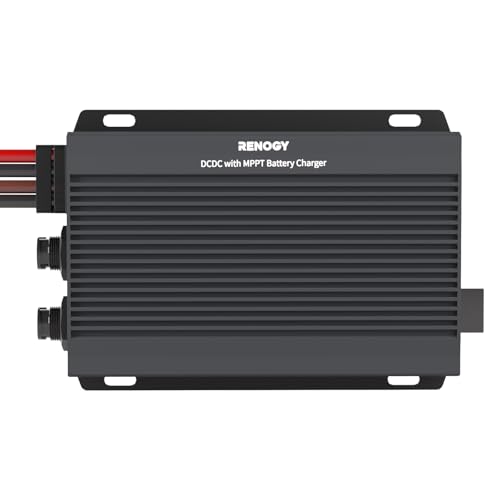
50A DC-DC MPPT Battery Charger 12V/24V IP67 Dual Input for RVs/Boats leads this shortlist for Sealed 50A DC-DC. Use that fit as a reference point, then compare the alternatives against your own space and workload.
Specs that separate the picks
The first details to compare are 50A DC-DC, 720W, 50A DC-DC with MPPT, 60A DC-DC, Anderson solar plug. Confirm the exact model and included components before ordering.
Trade-off to plan for
Most expensive charger in this list

Before you buy

What Matters Before You Choose a Solar Charge Controller With Alternator Input

Key buying criteria so you get the right fit the first time.

  1. 01

    Smart alternator compatibility

    Many modern vehicles lower or vary alternator voltage to save fuel, which can starve a battery connected directly. A DC-DC charger steps the voltage up to the battery's needs, but it must tolerate the lower input. Check the listing for smart alternator notes and your vehicle manual for the alternator behavior.

  2. 02

    Charge current versus wire size

    A 50A charger needs thick cable and a matching fuse on both sides, and long runs drop voltage and heat the wire. A 20A unit like VEBU 20A is far easier to wire than ATEM POWER 60A. Measure the cable run from the vehicle battery to the house battery before choosing.

  3. 03

    Solar input limits

    The solar side of these chargers has its own voltage and watt limits, separate from the alternator side. Panels that exceed the limit can damage the charger or force it to clip. Find the PV limit on the listing and compare it with your panels' open-circuit voltage.

  4. 04

    Start method

    Some units need an ignition signal wire, while Renogy REGO 50A starts when it senses 13.2V or more for 15 seconds. The start method changes the wiring and can matter on vehicles with smart alternators. Read the listing for how the unit wakes up.

  5. 05

    Battery chemistry profile

    Lead-acid and lithium batteries want different charge profiles, and VEBU units list STD, Gel, AGM, Cal and LiFePO4. A wrong profile can undercharge or overcharge a house bank. Verify that your chemistry is named on the listing.

Our standards

Why You Can Trust RV Gear Lab

At RV Gear Lab, we compare products based on rig fit and power or hookup compatibility, verified specifications, usability, setup requirements, weight, durability, and real-world trade-offs. We do not rank products purely on marketing claims or commission rates.

We have not personally tested every product listed. Where hands-on testing is not available, recommendations are based on verified manufacturer specifications, product documentation, use-case fit, and comparative research.

How we review RV gear →

Detailed reviews

The 6 best solar charge controller with alternator input, explained

01
Best for: Sealed 50A DC-DC

Our take

Best for a rig that wants a sealed, high-power alternator charger.

Why it made the shortlist

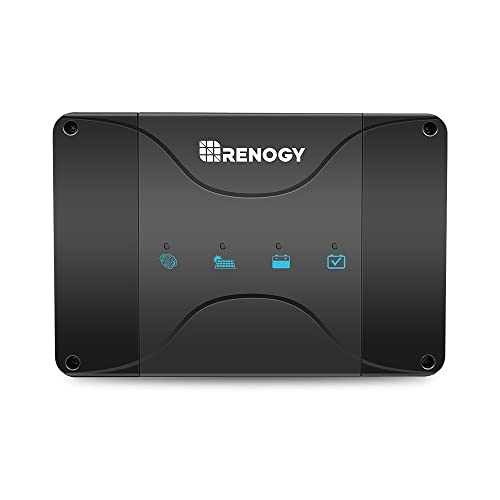
Renogy's REGO is a 50A DC-DC MPPT charger rated IP67 that takes alternator and optional solar input and delivers 720W. The REGO is a 50A DC-DC MPPT battery charger rated IP67 with dual input from the alternator and optional solar. It delivers 720W, starts when it senses 13.2V or more for 15 seconds, and needs no ignition wire.

It is more rugged than Renogy 50A Smart DC-DC and ATEM POWER 60A and starts by sensing voltage, so no ignition wire is needed. The price of that sealing is the highest cost in this list.

What works

  • 720W of charging power from the alternator
  • IP67 waterproof for harsh locations
  • Prioritizes solar before alternator when available
  • Starts by voltage sensing, no ignition wire

Watch out for

  • Most expensive charger in this list
  • Smart alternators may need setting adjustments
02
Best for: Monitored 50A

Our take

Best for a trailer or camper wanting alternator charging at 50A.

Why it made the shortlist

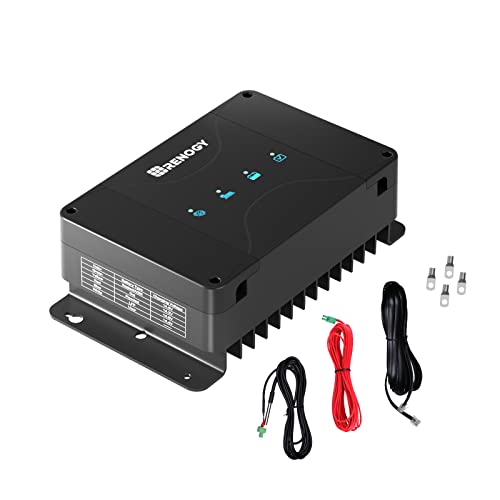
Renogy's 50A Smart DC-DC adds an RJ45 port for monitoring and lists compatibility with traditional and smart alternators. This Renogy 50A unit is a DC-DC charger with built-in MPPT and dual input, charging a service battery from an alternator or solar. The listing cites up to 99% efficiency, a three-phase profile (bulk, boost, float), compatibility with traditional and smart alternators and an RJ45 monitoring port.

Compared with Renogy 50A MPPT Dual it adds the monitoring port.

It is the straightforward 12V pick for a trailer or camper that needs alternator charging.

What works

  • Works with traditional and smart alternators
  • MPPT solar input efficiency listed up to 99%
  • RJ45 port for remote monitoring
  • Operates even when the battery sits at zero volts

Watch out for

  • Needs both alternator and solar wiring
  • Install is more involved than a plain controller
03
Best for: High-current DC-DC

Our take

Best for caravans and 4WD builds that need the most current.

Why it made the shortlist

ATEM POWER's 60A charger has an Anderson plug solar input and MPPT. ATEM POWER's 60A charger is a DC-DC unit with an Anderson plug solar input and MPPT, using the vehicle alternator to charge house batteries. The listing aims it at caravans, trailers and 4WDs.

It has the highest listed current here, 10A above Renogy 50A Smart DC-DC, and it needs matching heavy cable and an Anderson-style plug on the solar side.

It is the highest-amp option, so budget for heavy cable and a properly sized fuse.

What works

  • Highest listed charge current in this list
  • Anderson plug for solar input
  • Draws from the vehicle alternator to charge house batteries
  • Protections listed for in-vehicle use

Watch out for

  • Anderson plug wiring needs matching cable
  • Large current needs thick wiring
04
Renogy Smart 50A DC-DC MPPT Battery Charger 12V
  • 50A DC-DC MPPT, 12V
  • Dual input with soft start
  • Removable side covers
Check price on Amazon for Renogy Smart 50A DC-DC MPPT Battery Charger 12V (opens in a new tab)
Best for: Install-friendly

Our take

Best for a first-time DC-DC install.

Why it made the shortlist

Renogy's 50A MPPT Dual has a soft-start circuit and removable side covers for a cleaner install. This Renogy 50A DC-DC charger with MPPT has a dual-charging input and a soft-start circuit that raises voltage gradually at the input. Removable side covers protect the terminals from contact and static during installation.

It is a close sibling of the Smart 50A, so choose the one that matches your monitoring needs.

What works

  • Multi-input MPPT charging from solar and alternator
  • Soft-start circuit limits input surge
  • Removable covers protect terminals during install
  • Security assurance and protections listed

Watch out for

  • 12V only
  • Needs a proper alternator and solar layout
05
Best for: Silent mid-size

Our take

Best for a mid-size trailer where silence matters.

Why it made the shortlist

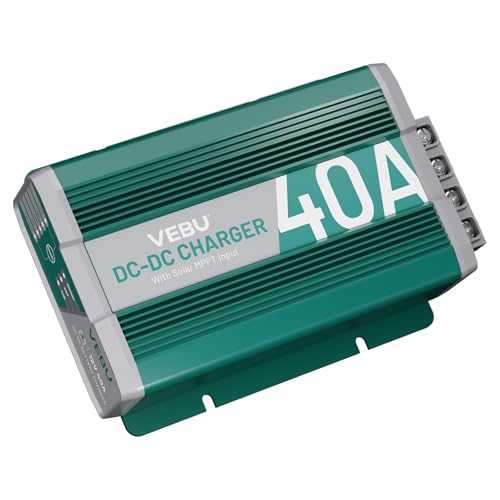
VEBU's 40A DC-DC is fanless and silent, with labeled solar, alternator and battery terminals. VEBU's 40A DC-DC charger with MPPT is fanless and silent and takes dual input from the alternator and solar panels. The listing gives profiles for STD, Gel, AGM, Cal and LiFePO4 batteries and clearly labels the solar input, alternator input and battery terminals.

It sits between VEBU 20A and the 50A Renogy units, with the same fanless design. It lists STD, Gel, AGM, Cal and LiFePO4 profiles.

It is the middle pick for a mid-size trailer with a modest house bank.

What works

  • Fanless and silent in operation
  • Clearly labeled solar, alternator and battery terminals
  • Optimized profiles for lead-acid and lithium
  • Dual input for alternator and solar

Watch out for

  • Not a plain solar charge controller
  • 40A sits between the 20A and 50A options
06
Best for: Small camper

Our take

Best for a small camper or van.

Why it made the shortlist

It supports STD, Gel, AGM, Cal and LiFePO4 batteries.

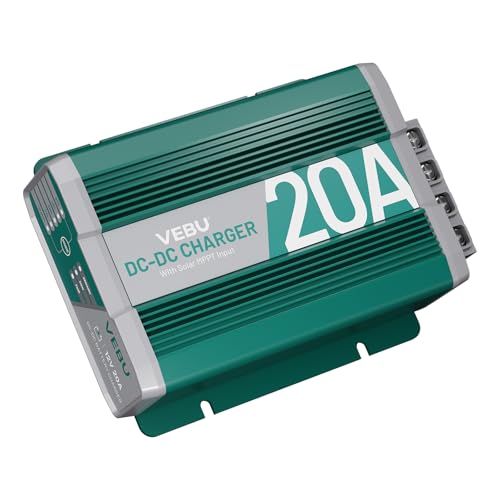
It costs less than VEBU 40A and charges more slowly, which suits a small house battery better than a large bank.

Choose it for a small camper where a 20A output matches a small house battery.

What works

  • Silent fanless operation
  • Dual input for alternator and solar
  • Labeled terminals for easier wiring
  • Covers lead-acid and LiFePO4 chemistries

Watch out for

  • 20A limits charge speed
  • Not a plain solar charge controller
The catch
VEBU's 20A DC-DC is the smaller fanless unit with the same dual input.

Methodology

How We Built This Shortlist

Each pick was assessed across 5 criteria weighted for real-world use.

01

Charger type

This guide confirms each unit is a DC-DC charger with an MPPT solar input rather than a plain solar controller.

02

Alternator compatibility

Smart alternator notes and start methods such as voltage sensing were compared.

03

Current rating

20A to 60A outputs were matched to typical house bank sizes.

04

Chemistry support

Lead-acid and lithium profiles named by each listing were compared.

05

Install details

Terminals, covers, plugs and noise were noted.

Decision guide

Match a Solar Charge Controller With Alternator Input to Your RV

By Charge Current

Your situationRecommended pickWhy
20A, small camper batteryVEBU 20A20A fanless with dual input.
40A, mid-size trailerVEBU 40A40A fanless with labeled terminals.
50A with monitoringRenogy 50A Smart DC-DC50A with an RJ45 port.
50A sealed for harsh locationsRenogy REGO 50A720W with IP67 rating.
Maximum current for a big bankATEM POWER 60A60A with Anderson solar input.

By Budget

BudgetRecommended pick
$100 to $130VEBU 20A or VEBU 40A
$210 to $220Renogy 50A MPPT Dual or ATEM POWER 60A
$230 to $300Renogy 50A Smart DC-DC or Renogy REGO 50A

Fanless vs Higher-Power Designs

Fanless

Fanless units run silent with no moving parts, but they tend to cap at lower current. VEBU 40A and VEBU 20A are fanless.

High-power

Higher-current units are bigger and need heavier wiring. Renogy REGO 50A and ATEM POWER 60A give more current at a higher price.

Most owners with a 100Ah to 200Ah bank are well served by VEBU 40A, and big banks should look at Renogy REGO 50A.

By Install Preference

PreferenceRecommended pick
No ignition wireRenogy REGO 50A
Soft start and removable coversRenogy 50A MPPT Dual
Anderson plug solar inputATEM POWER 60A
Clearly labeled terminalsVEBU 40A

For Smart-Alternator Tow Vehicles Specifically

Look for

Look for smart alternator compatibility and a voltage-sense start so the charger wakes up without an ignition wire.

In this comparison

Renogy REGO 50A uses voltage-sense start and notes smart alternator vehicles, and Renogy 50A Smart DC-DC lists traditional and smart alternator compatibility.

When to Spend More

Spend more if

Spend more if the charger will live in an exposed spot or feed a large bank, where Renogy REGO 50A beats the others.

Save if

Save on a small rig, where VEBU 20A is enough to keep a modest house battery topped up.

FAQ

Before You Bring One Home

Is a DC-DC charger the same as a solar charge controller?

No. A DC-DC charger moves power from the vehicle's alternator to the house battery, and the units in this guide add an MPPT solar input. They are not plain solar controllers.

What mistake do buyers make with a DC-DC alternator charger?

Undersizing the cable. A 50A charger needs thick wire and a fuse on each side, and long runs lose voltage.

Is a 50A model worth it over a 20A one?

If you drive for hours and have a big bank, yes. For a small camper battery, VEBU 20A is enough.

What is the safest way to wire a DC-DC alternator charger?

Fuse both battery connections, keep leads short, connect the house battery first and then the alternator and solar inputs per the manual. On a DC-DC alternator charger, double-check polarity at every terminal before powering up and use wire sized for the rated amps.

How should I maintain a DC-DC alternator charger?

On a DC-DC alternator charger, tighten terminals and inspect cable insulation at the start of each season, and keep vents, fans or heat-sink surfaces free of dust. Check terminals and fuses each season and keep the unit dry and ventilated.

Bottom line

The short version

Browse more solar charge controller with alternator input on Amazon →
Bowen Higgins, RV Editor at RV Gear Lab

About the author

Bowen Higgins

RV Editor at RV Gear Lab

Bowen covers RV power, water systems, towing and leveling, upkeep and interior comfort, with a focus on matching gear to the rig, the hookups and the way you actually travel.

More from Bowen →Editorial standards

Keep reading

Related guides