

We research everything we recommend. When you buy through our links, we may earn a commission. Learn more

Buying guide · 10 min read · Updated October 2, 2026

4 Best Solar Panel For Travel Trailer in 2026: A Practical RV Guide

Travel trailer solar panels compared on roof area, daily watt-hours and controllers: HQST 400W, ECO-WORTHY 200W kit, Callsun flexible 200W and Renogy 100W kit.

Bowen HigginsBy Bowen HigginsRV Editor at RV Gear Lab4 products comparedSpec-sheet researched

At a glance

Our top picks

A travel trailer has far more roof than a van, so the real limits are your controller, your battery bank and how much wiring you are willing to run. Four options are compared here, from a 100W starter kit up to 400W of N-Type panels. Each is translated into daily watt-hours at 3, 5 and 7 sun hours, with a note on expansion headroom, included hardware and what you still have to buy before the first charge.

RV Gear Lab field notes

The Rig Fit Check

Start with the job
HQST 400W Solar Panel leads this shortlist for Trailers with large lithium banks. Use that fit as a reference point, then compare the alternatives against your own space and workload.
Specs that separate the picks
The first details to compare are 2 x 200W N-Type panels, 2 x 100W panels, 30A controller, 100W, 22.5% efficiency. Confirm the exact model and included components before ordering.
Trade-off to plan for
No charge controller listed, so factor in extra cost

Before you buy

What Matters Before You Choose a Solar Panel For Travel Trailer

Key buying criteria so you get the right fit the first time.

  1. 01

    Watts versus daily energy

    Rated watts only show peak output in perfect light. A 200W array at 4 sun hours makes about 800Wh, as the ECO-WORTHY listing states. Divide your daily watt-hour use by your sun hours to find the array size you need.

  2. 02

    Controller amp rating

    A 30A controller handles about 400W at 12V, then stops. Going past that means replacing the controller. Check the listing for the amp number and voltage limits before adding panels.

  3. 03

    Cell technology and efficiency

    N-Type 16BB cells like the HQST's reach 25.4% efficiency and handle low light better than older types. The difference shows on cloudy mornings. Check the cell type and efficiency in the listing.

  4. 04

    Rigid versus flexible

    Rigid panels cost less and cool better, while flexible ones weigh less and fit curves. Heat lowers output, and glued panels shed heat poorly. Choose flexible only if your roof demands it.

  5. 05

    Warranty length and coverage

    A solar panel should last decades, so warranty length is a clue. Renogy states 10 years on the panel and 2 on the controller, while ECO-WORTHY lists 1 year. Look for separate panel and controller terms.

Our standards

Why You Can Trust RV Gear Lab

At RV Gear Lab, we compare products based on rig fit and power or hookup compatibility, verified specifications, usability, setup requirements, weight, durability, and real-world trade-offs. We do not rank products purely on marketing claims or commission rates.

We have not personally tested every product listed. Where hands-on testing is not available, recommendations are based on verified manufacturer specifications, product documentation, use-case fit, and comparative research.

How we review RV gear →

Detailed reviews

The 4 best solar panel for travel trailer, explained

01

Best Overall · 1 of 4

HQST 400W Solar Panel
HQST 400W Solar Panel
  • 2 x 200W N-Type panels
  • Up to 25.4% efficiency
  • IP65, 2400 Pa wind rated
Check price on Amazon for HQST 400W Solar Panel (opens in a new tab)
Best for: Trailers with large lithium banks

Our take

You must buy a controller and wiring separately, so the real price is higher.

Why it made the shortlist

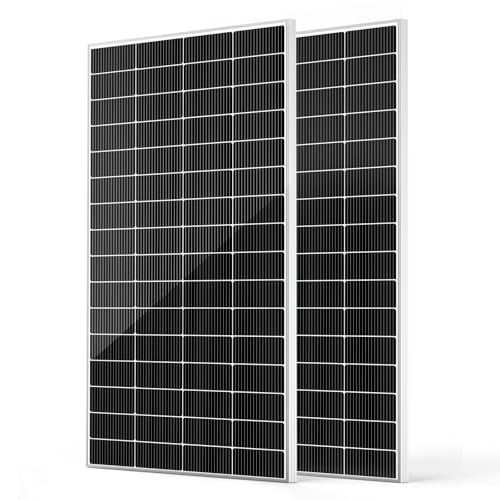
The HQST 400W set is two 200W N-Type panels with 16BB Grade A+ cells at up to 25.4% efficiency and IP65 protection.

Pick this if you want maximum power for a trailer with big batteries.

What works

  • Double the watts of the 200W kits for $21.00 more
  • N-Type cells perform better under cloud and low light
  • Aluminum frame rated for 2400 Pa wind loads

Watch out for

  • No charge controller listed, so factor in extra cost
  • Two large panels mean more cable work and mounting time
The catch
HQST quotes a 30 year service life at 87.4% output, and the panels are 13% smaller and 14.5% lighter than conventional PERC cells.
02
Best for: A first complete 200W trailer system

Our take

It is $59.65 above the Renogy 100W Kit and doubles its output, and it is also $6.00 above the Callsun Flex 200W.

Why it made the shortlist

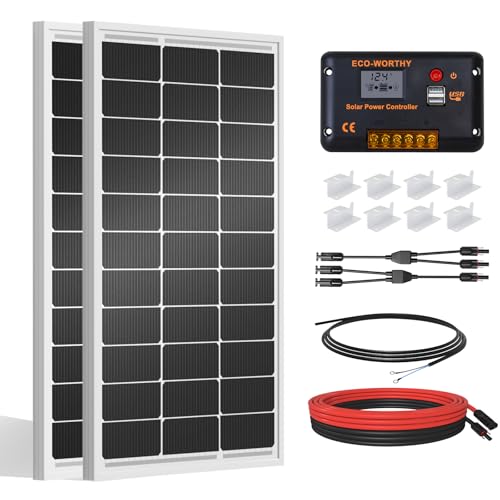
The ECO-WORTHY 200W kit is two 100W panels, each 35.2 by 23.1 by 1.37 inches, with a 30A controller. The maker quotes 800Wh a day at 4 sun hours and 21.5% cell efficiency. Wires plug in and can be set in series for 24V or in parallel for 12V.

Rigid panels run cooler than flexible ones. Pick this if you want a complete 200W system in one box.

What works

  • Controller and cables included, so no separate shopping
  • Panels wire in series for 24V or parallel for 12V
  • IP65 junction box protects against rain and dust

Watch out for

  • One year warranty is thin for a roof investment
  • Capped at 30A, which limits later expansion
The catch
The caveat is a 1 year warranty, shorter than Renogy's 10 year panel coverage.
03
Best for: Small trailers and phased upgrades

Our take

At $126.34 it is $53.65 under the Callsun Flex 200W and $59.65 under the ECO-WORTHY 200W.

Why it made the shortlist

The Renogy 100W starter kit comes with a Wanderer 30A PWM controller and a 22.5% efficient panel, making about 500Wh a day in average sun. It carries UL 61730 certification, IP65 junction box and IP67 connectors. A BT-1 Bluetooth module can be added for the DC Home app.

Renogy says the controller supports expansion up to 400W, so you can start small and grow.

What works

  • Controller accepts lithium, AGM, gel and flooded banks
  • Panel carries a 10 year material and workmanship plan
  • Can grow to 400W by adding panels later

Watch out for

  • Only about 500Wh a day in average sun
  • Bluetooth monitoring requires a separate module
The catch
The caveat is that 100W is thin for an AC heavy rig.
04

Best Low Profile · 4 of 4

Callsun 200W 12V Flexible Solar Panel

Callsun 200W 12V Flexible Solar Panel
  • 200W flexible, 240° bend
  • 0.1 inch thick
  • ETFE coated surface
Check price on Amazon for Callsun 200W 12V Flexible Solar Panel (opens in a new tab)
Best for: Curved roofs and weight-conscious trailers

Our take

It fits the same roof area with less weight.

Why it made the shortlist

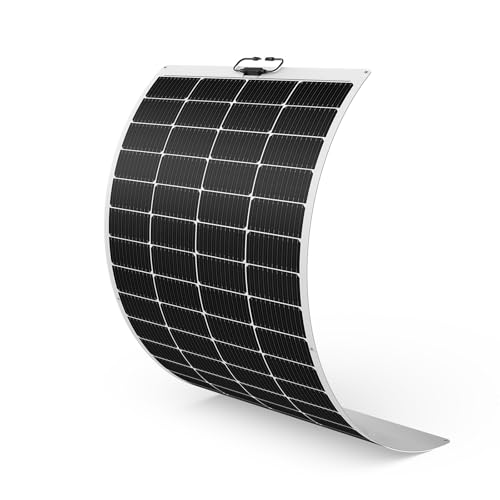
The Callsun Flexible 200W panel is 0.1 inch thick and about 50% lighter than a rigid equivalent, with 240 degree flexibility and ETFE coating. It is aimed at curved roofs and low-drag mounting.

Pick this if your trailer roof is curved, or you want to avoid roof rack height.

What works

  • Half the weight of a rigid 200W panel
  • Low 0.1 inch profile reduces wind noise and drag
  • Bends over curved or fiberglass roof sections

Watch out for

  • Glued panels trap heat and may age faster
The catch
The caveat is that glued flexible panels run hot and can have shorter life.

Methodology

How We Built This Shortlist

Each pick was assessed across 4 criteria weighted for real-world use.

01

Roof fit

We compared listed panel dimensions and weight against typical trailer roof space around vents and AC units.

02

Daily energy

Rated watts were converted to watt-hours using the 3, 5 and 7 sun hour range.

03

Controller limits

We looked at controller amp ratings and whether expansion headroom exists.

04

Total cost

We added items the listing leaves out, such as controllers, to compare real system price.

Decision guide

Match a Solar Panel For Travel Trailer to Your RV

By Battery Bank Size

Your situationRecommended pickWhy
One 12V lead acid batteryRenogy 100W KitGives about 500Wh a day and a PWM controller
Two 6V batteries or one 100Ah lithiumECO-WORTHY 200W800Wh a day at 4 sun hours
Curved roof, one lithium batteryCallsun Flex 200WFlexible 200W at 0.1 inch thick
200Ah or larger lithium bankHQST 400W400W with N-Type cells

By Budget

BudgetRecommended pick
$120 to $180Renogy 100W Kit or Callsun Flex 200W
$180 to $210ECO-WORTHY 200W or HQST 400W

Complete Kit vs Panels Only

Complete kit

The ECO-WORTHY 200W and Renogy 100W Kit include a 30A controller and cables, so everything works out of the box.

Panels only

The HQST 400W and Callsun Flex 200W are cheaper per watt but need a separate controller and wiring, usually an MPPT unit.

First time buyers should default to a complete kit unless they already own a controller.

By Roof Type

Best pickRecommended pick
Flat fiberglass roof with spaceHQST 400W
Curved aluminum or fiberglass roofCallsun Flex 200W
Limited space, small budgetRenogy 100W Kit
Medium space, plug and playECO-WORTHY 200W

For Boondocking Weekends Specifically

Look for

At least 400Wh a day for a fridge, lights and phone charging

In this comparison

The ECO-WORTHY 200W covers that at 800Wh in 4 sun hours, while the Renogy 100W Kit reaches about 500Wh

When to Spend More

Spend more if

Spend more on the HQST 400W if your trailer has a 200Ah lithium bank and you run an AC load on inverter.

Save if

Save with the Renogy 100W Kit at $126.34 if you only camp in campgrounds and want modest topping up.

FAQ

Before You Bring One Home

How much solar does a travel trailer need?

For boondocking with a fridge, 400W is a common target. A weekend camper can get by on 200W.

Can solar run a trailer air conditioner?

Only with a very large array, a big lithium bank and an inverter. Most 400W systems cannot sustain an AC for long.

Can I mix panel brands?

You can, but match voltage and current closely. Mismatched panels in series are limited by the weakest one.

Is MPPT better than PWM?

MPPT recovers more energy in cold or cloudy weather and handles higher voltage strings. PWM suits small low cost 12V systems.

Do solar panels work in shade?

Output drops sharply, and even partial shade can cut a series string hard. Park with the roof in open sun when possible.

Bottom line

The short version

Browse more solar panel for travel trailer on Amazon →
Bowen Higgins, RV Editor at RV Gear Lab

About the author

Bowen Higgins

RV Editor at RV Gear Lab

Bowen covers RV power, water systems, towing and leveling, upkeep and interior comfort, with a focus on matching gear to the rig, the hookups and the way you actually travel.

More from Bowen →Editorial standards

Keep reading

Related guides