
Practical Camping Guide · 12 min read
How Tents Handle Wind: Cabin, Dome and Tunnel Designs
Domes, tunnels and cabin tents respond to wind differently. Learn which shape holds up, what poles and guy points matter, and how to pitch.

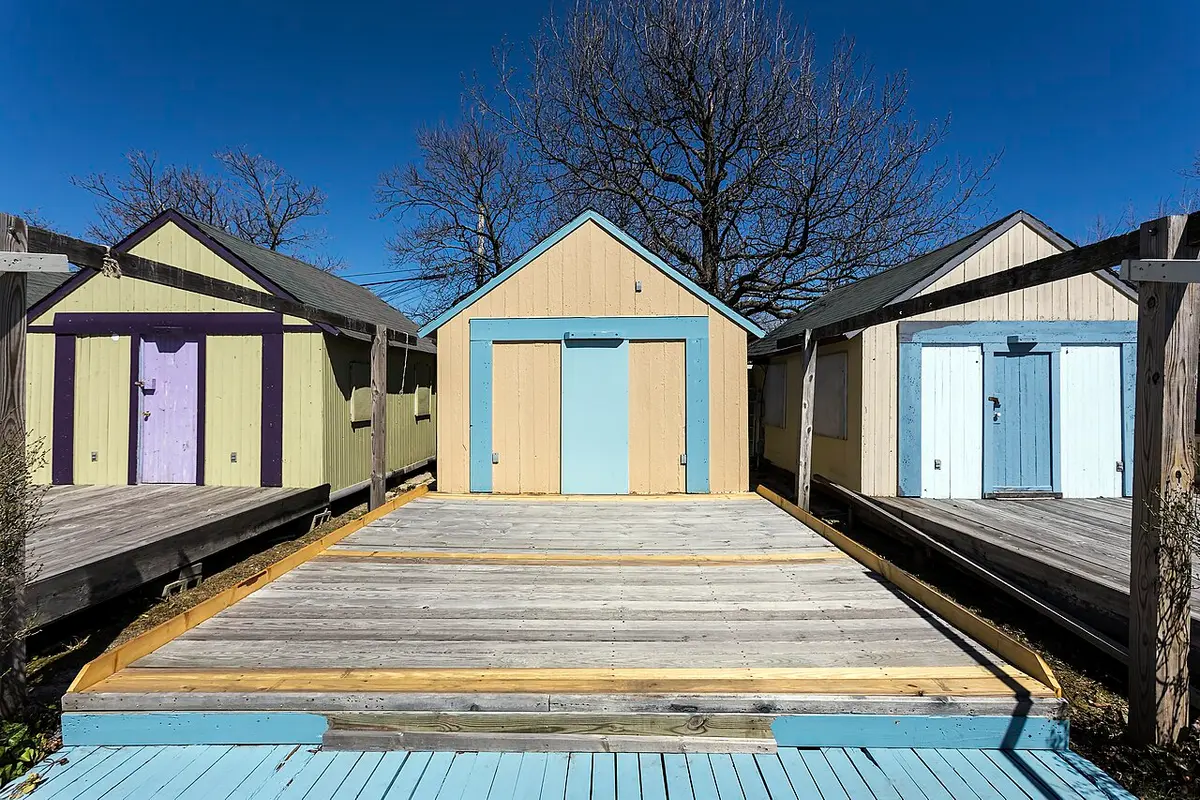
Wind pushes on a tent in two ways: it presses flat walls inward and it lifts the roof like an airplane wing. Domes and tunnels with curved, low shapes deflect wind and survive gusts best when staked properly, cabin tents with tall vertical walls catch the most wind and fail first, and the way you pitch and anchor matters as much as the design. Orienting the narrow end into the wind, staking every guy point and keeping the tent low and taut are the most effective steps you can take.
No fabric tent is a storm shelter, and manufacturers rarely publish tested wind ratings. A claim like "withstands 50 mph winds" depends on a perfect pitch with all guylines out, and even then it describes a single gust, not hours of buffeting. This guide explains how each tent shape responds to wind, what to look for in poles and guy points, and how to pitch and manage a tent when the forecast turns rough.
How wind acts on a tent
Wind creates a pressure difference across the tent. On the windward wall, the air piles up and pushes in. On the leeward side and over the roof, the air accelerates and pressure drops, which pulls the fabric outward and lifts the roof. A tall, flat wall presents a large surface for the push and a large suction area on the opposite side. A curved shape lets air slide around and reduces both effects.
Wind speed scales force sharply. Wind force on a surface grows with the square of speed, so a 40 mph gust pushes four times harder than a 20 mph breeze. A tent that handles light wind comfortably may meet its limit in a gust only twice as fast. This explains why a calm evening can turn into a destroyed tent by midnight when a storm front arrives. It also means that small improvements in aerodynamics and anchoring buy real safety margin.
Dome tents
A dome tent uses crossing flexible poles to form a rounded hemisphere. The shape sheds wind in all directions and the crossing poles share the load, so a dome is generally the best all-around performer. A two-pole dome is common in budget models, and a three- or four-pole geodesic design is much stronger because it adds crossing points.
Domes flex under gusts and return to shape, which spreads the load. They have less usable height at the edges and less volume than cabins, which also means less sail area. Pitched with the lower, narrower profile toward the wind and all guylines out, a quality dome can stand in gusts that wreck bigger tents. Budget domes with thin fiberglass poles are the exception: fiberglass can crack under repeated flexing. Compare options such as the best dome tents under $100, under $150 and under $200.
Tunnel tents
A tunnel tent has parallel hoops of pole covered by a long fabric tube. The shape is efficient: it provides a lot of interior volume for the weight and is very strong along its length, so long as the end faces the wind. Broadside to the wind, a tunnel is vulnerable, because the long side acts like a sail and the hoops can bow.
Tunnels rely on guylines more than domes do, since they are not freestanding. Each hoop needs guylines at both ends, and the windward end should have a guyline at the apex pulling forward and down. Expedition tents often use tunnel designs for exactly this reason, because careful pitching makes them very strong. For casual campers, the extra guy work is the cost of the volume.
Cabin tents
A cabin tent has near-vertical walls and a roof that is flat or gently pitched, with poles that form a rectangular frame. The shape gives the most standing room and usable floor area, which is why cabins are popular for families. The shape also makes them the worst performers in wind. Flat walls take the full force, and the roof acts like a lid that can lift. Big cabins weigh enough to resist small gusts, but a tall, light cabin with thin poles flexes badly and can collapse.
If you camp in wind-prone places, cabins need careful handling. Choose a model with a stiff steel or heavy fiberglass frame, plenty of guy points, and a fly that reaches the ground. Pitch with the narrow end into the wind. The lists of 10 person cabin tents, 12 person cabin tents, 2 room cabin tents and 4 person cabin tents feature models with extra guy points, but any cabin is a fair-weather design at heart.
| Shape | Wind behavior | Strengths | Weak points |
|---|---|---|---|
| Geodesic dome | Excellent | Many crossing poles, any direction | Less headroom, higher cost |
| 2-pole dome | Good | Light, freestanding | Fewer crossings, can bow |
| Tunnel | Excellent end-on, poor broadside | Volume for weight | Needs guylines, not freestanding |
| Cabin | Poor | Headroom, living space | Flat walls and roof catch wind |
| Instant/pop-up | Fair to poor | Fast setup | Broad sides, hinge weak points |
Poles: material, diameter and count
Poles carry the load. Fiberglass is cheap and flexible but fatigues and splinters. Aluminum alloys are stronger and lighter, and the best are the 7000-series alloys used in quality tents. Steel poles are strong and heavy and found on big cabin tents. Pole diameter matters: 8.5 mm aluminum is typical for light tents, and 9 to 10 mm or larger handle bigger loads.
Count the crossings. More crossing points mean more load paths and a stiffer frame. A pole that is color-coded to sleeves and clips reduces pitching mistakes. Shock cord inside the poles should be tight, and ferrules (the metal sleeves joining sections) should be smooth. A bent pole is a failure waiting to happen, so replace it or splint it with a repair sleeve before the next trip.
Guy points, guylines and fly design
A tent without guylines performs far below its potential. Look for several reinforced guy points on the fly at mid-wall height and at the apex, and plenty of cord with adjustable tensioners. A fly that sits just off the ground and attaches to the inner tent at several points flaps less and deflects wind.
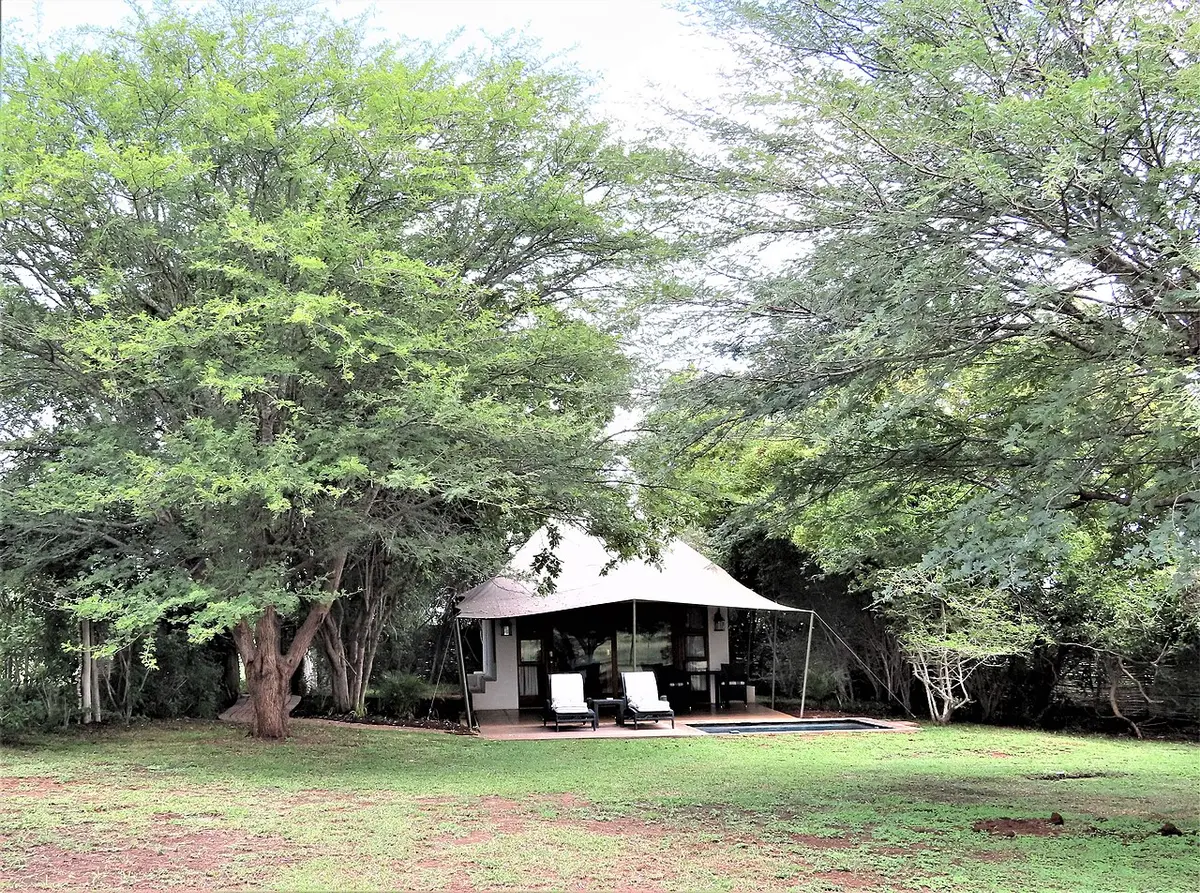
A fly with a gap at the bottom lets wind get underneath and lift the whole tent. Close that gap with stakes or by weighing down the skirt. Keep the zippers and doors closed in strong wind, since open doors let air in and pressurize the tent from inside, which is one of the common ways a tent turns inside out. Tie down the door flaps and bring in loose gear.
Choosing and preparing the site
The best defense is not to be exposed. Look for natural windbreaks such as dense trees, boulders and terrain folds. Avoid ridgelines, open meadows, lake shores and the bottoms of narrow valleys where wind funnels. Stay away from dead trees and large dead branches, which fall in storms, and stay out of dry washes, where flash floods can follow storms.
Walk the site before you commit and notice how the wind moves. Watch for dust or smoke patterns to see direction. Check the ground for firmness, since soft soil loosens stakes. Pitch the tent so the lower, narrower end faces the wind, with the door on the lee side. If the wind shifts in the night, you may need to reorient the tent. A tent that fits the site and the forecast is easier to hold down than any amount of extra stakes.
Pitching for wind: a step-by-step approach
- Choose the site and orientation, and clear sharp debris from the floor area.
- Stake the windward corners first, then pull the tent into shape from the lee side. Do not let the tent fly open unanchored.
- Raise the poles with the lowest end into the wind, and attach the fly securely.
- Stake every corner and every guy point, using longer or specialized stakes if the ground is soft. See how to choose tent stakes.
- Tension the guylines at about 45 degrees from the tent, starting with the windward side.
- Close all zippers and vents on the windward side. Keep some ventilation on the lee side if condensation is a concern.
- Recheck tension after the first hour and again before bed.
For basic technique, see how to set up a tent, and for single-person tips see how to pitch a tent by yourself.
When the wind rises in the night
If gusts increase, act early rather than late. Get dressed, bring in gear and tighten every guyline. Add stakes or rocks at the windward corners. Add extra guy points with spare cord looped around the poles at a junction, where the poles meet, to share the load. Put heavy gear on the windward side inside the tent. If the tent starts flexing hard, collapse it deliberately on the lee side rather than waiting for a pole to break, or move to a vehicle or a sturdier shelter.
Safety outranks the tent. A damaged tent can be replaced, and flying poles and fabric can injure people. If gusts are strong enough that the tent is thrashing, it is time to leave. In a thunderstorm, stay away from isolated trees and poles, which are lightning hazards, and sit on an insulating pad if you must remain in the tent.
Reading the sky and the forecast
Good wind management starts before you leave home. Look at the forecast for sustained wind speed and for gusts, because the gust figure is the one that breaks poles. A forecast of 10 to 15 mph sustained with gusts to 25 is manageable for most tents when properly pitched. Sustained 20 mph with gusts to 35 or more means a bad night in all but the strongest shelters, and many experienced campers would choose another site or another weekend. Frontal passages, thunderstorm outflows and canyon winds can create sudden gusts far beyond the forecast, so give yourself margin.
At camp, notice clues. A line of dark cloud with a smooth leading edge often means a gust front. Leaves flipping to show their pale undersides, a sudden temperature drop and dust lifting from the ground announce a squall minutes ahead. A change in wind direction often precedes stronger gusts. When you see these signs, close the tent, check every guyline and move loose items inside. Doing that in two minutes beats chasing a cooler down a hillside.
What the numbers on a spec sheet can and cannot tell you
A few figures help compare tents, though none predicts storm survival. Pole diameter and the count of crossing points indicate stiffness. Fly material and its attachment to the inner tent affect flapping. The number of guy points tells you how well the maker expects the tent to be anchored. Pack weight indicates how much material and structure is present, and a very light tent has less margin. A freestanding tent can be moved or pitched without stakes, which helps on rocky ground but does not make it wind-proof, since an empty freestanding tent can roll away.
Treat the words "windproof," "storm-ready" and "all-weather" as marketing. If a listing gives a wind rating, look for the test method and conditions. Most do not give one, and the practical test is to ask how the tent is built. A thin two-pole dome with six stake loops and no guylines is a summer tent. A three-pole dome with eight stake points, four or more guylines and a pole diameter near 9 mm has been designed for weather.
Repair kit for a windy trip
Carry a few items that can turn a failure into a fixable problem. A pole repair sleeve slips over a break and holds a snapped pole together. Spare shock cord replaces a failed pole cord. A roll of strong tape and a few safety pins close tears in the fly. Extra cord, at least 20 feet, lets you add guylines. Two or three additional stakes cover bends and losses. A small sewing kit and a few patches handle fabric damage. All of this weighs less than a pound and fits in a pouch, and any one of them can save a night.
Cabin tents in the wind: making the best of the shape
Plenty of families own a big cabin tent and camp in breezy places, so it is worth knowing how to improve the odds. First, choose the pad with the most natural shelter, such as the lee of a hedge row, a stand of healthy trees or a bank of earth. Second, orient the tent so that the shortest wall faces the wind, which cuts the area of flat fabric that takes the load. Third, use every guy point and add a few more by looping cord around the frame joints. Fourth, lower the roof pitch by shortening the roof guylines if the model allows it.
Inside, keep the weight low and on the windward side: coolers, water jugs and duffels set against the wall add stability. Keep doors zipped and tie their flaps. If the forecast predicts gusts above what the tent can take, consider taking down the rain fly's upper vents, leaving a smaller gap, and dropping the tent if the wind exceeds what you trust. A cabin tent is a comfortable family home in calm and moderate weather and a liability in a storm, and knowing that boundary is part of using it safely.
Rain and wind together
Wind-driven rain behaves differently from vertical rain. It strikes walls at an angle and forces water through weak seams and under flies. Check that the fly extends well below the inner tent and that the door has a storm flap. Keep guylines tight so the fly does not touch the inner and wick water through. For more on wet pitching, see how to set up a tent in the rain and how to keep a tent dry in the rain. Waterproofing details are in tent waterproof ratings.
Common mistakes to avoid
- Pitching a tall cabin tent broadside to the wind.
- Leaving guylines unused because the tent looks stable on a calm evening.
- Leaving a door open in a gust, which pressurizes the tent from inside.
- Pitching on a ridge, shoreline or open meadow when sheltered ground is nearby.
- Using short stakes in loose soil.
- Waiting for a pole to break before collapsing a tent.
- Trusting a manufacturer's wind claim without checking pole and guy point details.
Frequently asked questions
What wind speed can a tent handle?
It depends on design, pitch and anchoring. A well-pitched dome with strong poles and all guylines out may handle gusts of 40 mph or more, while a tall cabin may struggle in 20 to 25 mph. Manufacturer figures are best treated as optimistic upper limits, not safe operating conditions.
Are dome tents better than cabin tents in wind?
Yes. A dome's curved shape sheds wind and its crossing poles share the load. A cabin has flat walls and a lid-like roof that catch wind. A cabin can still work in light wind with a strong frame and good staking, but it is the less forgiving shape.
Which way should I face my tent in the wind?
Point the lowest, narrowest end toward the wind, with the door on the lee side. For tunnel tents, face the end into the wind. Keep the openings away from the gust to avoid pressurizing the tent.
Do I need to use all the guylines?
In any breeze, yes. Guylines transfer wind load to the ground and keep the fly off the inner tent. Using them costs a minute and adds a lot of stability. Skipping them is the most common reason for collapsed tents.
Can I weigh a tent down instead of staking it?
Gear and water jugs inside help, but weight alone is not a reliable anchor, because wind can lift a tent and roll it. Use weight as a backup to stakes, rocks or deadman anchors. In a strong gust, never rely on interior weight alone.
Should I take the tent down if it gets very windy?
If the frame is flexing heavily or fabric is tearing, yes. Collapse it on the lee side, secure the fabric and move to a vehicle or sturdier shelter. Safety is more important than the tent.
Sources & further reading
Image credits
- "Ocean Grove tent cabins NJ1" by Acroterion, CC BY-SA 4.0, via Wikimedia Commons.
- "Tent cabin Savanna Lodge" by Cosal, CC BY-SA 4.0, via Wikimedia Commons.


Ready to buy?
Compare the gear: Tents & Shelter
6 Best Dome Tents Under 100 in 2026
Best dome tents under $100 compared on floor size, pitch time and waterproof coating, for families who want room for four without a big budget.
6 Best Dome Tents Under 150 in 2026
Best dome tents under $150: family domes from a 4-6 person pop-up to a 10-person dome, compared on floor, weather rating and setup for car campers.
5 Best Dome Tents Under 200 in 2026
Best dome tents under $200 compared across a mesh-top backpacking dome, a 6-person weather dome, a big divided dome and an instant dome for car campers.
4 Best 10 Person Cabin Tents in 2026
Best 10-person cabin tents compared on floor size, center height, room dividers and porch design for big family and group car camping.
6 Best 12 Person Cabin Tents in 2026
Best 12-person cabin tents compared on floor size, instant versus manual setup, room dividers and weather build for large family trips.
5 Best 2 Room Cabin Tents in 2026
Best 2-room cabin tents compared on divider design, separate doors, floor size and porch space for families who need real privacy.
5 Best 4 Person Cabin Tents in 2026
Best 4-person cabin tents compared on floor size, wall height, instant setup and weather rating for couples, small families and car campers.
5 Best 6 Person Cabin Tents in 2026
Best 6-person cabin tents compared on floor space, wall height, instant setup and blackout fabric for family car camping.
Keep reading