
Practical Camping Guide · 13 min read
How to Charge a Portable Power Station From Your Car
Step-by-step guide to charging a portable power station from a car 12V socket, with real charging times, faster options and ways to protect your battery.

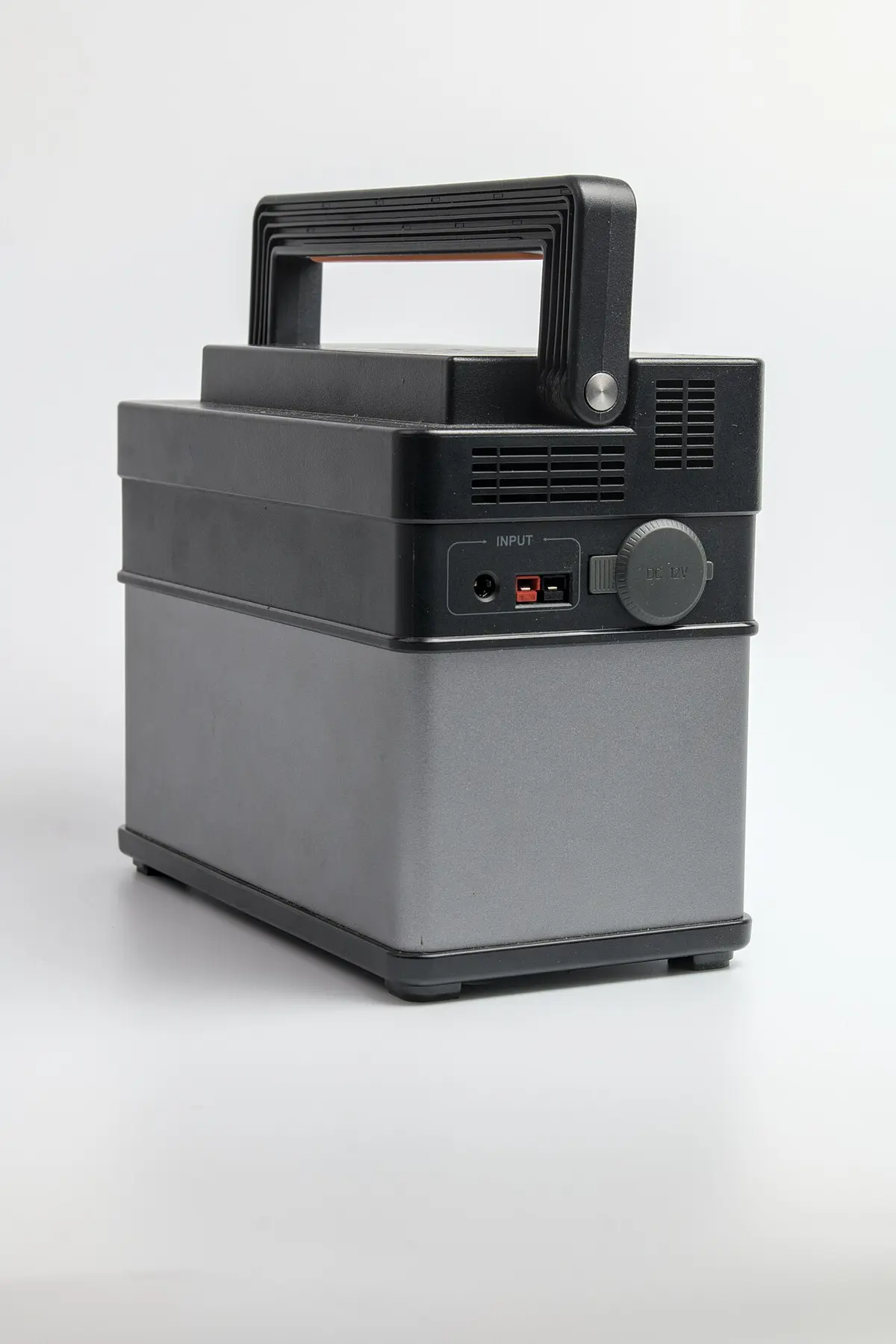
Plug the station's 12 V car charging cable into your vehicle's cigarette-lighter (12 V accessory) socket with the engine running, and expect a slow charge: most sockets are fused at 10 to 15 A, which limits input to roughly 100 to 150 W at best, and many stations accept even less. That means a 500 Wh station needs about four to six hours of driving to fill from empty, and a 1,000 Wh unit may take a full day. It works well for topping off on the road, and poorly as a primary charging method.
The details change how fast it goes and how safe it is for your vehicle's battery. Below is the full method, the numbers worth knowing, the faster alternatives (direct battery clamps and DC-DC chargers), and the mistakes that leave you with a dead starter battery at a trailhead.
The standard method: 12 V socket charging
Nearly every portable power station ships with a car charging cable, a coiled cord with a plug on one end that fits the 12 V accessory socket and a connector (commonly an 8 mm barrel, an XT60 or a proprietary plug) on the other. The steps are simple:
- Start the engine. Many vehicles cut power to the accessory socket when the ignition is off, but some keep it live. Either way, a running engine means the alternator supplies the current and your starter battery is not being drained.
- Plug the cable into the vehicle socket first. Then connect it to the station's DC input port. Connecting in that order avoids a spark at the station end in most designs.
- Check the station display. It should show an input wattage and a charging indicator. If it reads zero or a very low number, check the fuse in the plug and the socket.
- Place the station somewhere secure and ventilated. On a seat, strapped in or on the floor, not under a pile of gear. Batteries and chargers generate heat.
- Monitor occasionally. After the first 10 or 15 minutes, check the plug for warmth. A slightly warm plug is normal. A hot plug means a bad connection or an overloaded socket.
- Stop at the right level. Many users stop at 80 to 90 percent to preserve battery health, but this is a personal choice and depends on your power needs.
Charging from the socket is the most convenient method and does not need tools. It is just slow.
How fast will it charge?
The 12 V socket in most cars is wired with a 10 to 15 A fuse. At about 13.5 to 14.5 V with the engine running, that is a maximum of about 135 to 215 W theoretically, but the wiring and the plug design usually limit real delivery to 100 to 120 W. Station makers often cap car input to 100 to 120 W for safety. A few higher-end units accept 200 W or more through a dedicated high-current cable that connects directly to the vehicle battery.
Here are rough charging times, assuming 100 W of actual input and an efficiency of about 85 to 90 percent:
| Station capacity | Time from 0 to 100 percent at 100 W | Time at 60 W |
|---|---|---|
| 150 Wh | 1.7 to 2 hours | 3 hours |
| 300 Wh | 3.5 to 4 hours | 5.5 to 6 hours |
| 500 Wh | 5.5 to 6.5 hours | 9 to 10 hours |
| 1,000 Wh | 11 to 13 hours | 18 to 20 hours |
| 2,000 Wh | 22 to 26 hours | 36 to 40 hours |
Those numbers explain the common experience: a small station fills during a long drive to camp, a mid-size one fills during a day of driving, and a large one will not fill from a 12 V socket in any practical time. For a larger battery, plan on a wall charger, solar, or a vehicle-installed DC-DC charger. Our explainer on how to size a solar panel for camping shows how to add a faster source.
Why your car socket may charge slower than expected
Several factors reduce the real input:
- Voltage drop in the cable. Thin or long cables lose voltage, and the station's charger may reduce current to protect itself.
- A tired fuse or loose plug. Oxidation on the socket contacts adds resistance and heat.
- Station limits. Many stations restrict car input to 60 to 100 W.
- Alternator output at idle. In a stop-and-go environment, the alternator may not supply full current at idle while the climate control and lights use their share.
- Cold temperatures. Many stations refuse to charge or limit the rate below 32 degrees F.
- Eco or ignition-controlled sockets. Some newer vehicles shut off accessory power after a timer or when the engine stops.
A good test is to watch the display after ten minutes of driving. If it shows around 60 to 100 W, you are getting the standard rate.
The faster options
Direct battery connection with a high-current cable
Some stations offer an optional cable with battery clamps or an Anderson-style connector that bypasses the accessory socket. Connected to the vehicle's battery or a distribution point with a proper fuse, it can deliver 150 to 300 W, depending on the station. This is a good idea only if the manufacturer supplies the cable and says it is supported, since using an improvised cable risks overheating or damage to the charging circuitry.
DC-DC charger installed in the vehicle
A DC-DC charger, often called a battery-to-battery charger, takes power from the alternator-fed starter battery and delivers a regulated charging current to a second battery or power station. Units with a 20 to 40 A output deliver 250 to 500 W. This is the standard solution for campervans and overlanding rigs. It requires wiring, fuses and often professional installation. If you plan to charge a large station daily from the vehicle, this is the right upgrade, and it works with stations that accept a high-voltage DC input within the charger's range.
Using an inverter and the station's AC charger
You could run a pure sine inverter from the car and plug the station's AC adapter into it. This is an inefficient chain: the alternator makes DC, the inverter makes AC, and the station's charger converts back to DC. You lose 20 to 30 percent to the conversions and risk overloading a cigarette-lighter inverter. It works in an emergency. For tips on picking the right inverter, see pure sine wave versus modified sine wave inverters.
Protecting your starter battery
The big risk is charging with the engine off. A station pulling 100 W from a 12 V car battery draws more than 8 A. A typical starter battery holds 40 to 60 Ah, but you should never discharge it below roughly 50 percent state of charge, and it needs a strong reserve to start the engine, especially in cold weather. At 8 A, a few hours of charging with the engine off can leave you unable to start.
- Keep the engine running while charging, or drive.
- If you must charge parked, run the engine for 10 to 15 minutes every hour, and check the voltage. A healthy battery rests at about 12.6 V, and below 12.2 V it is low.
- Look for a low-voltage cutoff in the vehicle or in your station's car input. Some vehicles and some stations have this feature.
- Do not leave a station plugged in overnight with the engine off.
- In a vehicle with auto start-stop, the engine may switch off at stops, so the accessory socket may flicker. The station will resume when the engine restarts.
If you camp for several days from the vehicle, consider a separate house battery rather than relying on your starter battery as a power source.
Safety and cable care
Use the cable supplied by the station maker. Third-party cables may not match the voltage drop, polarity and fuse rating the station expects. Check that the plug fits snugly in the socket and that the fuse inside the plug is intact. A loose plug arcs and heats the socket, which can melt plastic.
Keep cables away from moving parts under seats and away from sharp edges. Do not run a cable through a closed door where it can be crushed. Do not coil a cable tightly while it is delivering current, since coils trap heat. Check the cable and plug regularly and replace any that show discoloration, melted insulation or looseness.
Place the station on a stable surface or strap it down. Lithium batteries do not like being thrown around in a sudden stop, and the unit can damage interior trim or injure a passenger. Do not leave a station inside a closed car in the summer sun, since cabin temperatures over 120 degrees F harm both the battery and the electronics. For storage tips and chemistry differences, see LiFePO4 versus lithium-ion power stations.
What input ports to look for
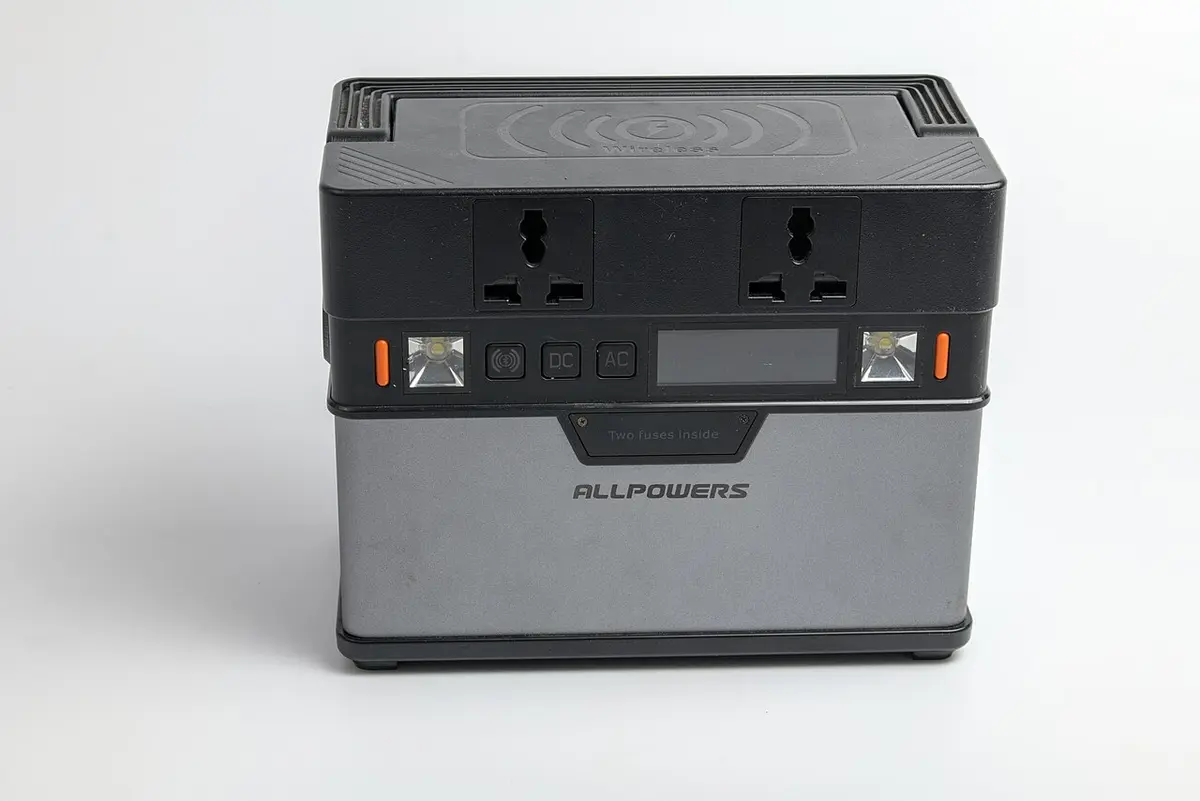
Before you buy a station, check its input specification. You may see:
- A 12 to 24 V DC input (car port). The most common. Typically 100 to 120 W maximum.
- A high-current DC input (Anderson, XT60 or XT90). Often shared with solar. May allow 200 to 600 W with the right source.
- USB-C Power Delivery input. Typically 60 to 100 W from a PD charger. A car USB-C charger with 100 W can charge small stations quickly.
- AC wall input. Often much faster, from 200 W to over 1,500 W.
- Combined input. Some stations accept AC plus solar at the same time, for faster charging.
If you plan to charge primarily from the car, look for a unit that lists 12 V car input explicitly, along with the input wattage. If the spec does not mention car charging, ask. Our best portable power stations for camping list is a good place to compare, and the best 1000W portable power stations for camping and best 1200W portable power stations for camping cover larger units where the input method matters more.
Choosing a station with charging in mind
Match the station to how you drive and camp:
| Your situation | Best charging approach | Station tip |
|---|---|---|
| Weekend trips, 2 to 4 hours of driving | 12 V socket for top-off | 150 to 500 Wh units |
| Road trips, 6 to 8 hours of driving a day | Socket or direct cable | 300 to 1,000 Wh with 100 W+ input |
| Van or overland, daily use | DC-DC charger plus solar | LiFePO4, high DC input |
| Basecamp with a wall outlet | AC charger before leaving | Any size |
| Fridge running while driving | Socket with passthrough | Unit that can charge and discharge together |
Budget matters too. Smaller, cheaper units charge faster from a car because they hold less. If you are shopping on price, see the best power stations for the money, the best budget lithium portable power stations, and the best power stations under $200 or the best power stations under $100 for compact units that suit car charging. If you are a fridge user, read how long a power station runs a 12V fridge to estimate how many miles of driving you need to replace a day of use.
A worked example: Friday drive to a Saturday camp
You have a 500 Wh station, and you drive three hours Friday evening to a campsite. The socket delivers about 90 W on average. Three hours gives you 270 Wh, minus about 10 percent for losses, so roughly 240 Wh added. If you began the drive at 40 percent (200 Wh), you arrive at about 440 Wh, which is close to 88 percent. Saturday you run a fridge at 300 Wh, lights and phones at 60 Wh, and end the day near 80 Wh. Sunday you drive home for three hours and add 240 Wh again. In this scenario, the car socket keeps the station in balance without solar, but only because the drive time and the fridge draw happen to match. If you also run an electric blanket, you will need something more.
Troubleshooting a station that will not charge from the car
When the display shows nothing or keeps flashing an error, work through the chain from the vehicle outward. This takes five minutes and solves most cases.
- Confirm the socket has power. Plug in a phone charger or a 12 V tire inflator. If it does not work, the vehicle's fuse for that socket may have blown, or the socket may switch off with the ignition. Your owner's manual shows which fuse protects it.
- Check the fuse in the plug. Most car charging cables have a small glass or blade fuse behind the tip of the plug. Unscrew it and look for a broken filament. Replace it only with the same rating.
- Wiggle test. If the display flickers while you move the plug, the socket contacts are dirty or loose. Clean carefully with the vehicle off, and use a plug that fits tightly.
- Read the display for temperature or voltage warnings. A station that is too cold or too hot will refuse to charge. Move it to a spot at a moderate temperature and try again after it has equalized.
- Check the input voltage. Some stations will not charge from a source that sags below about 10.5 V under load. A weak starter battery or a very long cable can cause this.
- Try the AC adapter at home. If the station charges normally from a wall outlet, the problem is on the car side. If not, contact the maker.
If the plug or the socket is warm to the touch within the first ten minutes, stop charging. Heat at the contact points means resistance, and resistance at 8 to 10 A is enough to melt plastic over time.
Planning the drive: how many miles is a full charge worth?
A handy way to think about car charging is energy per hour of driving. At about 90 W average, an hour adds roughly 80 Wh after losses. That is enough to recharge two phones fully and a laptop battery with some left over. Ten hours of highway driving over a long trip adds about 800 Wh, which is nearly one full unit for a 1,000 Wh station and a real support for a fridge that needs 300 to 400 Wh a day.
If your trips are short, or you spend most of the day parked, the car is a minor source. Combine it with other sources instead of relying on it alone. A folding panel handles the sunny hours at camp, a wall charger tops up before you leave, and the car fills the gaps during the drive. A station with the ability to accept two inputs at once gives you the most flexibility, though the combined input rating is the number that counts.
For air conditioning or other high-demand loads, neither a car socket nor a small panel is realistic. If that is your target, read the best budget portable power stations for air conditioners with a clear view of the capacity those loads need, and plan on a large battery and a wall or generator charge.
Common mistakes to avoid
- Charging with the engine off. This is how people drain starter batteries.
- Using a thin extension or a cheap multi-socket adapter. They add resistance and can overheat.
- Assuming the socket delivers its rating. Many deliver far less after a few minutes of heat build-up.
- Leaving the station on a seat in the sun. Heat shortens the lifespan and may trigger protective shutdown.
- Mixing up polarity or buying a random cable. Use the supplied cable.
- Ignoring the fuse in the plug. It is the first thing to check if charging stops.
Frequently asked questions
Can I charge a power station while driving?
Yes, and it is the best time to do it. The alternator supplies current while the engine runs, so your starter battery stays protected. Use the cable that came with the station and plug it in before you start the trip.
Will charging a power station drain my car battery?
Only if the engine is off. With the engine running, the alternator provides power. With the engine off, a 100 W charge draws more than 8 A, which can flatten a starter battery in a few hours. Many vehicles also stop the accessory socket after the ignition is turned off.
Why does my station show only 40 W from the car?
Common reasons are a station-imposed limit, a cheap or damaged cable, a poor socket connection, low alternator output at idle, or a cold battery. Try another socket, check the fuse, and try again while driving at speed.
Is it faster to charge from a car or from solar?
It depends. A 12 V socket gives a steady 60 to 100 W while driving. A 200 W solar panel in strong sun can give 120 to 160 W. Solar is free and works while parked, but only in daylight and clear conditions. Many campers use both.
Can I charge a power station from an RV or truck with a 24 V system?
Check the station's input range. Many accept 12 to 24 V, but not all. Applying 24 V to a 12 V-only input can damage the unit. Use a step-down converter if the spec does not list 24 V.
How can I charge faster in the car without installing anything?
Use a station with a USB-C Power Delivery input and a 100 W car USB-C charger, if supported. Otherwise, a direct-battery cable made by the station maker is the next step. A DC-DC charger is the most robust long-term upgrade.
Sources & further reading
- Anker: battery capacity and conversion basics
- Renogy: converting mAh to Wh
- Battery University: How to prolong lithium-based batteries
Image credits
- "Allpowers S300 portable solar generator P1110366" by -stk, CC BY-SA 4.0, via Wikimedia Commons.
- "Allpowers S300 portable solar generator P1110367" by -stk, CC BY-SA 4.0, via Wikimedia Commons.


Ready to buy?
Compare the gear: Camp Power
6 Best Budget Lithium Portable Power Stations in 2026
Six small lithium power stations from 90Wh to 288Wh, compared by cell chemistry, inverter output and recharge speed, for tent camps and short RV trips.
6 Best Budget Portable Power Stations for Air Conditioners in 2026
A straight look at what six budget power stations can run: small cooling loads yes, a rooftop RV air conditioner no. Compared by watts and watt-hours.
Best Portable Power Station for Camping in 2026
Compare portable power station for camping by fit, capacity, safety, compatibility, setup needs, ownership burden, and real product details.
3 Best Power Station For The Money in 2026
Best power stations for the money: three picks from a 120W budget unit to a 600W BLUETTI, compared on capacity per dollar, output and UPS.
6 Best Power Station Under 100 in 2026
Best power stations under $100: six small 90 to 192Wh stations with 100W AC outlets, compared on capacity, battery type and what they can run.
5 Best Power Station Under 200 in 2026
Best power stations under $200: five 128 to 192Wh stations with 200W AC outlets, compared on capacity, battery type, weight and recharge speed.
3 Best 1000w Portable Power Stations in 2026
Best 1000W portable power stations compared on 1kWh capacity, AC output, recharge speed and weight for campers who run coolers, fans and appliances.
5 Best 1200w Portable Power Stations in 2026
Best 1200W portable power stations compared: three true 1200W units and two surge-based fits, judged on capacity, outlets and recharge speed.
Keep reading