
Practical Camping Guide · 13 min read
How to Run a Generator Safely at a Campsite
Run a portable generator safely at a campsite with CO rules, 20-foot placement, refueling steps, GFCI and cord tips, plus noise and campground etiquette.

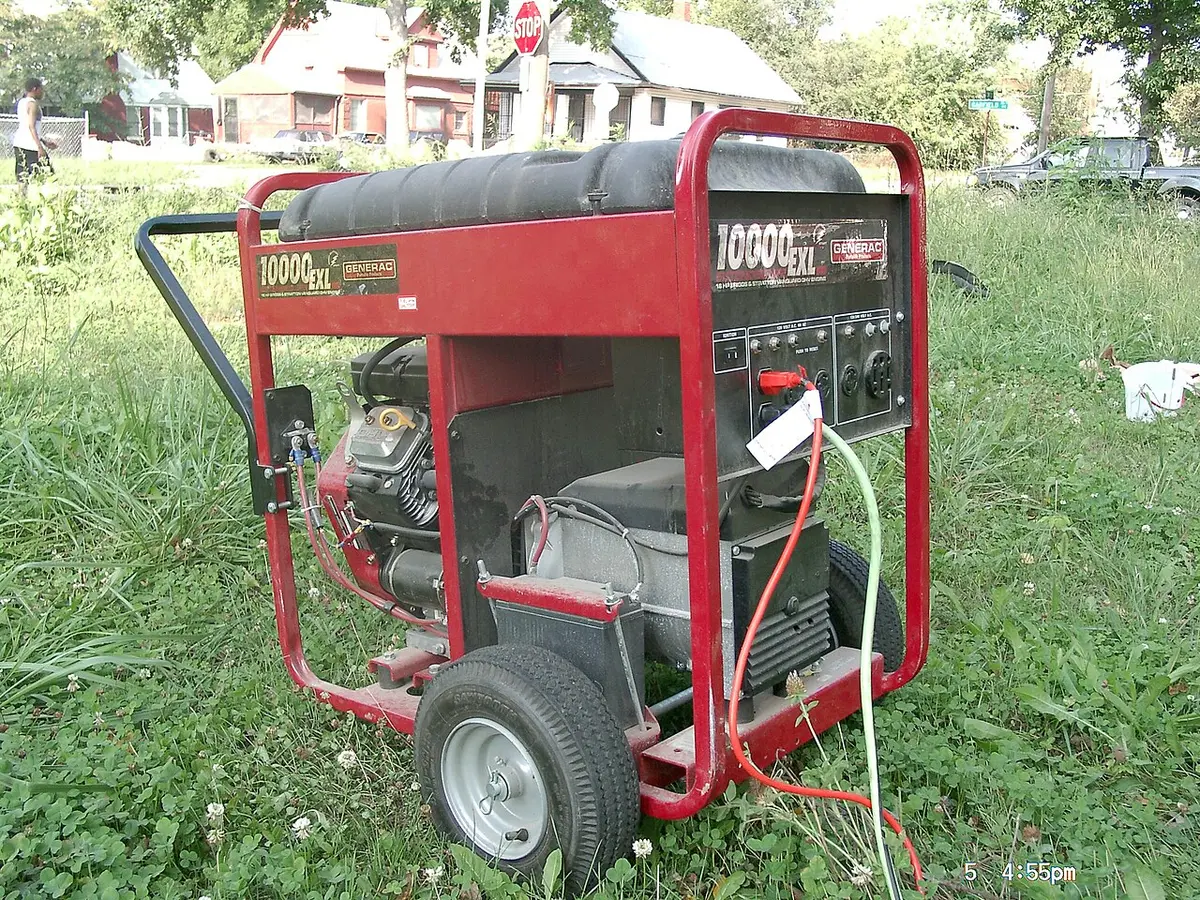
Run a portable generator outdoors only, on level ground, at least 20 feet from any tent, camper or vehicle you sleep in, with the exhaust pointed away from you and from where people gather. Keep a working battery-powered carbon monoxide alarm inside your sleeping space, let the engine cool before refueling, store fuel in approved cans away from the generator, and follow campground quiet hours. Carbon monoxide from a generator can incapacitate a person within minutes, and the people who die from it are usually asleep.
Generators are simple machines, and most campsite accidents come from a handful of repeating mistakes: placing the unit too close to a sleeping area, refueling a hot engine, running it in the rain without protection and plugging in with the wrong cord. This guide walks through setup, operation, refueling, electrical safety, noise etiquette and shutdown, with a checklist you can run every time.
The big risk: carbon monoxide
Carbon monoxide (CO) is a colorless, odorless gas produced whenever fuel burns without enough oxygen. A running gasoline or propane engine emits a lot of it. You cannot see or smell it, and early symptoms resemble the flu: headache, dizziness, weakness, nausea, confusion. Sleeping people may not wake up. The U.S. Consumer Product Safety Commission has documented that CO poisoning from portable generators causes dozens of deaths each year, and it repeatedly advises the same core rules.
| Rule | Why it matters |
|---|---|
| Use generators outdoors only | CO builds up in any enclosed or partly enclosed space |
| Keep them at least 20 feet from any building you can enter | Exhaust drifts through windows, doors and vents |
| Point the exhaust away from people and structures | Concentrates fumes where they will disperse |
| Never run one in a garage, carport, porch or under an awning | Partly open spaces still trap CO |
| Use a battery-powered CO alarm where people sleep | It is the last line of defense |
| Choose a model with a CO shutoff if available | Stops the engine when CO builds up near the unit |
For campers, treat tents, trailers, RVs, truck caps and vehicles with open windows as "buildings." An RV with an onboard generator in a compartment needs its exhaust system kept in good condition and its CO alarm working, and you should never use a portable generator in the cargo area of a truck or inside a camper.
Wind direction matters. Place the generator downwind of your camp and of neighbors' camps, and watch where the exhaust goes. A low spot, a gully or a tarp-covered area can hold CO, so choose open, well-ventilated ground. If anyone develops symptoms, move everyone into fresh air immediately, shut off the generator and call emergency services.
Before you start: the pre-run checklist
Do these steps every time, even with a familiar generator.
- Read the manual once, and keep it with the unit. Know where the oil fill, fuel valve, choke and shutoff are.
- Inspect the generator. Check for fuel leaks, loose parts, damaged cords and clogged vents.
- Check the oil level on a level surface, and top up with the recommended grade. Most engines shut off automatically when oil is low, but do not rely on it.
- Check the fuel level and quality. Use fresh gasoline, or the fuel type the unit is designed for. Stale fuel is the most common reason a generator will not start.
- Place it correctly: on firm, level ground, on a non-flammable surface, at least 20 feet from sleeping areas and 3 to 5 feet from anything else, with clear airflow around it.
- Test your CO alarm in the tent, camper or RV.
- Confirm campground rules. Many sites limit hours, require a spark arrestor or ban generators in tent areas.
- Plan the cord route from the generator to your load, and keep it out of walkways and water.
Starting and running it
Start the generator with nothing plugged in. Let the engine warm for a minute or two at idle or in eco mode, and then connect loads one at a time, starting with the largest motor load, such as a fridge or air conditioner, and ending with small items. This staggering prevents overloading from simultaneous startup surges. Keep the total load below about 80 percent of the rated output for sustained running.
During operation:
- Stay away from the exhaust and the muffler. They get hot enough to cause burns and ignite dry grass or fabric.
- Keep it dry. Rain and moisture are electrical hazards. Use a manufacturer-approved cover or a canopy designed for generators that leaves ventilation on all sides, and never run it in a fully enclosed box or tent. Water on the outlets can cause shock.
- Do not cover the vents. The engine needs airflow to cool.
- Check on it periodically. Listen for changes in sound, such as surging, which may indicate a fuel or load problem.
- Keep children and pets away. Set up a physical barrier if needed.
If the engine surges or stalls, reduce the load, check the fuel and let it settle before reconnecting. If you smell fuel or see smoke, shut it off and investigate.
Refueling safely
Refueling is the moment when generators start fires.
- Turn off the generator and let it cool for at least 10 to 15 minutes. Spilled fuel on a hot engine or muffler can ignite.
- Move away from open flames, stoves, cigarettes and sparks.
- Use a funnel or a spout to prevent spills, and fill slowly. Leave room in the tank for expansion, and do not top off to the brim.
- Wipe up spills before restarting.
- Close the cap securely and wash your hands.
- Store fuel in approved, labeled containers, away from the generator, the tent and heat sources, ideally in shade and in a ventilated place outside the vehicle's cabin.
Do not refuel at night in the dark with a flame nearby. Use a flashlight or headlamp, and complete refueling before dusk. For propane units, check the hose and connections for leaks with soapy water before use, and turn off the tank valve when you are done.
Electrical safety
A generator is a power source, and the usual electrical rules apply.
Use the right cords. Heavy-duty outdoor-rated cords with a grounded plug, rated for the load, are essential. A cord that is too thin overheats. Keep cords as short as practical and uncoiled, and inspect them for damage. Choose thicker wire for longer runs and heavier loads.
Use GFCI protection. Ground fault circuit interrupters cut power fast when current leaks to ground, which prevents shock. Many modern generators have GFCI outlets, and a portable GFCI adapter is cheap. Test it before each trip.
Ground the generator when the manual calls for it. Some portable units are designed to be used without a ground rod, and others require one. Follow the manual.
Never backfeed. Do not plug a generator into a wall outlet or an RV's inlet with a cord that has two male ends. That can send power back through the grid, endangering utility workers, and can damage equipment. If you need to power an RV's systems, use the proper shore power inlet with the correct cable and an appropriate transfer arrangement. A properly installed transfer switch is required for home connections.
Do not overload. Know the rated and surge capacity, and add up your loads before connecting them. If you are not sure, the planning method of adding running watts plus the largest startup surge helps you check.
Protect your equipment. Clean power matters for electronics. Inverter generators produce a smooth sine wave and are safer for laptops, phones and medical devices. If you use a conventional generator, plug sensitive gear into a protector or a battery station. The reasons are explained in pure sine wave versus modified sine wave inverters.
Noise and campground etiquette
Generator noise is the most common neighbor complaint. A typical portable unit produces 50 to 70 dBA at about 23 feet, and louder models produce more. In a quiet campground, that carries far.
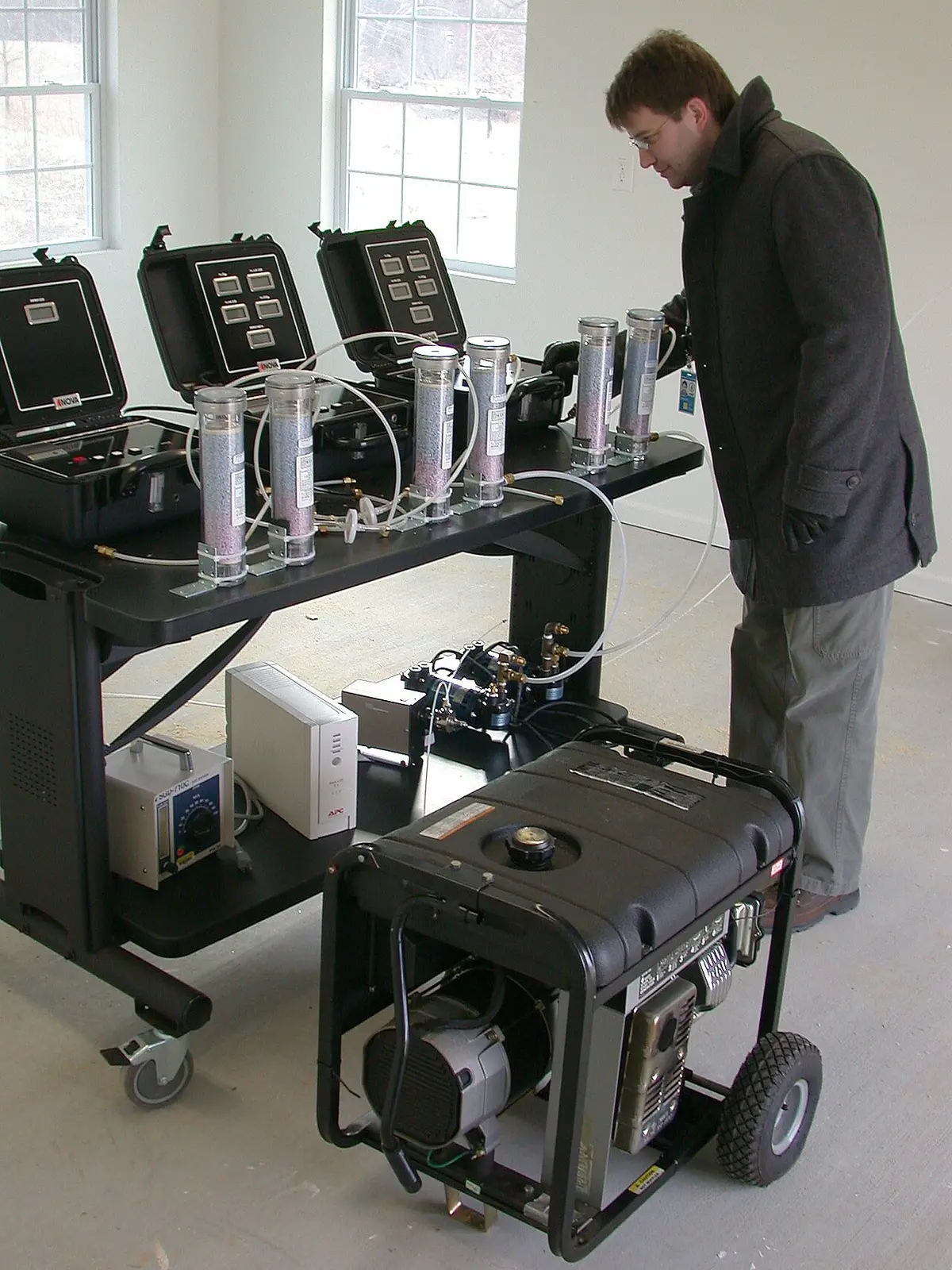
- Respect quiet hours and generator hours. Many campgrounds limit generator use to certain times of day, such as 8 a.m. to 8 p.m., and prohibit use at night.
- Position it away from neighbors' sites. Aim the exhaust and the noisy side away from them.
- Run it only as needed. Charge batteries in a block, then shut it off.
- Use eco mode on inverter models, which lowers engine speed at light load.
- Do not use homemade enclosures that trap heat or CO. If you want quieter operation, choose a quiet model or use a manufacturer-approved baffle with proper ventilation. The best propane portable generators for camping are one way to reduce smell and cleanup.
If you need quiet and clean power, consider a battery solution. The best 2000W solar generators and best 3000W solar generators are battery-based units that run without exhaust, and a combination of a generator for charging and a battery for use lets you shorten run times. For larger or voltage-specific needs, see the best 220V solar generators and the best 240V solar generators.
Choosing features that improve safety
When you shop, these features help:
- CO shutoff sensors that stop the engine when CO is detected near the unit.
- Electric start or remote start, which lets you start the unit from a distance, away from the tent and exhaust. See the best portable generators with electric start and the best portable generators with remote start.
- Low-oil shutoff that protects the engine.
- GFCI outlets built in.
- Spark arrestor, required on many public lands.
- A fuel shutoff valve and a fuel gauge.
- Wheels and handles to move the unit without lifting.
For larger demands, the best 9500 watt portable generators cover big units, which are heavy and require extra care in handling, fueling and placement.
Run it less: pairing a generator with a battery
The safest generator hour is the one you never run. Pairing a generator with a battery and solar shortens engine time, which cuts noise, fuel use and exposure to exhaust. The idea is to treat the generator as a fast charger instead of a power source for the whole day.
Start with the daily energy you need. If your load is a 12 V fridge, lights, phones and a laptop, the total might be 700 Wh a day. The method for working that out, and for estimating a fridge's duty cycle, is in how long a power station runs a 12V fridge. A 1,000 Wh battery covers most of a day, and a 2,000 W inverter generator can refill it from low to full in roughly an hour or two, depending on the charger's input limit. So instead of running the engine for ten hours at a light load, you run it for ninety minutes during allowed hours at a better load, which is also more fuel-efficient.
Solar closes the gap on sunny days. Sizing panels to cover the daily load, as in how to size a solar panel for camping, can reduce generator use to an emergency role on days of cloud or heavy cooking. For the arithmetic of battery units versus label claims, the watt-hours versus mAh explainer is a useful reference.
There are safety gains beyond noise. A battery in the tent vestibule or a car emits nothing, and so cuts CO risk for the hours when people sleep. The generator runs only in daylight, when you are awake, watching it and able to refuel in good light. Fewer hours of operation also mean fewer opportunities for a spill, a tip-over or a cord hazard. If you rely on a generator for medical equipment, such as a CPAP, a battery with a generator as a backup is a more reliable design than a generator alone, since a generator can stall or run out of fuel at 3 a.m.
Special situations
Hot weather. Generators produce heat, and a unit in direct sun on a hot day may overheat. Place it in open shade with clear airflow, and keep the exhaust away from dry grass. Hot exhaust and a spark can ignite vegetation, so clear a small area around the generator and keep a shovel and a bucket of water nearby in dry seasons.
Cold weather. Cold makes engines harder to start, and thick oil slows them. Use the oil grade the manual recommends for the temperature, and expect to prime or choke more. Snow around the exhaust can block it, so keep the unit clear and elevated on a board, and keep it out of drifts.
High altitude. Engines lose power as air thins, roughly 3 percent per 1,000 feet, and some carburetors need a high-altitude jet. If you camp high, derate your load and check the manual.
Wet or muddy ground. Place the generator on a board or pad so that it does not sink, and keep the cords out of puddles. Do not stand in water when handling the unit or the cords.
Shared campsites and groups. Agree on generator hours with your group and neighbors, and place the unit where noise and exhaust affect as few people as possible.
Travel and transport. Carry the generator upright with the fuel valve closed, and drain or empty the tank if the manual advises. Never transport a generator with fuel loose in the vehicle cabin, and keep fuel cans secured in a ventilated outdoor location such as an open truck bed, not in a closed trunk.
Shutting down and storing
- Disconnect the loads and let the engine run a minute with no load to cool.
- Turn off the engine using the switch, then close the fuel valve if there is one.
- Let it cool completely before moving or covering it.
- Store fuel properly, and do not leave the generator in a hot vehicle or an enclosed space where fuel vapors can collect.
- Run it dry or use stabilizer if you will not use it for more than a month.
- Keep it dry and covered between trips.
- Maintain it per the manual: oil changes, air filter, spark plug and fuel system.
What to do in an emergency
- CO symptoms. Get everyone into fresh air immediately, turn off the generator, and call 911 or poison control. Do not go back inside until the area is clear.
- A fuel fire. Do not use water on a gasoline fire. Use a fire extinguisher rated for fuel and electrical fires, keep it nearby, and evacuate if the fire grows.
- Electrical shock. Turn off the generator before touching the person, and call for help.
- Tip-over or damage. Shut it down, let it cool, and check for leaks before using it again.
Keep a fire extinguisher, a first-aid kit and a charged phone near the generator area. Know the campground's emergency contact.
Common mistakes to avoid
- Running the generator too close to the tent or camper. Twenty feet is a minimum.
- Skipping the CO alarm. It is cheap and can save lives.
- Refueling a hot engine. A spill can ignite.
- Using a thin extension cord. Overheating is a fire risk.
- Running it under a closed tarp or in a vestibule. CO and heat build up.
- Ignoring campground rules. Fines and eviction are real.
- Plugging into a wall outlet to backfeed. It is dangerous and illegal in many places.
- Leaving it running overnight unattended. If you must, ensure CO protection and safe placement.
Frequently asked questions
How far should a generator be from my tent?
At least 20 feet, according to U.S. Consumer Product Safety Commission guidance for buildings, with the exhaust pointed away from the tent and downwind. In practice, farther is better, and a CO alarm inside your sleeping space provides an extra layer of protection.
Is it safe to run a generator overnight?
It can be if it is far from sleeping areas, downwind, protected from rain and you have working CO alarms. Many campgrounds ban it at night, and noise is a problem. If you need overnight power, a battery power station is quieter and avoids the CO risk.
Can I run a generator in the rain?
Only with proper protection. Use a manufacturer-approved cover or a canopy designed for generators that keeps rain off the outlets and leaves ventilation on all sides. Never run one in a fully enclosed space, and keep the unit on dry ground.
What kind of CO alarm should I use for camping?
A battery-powered CO alarm designed for homes or RVs works in a camper or large tent. Place it near where you sleep, test it before each trip and replace batteries as needed. Alarms have a limited life, usually five to ten years.
Do I need a spark arrestor?
Many national forests, parks and fire-restricted areas require a spark arrestor on engines, and some generators include one. Check local rules and keep it clean.
How do I keep my generator quiet?
Choose an inverter model, use eco mode, place it as far from camp as the cord allows with the exhaust pointed away, and run it only during allowed hours. Avoid homemade enclosures that trap heat.
Sources & further reading
- U.S. CPSC: Portable generator safety alert (PDF)
- U.S. CPSC: Report on carbon monoxide fatalities and generator safety
- ESFI: Extension cord safety
Image credits
- "Portable electrical generator angle" by Unknown author, CC BY-SA 3.0, via Wikimedia Commons.
- "Gasoline-powered portable generators (5884715763)" by National Institute of Standards and Technology, Public domain, via Wikimedia Commons.
- "2023-01-03 Portable electrical generators" by Maksym Kozlenko, CC BY-SA 4.0, via Wikimedia Commons.


Ready to buy?
Compare the gear: Camp Power
2 Best 9500 Watt Portable Generators in 2026
Best 9500 watt portable generators compared on running watts, fuel options, CO shutdown and 50A outlets for large RVs and home backup.
6 Best Portable Generators With Electric Start in 2026
Best portable generators with electric start compared on running watts, fuel type, noise and outlets for campers who skip the pull cord.
6 Best Portable Generators With Remote Start in 2026
Best portable generators with remote start compared on key fob range, running watts, fuel type, noise and RV outlets for camp and backup use.
3 Best Propane Portable Generators For Camping in 2026
Best propane portable generators for camping compared on propane running watts, noise, 30A outlets and CO protection for RVs and campsites.
5 Best 2000w Solar Generators in 2026
Best 2000W solar generators compared on rated output, battery size, included panels and recharge speed for camping, RVs and home backup.
3 Best 220v Solar Generators in 2026
Best 220V solar generators compared on 120V/240V split-phase output, capacity, solar input and expansion for RV, cabin and home backup.
3 Best 240v Solar Generators in 2026
Best 240V solar generators compared on split-phase output, capacity, solar input and expansion for RV, cabin and home backup power.
2 Best 3000w Solar Generators in 2026
Best 3000W solar generators compared on continuous versus surge output, capacity and charging for RVs, cabins and home backup.
Keep reading