
Practical RV Guide · 12 min read
How to Choose an RV Outdoor Rug
Choose an RV outdoor rug by size, woven recycled-plastic material, drainage and anchoring, with sizing tables for awnings and cleaning tips.

Pick an RV outdoor rug by size first (measure the area under your awning, then choose a rug about 6 inches shorter on each side, commonly 9 x 12, 9 x 18 or 10 x 20 feet), then by material: woven recycled-plastic (polypropylene) rugs are the standard because they drain, dry fast, resist mildew and fade slowly. Choose a reversible weave in a mid-tone color that hides dirt, look for a lightweight design you can shake out and hose off, and plan on stakes or anchors for wind. A rug that is too heavy, too light-colored or poorly drained turns into a chore.
An outdoor mat does three jobs at once: it keeps dirt out of the RV, gives you a clean surface to sit or let kids and pets play on, and makes a rough or muddy site feel like a patio. The details that separate a good one from a frustrating one are size, weave, weight, drainage, colorfastness and how it folds. Here is how to measure, what each material does in sun and rain, how to keep it in place and clean, and what to expect at each price tier.
Start with the space: how to size a rug
Measure the area where you will use it before looking at products. The awning shade line is a good guide, since you want the rug mostly in the shade, where it stays cooler and fades less. Measure the awning's extended depth and its length, and consider where the entry door and the picnic table fall.
| RV and awning | Typical awning size | Common rug size |
|---|---|---|
| Pop-up or small trailer | 8 to 12 ft long, 6 to 8 ft deep | 6 x 9 or 8 x 10 ft |
| Mid-size travel trailer | 14 to 18 ft long, 8 ft deep | 9 x 12 ft |
| Large trailer or small motorhome | 18 to 20 ft long, 8 to 9 ft deep | 9 x 18 or 10 x 15 ft |
| Fifth wheel or Class A | 20 to 24 ft long, 9 to 10 ft deep | 10 x 20 ft |
| Small group area or pet play space | N/A | 10 x 10 ft |
A rug that is slightly smaller than the awning looks neat and avoids the rug's edge catching rain or sun. If a rug is too large, it wraps around chairs and makes folding harder. If it is too small, chairs hang off the edge and tip. For long awnings, you can also use two rugs side by side.
Consider where the table and chairs will sit. A table placed on a rug with a smooth surface may wobble, and chairs with narrow legs sink into a thick pile. A flat weave is more stable for furniture.
For specific sizes, see the best 10x10 RV outdoor rugs and the best 10x20 RV outdoor rugs.
Materials: what is under your feet
| Material | Strengths | Weaknesses |
|---|---|---|
| Woven recycled plastic (polypropylene, often from recycled bottles) | Drains, dries fast, mildew-resistant, light, reversible | Can feel stiff, edges can curl |
| Polypropylene with a woven or mesh pattern | Lightweight, packs small | Less cushioning |
| Polyester or nylon | Soft, colorful | Slower to dry, can fade and hold odors |
| Natural fibers (jute, sisal, cotton) | Look and feel natural | Rot and mold when wet, poor for outdoors |
| Rubber or vinyl-backed mats | Grip the ground | Heavy, trap water, can be hot |
| PVC mats and grass-style turf | Soft underfoot | Hot in sun, heavy, bulky |
Most RV outdoor rugs are made from polypropylene, and many are marketed as recycled plastic, since the material is inexpensive, resists UV, water and mildew, and can be woven into patterns that let water pass through. The look is flat and slightly textured, and the rug is often reversible, so you can flip it when one side is dirty.
If you value sustainability, the best recycled plastic RV rugs are worth a look. Many makers describe the percentage of recycled material, and it is worth checking the claim on the product page.
Avoid natural fiber and indoor rugs outdoors. They absorb water and soon smell of mildew.
Weave and drainage
The structure of the rug matters as much as the fiber. Look for:
- Open weaves and mesh. Water passes through and the rug dries quickly, even after rain or hosing off. Tight weaves hold water for hours.
- Flat weaves. They are less likely to snag chair legs, and easier to shake out.
- Reversible design. Both sides usable, which extends the life.
- Even thickness. Thin rugs flatten in use, and very thick ones are heavy and hard to fold.
- Edge finish. Stitched or heat-sealed edges resist fraying, and loose edges unravel with use.
A rug that dries fast also stays cleaner, since dirt does not stay damp, and it does not smell. If your trips include rain or a lake, consider the best quick-dry RV rugs.
Weight and portability
You will carry the rug from a storage bay to the site and back again many times. Weight and folded size matter. A 9 x 12 foot polypropylene rug often weighs 8 to 15 pounds, while a heavier rubber-backed mat may weigh twice that. Rugs usually come in a carry bag, and rolling is easier than folding for most woven rugs, since folds can create permanent creases. If you have limited storage, a roll-up rug that fits in a long, narrow bay works well. A very light rug blows around in wind, which brings us to anchoring.
Wind, stakes and anchoring
Wind is the main enemy of an outdoor rug. A flapping rug is a tripping hazard and can fly into a neighbor's site. Remedies include:
- Stakes. Many rugs come with stakes or have grommets in the corners and edges for them. Use plastic or metal stakes that go deep enough to hold in the ground. See the best RV outdoor rugs with stakes.
- Weights. Use the legs of a table or chairs, or place weights on the corners, such as water-filled bags.
- Rug clips and anchors. Clips attach the rug to the awning's frame or to the ground.
- A non-slip underlay. On smooth surfaces, such as pavement or a patio slab, a grip pad helps.
- Rolling the rug up when you leave. In forecasted high wind, store it.
Check campground rules for stakes, since some sites on rock or pavement do not allow them. A rug with grommets lets you use pegs on soft ground and weights elsewhere.
Color, pattern and heat
Dark colors absorb heat, and a black rug in full sun can burn bare feet. Light colors stay cooler but show dirt. A mid-tone, patterned rug hides dust and grass stains and stays reasonably cool. Patterns, such as stripes, diamonds and medallions, camouflage the occasional stain. Consider fade: cheap dyes fade in strong sun, so check that the rug is described as UV resistant or fade resistant, and place it under the awning when possible.
If your site has no shade, look for lighter colors, and consider moving the rug into the shade during the hottest part of the day. For dogs, hot surfaces can be painful, so test the rug with your hand before letting pets walk on it.
Pets, kids and comfort
Outdoor rugs get a lot of use from pets and children. Choose a rug that is easy to clean and resistant to claws. Tight weaves resist snagging, and sturdy synthetic fibers handle wear. Look for non-toxic dyes and materials, and avoid anything with a strong smell. For pet owners, see the best pet-friendly RV outdoor rugs. A rug with a bit of cushion makes sitting on the ground comfortable, but thick pile can trap hair and dirt. For young children, a flat, even surface is best for toys and play.
Cleaning and care
A good rug is easy to clean:
- Shake it out and sweep off loose dirt and sand.
- Hose it down or use a bucket of water with a mild soap, and scrub with a soft brush for stains.
- Rinse well so that no soap remains, since residue attracts dirt.
- Dry it fully before folding or rolling, hanging it over a line or draping it over the picnic table. Storing a damp rug causes mildew.
- Spot-treat stains quickly, such as spilled drinks and grease.
- Do not use harsh chemicals or bleach, which can fade and weaken the fibers.
- Store it clean and dry, rolled loosely in its bag.
At the end of the season, inspect for fraying, check grommets and consider repairing small tears with fabric tape or stitching. A rug that is cleaned regularly lasts several seasons.
Budget and quality
Price correlates loosely with weight, weave density and fade resistance. A budget rug can be perfectly fine for occasional trips. For heavy use, a better-made rug with sturdy edges lasts longer. See the best budget RV outdoor rugs for lower-cost options, and the best RV outdoor rugs for a broader view. Warranties and clear descriptions of the material are good signs.
When you compare similar rugs, look at the weight, since a heavier rug at the same size often indicates denser fibers, the edge finish, the carry bag and the stated UV resistance.
A worked example: choosing for a 27 foot travel trailer
A family of four owns a 27 foot travel trailer with a 16 foot awning that extends 8 feet. They camp mostly on grass and gravel sites, bring a dog, and often get afternoon thunderstorms in summer. Here is how the decision unfolds.
Size. The awning covers about 16 x 8 feet. A rug 6 inches shorter on each side would be about 15 x 7 feet, so the nearest standard sizes are 9 x 12 (too small to reach the edges, but comfortable) and 9 x 18 (slightly larger than the awning). They choose 9 x 12 for the main seating area, since it fits the table and four chairs with room for the dog, and it folds into the storage bay easily. They accept that part of the awning area is bare.
Material. Because the sites are damp and the dog plays on it, they choose woven polypropylene with an open weave, which drains after a storm and dries in an hour or two of sun. A reversible pattern gives them a second face when one side gets muddy.
Color. They avoid black and cream. A mid-tone brown and tan pattern hides dirt, and it will not get as hot as a dark rug under the afternoon sun.
Anchoring. The rug has grommets, so they use plastic stakes on grass and set the table legs on the corners at gravel sites. They add clips for the occasional windy day.
Care. After each trip they shake it out, hose it off at home and hang it over the fence for a few hours. The whole routine takes ten minutes, and the rug stays fresh for the next trip.
Cost. They set a mid-range budget, because a cheaper rug in their experience curled at the edges and faded in a season. The mid-priced rug costs a bit more up front, but they expect it to last three or four seasons, so the cost per trip is lower.
This sequence, size first, then material, color, anchoring and care, works for nearly any rig. The details change with climate and ground, but the order does not.
Testing a rug before you rely on it
Unroll the rug at home on the grass or driveway and check a few things. Lay it flat and see how quickly the edges settle, since a rug that stays curled after a day in the sun will trip people at camp. Pour a cup of water on the rug and watch whether it drains through or pools. Rub a damp white cloth over a patch to check for dye transfer, since bleeding dye can stain a light floor or your feet. Smell it, because a strong chemical odor often fades with airing but may signal low-quality materials. Fold and roll it once to see how it behaves, and make sure it fits in its bag and your storage bay. If anything looks wrong, return it before the first trip, not at the campground.
Alternatives and add-ons
A rug is not the only option for a clean outdoor floor. Interlocking deck tiles create a hard, flat surface that is easy to level on uneven ground, though they are heavier and bulkier. Grass-style mats feel soft underfoot but get hot. A simple tarp under the rug protects it from sharp stones and keeps the ground drier, and a grip pad keeps it from sliding on pavement. For the door, a small mat that you can shake out right before stepping inside catches most of the mud. For the fire pit area, use a bare patch or a fire-resistant mat, and keep rugs away from embers and heaters, because polypropylene melts and can burn.
Seasonal and storage tips
At the end of a season, wash the rug, let it dry completely in the sun and roll it loosely around a cardboard tube if you have one, which prevents creases. Store it in a dry bin or a bag in a place that does not get damp, and keep it off bare concrete where moisture can wick up. In spring, unroll it a day before the first trip so it relaxes flat. If a corner has curled for good, a few hours under a heavy board in the sun often helps. Keep a spare set of stakes in the bag, since they disappear faster than anything else.
Setting up at the campsite
A short routine helps. Level the area as best you can and clear sticks and stones. Lay the rug flat, smoothing out wrinkles, and stake or weigh down the corners. Place a table and chairs on it, and keep a small mat or a bin for shoes by the door, so that most of the dirt stays outside. When you leave, sweep or shake it off and roll it up. If rain is forecast, you can leave it out, since a good outdoor rug drains, but make sure it does not trap water against the ground for days, which can kill grass and attract insects. Many campgrounds ask that rugs be lifted to protect the grass, so check the rules.
Setting up your site is part of the arrival routine. If you rely on the internet or cell signal during your stay, see how cell signal boosters work in an RV and how a campground WiFi extender works, and for the road to get there, RV GPS versus phone navigation apps.
Common mistakes to avoid
- Buying the wrong size. Measure the awning and the area, not the rug listing.
- Choosing a dark rug for a sunny site. It gets hot, and fades.
- Using an indoor rug outdoors. It will soak up water and rot.
- Forgetting stakes or weights. Wind turns a rug into a hazard.
- Storing it damp. Mildew will follow.
- Skipping cleaning. Dirt wears fibers and stains the weave.
- Ignoring campground rules. Some sites restrict stakes or ask you to lift rugs.
- Choosing by looks alone. Weave and drainage matter more.
Frequently asked questions
What size RV outdoor rug do I need?
Measure the area under your awning. A 9 x 12 foot rug suits most mid-size travel trailers, a 9 x 18 or 10 x 20 foot rug suits larger rigs, and a 10 x 10 foot rug suits smaller spaces. Choose a rug a bit shorter than the awning on each side.
What is the best material for an RV outdoor rug?
Woven polypropylene, often made from recycled plastic, is the most common choice. It drains, dries quickly, resists mildew and UV, and is light enough to carry. Avoid natural fibers and indoor rugs outdoors.
How do I keep an RV rug from blowing away?
Use stakes through the grommets, weights on the corners, rug clips, a non-slip underlay and the weight of the furniture. In high wind, roll it up and store it.
How do I clean an outdoor rug?
Shake it out, hose it down or scrub with mild soap and a soft brush, rinse well and let it dry completely before folding. Avoid bleach and harsh chemicals, and treat stains quickly.
Are outdoor rugs good for pets?
Yes, if they are durable, easy to clean and free of strong odors. Flat weaves resist snags, and many are marketed as pet friendly. Test the surface for heat in hot weather.
Will a rug kill the grass underneath?
If left in place for days, it can reduce sunlight and trap moisture, which stresses the grass. Lift it periodically, and use a rug that drains and is not rubber-backed.
Sources & further reading
Image credits
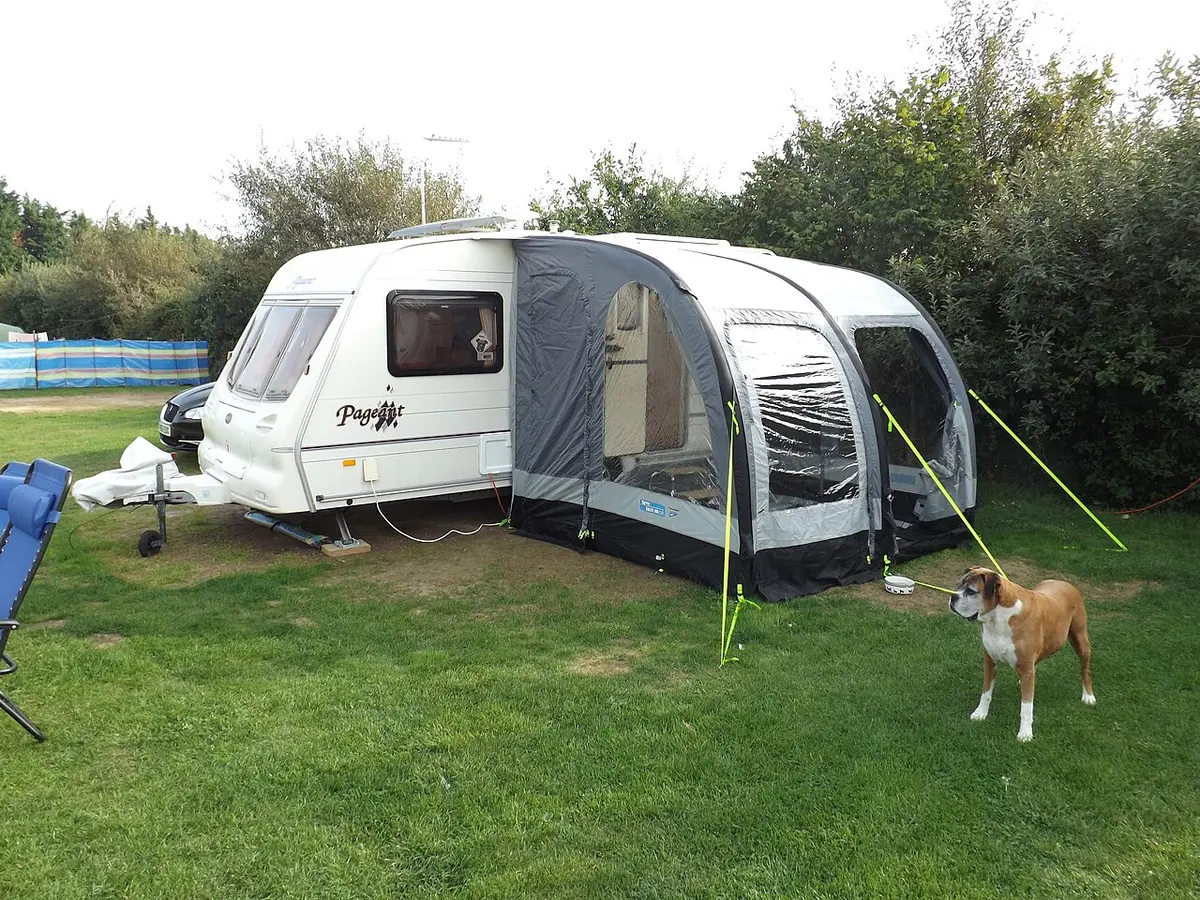
- "Caravan with new Kampa Inflatable Awning and Micha the Boxer Dog (15123465967)" by Andrew Bone from Weymouth, England, CC BY 2.0, via Wikimedia Commons.

Ready to buy?
Compare the gear: Camping & Travel
5 Best 10x20 RV Outdoor Rug in 2026
Five reversible 10x20 ft RV outdoor rugs compared on weave, edge binding and carry bags, for owners who want a full patio under a big awning.
5 Best Pet Friendly RV Outdoor Rug in 2026
Five soft, easy-clean RV outdoor rugs that handle pet hair, muddy paws and spills, compared on weave, size and pet-safe materials.
5 Best Quick Dry RV Rug in 2026
Five waterproof, reversible RV rugs that drain and dry fast after rain, compared on weave, size and stakes for wet campsites.
4 Best Recycled Plastic RV Rug in 2026
Four recycled plastic RV outdoor rugs compared on certification, size and fold-down storage, for campers who want a greener reversible mat.
3 Best RV Outdoor Rug With Stakes in 2026
Three RV outdoor rugs that come with stakes and corner loops, compared on size, anchoring and weather resistance for breezy campsites.
6 Best Budget RV Outdoor Rugs in 2026
Six reversible woven outdoor rugs for campsites and RV patios, compared on weave, UV protection and kit contents, plus what a budget rug leaves out.
5 Best RV Outdoor Rug in 2026
Five reversible polypropylene RV outdoor rugs, from 5x8 to 9x18, compared on awning fit, drainage, UV coating and packed size for campsite use.
3 Best 10x10 RV Outdoor Rug in 2026
Three 10x10 ft RV outdoor rugs in reversible HDPE mesh, compared on weight, stakes, drainage and grass-friendly weave for campsite patios.
Keep reading