
Practical Camping Guide · 13 min read
What NSF/ANSI Certifications Mean on Portable Water Filters
What NSF/ANSI 42, 53 and P231 mean on portable water filters, how certified differs from tested to, and how to verify a product claim.

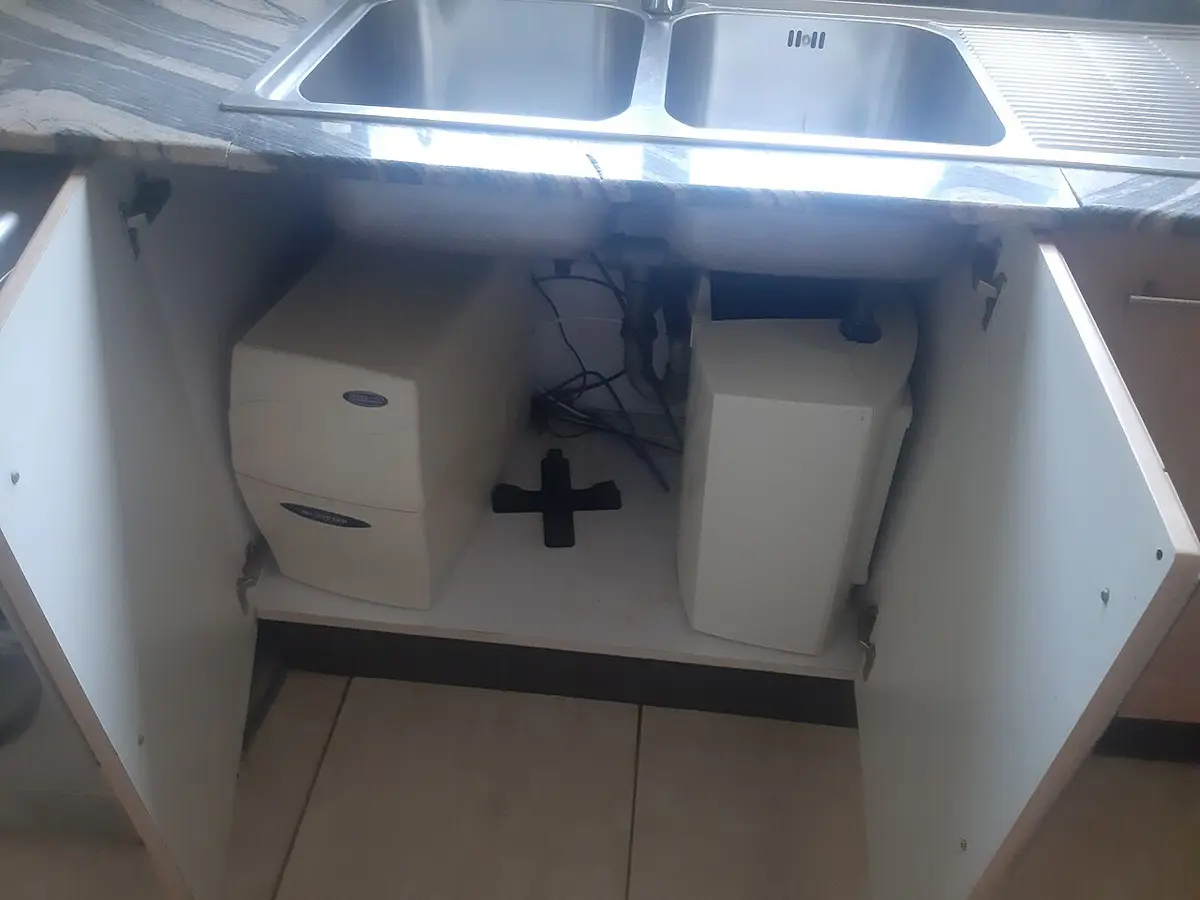
NSF/ANSI certifications are independent tests that check whether a water treatment product delivers what it claims. For portable camping filters, the ones that matter are NSF/ANSI 53 (health-related reductions such as cysts like Giardia and Cryptosporidium), NSF/ANSI 42 (aesthetic effects such as taste, odor and chlorine) and NSF/ANSI P231 (microbiological purifiers that address bacteria, viruses and cysts in water of unknown quality). A product that says it is "certified" should appear in the certifier's public listing for that exact model, and the listing states which claims were verified.
Many backpacking filters carry no NSF listing at all, and many say they were "tested to" or "meet the requirements of" a standard, which is not the same as being certified. That does not make them bad, because some well-regarded filters rely on lab tests under other protocols, but it does mean you have to read claims carefully. This guide explains what each standard covers, what certification does and does not prove, how to verify a claim, how the standards relate to the filter versus purifier distinction and how to use them as part of a sensible buying process.
Who sets the standards, and what certification means
NSF International is an independent public-health organization that develops standards and tests products. The standards are developed jointly with the American National Standards Institute (ANSI), which is why you see "NSF/ANSI" in the names. Other certifiers, such as UL and the Water Quality Association, also test products to the same standards.
Certification means that an accredited body tested the product, audited the factory and lists the product publicly for specific claims. "Tested to" or "meets" a standard typically means the manufacturer or a lab ran the protocol and reports the results, without third-party certification and ongoing audits. "Compliant" is similar. All of these statements can be honest, and only the first gives you an independent listing to check.
The standards that matter for camping
| Standard | What it covers | Relevance to camping |
|---|---|---|
| NSF/ANSI 42 | Aesthetic effects: taste, odor, chlorine, particulates | Tells you about taste, not safety |
| NSF/ANSI 53 | Health effects: specific contaminants, including cysts | Cyst reduction claims on some filters |
| NSF/ANSI 58 | Reverse osmosis systems | Home systems, not backpacking |
| NSF/ANSI 55 | Ultraviolet systems | UV purifiers, including some portable units |
| NSF/ANSI P231 | Microbiological purifiers: bacteria, viruses, cysts | Applies to purifier claims for unknown water |
| NSF/ANSI 244 | Incidental microbial contamination in disinfected municipal water | Not for wild water |
Standards 42 and 53 are the common ones for filters. A filter certified to 42 improves taste and may reduce chlorine and particles. A filter certified to 53 for cysts has been shown to reduce Giardia and Cryptosporidium cysts under test conditions, but that does not make it a purifier, since it does not address viruses or all bacteria. Standard P231 is the one that applies to microbiological purifiers: it evaluates devices intended to reduce bacteria, viruses and cysts from water of unknown microbiological quality and is based on EPA guidance, specifically the agency's guide and protocol for testing microbiological water purifiers from 1987. Standard 55 applies to UV devices.
What the certifications do not tell you
A certification covers specific claims, under test conditions, for a product model at the time of testing. Keep these limits in mind.
- It does not cover every contaminant. A cyst reduction claim says nothing about viruses, chemicals or heavy metals unless those are listed.
- It does not mean the product will work forever. Filters have a rated capacity, and performance changes with clogging, damage and freezing.
- It does not replace proper use. A certified purifier used incorrectly, with the wrong contact time or on dirty water, may fail.
- It does not guarantee taste. Taste is covered only by 42, and only for specific aesthetic claims.
- Test water is not wild water. Lab tests use standardized challenge water, which may be cleaner than a muddy creek.
Treat certification as strong evidence that a claim is real, and not as a guarantee of safety in every situation.
How to verify a claim
Verification takes a couple of minutes.
- Find the exact model name and number on the product page or packaging.
- Search the certifier's listing database (NSF, WQA or UL) for that model. Many brands list certified models on their website too, but check the independent source.
- Read the listed claims. The listing states which standard and which contaminants were tested, and sometimes the conditions.
- Check that the listed product matches yours, including cartridge type. A certification on a pitcher cartridge does not apply to a backpacking squeeze filter.
- Look at the date and status. Listings can be withdrawn or updated.
- If there is no listing, read the manufacturer's test report, if available, and see who ran the tests and which protocol.
If a seller cannot or will not name the standard, the model and the lab, treat the claim as marketing.
Why many camping filters are not certified
Certification costs money and time, and the standards were written for household and municipal products, not for squeeze bags and pen-sized devices. Many portable filters rely on well-known hollow-fiber membranes and test their products against protocols from the EPA or other bodies, and publish lab data. Some brands say their products meet the performance criteria of P231, but the claim refers to adherence to the protocol and not necessarily a formal listing of the finished product. A listing in a public database is the clear evidence.
In the end, the difference between a filter and a purifier matters more than certification status. A filter that removes protozoa and bacteria is a legitimate tool for most North American backcountry water, even if it has no NSF listing, and a purifier is necessary where viruses are likely. For a plain explanation of this choice, read water filter vs water purifier for camping.
Reading a product claim critically
Here are claims you may meet and how to read them.
- "Removes 99.9999 percent of bacteria." A statement about bacteria, usually from lab testing, with no virus claim unless stated. Check the pore size and the test organism.
- "Removes 99.9 percent of protozoa." The common claim for hollow-fiber filters.
- "EPA-registered." Registration with the EPA applies to chemical purifier products that make microbial claims, not to filters. Do not confuse registration with certification.
- "Meets NSF standards." A vague statement. Ask which standard and whether the product is listed.
- "Purifier" in the name. Check whether it addresses viruses.
- "Lab tested." Ask which lab and which protocol.
A manufacturer that provides details is easier to trust than one that provides only a logo.
How to use standards when shopping
Use standards to narrow the field, not to decide it. Start with the type of water you will treat and the pathogens you need to address. Then look at the filter lists, such as the best hiking water filters, the best backpacking water filters for hiking, the best lightweight backpacking water filters, the best filter bottles for backpacking, the best gravity water filters for hiking and the best water filter bags for backpacking. For each candidate, check pore size or technology, tested claims, flow rate, capacity, weight, ease of cleaning and replacement parts. Prefer products that disclose test data.
Then think about use. A filter you do not clean will clog, and one you do not protect from freezing may fail without warning. Learn the care routine in how to clean and store a water filter, and consider a backup method such as tablets; see how to use water purification tablets. If you are choosing a personal straw for day hikes and emergencies, how to use a filter straw explains the limits.
Reading percentages and log reductions
Performance claims often come as percentages or as "log reductions," and the two describe the same thing in different ways. A log reduction counts how many powers of ten the number of organisms falls. A 1-log reduction removes 90 percent, 2-log removes 99 percent, 3-log removes 99.9 percent, 4-log removes 99.99 percent and 6-log removes 99.9999 percent. Each additional log is ten times fewer survivors. That means "99.9999 percent" is a thousand times better than "99.9 percent," although the two look nearly identical on a package.
| Log reduction | Percent removed | Organisms remaining per 1,000,000 |
|---|---|---|
| 1-log | 90 percent | 100,000 |
| 2-log | 99 percent | 10,000 |
| 3-log | 99.9 percent | 1,000 |
| 4-log | 99.99 percent | 100 |
| 5-log | 99.999 percent | 10 |
| 6-log | 99.9999 percent | 1 |
When a manufacturer states a percentage, check the organism and the conditions. A claim for a bacterium such as E. coli does not automatically apply to a virus, and a claim measured in clean lab water may not hold in cold, turbid stream water. Ask whether the claim is from a certified listing, a third-party lab report or an in-house test, and whether it refers to the cartridge when new or at the end of its rated capacity. A good report includes both.
Pore size: what the micron numbers mean
Filters describe their pore size in microns, one millionth of a meter. A pore rated at 0.2 microns is nominally small enough to block protozoa and bacteria, which are larger. Viruses are much smaller than that, so a 0.2 micron filter by itself does not block them. Some devices use finer membranes or add a stage that traps or kills viruses.
Note the difference between "nominal" and "absolute" ratings. A nominal rating means the filter removes most particles of a given size, and an absolute rating means it removes nearly all of them. For microbial claims, absolute ratings and tested performance are more meaningful than a pore-size number alone. A manufacturer who gives you only a micron figure and a percentage is telling part of the story. Combine pore size with the certification or test data to get the full picture.
How filters fail, and what standards cannot catch
Standards test a new product under controlled conditions, and real filters fail in ways that tests do not always capture. The most dangerous failure is a crack in a hollow-fiber membrane, which can result from freezing, a hard impact or a pressure spike. A cracked filter can look and flow normally while letting contaminants through. For this reason, manufacturers advise keeping filters from freezing and replacing any filter that may have frozen or been dropped hard. Some units include a visible integrity test or a testing procedure you can run at home.
Other failure modes include clogging, which slows flow and tempts people to force water through, and age-related breakdown of seals and housings. Using a filter beyond its rated capacity, or neglecting to backflush, reduces performance. Dirty hands, contaminated bottles and reused inlet hoses can reintroduce pathogens after treatment. No certification addresses these human factors, so build habits: label the dirty and clean sides, keep the clean outlet covered and wash your hands before handling clean water.
Three buying scenarios
You hike in the Rockies and Sierra, mostly mountain streams. Protozoa and bacteria are the main concerns. A well-regarded hollow-fiber filter with documented lab testing is a sound choice, with or without an NSF listing. Look for flow rate and rated capacity, and carry a few chlorine dioxide tablets as a backup.
You travel abroad and camp in places with uncertain sanitation. Look for a device with a P231 listing or a virus claim backed by a stated protocol, or combine a filter with chemical treatment. Check the listing for the specific model and note the contact time.
You are building an emergency kit for your home or vehicle. Long shelf life and simplicity matter. A certified product or a tablet with an EPA registration and clear instructions suits this use. Store items cool and dry, and check expiration dates.
In each scenario, the standard is a tool for judging claims, and the choice is shaped by where you go and how you use the product. If you can answer which pathogens, which water and which care routine, the right product is usually clear.
Checklist before you buy
- Which pathogens does the product claim to address, and are viruses included?
- Is it certified (listed by a third party) or "tested to" a standard?
- Which standard and which claims are listed for this exact model?
- What is the rated capacity in liters, and how will I know when to replace it?
- What is the flow rate in clean and cold water?
- How do I clean it, and how does it handle freezing?
- Can I buy replacement cartridges and parts?
- What backup method will I carry?
Home, travel and emergency filters compared with camping filters
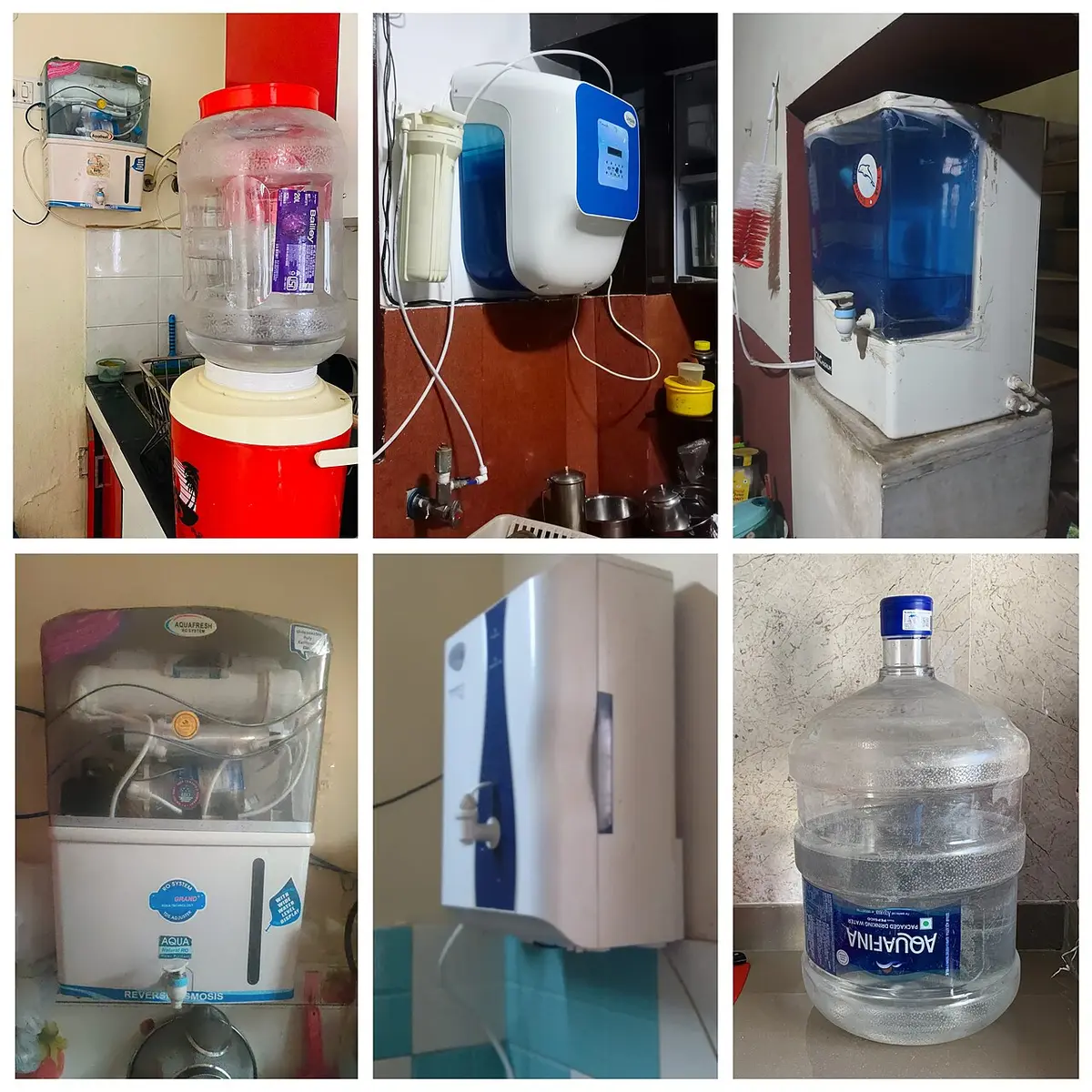
Many certified products on the market are designed for homes, such as pitcher filters, faucet filters and under-sink systems. Their certifications apply to their own use, which is treating municipal water for taste, chlorine, lead or other specific contaminants. A pitcher that reduces chlorine and lead has little to do with whether it can make a pond safe to drink. Do not assume that an NSF logo on a home filter means it can treat backcountry water, and check the listing for the claim that matters to you.
Travel and emergency purifiers occupy a middle ground. Some are designed for use in places with uncertain water supplies, such as bottles that combine a filter with a chemical or UV stage, and some carry P231 listings. Emergency kits often include chemical tablets with EPA registration numbers, which is a separate regulatory process from NSF certification. For camping, the useful question is always what the product was tested to remove, under which conditions and how that matches your water. When a claim does not match your needs, look for another product or add a second method.
What the numbers do not say about taste and speed
Certification is mostly about contaminant reduction, not about taste or speed. A filter certified for cyst reduction may still be slow, hard to clean or have a strong carbon taste. Flow rate is a practical issue that standards do not rate in a way that matches the field. A filter that produces a liter a minute in a lab with clean water may produce half that in silty creek water. Taste is covered by standard 42 only for some filters, and only for particular aesthetic claims.
When you compare products, give weight to the things that decide whether you will use the filter: how easy it is to fill and clean, how heavy it is, how fast it flows in real conditions and how well it handles cold. A filter that you hate using will stay in the pack, and a filter that is not used protects no one. Combine the evidence from standards with practical feedback from people who use the product in conditions like yours, and weigh both when you decide.
Keeping up with changes
Standards and product listings change. A product may be reformulated, a certification may be updated, withdrawn or reissued under a new standard, and brands may rename products while keeping the same internals. Revisit the listing when you buy replacement cartridges and when you buy a new model, instead of assuming that last year's claim carries over. If a manufacturer updates its test data, read the change notes. Consider signing up for product notices from the maker, and check for recalls. A few minutes each year keeps your knowledge in step with your equipment, and ensures that the water you drink is as safe as you believe.
Common mistakes to avoid
- Treating "tested to" as "certified."
- Assuming a cyst reduction claim means virus protection.
- Ignoring the difference between 42 (taste) and 53 (health).
- Trusting a logo without checking the listing.
- Assuming a certified home pitcher filter works for backcountry water.
- Using a certified product beyond its capacity or after freezing.
- Skipping a backup method.
Frequently asked questions
What is NSF/ANSI P231?
It is a protocol for microbiological water purifiers, designed for devices that claim to reduce bacteria, viruses and cysts in water of unknown quality. It is based on EPA guidance for testing purifiers. A product listed to P231 has been tested for those claims.
Is NSF 53 enough for camping?
For cysts such as Giardia and Cryptosporidium, a 53 cyst reduction claim is meaningful. It does not cover viruses, so in places where viruses are a concern you need a purifier or an additional treatment.
Why does my filter not have an NSF listing?
Certification is optional and costly, and many camping filters use other test protocols. Check the manufacturer's test data, and decide based on the pathogens you need to address. A lack of a listing is not proof of poor performance, but a listing is stronger evidence.
What does NSF 42 mean on a filter?
It means the product was tested for aesthetic effects such as taste, odor and chlorine reduction. It does not tell you about microbial safety. Look for 53 or P231 for health claims.
How can I check if a model is certified?
Search the certifier's public database for the exact model, and read the listed claims. If you cannot find it, ask the maker which lab did the testing.
Does certification mean I do not need to clean my filter?
No. Certified filters still clog and fail if neglected or frozen. Follow the maker's cleaning and storage guidance, and replace cartridges at the rated capacity.
Sources & further reading
Image credits
- "Under-sink Water Filter System" by Fanti Salms, CC BY-SA 4.0, via Wikimedia Commons.
- "Home water filters, water purifiers, and bottled water in India" by FacetsOfNonStickPans, CC BY-SA 4.0, via Wikimedia Commons.


Ready to buy?
Compare the gear: Packs & Hiking
6 Best Backpacking Water Filters For Hiking in 2026
Best backpacking water filters for hiking: six squeeze, pump and straw filters compared on stated flow, micron rating and what each listing actually claims.
4 Best Filter Bottles Water Filters For Backpacking in 2026
Best filter bottles for backpacking: a GRAYL press purifier and three collapsible filter bottles compared on stated capacity, micron rating and pathogen claims.
6 Best Gravity Water Filters For Hiking in 2026
Best gravity water filters for hiking: six hang-and-drink systems from 1 gallon to 6 liters compared on stated flow, lifespan and named standards.
5 Best Hiking Water Filters in 2026
Best hiking water filters: a pump, a group kit, a palm-size Sawyer and two straw packs compared on stated flow, lifespan and the standards each listing names.
3 Best Lightweight Backpacking Water Filters in 2026
Best lightweight backpacking water filters: a fast Platypus QuickDraw, a flat Katadyn BeFree AC and a TRAILGO pump compared on flow, weight claims and format.
3 Best Water Filter Bags For Backpacking in 2026
Best water filter bags for backpacking: one complete SimPure gravity set and two bags for your own filter compared on capacity, threads and included parts.
5 Best Water Filter Straws For Survival in 2026
Best water filter straws for survival: five straw packs for go-bags and emergency kits compared on stated life, test claims and extras.
5 Best Water Filter Straws For Hiking in 2026
Best water filter straws for hiking, compared on flow, filter life, certifications and pack size for day hikers and backpackers.
Keep reading