
Practical Camping Guide · 12 min read
Water Filter vs Water Purifier for Camping
Filters remove protozoa and bacteria but usually not viruses; purifiers also handle viruses. Learn which you need for camping and backpacking water.

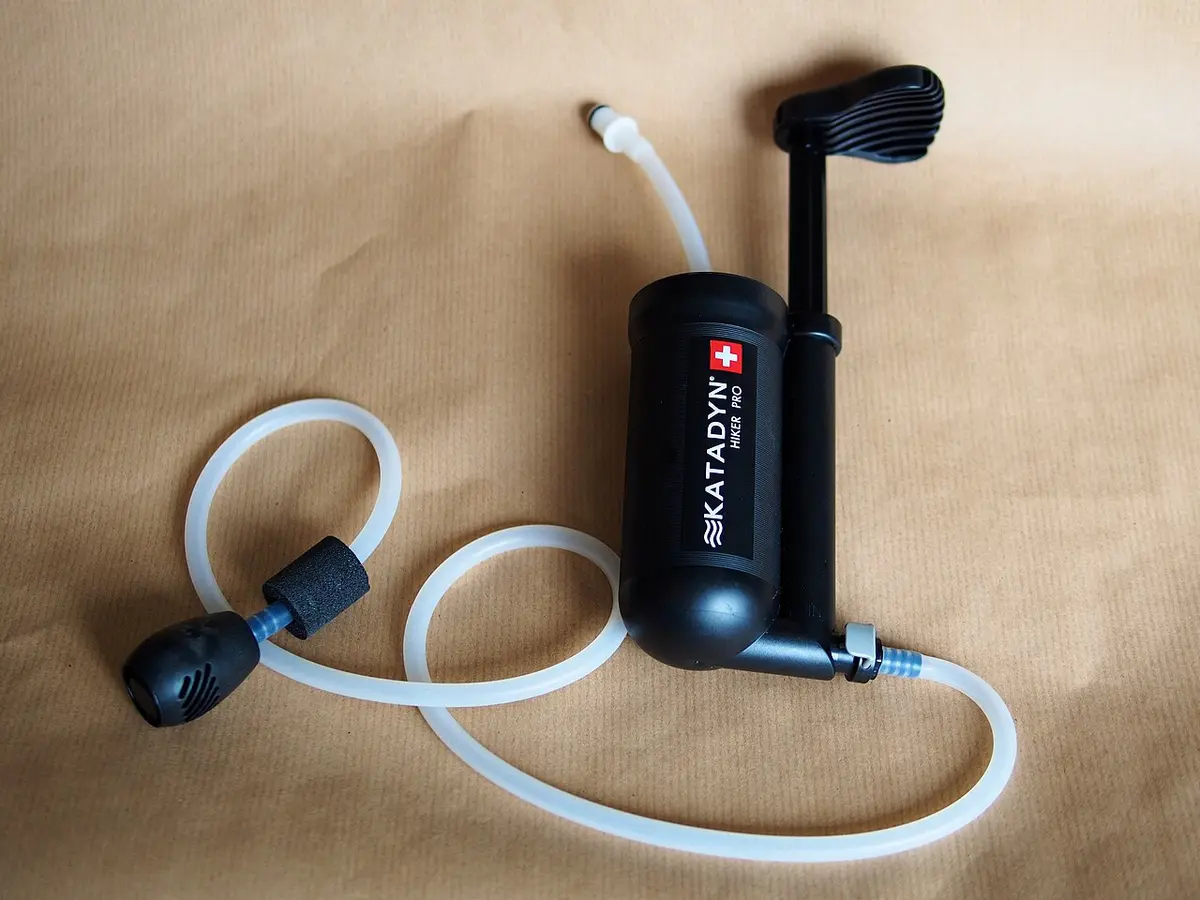
A water filter physically strains out protozoa (such as Giardia and Cryptosporidium) and most bacteria, but typically does not remove viruses. A water purifier removes or inactivates all three: protozoa, bacteria and viruses, using chemicals, ultraviolet light, boiling or a filter combined with a virus-stopping stage. For most backcountry water in the United States and Canada, a filter is enough, while a purifier is the safer choice abroad, near human sewage or after floods, and anywhere viral contamination is a concern.
The labels are used loosely, and that is where campers get into trouble. A product called a "purifier" may be a filter with a chemical add-on, a UV pen or a certified device, and a "filter" may have a pore size that is small enough for bacteria but not for viruses. This guide explains what each pathogen is, how each treatment works, how the US EPA-style purifier concept connects to standards, how to decide what you need, how to combine methods and how to use treatment safely in the field.
What you are trying to remove
Three groups of waterborne pathogens matter to campers.
Protozoa. Single-celled parasites such as Giardia and Cryptosporidium, about 1 to 15 microns across. They cause giardiasis and cryptosporidiosis, with diarrhea, cramps and nausea, and they form hardy cysts that survive in cold water. Cryptosporidium is resistant to chlorine at typical doses.
Bacteria. Organisms such as E. coli, Salmonella and Campylobacter, about 0.2 to 10 microns. They come from animal and human waste and can cause severe gastrointestinal illness.
Viruses. Much smaller, roughly 0.02 to 0.3 microns, including hepatitis A, norovirus and rotavirus. They are more of a concern in places with poor sanitation or where human waste enters the water.
Chemical contamination, such as pesticides, heavy metals and industrial runoff, is a separate problem. Most backcountry treatments do not remove it, except those with activated carbon, which reduces some chemicals and improves taste. If you suspect industrial or agricultural pollution, choose a different source.
How filters work
A water filter forces water through a membrane or hollow fibers with tiny pores. Many portable filters have pores of about 0.1 to 0.2 microns, small enough to block protozoa and bacteria but not viruses, which can slip through. Filters are popular because they work immediately, do not leave a chemical taste and have no waiting period. They come as pump filters, gravity bags, squeeze pouches, bottle filters and straw filters.
Filters need care. Hollow-fiber membranes can crack if they freeze, and a frozen cartridge may look fine while letting contaminants through, so keep filters from freezing and discard one that may have frozen. Pores clog over time and slow the flow, which you can reverse with backflushing; see how to clean and store a water filter for the routine. Many filters also include activated carbon to improve taste and reduce some chemicals.
How purifiers work
A purifier deals with viruses as well. There are several ways to do it.
- Chemical treatment. Chlorine dioxide tablets or drops kill bacteria, viruses and protozoa, though contact times differ: about 30 minutes for most bacteria and viruses and longer, up to four hours according to some guidance, for Cryptosporidium. Iodine is effective against bacteria and viruses and less reliable against Cryptosporidium, and it carries cautions for pregnant people and those with thyroid conditions.
- Ultraviolet (UV) light. A UV pen or bottle disrupts the DNA of pathogens in clear water, and it needs batteries and clear water; cloudy water shields organisms.
- Boiling. A rolling boil for one minute (three minutes above about 6,500 feet elevation) kills pathogens, per CDC guidance, and requires fuel and time.
- Filter plus virus stage. Some devices combine a filter with a second stage such as a charged media or chemical element that captures or kills viruses. Others use a very fine membrane.
For how tablets work and how to use them, see how to use water purification tablets. Browse the shop lists for water purification tablets for hiking, travel, drinking water and iodine tablets to see how they are packaged and labeled.
Side-by-side comparison
| Feature | Filter | Chemical purifier | UV purifier | Boiling |
|---|---|---|---|---|
| Protozoa | Removed | Killed (time varies) | Inactivated | Killed |
| Bacteria | Removed | Killed | Inactivated | Killed |
| Viruses | Usually not removed | Killed | Inactivated | Killed |
| Wait time | None | 30 minutes to 4 hours | About 1 to 2 minutes | Until boiled and cooled |
| Taste | Clean, may use carbon | Chemical taste possible | No change | Flat |
| Cloudy water | Clogs | Needs pre-filtering | Shielded organisms | Fine |
| Weight | 2 to 16 oz | Very light | 4 to 6 oz | Needs fuel |
| Needs power | No | No | Batteries | Fuel or fire |
| Best for | US and Canada backcountry | Backup, travel | Clear water, quick | Emergencies |
Do you need a purifier or is a filter enough?
The answer depends on where you are and the source of your water. In most of the United States and Canada, viruses are a lower risk in remote backcountry water, and protozoa and bacteria dominate, so a good filter is the standard tool. Where human waste can enter the water, such as near villages, busy campgrounds and trails with many users and poor sanitation, in developing regions or after a flood, viruses may be present, and a purifier or a filter plus a chemical or UV step is the safer choice. Authorities such as the CDC advise choosing treatment based on the pathogens likely in the area.
Think also about the risk you are willing to accept, and how sick you would be if you were wrong. For a short trip near home, a filter is practical. For a trip in unknown places, carry a backup method such as a small pack of tablets. The weight of a backup is tiny compared with the cost of illness.
What labels and standards tell you
Marketing terms vary, so look for independent standards. In the United States, NSF/ANSI standards test water treatment devices for specific claims. NSF/ANSI P231 is a protocol for microbiological water purifiers, intended to reduce bacteria, viruses and cysts in water of unknown quality, and it is based on EPA guidance for microbiological purifiers. NSF/ANSI 53 covers health-related contaminant reduction such as cysts, and 42 covers aesthetic effects like taste and chlorine. Not every portable device is certified, and some companies say they follow a protocol without holding a formal listing. Read the next article in this series, what NSF/ANSI certifications mean on portable water filters, to understand the claims, and check the NSF listing database for the specific model.
If a product claims to be a purifier, ask which pathogens it removes, how that was tested and what the contact time or flow rate is. A product that lists "removes 99.99 percent of bacteria and 99.9 percent of protozoa" with no virus claim is a filter.
Large-volume and group options
For groups and base camps, gravity filters process several liters with no pumping. A bag of water hangs from a branch and flows through the filter into clean containers. The best 10L gravity water filters and the best 5-gallon gravity water filters lists cover high-volume setups for camps and RV use. They typically filter protozoa and bacteria, and may be paired with chemical treatment for viruses.
Using treatment safely in the field
- Choose the best source you can. Moving, clear water is better than stagnant pools. Avoid water downstream of camps, grazing areas and mines.
- Pre-filter cloudy water. Let sediment settle or pour through a cloth to protect the filter and improve chemical performance.
- Follow instructions for contact time and dosing, and for water temperature, since cold water slows chemical action.
- Keep clean and dirty water separate. Do not let a clean bottle touch a dirty source or a dirty filter inlet.
- Treat water you will use for drinking, brushing teeth and washing dishes.
- Carry a backup, such as tablets, in case a filter fails or freezes.
- Do not freeze filters, and keep them in an inside pocket or sleeping bag on cold nights.
Personal and emergency options
Not every trip needs a pump or a gravity bag. A filter straw is the lightest, simplest device: you drink directly from a source or screw it onto a bottle. It weighs a couple of ounces and suits day hikes, emergency kits and travel, though it is slow for group use and offers no virus protection unless it has an added stage. For the proper technique and its limits, see how to use a filter straw, and browse the best water filter straws or the best personal water filter straws lists to compare designs. For emergency preparation, the best water filter straws for emergencies and for survival lists focus on long shelf life and simple operation, and the best water filter straws for hiking lists lean light.
Think of straws and tablets as complementary. A straw gives you instant water without a wait, and tablets cover the virus gap and the backup role. A hiker who carries both, plus a lighter for boiling in the worst case, has three independent ways to get safe water for a combined weight of a few ounces. Redundancy is the safest approach in the backcountry, where a single failure can be serious.
A decision guide by trip type
Day hikes near home. Carry plenty of water from home, and bring a straw or a small filter bottle as a backup. Treat water only if you run out.
Weekend backpacking in US mountains. A squeeze or gravity filter is the standard, with a few tablets as a backup. Gravity systems are especially convenient for camp, since you can fill several bottles while you set up.
Long trails and thru-hikes. A lightweight squeeze filter is the common pick, because it is quick and light. Keep an eye on filter life and flow rate, and replace cartridges as needed. Some hikers also use chemical treatment in suspicious sources.
International travel and developing regions. Choose a purifier, tablets or a filter with a virus stage, and do not rely on a filter alone. Bottled water and boiling are also useful options.
Car camping, RV and groups. Large gravity filters or tap-water supplies serve most needs. If you use campground water, check local advisories, and consider carbon filtration for taste.
Winter and cold climates. Keep filters from freezing by sleeping with them, and consider chemical or boiling options. Melting snow for water still benefits from treatment in some situations, depending on contamination.
Flow rate, weight and cost
Practical factors drive many decisions. Flow rate is how fast clean water comes out, usually quoted in liters per minute; a faster filter saves time, especially for groups. Weight matters in the backpack, ranging from an ounce or two for a straw to a pound or more for a pump. Cost includes the device and replacement cartridges. A cheap filter with expensive cartridges can cost more over time than a pricier one with a long life. Check the filter's rated capacity in liters or gallons, since that sets how long it lasts before replacement.
If you are comparing, the best portable water filters, best water filters under $100 and best water filters under $150 lists give a sense of price tiers, and the best lightweight gravity water filters and best ultralight gravity water filters lists focus on weight.
Choosing a source: where the water comes from matters
No treatment replaces a good source. Water that flows from a spring or a high, fast stream well above camps and grazing land is a better starting point than a stagnant pond. Fast, cold, clear water usually carries fewer pathogens and sediment, and the less sediment there is, the easier life is for any filter or chemical. Collect water from the middle of a stream, away from the bank where scum and debris gather, and from a depth below the surface film. Avoid places where animals gather, where campers wash dishes or relieve themselves, below beaver dams and below mining sites.
If a source is cloudy, let it settle in a container for 30 minutes, then pour off the clearer water on top. A bandana or coffee filter strained over the bottle cuts large particles. Pre-treating in this way extends the life of a filter, speeds flow and improves the performance of chemicals and UV, which are weakened by turbidity. In cold water, chemical tablets work more slowly, and some manufacturers recommend longer contact times, so warm the water a little by carrying a bottle inside your jacket before treatment if you can.
Taste, color and what treatment does not fix
Filtered water is clean in the microbial sense and may still taste of silt, algae or tannins. Activated carbon in some filters improves taste and removes some chemicals, and chemical tablets can leave a swimming-pool flavor that fades when you let the water stand with the cap off or add a flavor packet. UV leaves taste unchanged, and boiled water tastes flat until you pour it between containers to aerate it.
Know the limits. Standard backcountry filters and purifiers do not remove dissolved salts, heavy metals or most chemicals. If you are near agricultural runoff, abandoned mines or industrial sites, or if the water has a chemical smell or an oily sheen, choose another source or carry water. In emergencies, water that is cloudy or discolored but free of chemical hazards can be treated by settling, straining and a reliable method, then used with care. When in doubt, treat twice with different methods, for example filter and then chemicals, which covers the weaknesses of each.
Staying healthy after drinking untreated water
If you drink water that you suspect was not treated well, watch for symptoms. Diarrhea, stomach cramps, nausea and fatigue are the usual signs of waterborne infection, and they may start days to weeks after exposure, which makes it hard to link to the cause. Drink fluids and rest, and seek medical care if diarrhea lasts more than a couple of days, if you see blood, if you have a high fever or signs of dehydration, or if you are pregnant, very young, older or have a weakened immune system. Tell your doctor about your trip and water sources, since that helps narrow the diagnosis. Prevention is far easier, so give treatment the same attention you give your shelter and food.
A one-page plan for water on a trip
Before any trip, write a short water plan. List the water sources on your route and their reliability, the distance between them and the treatment method you will use at each one. Note how much you need to carry on dry stretches, and what your backup is if a source is dry or contaminated. Carry the plan in your head or on a card, and share it with someone who is not going. Include the steps for treating and storing water and the contact times for any chemicals. A plan like this turns water from a daily worry into a routine and reduces the odds of bad decisions when you are tired and thirsty.
Common mistakes to avoid
- Assuming a filter removes viruses.
- Using chemical tablets without waiting the full contact time.
- Letting a filter freeze and continuing to use it.
- Skipping backflushing and cleaning.
- Treating cloudy water with UV only.
- Relying on a single method with no backup.
- Contaminating clean bottles with dirty hands or inlets.
Frequently asked questions
Do I need a purifier in the US backcountry?
Usually a filter is adequate because protozoa and bacteria are the main concerns, though local conditions vary. Where human waste or flooding may contaminate water, or when traveling abroad, use a purifier or add a chemical or UV step.
Does a filter remove viruses?
Most portable filters do not, because virus particles are smaller than the pores. Some devices include a second stage to handle viruses. Check the manufacturer's claims and independent certification.
How long do I wait after using tablets?
It depends on the product and the pathogen. Chlorine dioxide tablets typically need 30 minutes for most bacteria and viruses, and longer for Cryptosporidium according to some guidance. Follow the label.
Is boiling better than filtering?
Boiling kills all three types of pathogens and is reliable, but it takes fuel and time, and the water must cool. Filters are quicker for daily use, and boiling is a good backup.
Can I filter water from a muddy stream?
You can, but pre-filter or settle it first, because mud clogs filters fast and reduces the effect of chemical and UV treatments. Choose a clearer source when possible.
What should I carry as a backup?
A small pack of chemical tablets or drops weighs almost nothing and covers a clogged or frozen filter. A lighter or stove lets you boil water in an emergency.
Sources & further reading
- CDC: Water Treatment Options When Hiking, Camping or Traveling
- NSF: Standards for Water Treatment Systems
Image credits
- "Katadyn Hiker Pro" by Sputniktilt, CC BY-SA 3.0, via Wikimedia Commons.
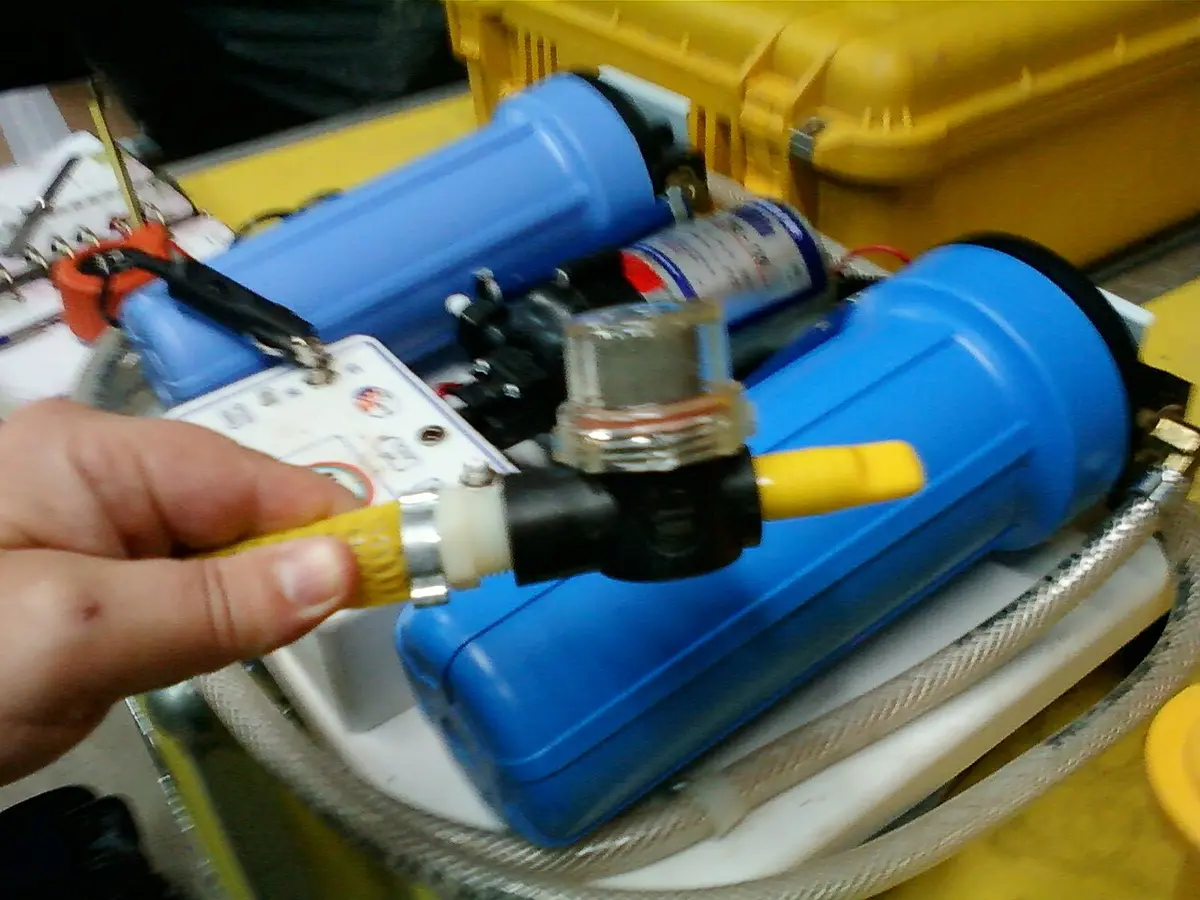
- "Img-0037 A Noah backpack portable water purification unit, which includes a ceramic filter and a high intensity U.V. light source to render microorganisms inert" by TootsweetMC, CC BY-SA 3.0, via Wikimedia Commons.


Ready to buy?
Compare the gear: Packs & Hiking
6 Best Water Purification Tablets For Drinking Water in 2026
Best water purification tablets for drinking water: Aquatabs, Potable Aqua, Coghlan's and more compared on stated pathogens, contact time and registrations.
3 Best Water Purification Tablets For Hiking in 2026
Best water purification tablets for hiking: Aquatabs 49mg foil strips, a 397mg bulk bottle and Potable Aqua compared on weight, dose and stated pathogen claims.
4 Best Water Purification Tablets For Travel in 2026
Best water purification tablets for travel: a tank-treatment kit, Aquatabs and a 100-count bottle compared on dose, shelf life and what each page covers.
5 Best 10l Gravity Water Filters in 2026
Best 10 liter gravity water filters for base camp and groups, plus the smaller 3 liter sets that fit solo trips and day hikes.
2 Best 5 Gallon Gravity Water Filters in 2026
Best 5 gallon class gravity water filters for RV bases, cabins and off-grid camps, comparing a bucket system with a 6 gallon countertop unit.
3 Best Iodine Water Purification Tablets in 2026
Best iodine water purification tablets and the iodine-free alternatives, compared on dose, contact time and taste for hikers and emergency kits.
5 Best Uv Water Filters in 2026
Best UV water filters for cabins, off-grid homes and camp buildings, compared on flow, lamp life, power draw and spares for 120V systems.
4 Best Uv Water Purifiers in 2026
Best handheld UV water purifiers compared on weight, battery type, treatment count and display for backpackers, travelers and emergency kits.
Keep reading